
Corporate Video Trends in 2026: What Has Changed
shootsta.
Corporate Video Trends in 2026: What Has Changed
By Shootsta · Published April 11, 2026 · Updated April 2026
Corporate video production looks different in 2026. Here are the trends shaping how businesses produce, distribute, and measure video content this year.
What has changed in corporate video production?
Three years ago, corporate video meant hiring an agency for a polished brand film once or twice a year. The output was high quality but low volume. Most companies produced fewer than 10 videos per year.
In 2026, the companies getting the most value from video are producing 20-50 pieces per month across multiple formats and departments. The shift isn't about budget increasing - it's about the production model changing. Here are the trends driving this shift.
What are the biggest corporate video trends in 2026?
1. Decentralized production is the default
The old model: a central video team or agency handles all production. The new model: anyone in the organization can film content on their phone, and a centralized editing team delivers branded results. This is how companies produce at volume without scaling headcount. Read our full guide on scaling video production across teams.
2. AI assists but doesn't replace production
AI tools handle captioning, transcription, script drafting, and content repurposing well. They don't yet produce enterprise-quality video from scratch. The companies getting value from AI are using it to speed up parts of the workflow, not to replace professional editing. See our practical guide to AI video in the enterprise.
3. Video is a system, not a project
The biggest mindset shift is treating video as an ongoing business function rather than a series of one-off projects. Companies with a video operating system - defined workflows, intake processes, and production pipelines - produce more content and get better results than companies that start from scratch every time.
4. Internal video is growing faster than external
Marketing video gets the attention, but internal communications, training, and employee engagement video is growing faster. Remote and hybrid work made video essential for reaching distributed teams. Companies are producing more internal comms video, training content, and onboarding material than ever before.
5. Short-form dominates every channel
Two years ago, marketers debated whether long-form or short-form video performed better. The debate is over. Short-form wins for attention and engagement. Long-form wins for depth and education. Smart teams produce both from the same source material - film a 20-minute interview, cut it into a 3-minute blog embed and ten 30-second social clips.
6. Video SEO and AEO are becoming real channels
Google increasingly features video in search results. AI tools like ChatGPT and Perplexity cite video content in their answers. Companies that structure their video content with proper metadata, transcripts, and schema markup are appearing in both traditional and AI-powered search. This is why every new video page should include FAQ structured data and question-based headings.
7. Subscription models are replacing per-project
Per-project pricing works for a brand film but breaks at volume. Subscription video production gives teams predictable costs, faster turnaround, and lower per-video economics. The shift mirrors what happened in SaaS - monthly subscriptions replaced one-time purchases because businesses prefer predictability and flexibility.
What hasn't changed?
Quality still matters. Authenticity still beats polish for most formats. Distribution determines whether anyone sees your video. And the number one barrier to video adoption is still "we don't have time to film" - which is a production model problem, not a time problem.
If filming takes 15 minutes on a phone and editing takes 48 hours in the background, everyone has time. If filming requires booking a crew and a studio, nobody does.
Explore corporate video production with Shootsta, or take the video quiz to see which formats will have the biggest impact for your team in 2026.
Take this article with you
Read the latest at shootsta.com/blog/corporate-video-trends-2026-what-has-changed
You might also like

How to Plan Video Team Capacity Around Leave
Your only editor just booked two weeks off, and you already know which projects will slip. Chad Lakin explains how to plan video team capacity so the work keeps moving when someone is away.
Corporate Video Editing Standards: Full Guide
A two-page editing standard does more for consistency than a forty-page brand book. Here is what it should cover, who owns each part, and how to enforce it with an in-house editor or an outside partner.
Quality Control in Outsourced Video Editing
When editing leaves the building, quality has to be checked by a system rather than by whoever happens to look. Here is the system: acceptance criteria, two QA gates, counted revision rounds and a quarterly audit.
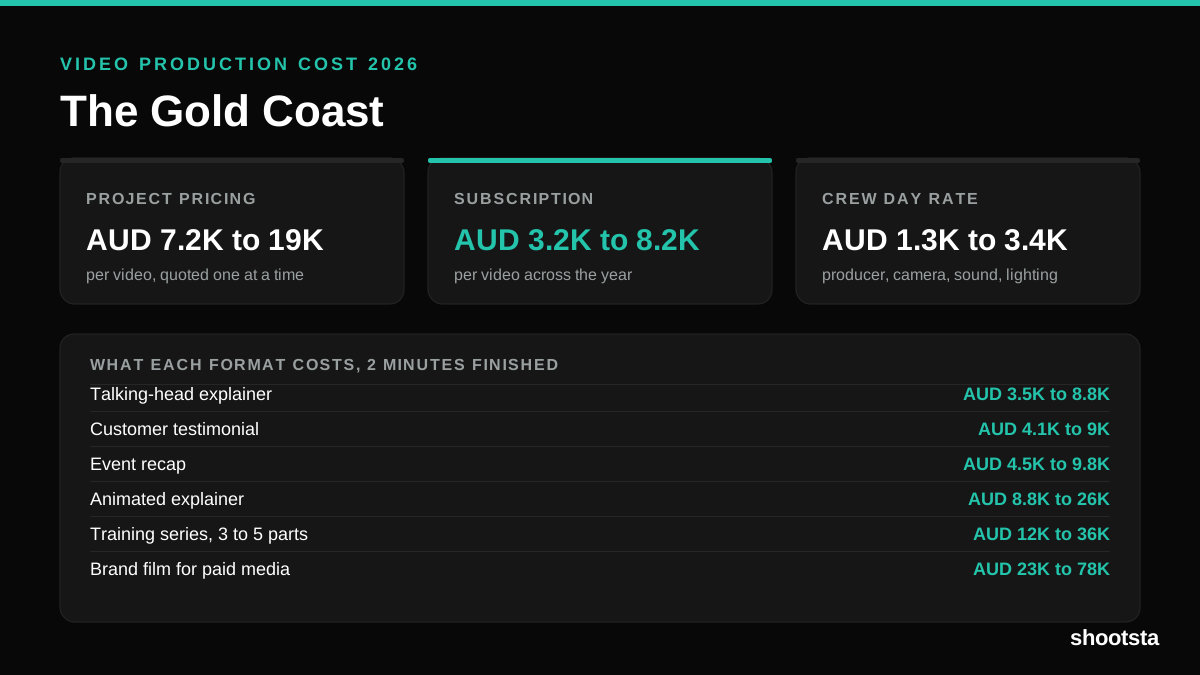
Video Production Cost on the Gold Coast 2026
Video production in the Gold Coast costs AUD 3,200 to AUD 8,200 per finished video on a subscription model, and AUD 7,200 to AUD 18,500 for one-off project work. Here is what you are paying for, and how the three pricing models compare.
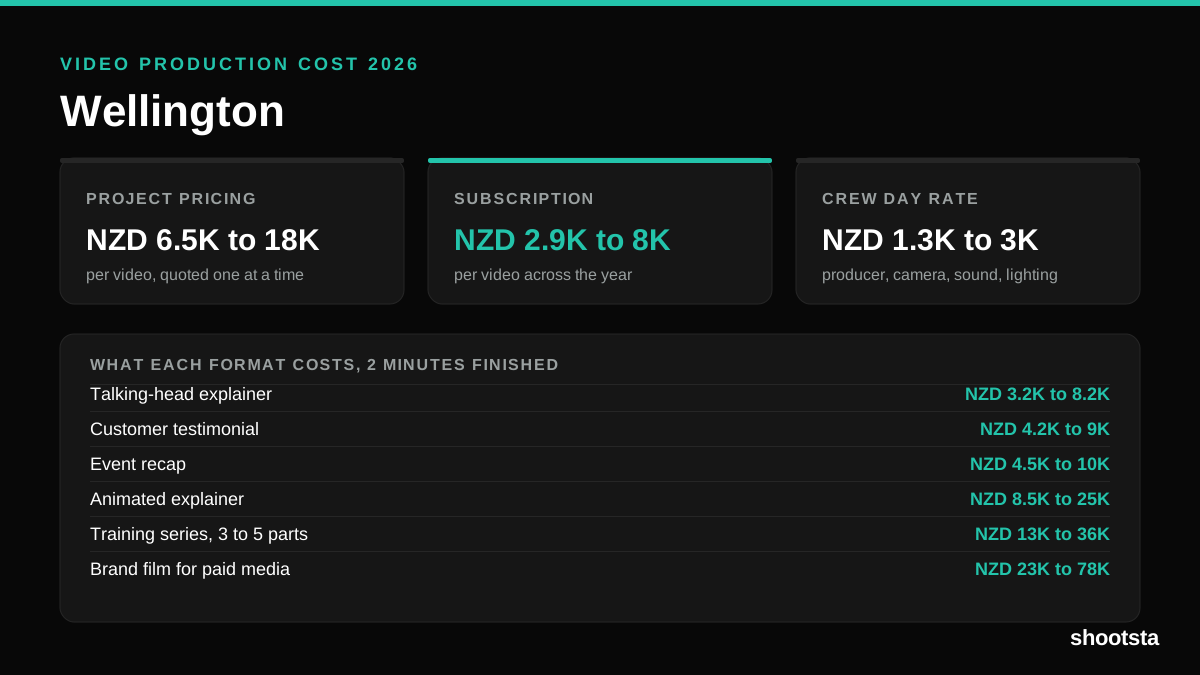
Video Production Cost in Wellington (2026)
Video production in Wellington costs NZD 2,900 to NZD 8,000 per finished video on a subscription model, and NZD 6,500 to NZD 18,000 for one-off project work. Here is what you are paying for, and how the three pricing models compare.
Video Production Cost in Berlin (2026)
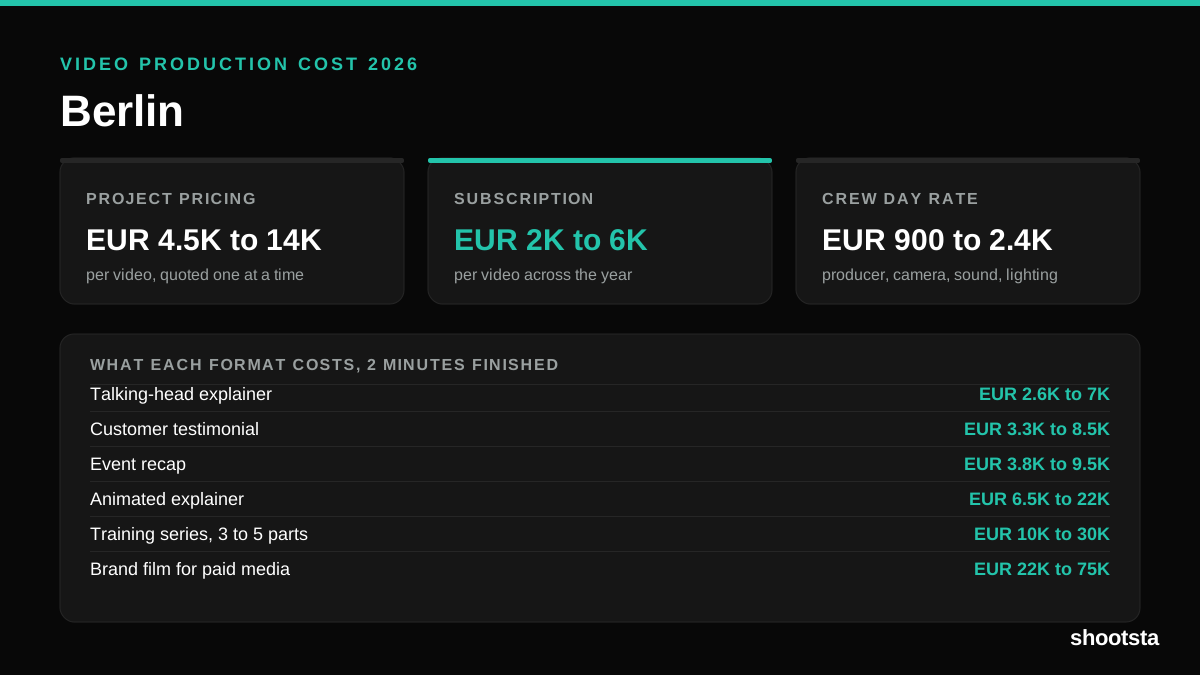
Video production in Berlin costs EUR 2,000 to EUR 6,000 per finished video on a subscription model, and EUR 4,500 to EUR 13,500 for one-off project work. Here is what you are paying for, and how the three pricing models compare.