
7 Signs Your Video Review Process Will Break
shootsta.
7 Signs Your Video Review Process Will Break
By Shootsta · Published July 26, 2026 · Updated October 2026
Most corporate video does not stall in the edit. It stalls in review. If approvals bounce between inboxes, versions get confused, and reviewers keep re-flagging the same brand details, the process is already breaking. Seven signs to watch, and what to do about each.
Corporate video rarely stalls in the edit. It usually stalls in review. If approvals bounce between inboxes, versions get mixed up and reviewers keep flagging the same brand details, your process is already breaking. Below are seven signs to watch for and what to do about each one.
Editing is faster than it has ever been. Even so, the gap between a finished cut and a published one can keep growing inside a corporate team. The cause is almost always the review loop, with too many reviewers, no clear owner and no record of what changed. These seven signs tell you the process is close to breaking under its own weight.
Seven signs your video review process is breaking
1. Feedback lives in email threads
When comments arrive across separate replies, forwarded messages, and the occasional hallway note, someone has to reconcile them by hand. That reconciliation is where feedback gets lost and rounds multiply. Feedback belongs in one place, tied to the timecode it refers to.
2. No one owns the sign-off
If every reviewer can block a cut but no one is accountable for the final yes, approval drifts. A clear owner per stage, with the authority to close it, is what keeps a video moving.
3. Reviewers keep re-flagging the same brand details
When stakeholders spend review cycles on fonts, logos, and lower thirds, the brand was not locked before the cut reached them. Enforcing the brand kit before review frees reviewers to check message and accuracy, which is the job only they can do.
4. You cannot tell which version is current
Files named final, final-2 and final-real look like a joke, but they point to a real problem. Without version tracking, reviewers comment on old cuts and approved changes get reverted. Every version and comment needs to be tracked in sequence.
5. One revision round takes a week
If a small change means waiting days for the next cut, your calendar has to plan a month ahead and cannot react to anything. Fast turnaround, ideally a turnaround SLA, is what makes a review loop feel responsive. We put numbers on the delay in how to calculate the cost of video delays.
6. Legal or compliance gets involved late
When restricted content reaches legal at the very end, it triggers changes that unravel earlier approvals. Bringing the right reviewers in at the right stage, rather than all at the end, prevents the expensive rework.
7. Publish dates keep slipping
This is the clearest sign of the seven. If the video is finished but keeps missing its date, the approval loop is holding it up rather than the production. At that point you need to fix the process, and hiring another editor will not help.
How to fix a review process before it breaks
The fixes are consistent: lock the brand before review, define stages and owners, track versions, and use a service fast enough that a revision round takes hours. We walk through the mechanics in how to speed up corporate video review workflows, and rank the services and tools that handle it in the best video editing services for corporate reviews.
Every fix above assumes one place where comments, versions and the approval live. The Shootsta platform gives you that place. See video review workflows for corporate marketing teams for how a cut moves from the editor to sign-off on the timeline.
Frequently asked questions about video review workflows
How long should corporate video review take?
A healthy review loop should close within a few days. If the brand is locked before review and revisions come back within hours, a corporate video can move from first cut to approved inside a week, even with several reviewers. When a loop runs past two weeks, the cause is usually the workflow rather than the production.
How do you speed up multi-stakeholder video approval?
Lock the brand so reviewers stop re-flagging consistency, give each review stage a named owner, track every version and comment in one place, and use a service with fast turnaround so revision rounds take hours. Together, these steps keep fixed publish dates from slipping.
Where to go next: read how to speed up corporate video review workflows, compare video editing services built for corporate review, or book a free consultation to map the bottlenecks in your own approval loop.
Take this article with you
Read the latest at shootsta.com/blog/video-review-process-warning-signs
You might also like
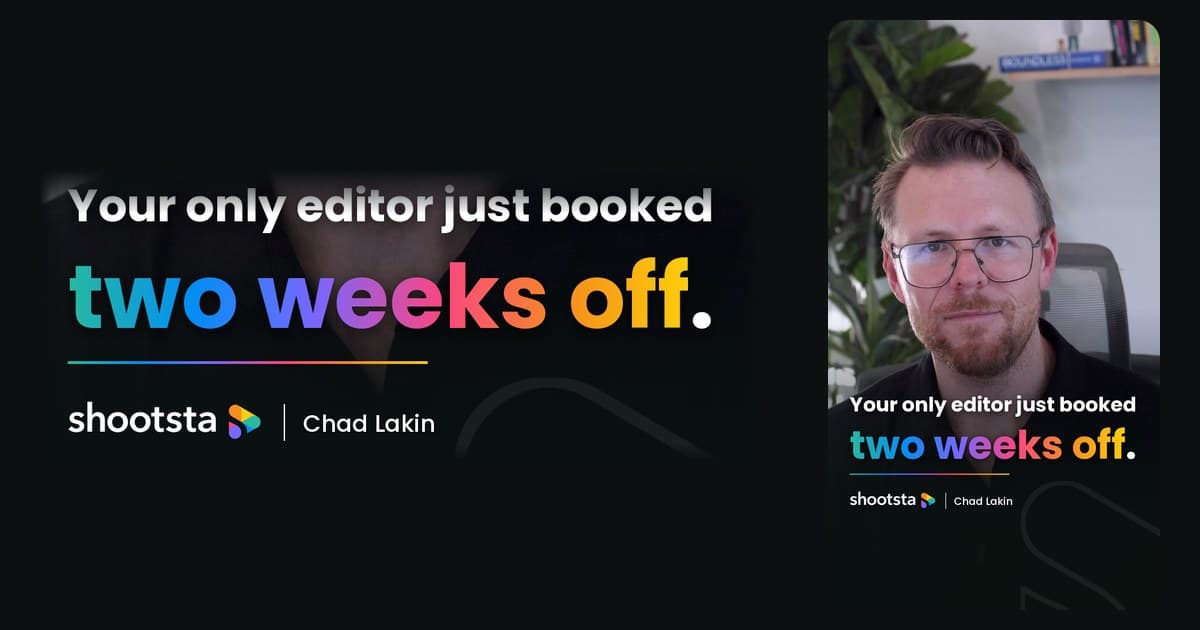
How to Plan Video Team Capacity Around Leave
Your only editor just booked two weeks off, and you already know which projects will slip. Chad Lakin explains how to plan video team capacity so the work keeps moving when someone is away.
Corporate Video Editing Standards: Full Guide
A two-page editing standard does more for consistency than a forty-page brand book. Here is what it should cover, who owns each part, and how to enforce it with an in-house editor or an outside partner.
Quality Control in Outsourced Video Editing
When editing leaves the building, quality has to be checked by a system rather than by whoever happens to look. Here is the system: acceptance criteria, two QA gates, counted revision rounds and a quarterly audit.
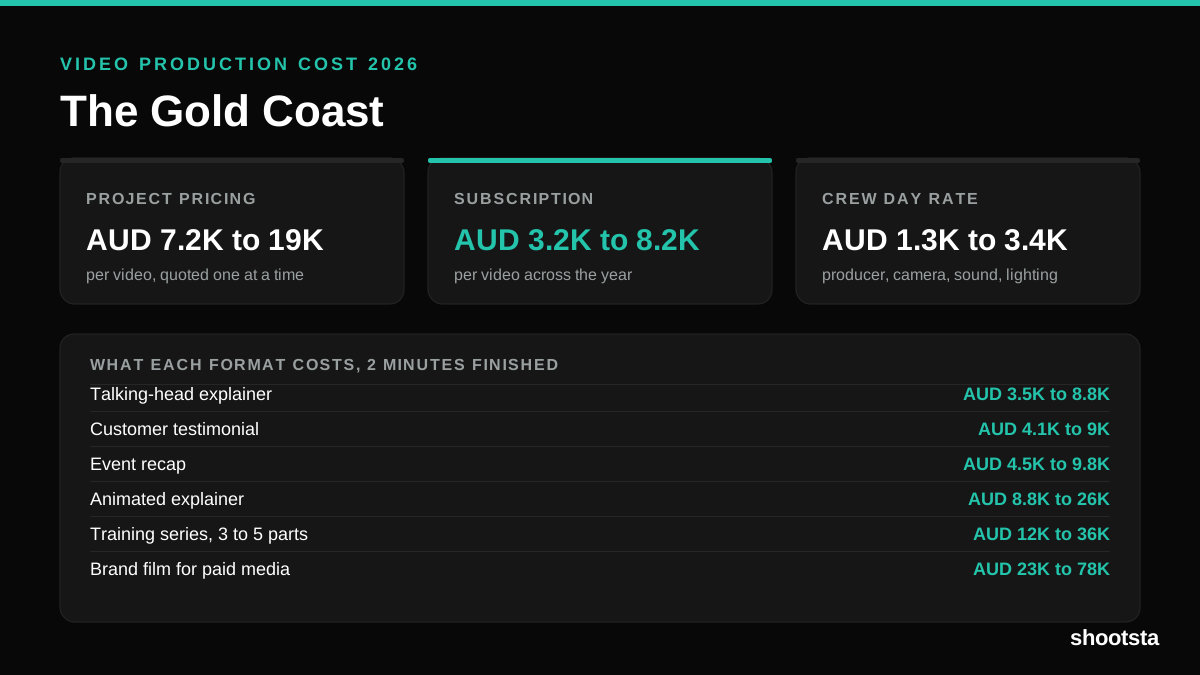
Video Production Cost on the Gold Coast 2026
Video production in the Gold Coast costs AUD 3,200 to AUD 8,200 per finished video on a subscription model, and AUD 7,200 to AUD 18,500 for one-off project work. Here is what you are paying for, and how the three pricing models compare.
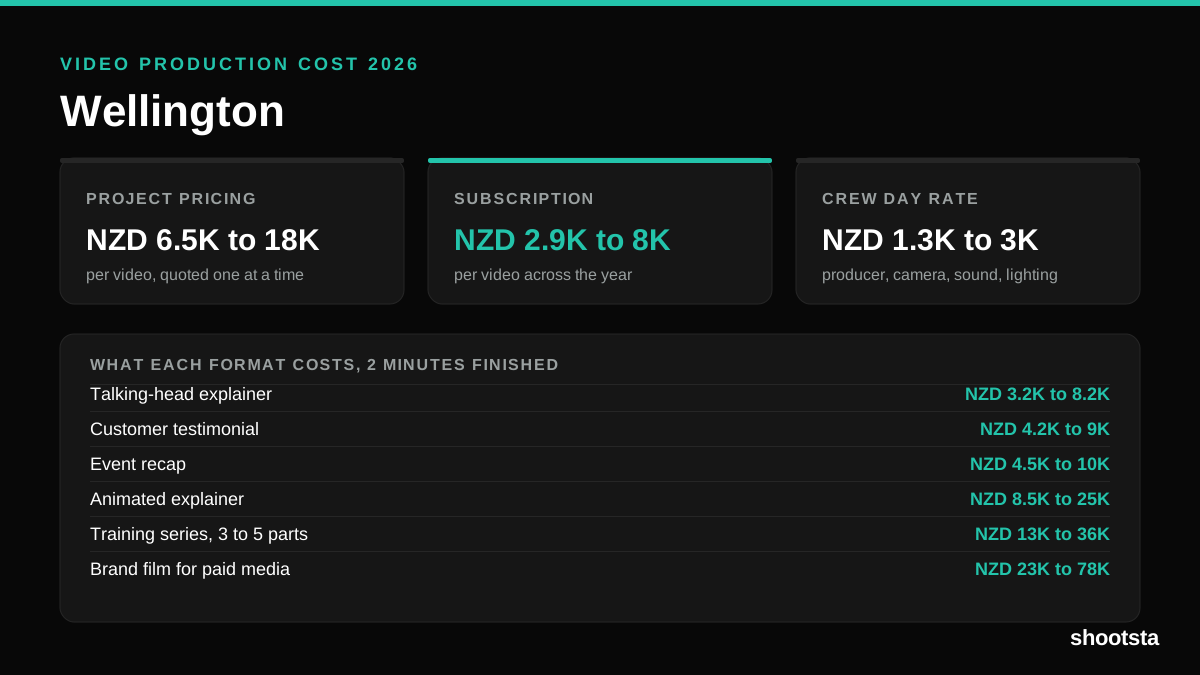
Video Production Cost in Wellington (2026)
Video production in Wellington costs NZD 2,900 to NZD 8,000 per finished video on a subscription model, and NZD 6,500 to NZD 18,000 for one-off project work. Here is what you are paying for, and how the three pricing models compare.
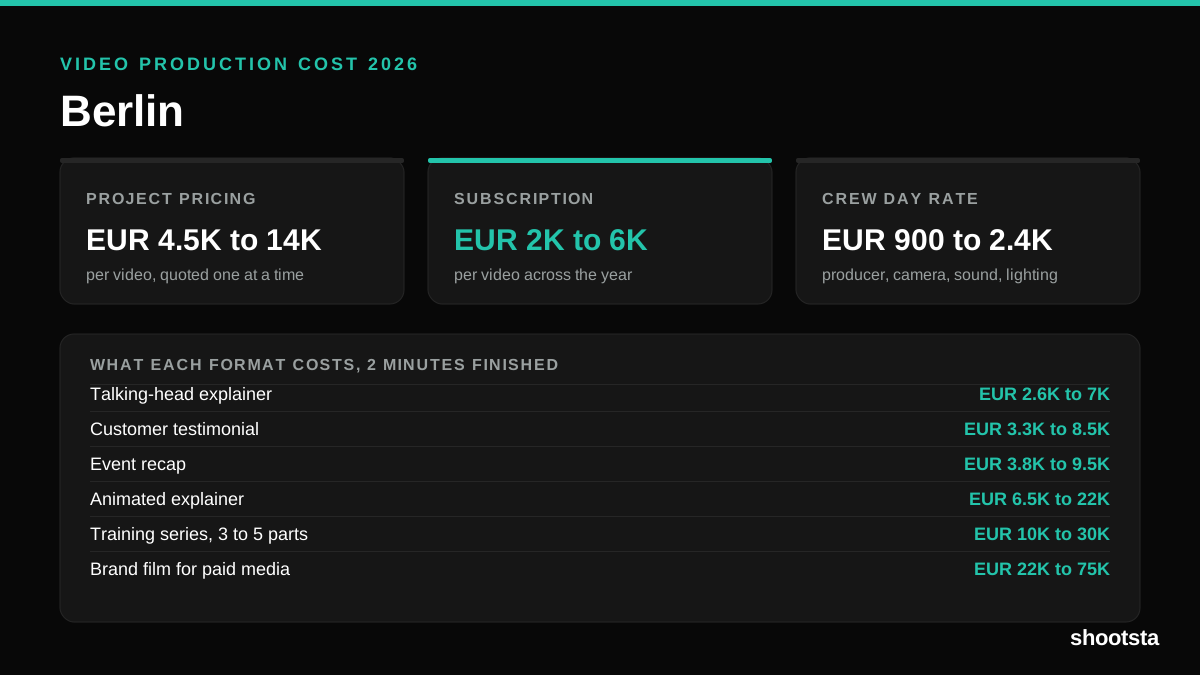
Video Production Cost in Berlin (2026)
Video production in Berlin costs EUR 2,000 to EUR 6,000 per finished video on a subscription model, and EUR 4,500 to EUR 13,500 for one-off project work. Here is what you are paying for, and how the three pricing models compare.