
Is Storyboarding Still Relevant in 2026?
shootsta.
Is Storyboarding Still Relevant in 2026?
By Shootsta · Published May 6, 2026 · Updated October 2026
Storyboarding as a discipline is more important than ever. Storyboarding as a hand-drawn artifact is mostly gone. Here is what changed and when traditional storyboards still earn their place.
Yes, but the format has changed. Storyboarding as a discipline (planning the shots, framing, and pacing of a video before production) is more important than ever. Storyboarding as an artifact (a hand-drawn sequence of panels) is now one option among five, and not even the most common one.
This post is the short version of where storyboards stand in 2026, what has replaced parts of the workflow, and when the traditional version still earns its place. For the longer breakdown of the alternatives, see our guide to storyboard alternatives in modern video production.
Is storyboarding dead?
No. The function is more relevant than ever because video projects involve more stakeholders and shorter timelines than they did five years ago. What has changed is the tooling. The output that used to come from a senior storyboard artist now usually comes from an AI generator, an animatic, or a 3D pre-viz pass.
What changed between 2020 and 2026?
Three things changed. AI storyboard tools became good enough for client-ready output, and video timelines got so short that a storyboard pass lasting several days became a bottleneck. Budgets per video also shrank, so a day rate for a storyboard artist became hard to justify on routine corporate work.
The result is that the storyboard step still happens, but it now takes minutes instead of days. A team types a brief into something like the Shootsta AI storyboard generator, gets back a full set of panels with shot directions, and iterates from there. The cost is close to nothing, and the quality is good enough for sign-off on most corporate, marketing and social video.
When are traditional hand-drawn storyboards still worth it?
Hand-drawn boards still earn their place in four cases. In each one, the drawing itself does work that a generated panel cannot.
- Narrative film, where a single artist sets the visual language for the whole project
- High-end animation, where the storyboard is also part of the production asset chain
- Brand films with a strong visual identity that a designer needs to shape by hand
- Director-led projects where the storyboard is the director's thinking tool
Outside of those, the time and cost of a hand-drawn storyboard is hard to defend. AI generators produce comparable output for client review at a small fraction of the cost. For the practical mechanics, see how to storyboard a corporate video with or without a designer.
Free AI Storyboard Tool
See how AI storyboarding works
Turn a brief into a storyboard in minutes with Shootsta's free tool. Judge it for yourself.
Should I still learn to storyboard?
Yes, but the skill has shifted. Drawing the panels by hand is now a niche craft. Reading a script and breaking it into shots, framing each shot, and choosing what to show versus what to imply is still the core skill, and it is now applied through AI tools rather than a sketchbook.
The producers and directors who get the most out of modern tools are the ones who could still draw a storyboard if they had to. They know what to ask the AI for, and they can see when the generated output misses the brief.
Is storyboarding still relevant in 2026 FAQs
Are storyboards obsolete?
No, but the artifact has changed. Hand-drawn storyboards have been replaced by AI generators and animatics for most corporate and marketing work. The function (planning shots before production) is more important than ever.
Do video producers still draw storyboards?
Some do, mainly in narrative film, animation, and high-end brand work. For corporate, marketing and social video, many producers now generate storyboards with AI tools or skip straight to an animatic.
What replaced traditional storyboards?
AI storyboard generators (the most common replacement), animatics, 3D pre-visualization software, interactive mood boards, and script-to-video tools. See storyboard alternatives in modern video production for the full breakdown.
Are AI storyboards as good as hand-drawn ones?
For client review and shot planning, usually yes. For projects where the storyboard is part of the final visual language (animation, narrative film), no. The right comparison is not "AI versus artist" but "AI as a first pass that an artist can refine."
How long does it take to make a storyboard now?
Under a minute with an AI generator. The Shootsta AI storyboard generator turns a brief or script into illustrated panels with shot directions in about that long. A traditional hand-drawn storyboard takes 1 to 5 days depending on length and complexity.
What skills should a modern storyboard artist learn?
Shot composition and framing still matter, and so does an editorial sense for what to show and what to cut. The new skills on top are prompt-writing for AI tools, working with brand context as input, and editing AI output back toward the brief. In short, the job has moved away from drawing and toward directing the tools.
Try a modern storyboard tool
If the question is whether storyboarding is dead, the answer is no, the format just got faster. The Shootsta AI storyboard generator is free to try with no sign-up. For the longer view of where the discipline is heading, read storyboard alternatives in modern video production or our breakdown of the best AI storyboard generators in 2026.
Take this article with you
Read the latest at shootsta.com/blog/is-storyboarding-still-relevant-in-2026
You might also like
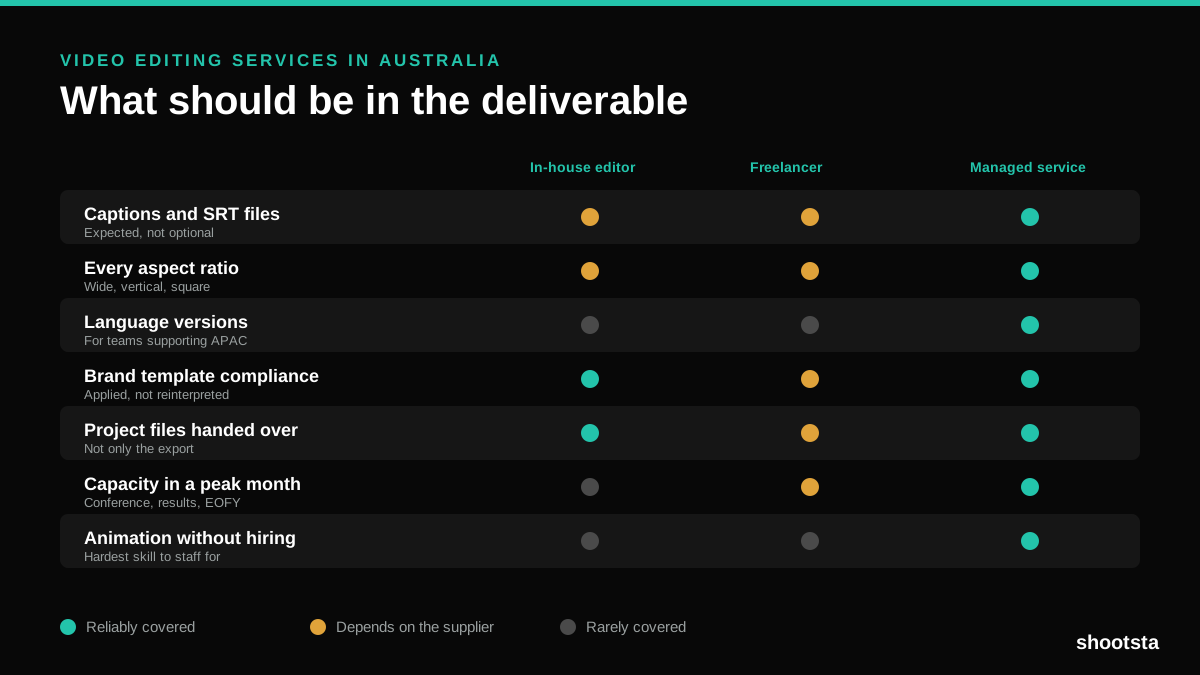
Video Editing Services in Australia
Australian teams are spread across time zones and offices, so the editing queue matters more than the editing. Here is what to expect on cost and turnaround.
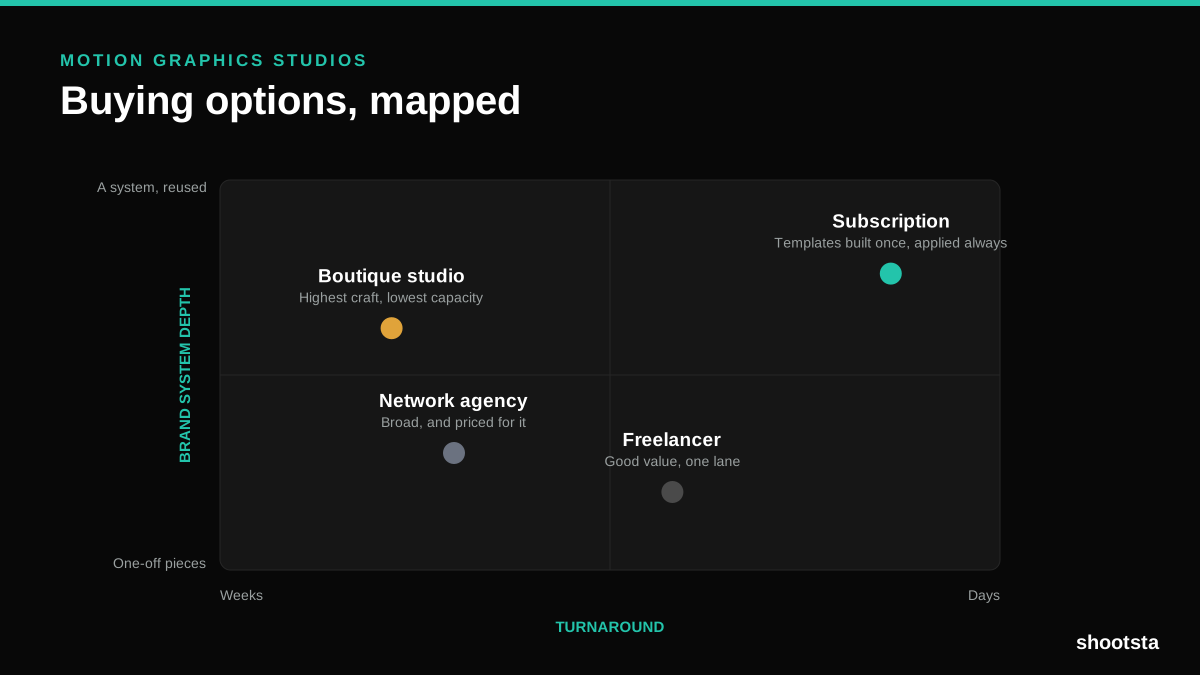
How to Choose Between Motion Graphics Studios
Every motion graphics studio has a good reel. The reel is the one thing that will not tell you how the fifth project goes. These ten criteria will.
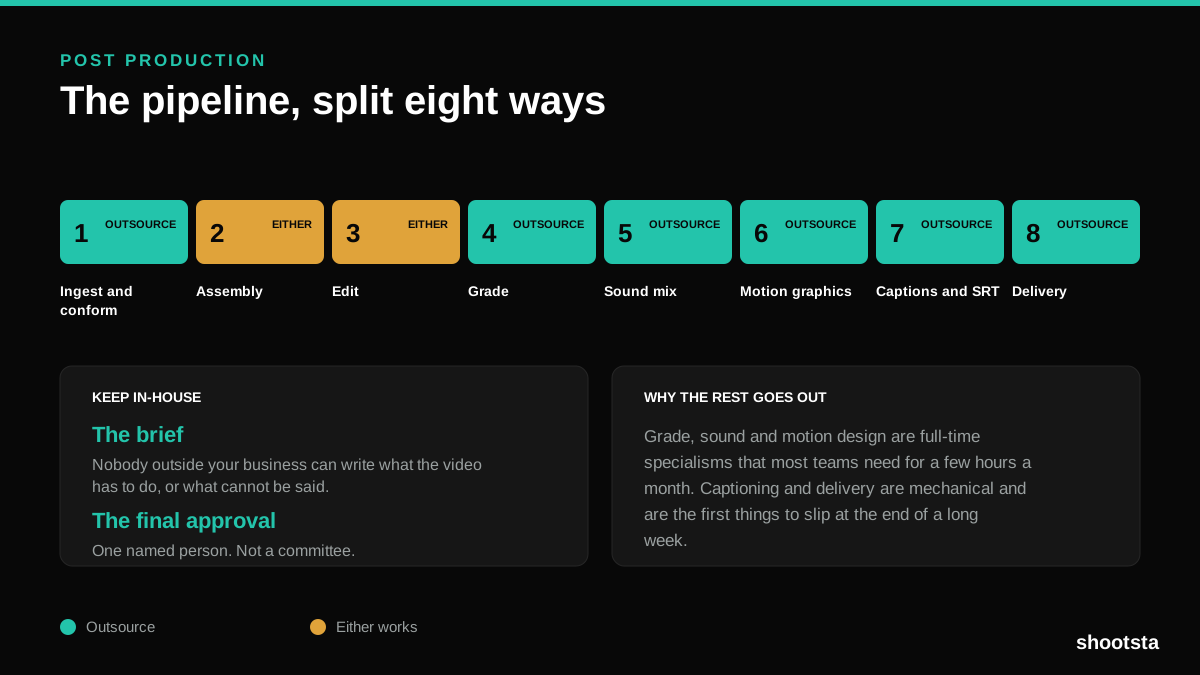
Post Production Agency or In-House Team?
Post production is eight stages, not one. Some of them need context only your team has. The rest are mechanical and are the first things worth handing over.
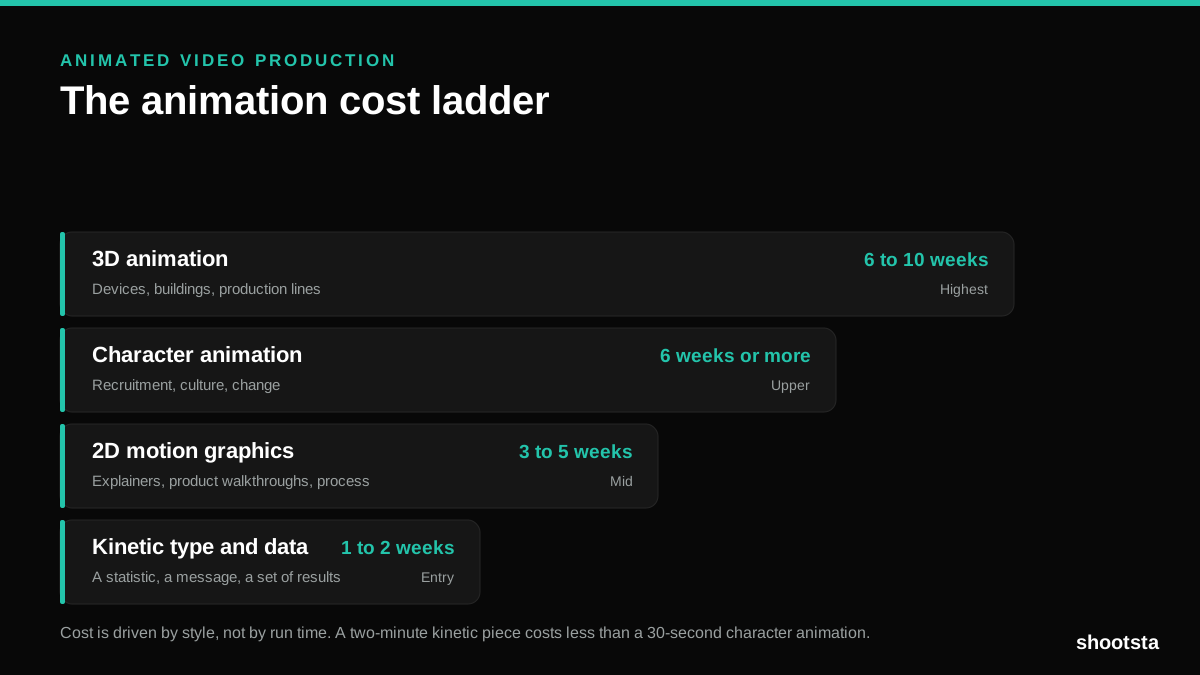
Animated Video Production Cost in the US
Animated video production costs move with style, not with length. Kinetic type, 2D motion, character and 3D sit on four rungs of a ladder. Here is what separates them.
How to Commission Medical Training Animation
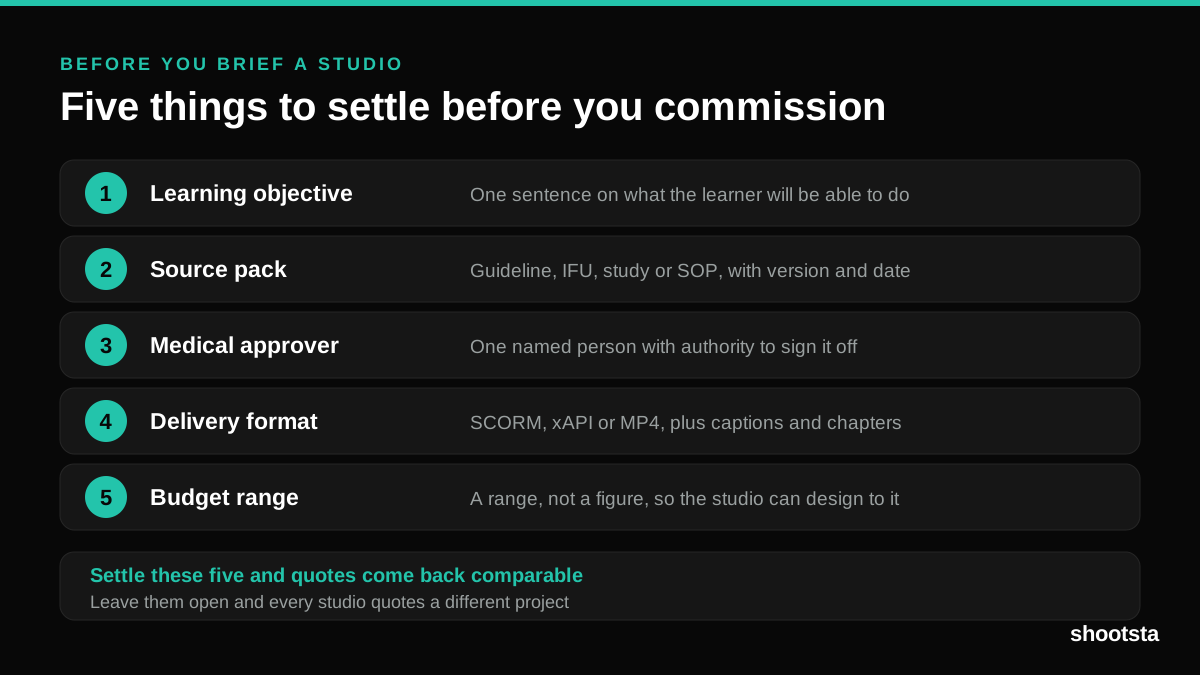
Commissioning a medical training animation is mostly decisions you make before anyone animates a frame. The brief fields that matter, what to ask a studio, how much expert time to budget, and the contract terms that stop a rebuild in two years.
How to Write an Animation Brief
How to Write an Animation Brief
Most animation briefs cause delays because they over-specify the visual style and under-specify the outcome. Here are the nine fields an animation production team needs to quote accurately and start without rework.