
How to produce podcast video for enterprise
shootsta.
How to produce podcast video for enterprise
By Shootsta · Published April 25, 2026 · Updated October 2026
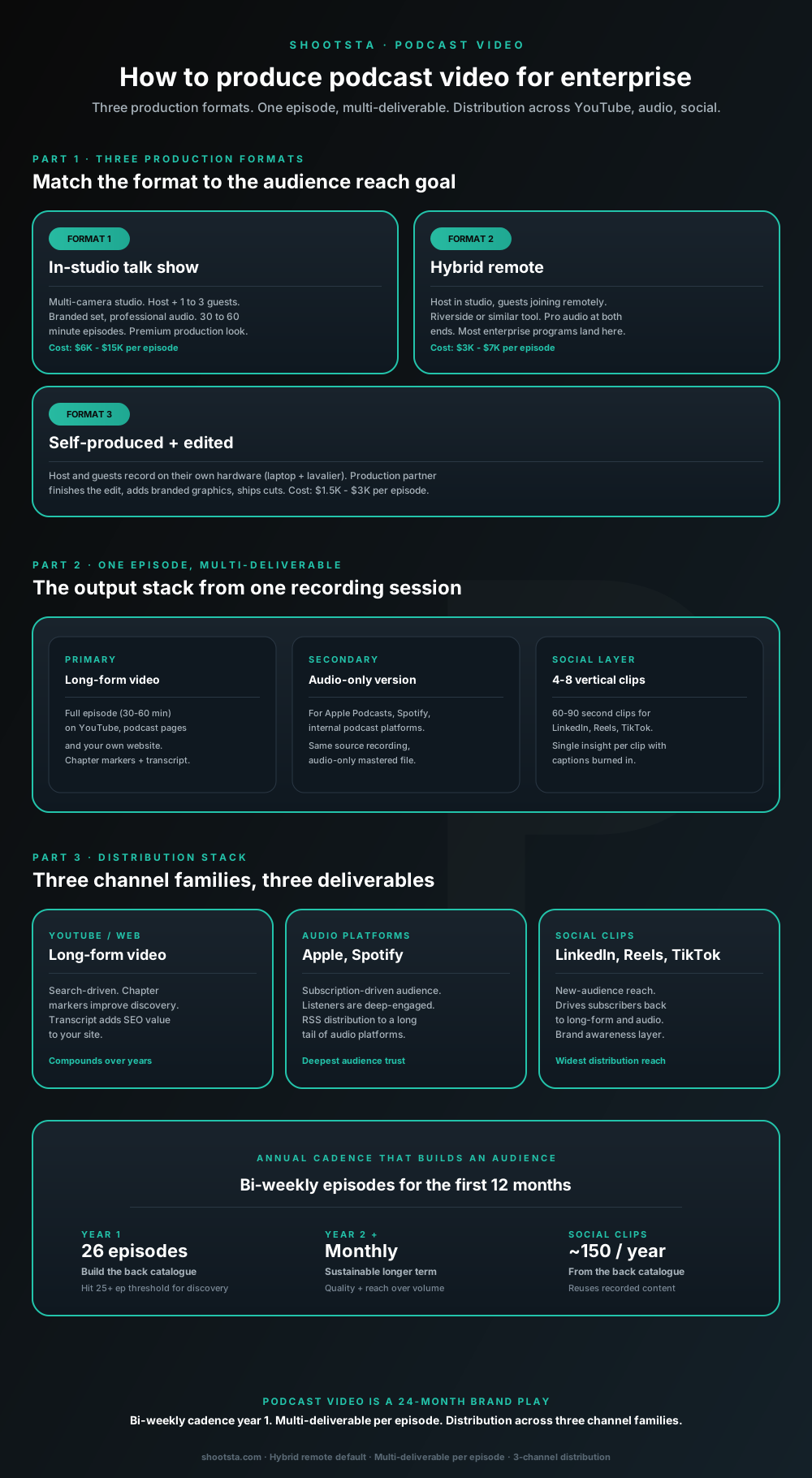
Podcast video sits at the intersection of thought leadership, content marketing and executive brand. Most enterprise programs that launch fail within 12 episodes because they treat each episode as a single deliverable. The structural shift is multi-deliverable per episode and three-channel distribution. Here is the production model that holds.
Why most enterprise podcast programs stall at 12 episodes
An enterprise podcast launch often follows the same path. Marketing decides to start a podcast, scopes an in-studio production with a vendor and commits to a weekly cadence. The first eight or so episodes go out with leadership cameos. Around episode 10 the guest pipeline runs dry, the show slows to monthly, and it stops soon after. Six months later nobody can find the back catalog, the budget is spent, and the next CMO inherits a "we tried podcast" story instead of a program.
The root mistake is treating each episode as a single deliverable. Each episode looks expensive when its only output is one long-form video. The fix is to get several deliverables from each episode. One recording session can give you a long-form video, an audio-only version and 4 to 8 social clips. Your cost per asset drops sharply because the same recording feeds three channels, and that is what keeps the program going.
The three podcast production formats
Format 1: In-studio talk show
This format uses a multi-camera studio, with a host and 1 to 3 guests on a branded set and professional audio. Episodes run 30 to 60 minutes and have a premium look. It puts a flagship podcast in the same visual class as major business shows like Acquired, Lex Fridman and Decoder. It is also the most expensive format per episode, and the cost rises with guest count and studio setup.
It suits B2B companies with a strong brand commitment, regular access to senior guests and a steady marketing budget. It is a poor fit if you need to launch quickly or want to test the format before you commit.
Format 2: Hybrid remote (host studio + remote guests)
The host records from a small studio or office setup. Guests join remotely through Riverside.fm, Squadcast or a similar dual-recording tool. You get professional audio and usable video at both ends, with episodes of 30 to 50 minutes. Many enterprise programs settle on this format over time because it balances quality with logistics. Guests do not have to travel, and recordings are not tied to studio bookings. The cost per episode sits well below a full studio show.
It suits the majority of enterprise B2B podcasts. It also gives you the most finished episode for each dollar of production budget.
Format 3: Self-produced plus edited
The host and guests record on their own gear, such as a laptop with a USB microphone or a lavalier. A production partner finishes the edit, adds branded graphics and delivers the cuts. This is the cheapest of the three formats. It works at lower volumes, or when reach matters more to you than a premium look.
It suits early programs that are testing the format and smaller B2B companies with a tight budget. It also suits internal podcasts that are not aimed at an external audience.
The multi-deliverable per-episode model
Every recording session should produce three kinds of output. Each one reaches a different audience, as the sections below explain.
Primary: long-form video
The full episode of 30 to 60 minutes goes on YouTube and is embedded on your own website. Chapter markers help people find it and keep watching. A transcript on the episode page adds SEO value, because it helps the page rank for long-tail searches on the topics covered. The long-form video stays up for good, and older episodes keep drawing search traffic for months.
Secondary: audio-only version
A mastered audio file goes out via RSS to Apple Podcasts, Spotify and internal podcast platforms such as Sounder or Voxer. It uses the same source recording, with the audio mastered separately from the video. Audio listeners tend to be your most engaged group. They subscribe and download episodes on purpose instead of stumbling on them in a social feed.
Social layer: 4 to 8 vertical clips
Your editor cuts 60 to 90 second clips from the episode for LinkedIn, Reels and TikTok. Each clip carries one insight, with captions burned in because these feeds autoplay on mute. The clips bring new people back to the long-form and audio versions. Without them, the program loses its way to reach new listeners.
Each episode gives you one long-form video, one audio-only file and 4 to 8 social clips. Add a written episode summary for SEO and email, and a transcript for accessibility and search. That comes to about 7 to 11 separate assets from one recording session.
Interactive planner
What does an enterprise podcast video program actually cost?
Pick the production format, set the cadence, and choose how many social clips you want per episode. The planner returns annual episode count, total cost, and the social clip volume the program produces.
$5,000 per episode
Bi-weekly is the sweet spot for year 1
Annual episodes
26
bi-weekly cadence
Annual production cost
$130K
$5.0K per episode
Annual social clips
156
6 per episode × 26
What this program produces
At 26 episodes a year, you produce a long-form video on YouTube, an audio-only version on Apple/Spotify, and 156 social clips across LinkedIn, Reels and TikTok. The long-form compounds via search; the audio builds a subscription-driven loyal audience; the social clips drive new-audience reach back to both. Most enterprise podcast programs hit credible audience size by month 12 to 18 with this output volume.
Scope a podcast video programAssumptions: production cost midpoints by format. Studio includes multi-camera setup, branded set, professional audio. Hybrid uses host studio + remote guest tooling. Self-produced uses participant hardware with partner edit. Social clip cost is incremental on the episode. Numbers are guides.
The three-channel distribution stack
YouTube and web (long-form)
This audience finds you through search. Chapter markers help YouTube show the episode for relevant queries. The episode page on your own website hosts the video and the full transcript, and that is where the SEO value builds, since the transcript ranks for long-tail keywords. The audience grows slowly, but episodes keep earning traffic for years.
Audio platforms (audio-only)
This audience comes through subscriptions. Subscribers get new episodes automatically, and they tend to be closely engaged with the show and the host. The audio audience is smaller than the YouTube one, but each listener is often worth more. They pay closer attention and are more open to brand mentions. RSS also reaches a long tail of audio platforms beyond Apple and Spotify.
Social clips (vertical short-form)
Social clips reach people who have never heard the show. Use LinkedIn for B2B, Reels for a broader business audience and TikTok where it fits. A clip shows just enough of the insight that the viewer wants the long-form or audio version. Only a small share of viewers will subscribe, so clip volume is what grows the audience steadily.
The cadence that builds an audience
In year 1, publish an episode every two weeks and build the back catalog past 25 episodes. That target matters because YouTube and Apple Podcasts tend to surface shows with a deep back catalog ahead of shows with only a handful of episodes. New subscribers also want to see there is more to listen to than the latest episode.
From year 2, a monthly cadence is sustainable and quality matters more than volume. The first 25 episodes built the audience. Later episodes serve and grow that audience without needing volume to drive discovery.
For social, aim for 3 to 5 clips a week all year, drawn from new episodes and the back catalog. The clips feed discovery, and the long-form episodes turn those new viewers into subscribers. You need both, because each one does a job the other cannot.
Guest pipeline planning
Enterprise podcasts fail most often because the guest pipeline runs out. Episode 1 is the CEO, the next few feature internal leaders, and then come senior internal SMEs. By episode 14 the team has used up its internal voices and has no external guests lined up. The program then lowers the bar on guests or slows to a stop.
Start building the external guest pipeline from episode 1. Look to customer leaders, industry analysts, sector experts and complementary vendors. Keep 10 to 20 future guests booked at any time. It also helps to give one coordinator a few hours a week to run guest outreach, scheduling and pre-production.
How to measure podcast video success
The right metrics are platform-specific because the platforms measure different things.
On YouTube, track subscriber growth, average watch time per video, total channel watch time and thumbnail click-through rate. These long-form metrics build month on month.
On audio platforms, track subscriber count, downloads in the first 30 days after release and listen-through rate. These loyalty metrics show how engaged your audience is.
For social clips, track views, click-through to the long-form or audio version and follower growth on the host's and brand's accounts. These metrics show whether clips turn new viewers into subscribers.
For business outcomes, track marketing-influenced pipeline from accounts that watched or listened, using CRM attribution. Also watch brand-tracker movement on topics the podcast covers and recruitment lift for roles featured in episodes. We covered the broader measurement framework in how to measure enterprise video success.
Frequently asked questions
Should we launch a podcast at all if we cannot commit to year 2?
Probably not, because podcast video is a two-year brand play rather than a quarterly campaign. Programs launched on a 12-month budget tend to stop just as the audience starts to grow, which wastes most of the spend. If the budget is uncertain past year 1, run a 6-episode pilot to test the format and the guest pipeline before committing to the full launch.
What is the right episode length?
Aim for 30 to 50 minutes for an enterprise B2B podcast. Below 30 minutes you lose the depth that podcast video has over short-form video, and above 50 you start to lose listeners. That range also fits a typical commute or workout for your audience.
How important is the host?
The host is the biggest factor in audience growth after the first six months. A strong host is curious, interviews well and has a clear point of view, and the program grows with them. A weak host limits growth however good the guests are. Spend more time choosing the host and less on production polish.
Should the CEO be the host?
Sometimes yes, often no. A CEO host works when the CEO is a strong interviewer and is willing to be on camera 26 times a year. It fails when the CEO hosts only because nobody else has the brand authority. Quality then varies, and the show competes with the CEO's other commitments. A senior leader with relevant domain credibility plus interviewing skill is often a stronger host than the CEO.
What about internal podcasts?
Internal podcasts use the same production model with different distribution. Leadership conversations, function spotlights and employee stories go on internal hosting such as Teams, Slack or the intranet in place of YouTube. Internal podcast tools take the place of public audio platforms. You still cut clips, but you share them through internal channels.
How do we handle compliance review for podcast content?
Review each episode at the rough-cut stage. For a typical B2B podcast the review is light: it checks for off-brand claims, off-message comments about competitors and anything inappropriate. In regulated industries like financial services, healthcare and government, the review is heavier and adds time to each episode. Build that time into the production cycle from the start.
Where to go next
For the CMO-level view of how podcast video fits into a marketing-led content program, read how a CMO should think about enterprise video. For the broader brand strategy framing podcast video sits inside, read how to build a video strategy from scratch. For the format-by-format deliverable model the multi-deliverable approach draws on, read how to produce customer story video at scale.
To scope a podcast video program for your team, book a free consultation.
Take this article with you
Read the latest at shootsta.com/blog/how-to-produce-podcast-video-for-enterprise
You might also like
How to Brief an Animation Project
How to Brief an Animation Project
An animation brief is the document you send to your production partner before work starts. Get it right and you cut revision cycles in half. Get it wrong and you discover mid-production that everyone disagrees on what the video is for. This is what a complete brief looks like.
Animation for change management comms
Animation for change management comms
Animation handles change management communications better than live video for three reasons: no on-camera executives required during sensitive periods, scene-level updates when plans shift, and a single production that works across global teams with voiceover-only language swaps.
How sales leaders should use video at scale
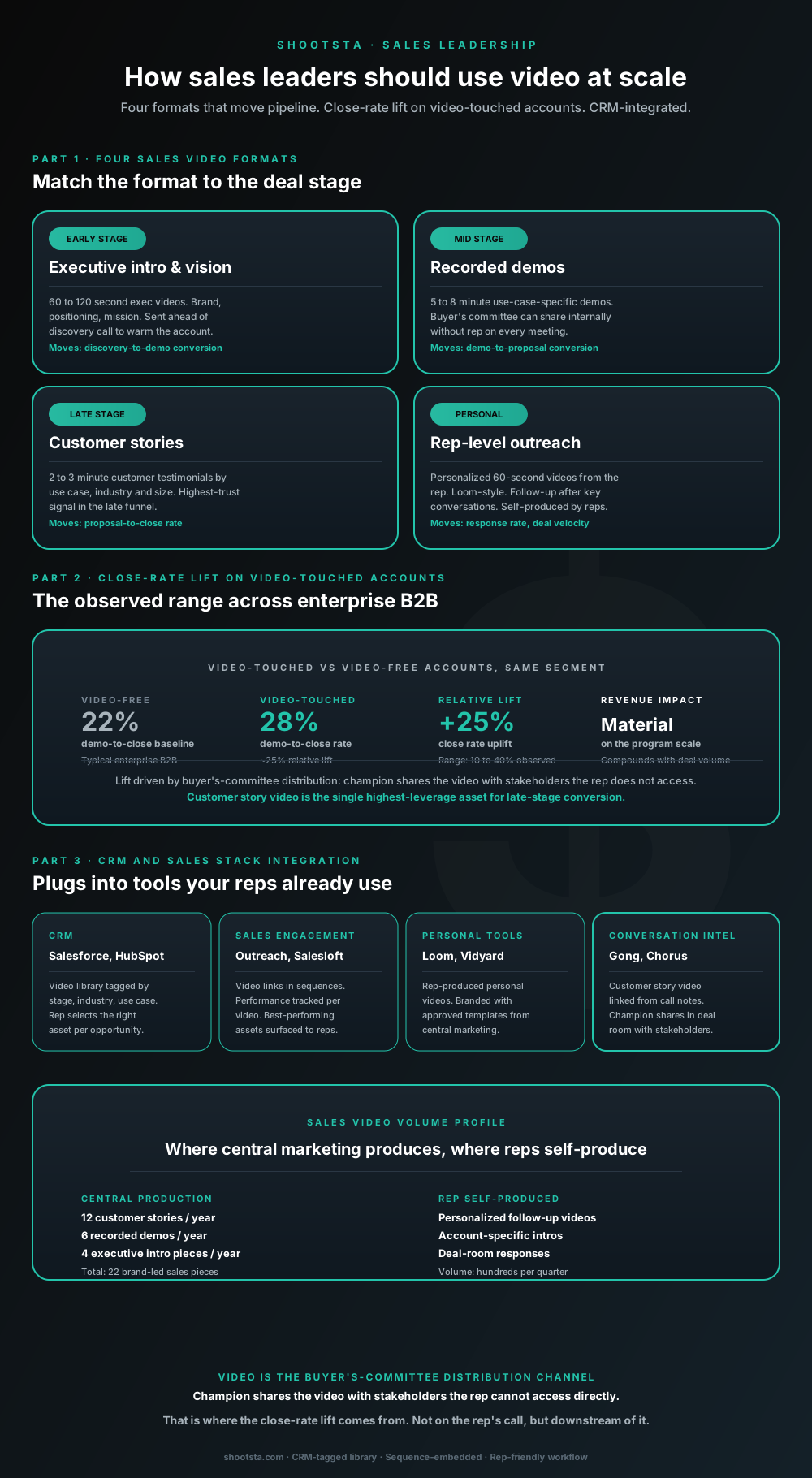
Sales leaders mostly think about video as personalized rep outreach (Loom, Vidyard) or as marketing-produced customer stories. Both are useful. The bigger opportunity is the buyer's-committee distribution layer: assets the champion shares internally with stakeholders the rep does not access directly. That is where the close-rate lift compounds.
How L&D leaders replace classroom with video
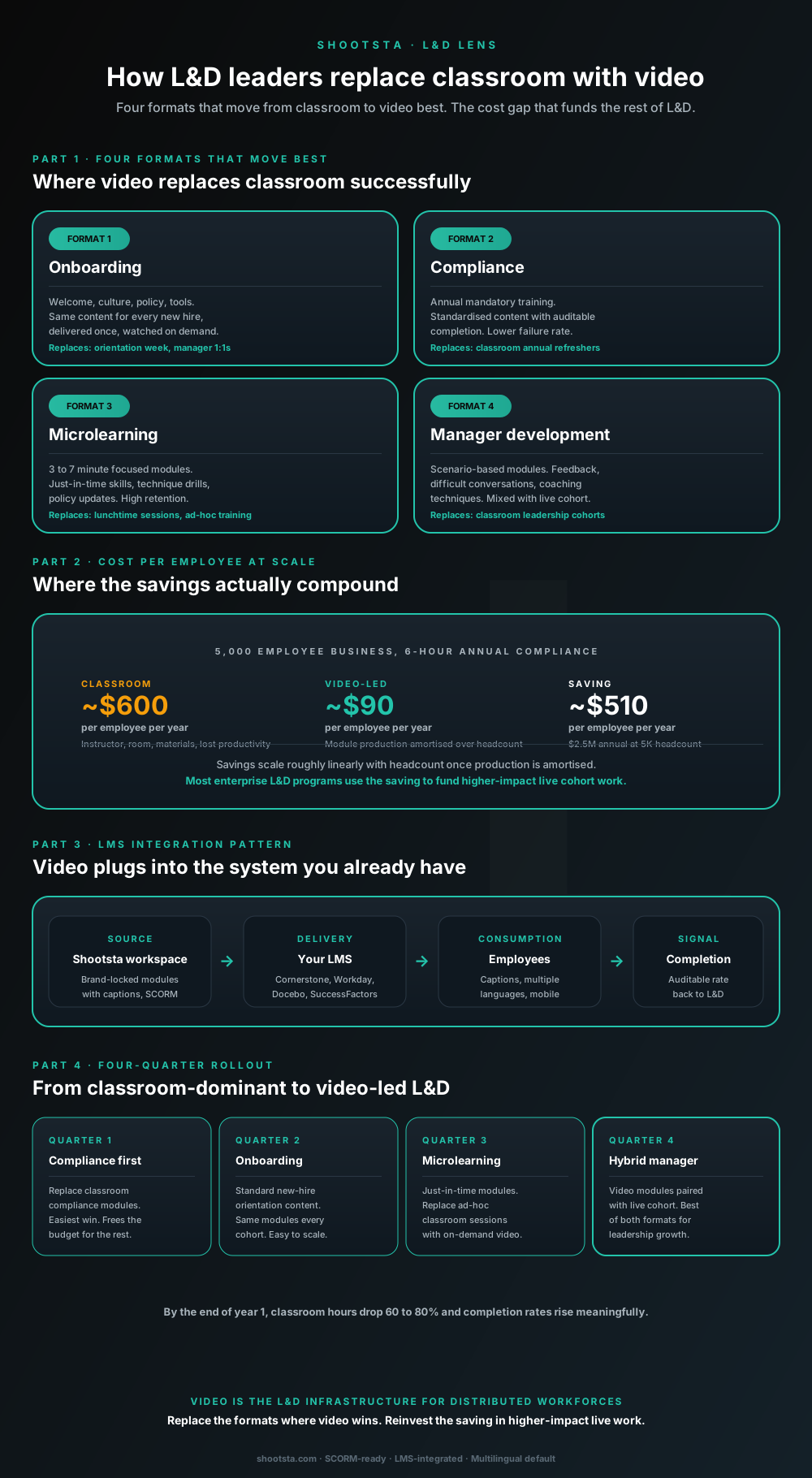
L&D leaders running classroom-heavy training programs typically have the largest single opportunity in the business to free budget through format change. Four training formats move from classroom to video cleanly; the savings fund higher-impact live work. Here is the rollout that compounds learner adoption over four quarters.
How customer success leaders should use video
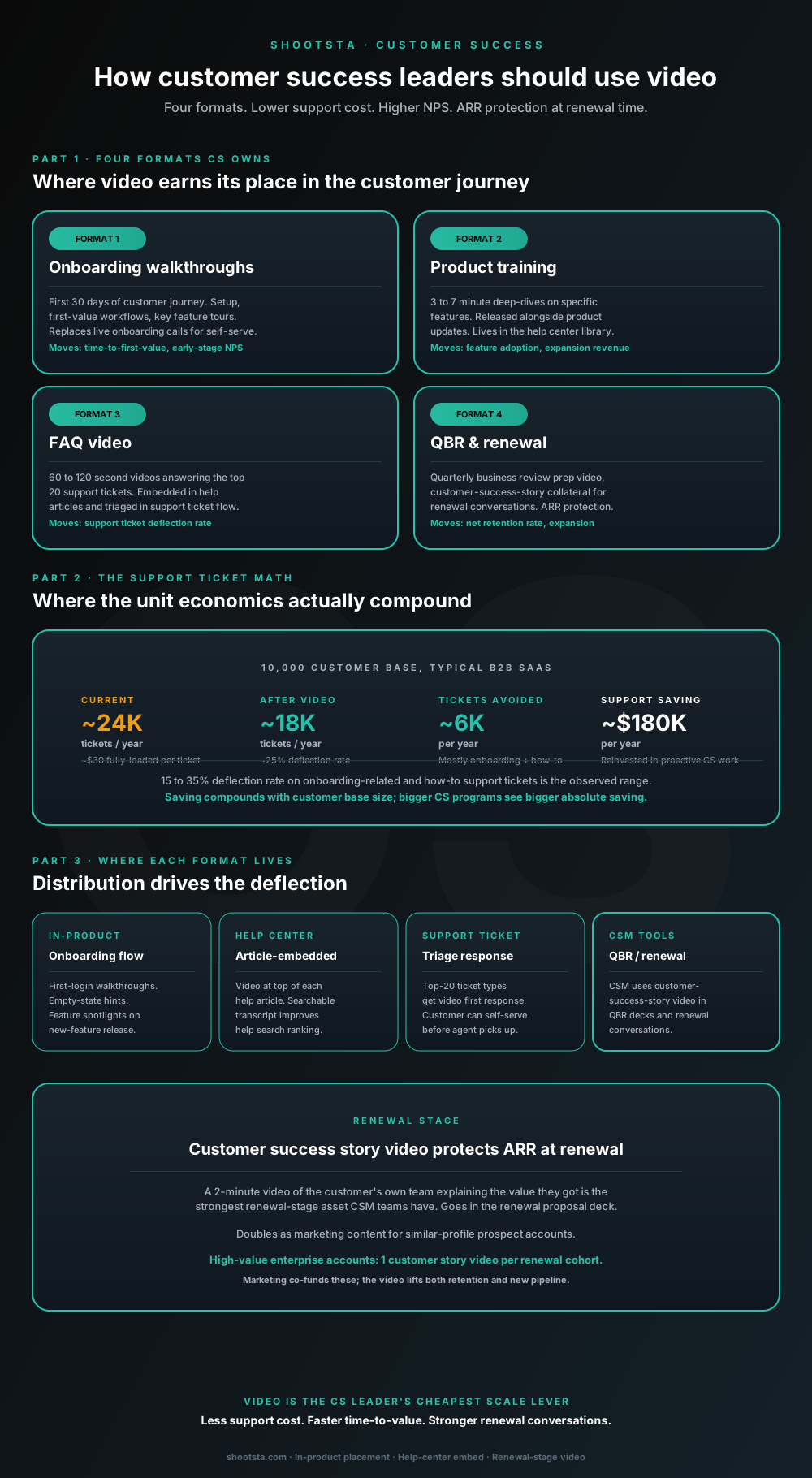
Customer success leaders are usually under-resourced for both reactive support volume and proactive retention work. Video is the cheapest lever to fix both - 15 to 35% deflection on onboarding and how-to tickets, faster time-to-value, and renewal-stage customer story video that lifts net retention. Here is the four-format model and where each piece earns its place.
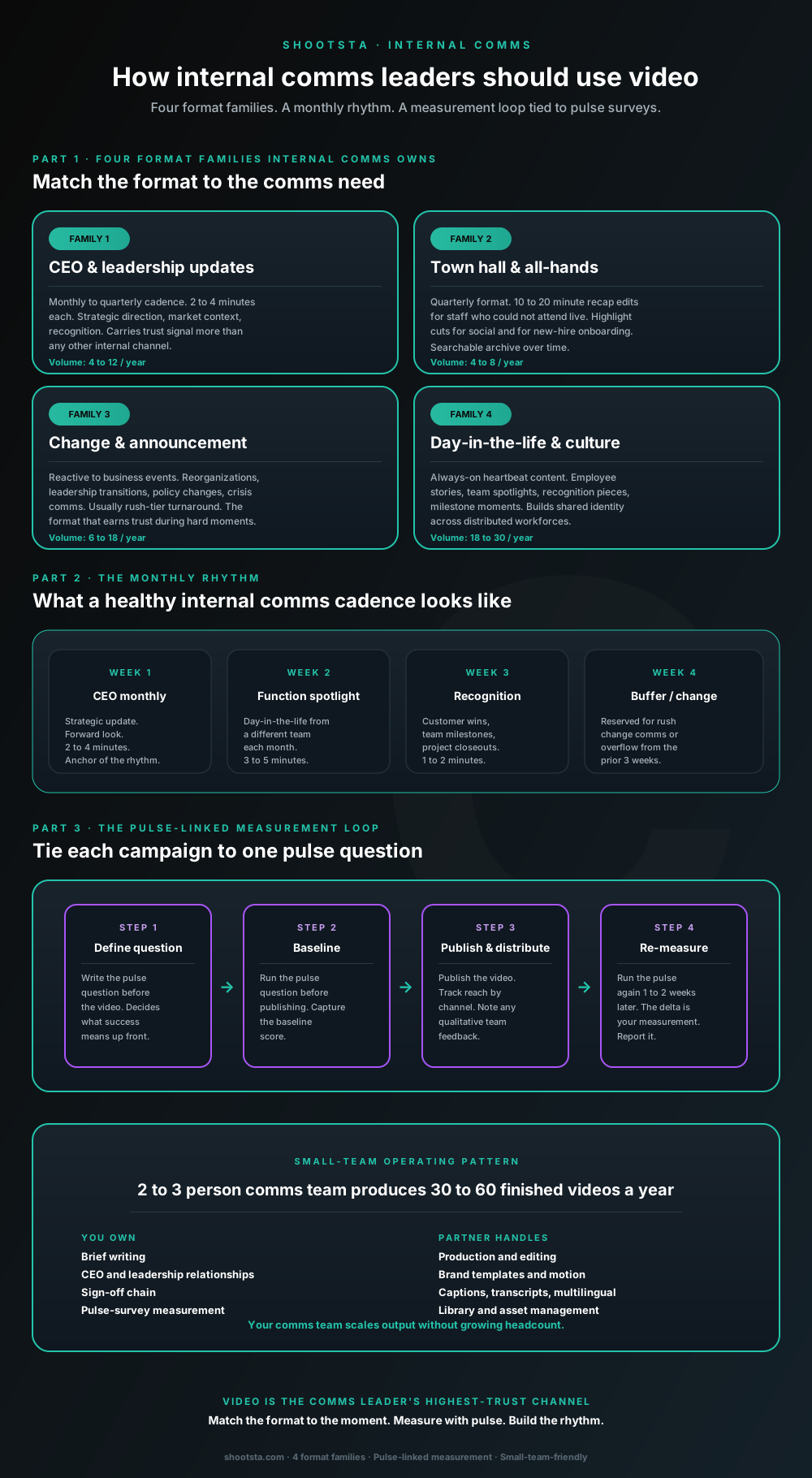
How internal comms leaders should use video
Internal comms leaders are usually under-resourced for the volume of video the business wants. The fix is not more headcount; it is structuring the program around four format families, a monthly rhythm, and a pulse-survey-linked measurement loop. Here is the operating pattern that lets a small comms team produce 30 to 60 finished videos a year.