
Video Production Cost in Tokyo (2026)
shootsta.
Video Production Cost in Tokyo (2026)
By Shootsta · Published August 28, 2026 · Updated October 2026

Video production in Tokyo costs JPY 380,000 to JPY 1,150,000 per finished video on a subscription model, and JPY 850,000 to JPY 2,600,000 for one-off project work. Here is what you are paying for, and how the three pricing models compare.
Short answer. Video production in Tokyo costs JPY 380,000 to JPY 1,150,000 per finished video on a subscription model, and JPY 850,000 to JPY 2,600,000 for one-off project work. The gap is not quality. It is that project pricing pays for briefing, brand setup and project management every single time, and a subscription pays for them once.
How much does video production cost in Tokyo?
In 2026, corporate video production in Tokyo typically costs JPY 380,000 to JPY 1,150,000 per finished video on a subscription model, and JPY 850,000 to JPY 2,600,000 for one-off project work. A high-end brand film runs JPY 3,600,000 to JPY 11,500,000.
What moves the number is shoot complexity, video length, how much motion graphics is involved, how many language versions you need, and how much planning happens before the camera is switched on. Below is the full breakdown, the three pricing models in this market, and what to compare when two quotes look different.
What are you paying for in a Tokyo video production quote?
Most enterprise quotes contain the same line items, bundled differently. These are the five real cost drivers in Tokyo.
- Crew and equipment. This covers the shoot day: a producer or director, camera, sound, lighting, sometimes a second camera. Tokyo crew rates run JPY 180,000 to JPY 450,000 per day depending on the level of the crew.
- Editing and post-production. This is where most of the time goes. A standard two to three minute video takes 1.5 to 3 days to edit. Editor day rates run JPY 100,000 to JPY 220,000.
- Motion graphics and animation. Simple lower thirds and brand templates are usually included. A fully animated explainer is a different product, at JPY 1,150,000 to JPY 3,600,000.
- Pre-production. This stage covers scripting, storyboarding, scheduling and briefing. It usually takes 1 to 3 days of producer time at JPY 130,000 to JPY 260,000 per day.
- Project management and revisions. This line is easy to leave off a quote, but you pay for it either way. One round of feedback is normally included. A third and fourth round adds JPY 210,000 to JPY 430,000 to a project.
Use the estimator below to put your own volume against both models before you read the rest.
Interactive estimator
What will your video program cost in Tokyo?
Set your annual volume, how involved a typical video is, and how many language versions you need. The estimate returns the yearly cost of buying each video as a project against buying capacity on a subscription, in JPY.
How involved is a typical video?
Pick the one most of your videos look like, not the biggest thing you make all year.
How many language versions?
Count the master. Subtitled versions cost less than full voiceover, so this is a midpoint.
Project pricing, per year
JPY 39,300,000
About JPY 1,637,500 a video, quoted one at a time.
Subscription, per year
JPY 17,436,000
About JPY 726,500 a video across the year.
You keep
JPY 21,864,000
Roughly 56% off the per-video cost.
What sits behind the Tokyo numbers
- Crew day rateProducer, camera, sound and lighting for a shoot day.JPY 180,000 to JPY 450,000
- Editor day rateA standard two to three minute video takes 1.5 to 3 days.JPY 100,000 to JPY 220,000
- Extra revision roundsWhat a third and fourth round of feedback adds across the year on project pricing. Subscriptions build the rounds into the workflow instead.JPY 2,966,400
You are at the crossover
At 24 videos a year the two models are close, and the tie-break is not price. It is whether your volume is steady or lumpy. If most of the work lands around a launch, a results week or a conference, project pricing means queueing for crew exactly when everyone else wants them. Capacity you have already bought does not queue.
See video production in TokyoBudget guides for Tokyo in 2026, not a quote. Ranges come from the same rate table the article quotes. Project pricing assumes each video is scoped and quoted on its own. Subscription pricing assumes brand templates and the approval chain are set up once and reused, which is what moves the per-video cost. Travel, talent buyouts and music licensing beyond a production library sit outside both.
The three pricing models for video production in Tokyo
Teams in Tokyo generally choose between three ways of buying. Each suits a different volume profile, and the cheapest one changes as volume grows.
1. Project-based with a video production agency
You hire an agency for a specific video. They quote, produce and deliver, and you pay for that video. Cost per video is highest, because every project resets the brand learning and the setup. A two to three minute corporate video lands at JPY 850,000 to JPY 2,600,000, and a brand film for paid media runs JPY 3,600,000 to JPY 11,500,000.
Best for one-off campaigns, hero films, and teams producing fewer than about 10 videos a year.
2. Agency retainer
You pay monthly for a block of agency time. Cost per video falls, because setup is spread across more work. Retainers usually bundle video with other creative work such as design and copy, which makes the per-video cost harder to see.
Best for marketing teams with steady moderate volume who want one supplier across several disciplines.
3. Subscription video production
You pay a monthly subscription covering briefing, a set production capacity and access to the editing team. Cost per finished video drops again, because the production infrastructure is shared and your brand rules are built into the workflow rather than re-explained. Per-video cost lands at JPY 380,000 to JPY 1,150,000 depending on complexity and volume tier.
Best for comms, marketing, HR and L&D teams producing 20 or more videos a year, particularly where volume spikes around launches, results and events.
Sample cost breakdown for a typical Tokyo corporate video
For a two-minute corporate video filmed at one location in Tokyo, with captions and one round of revisions:
- Pre-production, scripting and scheduling: JPY 153,000 to JPY 468,000
- Shoot day, crew and equipment: JPY 238,000 to JPY 728,000
- Editing: JPY 221,000 to JPY 676,000
- Motion graphics, lower thirds and brand templates: JPY 102,000 to JPY 312,000
- Captions and quality check: JPY 42,500 to JPY 130,000
- Project management and one revision round: JPY 93,500 to JPY 286,000
Total on project pricing: JPY 850,000 to JPY 2,600,000 per video.
The same video on a subscription: JPY 380,000 to JPY 1,150,000, because the templating, brand setup and project management are spread across everything else you produce that year.
Why is video production priced the way it is in Tokyo?
Tokyo is the most expensive video market in Asia and the most exacting. Crew quality is high, timekeeping is precise, and the finish expected on a corporate video is closer to what other markets reserve for brand work. Budgets that assume regional Asian pricing tend to be short by a wide margin.
Who is buying shapes the market as much as who is selling. In Tokyo the volume comes from these sectors:
- Manufacturing and industrial. Product, process and safety video with a strong emphasis on technical accuracy and internal review.
- Financial services. Investor and internal communication video, with layered approval and a conservative treatment of any forward-looking statement.
- Retail and consumer. High-volume product and campaign video tied to a fast seasonal calendar.
How does the approval process affect a Tokyo video budget?
The most underestimated cost in Japan is not production. It is consensus. Approval typically moves through several levels before anything is signed off, and each level may return comments. If your process assumes one reviewer and two rounds, plan again. This does not have to be expensive, but it does have to be planned: agree who reviews at which stage before filming, and lock the script rather than the edit, because changing a script is cheap and changing a finished edit is not.
What do Japanese language versions involve?
A language version takes more than translation. Japanese carries levels of formality, and the register used to address customers is not the register used to address staff. A translated script that gets this wrong reads as careless even when every word is correct. Have Japanese copy written or adapted by someone who knows the audience rather than translated line by line. For subtitles, line length and break points matter more than in English, because the reading pace is different.
Hidden costs that catch Tokyo teams out
These are the items that turn an approved budget into an awkward conversation. None of them are unusual. They are just rarely on the first quote.
Studio and location cost
Space in Tokyo is expensive and heavily booked. Location filming in a commercial building needs approval and often a supervisor. Budget the room and the permission separately from the crew.
Talent usage rights
Talent agreements in Japan are typically limited by term, territory and media, and they are enforced. A video still running two years after a one-year buyout is a real legal exposure for your business. Agree the usage period at the point of booking and diarise the expiry.
Revisions beyond the first round
Project pricing normally includes one revision round and bills the rest by the hour. A video that goes through three rounds of stakeholder feedback adds JPY 210,000 to JPY 430,000. Subscription models tend to handle this differently, with feedback rounds built into the workflow rather than charged as an extra.
Talent fees and travel
External talent runs JPY 120,000 to JPY 500,000 per day in Tokyo, depending on profile and usage rights, and the usage period is a separate negotiation from the day rate. Filming outside Tokyo adds JPY 400,000 to JPY 900,000 in flights, accommodation and per diems per shoot before any production cost.
How does video type change the cost in Tokyo?
Format changes the number more than length does. Rough guide for Tokyo in 2026:
- Talking-head explainer, single camera, one location, 2 minutes: JPY 450,000 to JPY 1,150,000
- Customer testimonial, filmed on location, 2 minutes: JPY 580,000 to JPY 1,300,000
- Event recap, full-day shoot, 90 seconds delivered: JPY 650,000 to JPY 1,450,000
- Animated explainer, 2 minutes, custom style, no live action: JPY 1,150,000 to JPY 3,600,000
- Internal training series, 3 to 5 episodes shot in one block: JPY 1,700,000 to JPY 5,000,000 total
- Brand film for paid media, 60 seconds, multi-location: JPY 3,600,000 to JPY 11,500,000
How does Tokyo compare with other markets?
Tokyo sits well above Singapore, Hong Kong and every Australian city on a like-for-like corporate video. Some of that is genuine cost and some is the higher finish expected as standard. Companies producing across APAC often set the format and the templates in a cheaper market, then film in Tokyo against an already approved standard, which keeps the expensive part short.
When is a subscription the wrong model in Tokyo?
Below about 10 to 12 videos a year it rarely pays back, and no per-video calculation changes that. The fee assumes you use the capacity. Produce 4 videos in a year on a plan sized for 24 and you have paid for 20 you never made. Project pricing is the right answer at that volume.
The same goes for a one-off hero film, a broadcast commercial, or anything needing a specific director. Those are agency-shaped projects. Buying them from a subscription is paying for a workflow you are not going to use.
Frequently asked questions
We have a team in Tokyo already. What would a partner add?
Usually post-production capacity and the non-Japanese versions. Local teams understand the audience and the approval chain in a way an outside partner will not. What they are rarely resourced for is producing the English, Korean or Chinese versions of everything they make, on the same deadline. Keeping the filming and the relationships local while the versioning happens elsewhere is the arrangement that scales.
What is the cheapest way to produce business video in Tokyo?
Lock the script and the template before you film. Rework is the single largest avoidable cost in this market, because the day rates that get repeated are high. Filming more than one video per crew day is the next biggest saving.
How long does a Tokyo corporate video take?
Production is fast. Approval is not. Assume the schedule is set by the review chain rather than by the edit, and agree the review stages in writing before filming.
Do we need Japanese crew for a Japanese video?
For filming in Japan, yes. Language is one reason, and location access, building etiquette and scheduling all run on local knowledge. Editing and versioning can happen anywhere, which is where most of the cost saving is available.
Is subtitling or dubbing better for Japanese versions?
Subtitles for most corporate and internal content, and they are far cheaper. Dubbing where the viewer has to follow a procedure while watching their hands rather than the screen.
Where to go next
For the wider picture beyond this market, read what video production costs in Singapore and our full video production cost breakdown. For a direct comparison, see how to choose a video partner in APAC.
If you are weighing up options in Tokyo specifically, the Tokyo video production hub covers the services, sectors and use cases we work across there. For pricing against your actual volume, tell us what you need to produce and we will come back with a costed outline.
Take this article with you
Read the latest at shootsta.com/blog/video-production-cost-tokyo
You might also like

How to Plan Video Team Capacity Around Leave
Your only editor just booked two weeks off, and you already know which projects will slip. Chad Lakin explains how to plan video team capacity so the work keeps moving when someone is away.
Corporate Video Editing Standards: Full Guide
A two-page editing standard does more for consistency than a forty-page brand book. Here is what it should cover, who owns each part, and how to enforce it with an in-house editor or an outside partner.
Quality Control in Outsourced Video Editing
When editing leaves the building, quality has to be checked by a system rather than by whoever happens to look. Here is the system: acceptance criteria, two QA gates, counted revision rounds and a quarterly audit.
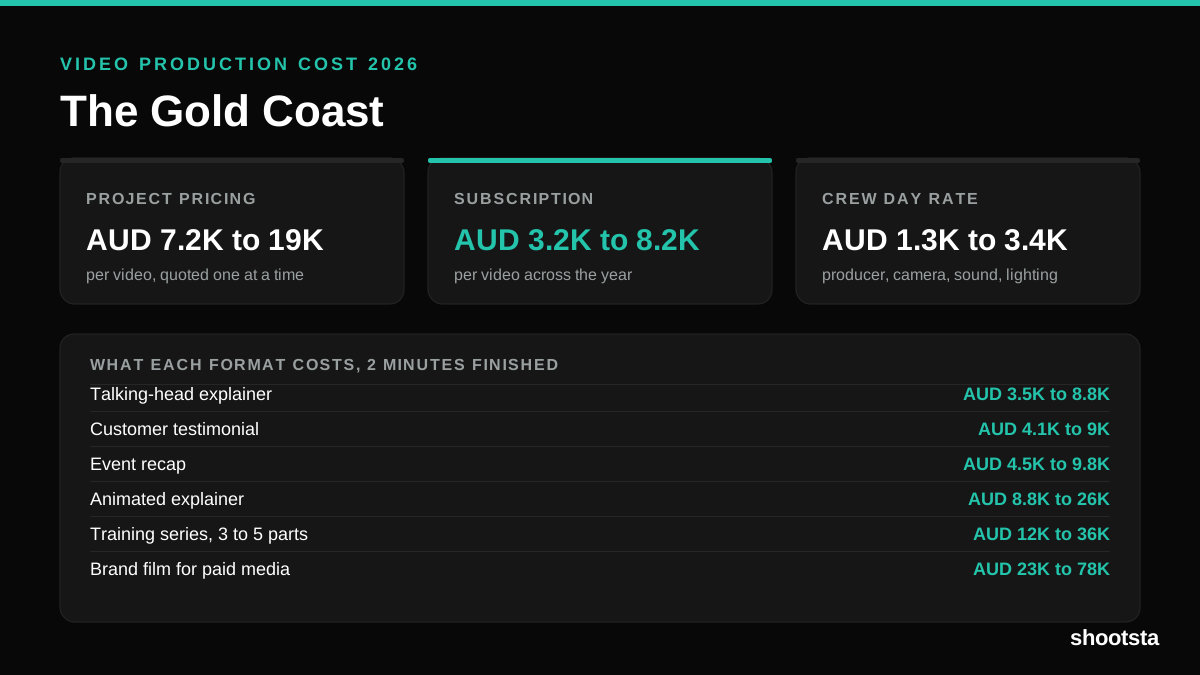
Video Production Cost on the Gold Coast 2026
Video production in the Gold Coast costs AUD 3,200 to AUD 8,200 per finished video on a subscription model, and AUD 7,200 to AUD 18,500 for one-off project work. Here is what you are paying for, and how the three pricing models compare.
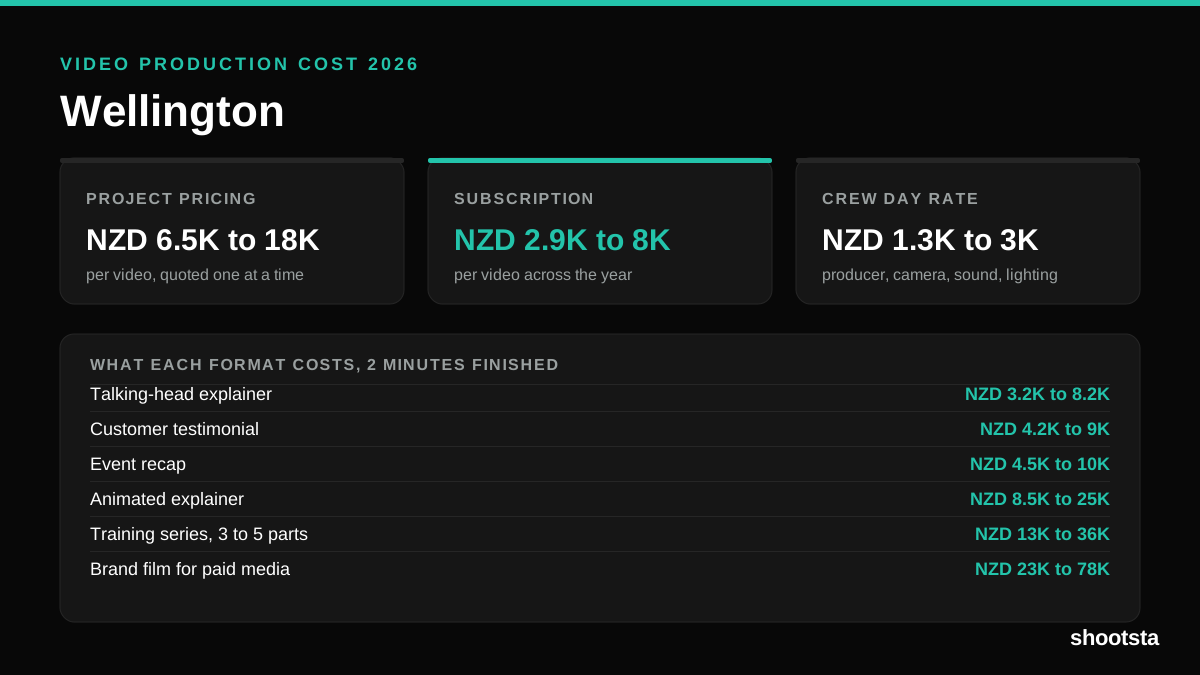
Video Production Cost in Wellington (2026)
Video production in Wellington costs NZD 2,900 to NZD 8,000 per finished video on a subscription model, and NZD 6,500 to NZD 18,000 for one-off project work. Here is what you are paying for, and how the three pricing models compare.
Video Production Cost in Berlin (2026)
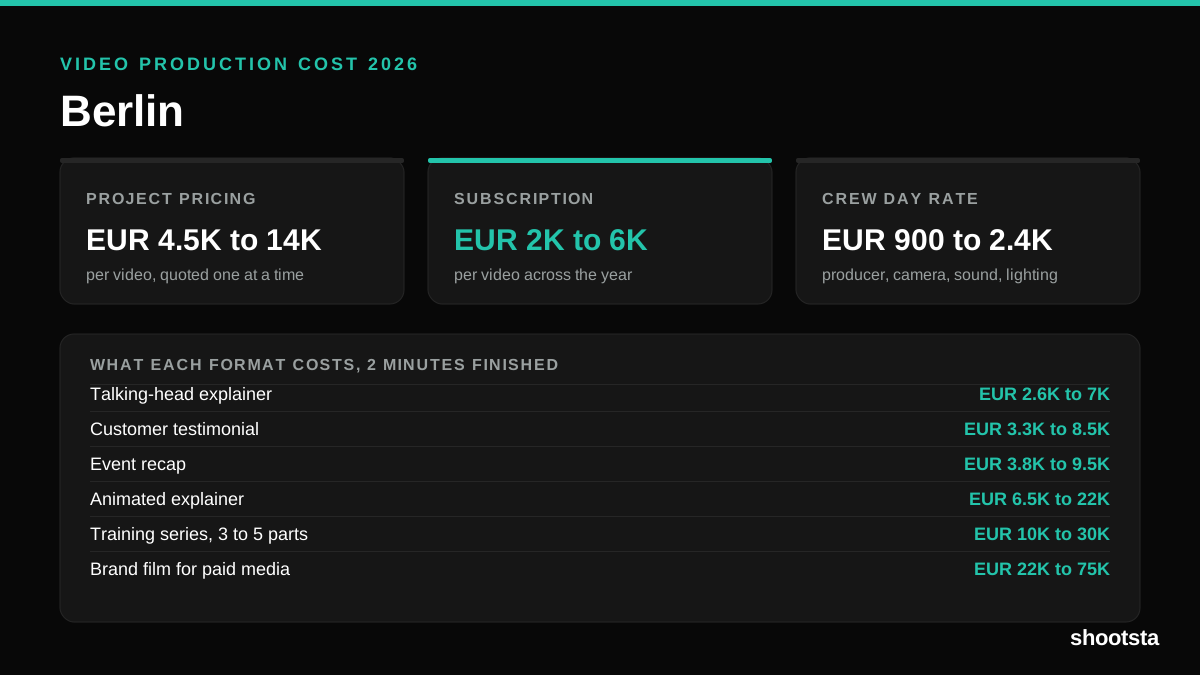
Video production in Berlin costs EUR 2,000 to EUR 6,000 per finished video on a subscription model, and EUR 4,500 to EUR 13,500 for one-off project work. Here is what you are paying for, and how the three pricing models compare.