
How DMOs Choose a Video Production Partner
shootsta.
How DMOs Choose a Video Production Partner
By Shootsta · Published June 6, 2026 · Updated October 2026
Most tourism board RFPs for video production optimize for the wrong thing. Here is the 8-criteria decision framework state tourism offices, CVBs, and DMOs should use instead in 2026.
How does a tourism board choose a video production partner?
A typical US state tourism office, CVB or DMO runs a competitive RFP, scores three responses and picks the lowest qualified bid. That process rewards the cost of one project and ignores how the work runs over a full year. A program that makes dozens of videos a year for several countries, around hurricane and event windows, needs a better way to judge partners. Below is an 8-criteria decision framework destination marketing organizations can use in 2026.
What does a tourism board's video production partner need to deliver?
For a US tourism office or DMO, the job is bigger than "produce this one anthem video." The partner has to do all of the following:
- Produce a steady flow of finished videos each year across anthem, partner enablement, event recap, stakeholder and crisis comms.
- Deliver inside 48 to 72 hours when hurricanes hit, wildfires close attractions, or the legislature wants a briefing.
- Create language versions of anthem and partner videos for each international market without restarting production each time.
- Keep visual brand consistency across years of campaigns and changing CMOs.
- Build reusable B-roll libraries the team can pull from for future campaigns.
- Meet co-op partner funding rules, with correct attribution and co-branding on every version.
- Provide stakeholder reporting assets in the format the board and legislature ask for.
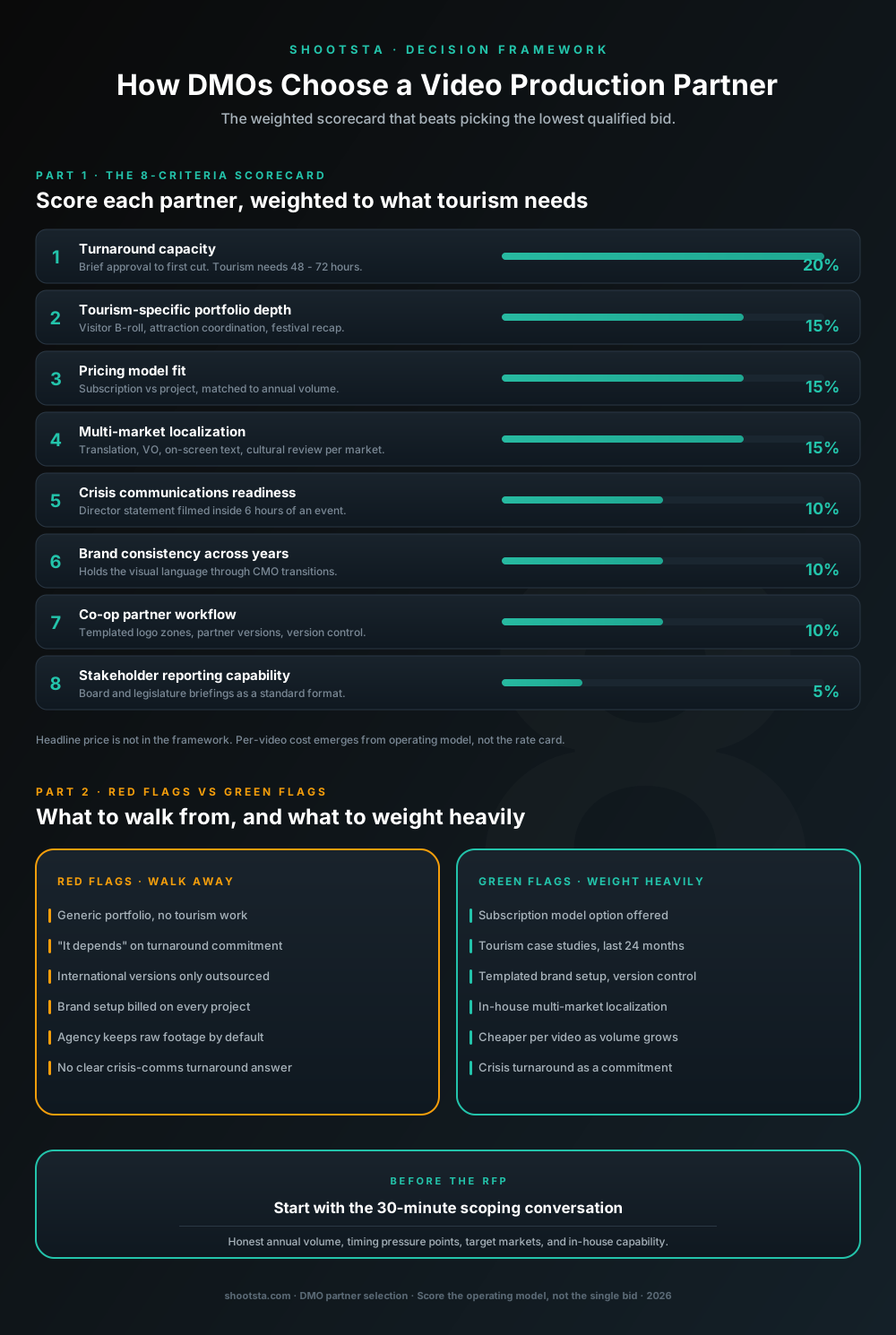
The 8-criteria framework below judges a partner on that whole job rather than on one hero video bid.
The 8-criteria framework for choosing a tourism board video production partner
1. Turnaround capacity (most important for tourism)
Tourism has more 48 to 72 hour delivery windows than almost any other vertical - hurricanes, wildfires, peak event windows, legislative briefings, IPW prep cycles. Ask what the standard turnaround is from brief approval to first cut. If the answer is more than 7 days, you are buying project work and will miss those windows. Tourism teams should expect 48 to 72 hours. The detail is in our 48-hour video workflow guide.
2. Tourism-specific portfolio depth
Tourism video is its own discipline, covering visitor experience B-roll, attraction coordination, drone permits, festival recaps and versions for international audiences. Ask for the partner's tourism-specific work from the last 24 months. A generic "we do video" pitch tells you little. Experience with a state tourism office, CVB or DMO is the filter that counts.
3. Multi-market localization capability
If the program targets international visitors, you need a partner who can make versions for each market. Ask who handles translation, VO, on-screen text and cultural review in each one. A partner with an in-house network is faster and cheaper at scale. When that work is outsourced, each project picks up extra cost and delay. The detail is in our multi-language destination videos guide.
4. Brand consistency across years and CMO transitions
Tourism boards often see their CMO and CEO change between campaigns. A partner that holds the brand's visual language through those changes is worth paying more for. Ask how they keep the brand consistent across a multi-year program, and what changes when a new CMO arrives. A good answer points to a templated brand setup that stays in place whoever is in charge.
5. Co-op partner workflow
Lodging partners, attractions, and regional businesses contribute to specific campaigns and expect co-branded deliverables in return. Ask how the partner handles co-op attribution, logo placement and version control across partner-funded videos. A partner who treats this as a workflow problem (templated logo zones, partner-by-partner versions) costs less than one who treats it as a project-by-project negotiation.
6. Stakeholder and legislative reporting capability
Stakeholder reporting video is its own format. It runs 3 to 5 minutes, carries a lot of facts, and is made for legislature, board and partner briefings. Ask for examples of this exact kind of work. A partner who has done it before saves your comms team a scramble every quarter. The format is covered in our stakeholder reporting video guide.
7. Crisis communications readiness
Ask what the turnaround is on a Director or Commissioner statement filmed within 6 hours of an event. If a tourism partner cannot answer that question, they are not set up for crisis work. The format is covered in our crisis communications video guide.
8. Pricing model fit (subscription vs project)
Your volume decides the operating model. Below 12 to 15 videos a year, project pricing usually makes more sense. Between 15 and 30, project work or a light retainer can fit. Above 30, especially with crisis and event-recap windows, subscription production tends to win on per-video cost, turnaround and brand consistency. The math is in our tourism video production cost guide.
The decision matrix for tourism boards
For a state tourism office or large DMO comparing 3 video production partners, score each on the 8 criteria from 1 to 5, weighted by priorities. A typical weighting for a 60-video-a-year state tourism office:
- Turnaround capacity: 20%
- Tourism-specific portfolio depth: 15%
- Pricing model fit: 15%
- Multi-market localization: 15%
- Crisis communications readiness: 10%
- Brand consistency across years: 10%
- Co-op partner workflow: 10%
- Stakeholder reporting capability: 5%
Headline price is left out of the framework on purpose. Your per-video cost comes from the operating model and the brand setup you choose, and the rate card only tells part of that story. Two providers with similar rate cards can end up far apart on what you spend over a year.
Red flags in tourism board video production partner evaluation
- Generic enterprise portfolio with no specific tourism work.
- "It depends" answers on turnaround commitment.
- No process for international market versions other than "we outsource it."
- No reference DMO or tourism office clients to call.
- Brand setup billed separately on every project.
- Raw footage retained by the agency by default - a problem for B-roll library building.
- Stakeholder reporting treated as a one-off project rather than a standard format.
- No clear answer on crisis-comms turnaround.
Green flags worth weighting heavily
- Subscription model option, even if you ultimately choose project work, because it indicates production discipline.
- Tourism-specific case studies from the last 24 months.
- Templated brand setup process with version control.
- In-house multi-market localization capacity.
- Reference clients you can call who have worked with the partner across 2+ CMOs or 2+ legislative cycles.
- Pricing model that gets cheaper per video as volume grows.
- Raw footage and B-roll library ownership clearly handled by the tourism board.
- Crisis comms turnaround written into the contract as a commitment, where a weaker partner would only say "we'll try."
The 30-minute conversation that should come before any RFP
The most useful evaluation step comes before the RFP goes out. Hold a 30-minute scoping conversation with each candidate partner and cover four things:
- What is your honest annual video volume across all formats?
- Where are the timing pressure points (hurricane season, peak events, IPW, legislature, board meetings)?
- Which international markets do you produce for, and how localized do those versions need to be?
- What is the in-house team capable of producing themselves vs needing partner support?
A partner who turns that conversation into a clear proposed operating model and transparent pricing is set up to deliver. A partner who responds with "send us the RFP and we will quote" is set up to win the bid and then surprise you on the invoice.
How does Shootsta fit this framework for tourism boards?
Shootsta is strongest on four of the criteria. On turnaround (1), a first cut in about 48 hours is standard and crisis comms turnaround is built in. On pricing model (8), the subscription suits programs of 30 or more videos a year. Language versions for each market (3) are handled in-house, and stakeholder reporting (6) runs as a standard format rather than a one-off. For a big-budget hero anthem film that needs a specific director, a boutique production house is usually a better fit, and we say so in scoping conversations. For the rest of your tourism board video program, the operating model is built for the job. The full picture is in our piece on the 5 video formats every US tourism board should be producing.
Frequently asked questions
What is the most important criterion when choosing a video production partner for a tourism board?
Turnaround capacity matters most. Tourism has more 48 to 72 hour delivery windows than almost any other vertical, from hurricane recovery and wildfire response to peak event recaps, legislative briefings and IPW prep. A partner who cannot deliver inside 72 hours misses every one of those windows. Operating model fit comes second.
Should a tourism board use a project agency or a subscription production partner?
Choose a subscription if you make 30 or more videos a year across several formats and crisis readiness matters. Choose project work if you make fewer than 15 a year and crisis turnaround is rarely needed. Many state tourism offices run a hybrid, with a subscription for the ongoing program and one or two boutique projects for hero anthem work.
How do co-op partner funded videos affect the choice of production partner?
Co-op funding affects the choice a great deal. Co-op partner work needs templated logo zones, a version for each partner, and version control to keep attribution clean. A partner with a set workflow for this saves you a lot of rework across a year of co-op campaigns. Ask how they handle co-branding for several partners in a single asset.
What should be in a tourism board video production RFP?
Start with the 4 questions from the 30-minute conversation above, written down. Then set out what you expect for each format, including anthem turnaround, partner enablement deliverables, the crisis turnaround commitment, stakeholder reporting cadence and B-roll library ownership terms. A generic "produce videos for our destination" RFP attracts generic bids, while a specific RFP draws partners who can show specific experience.
Can the same partner handle both anthem hero work and ongoing event recap?
Usually no, and buying both through a single procurement is a common mistake. Boutique production houses make great hero anthems, but they cost several times as much per video on event recap and crisis comms. Subscription partners deliver event recap and crisis comms at the right cost, but they are not the right fit for hero anthem direction. That is why many large state tourism offices split the work between two partners.
Where to go next
For the full picture on tourism board video programs, see our 5 video formats every US tourism board should be producing piece. For pricing context, read the tourism video production cost guide. The 48-hour video workflow guide explains how fast-turnaround programs run. If you would like a scoping conversation, get in touch and we will start with the 30-minute call before any RFP is written.
Take this article with you
Read the latest at shootsta.com/blog/how-dmos-choose-video-production-partner
You might also like

Shootsta at Day 1 of B2B Marketing Leaders Forum
Shootsta is at B2B Marketing Leaders Forum Asia in Singapore on 14 and 15 October 2026. Watch our day 1 video, edited overnight and ready before the first coffee break on day 2.
Commercial Videography: Cost and Scope
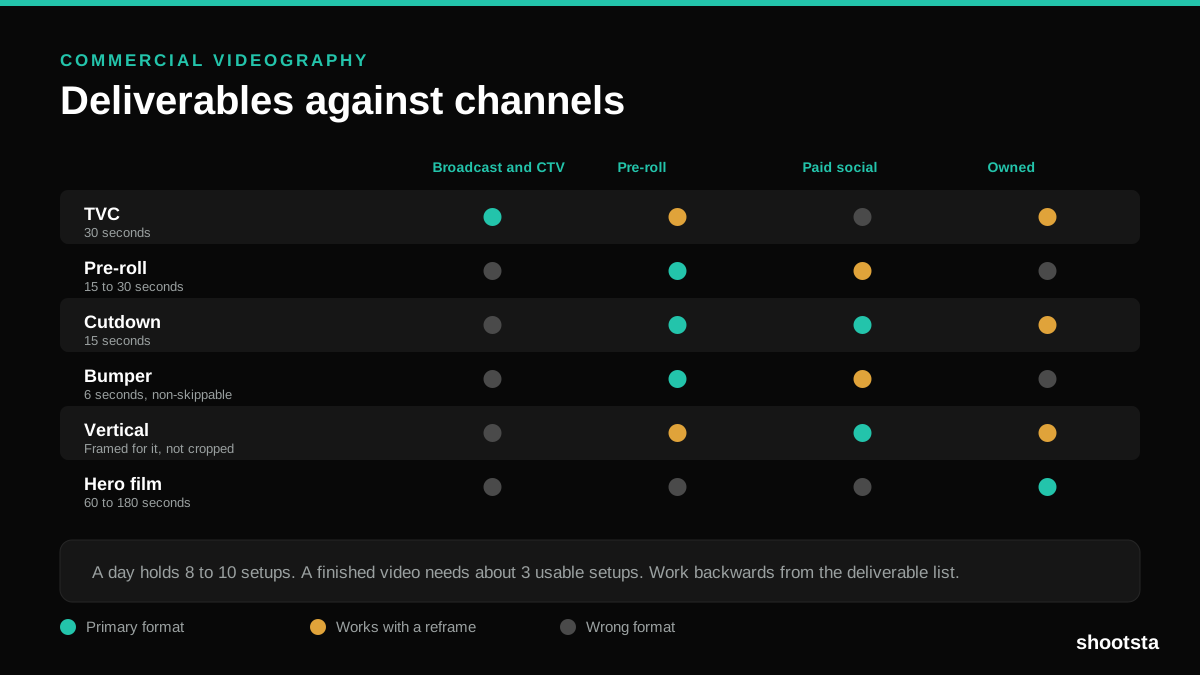
Commercial videography is priced by the day and judged by the deliverable. Most projects go wrong because those two numbers were never reconciled.
12 Branded Content Examples That Worked
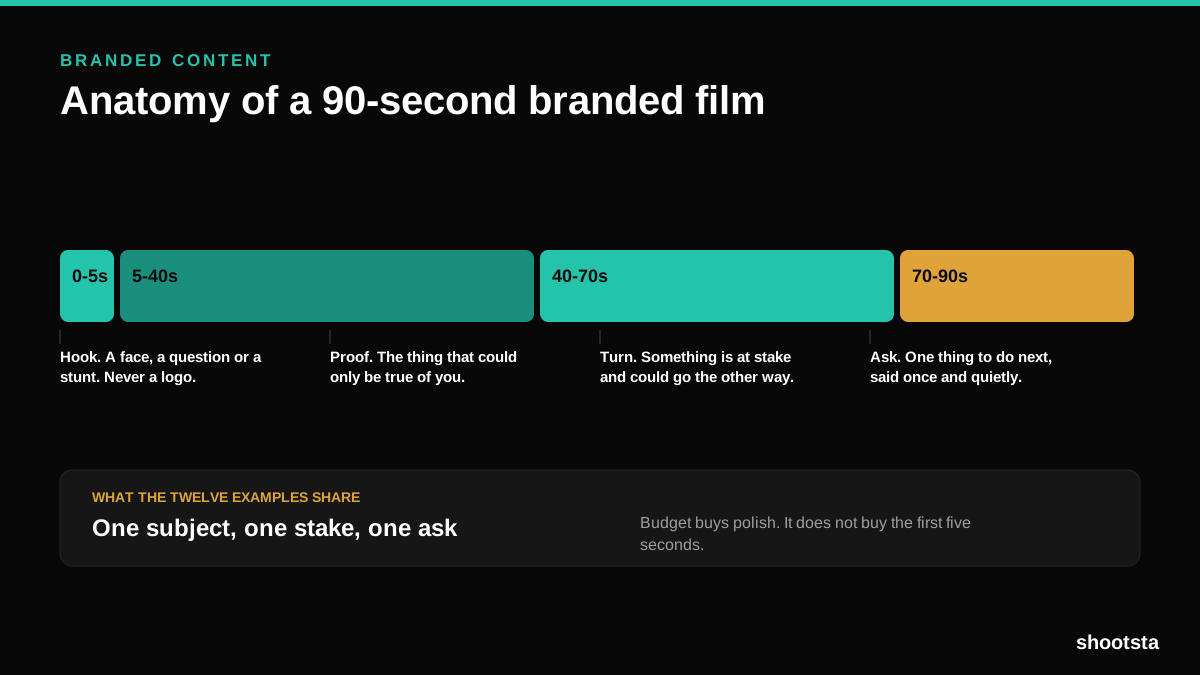
Twelve pieces of branded content that people chose to watch, what each one got right, and the structure underneath all of them.
Promotional Video Production: Cost and Time
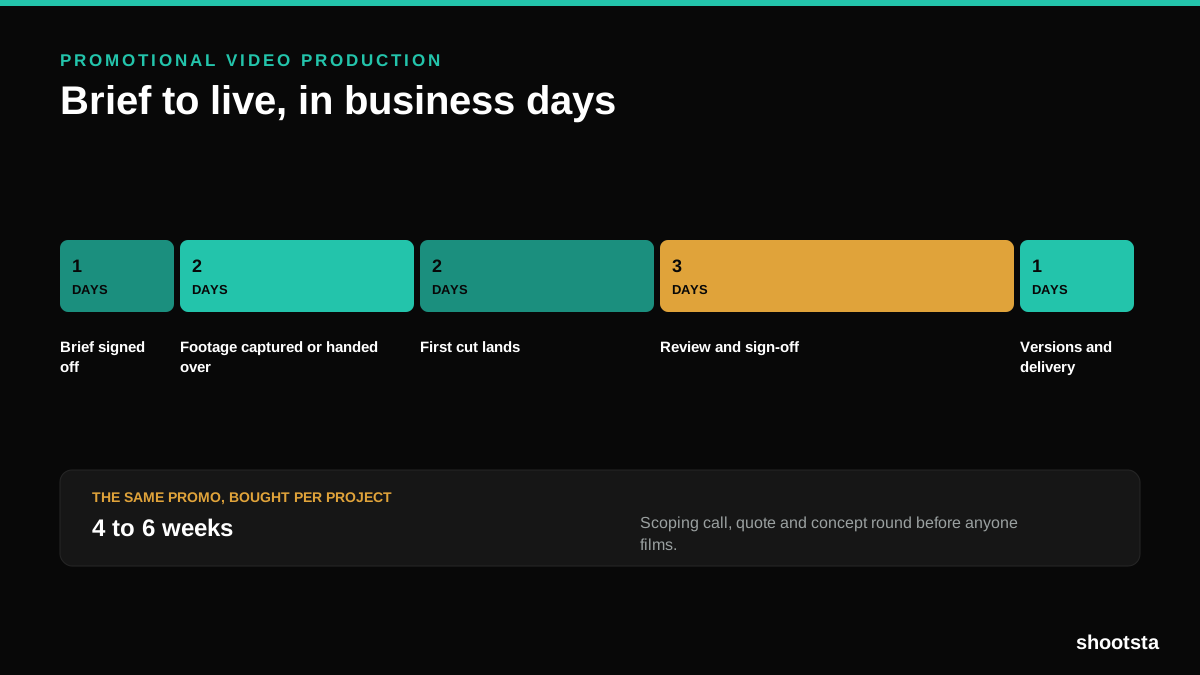
Most promotional video production schedules are not slow because of the edit. They are slow because of the approval chain. Here is where the days go.
Video Marketing Agency or Subscription?
A video marketing agency prices per project and works in weeks. A subscription prices the year and works in days. Which one fits depends on how often you publish, not on which is better.

B2B Video Production: Costs and Buying Models
There are five ways to buy B2B video production. Each one works well up to a point and then breaks, usually at a volume nobody planned for. Here is what each costs and where the ceiling sits.