
shootsta.
LinkedIn Video Strategy in 2026: The Ultimate B2B Guide
By Mark Ashworth · Published March 10, 2026 · Updated October 2026

The Ultimate Guide to LinkedIn Video Strategy in 2026
Quick Answer: A winning LinkedIn video strategy in 2026 combines emotional storytelling, employee-generated content, smart event repurposing, and funnel-stage measurement. The brands that post often, even on a modest budget, are the ones capturing the most pipeline on the platform.
The reason why we're hosting this webinar is that, at shoots that we are really passionate about video content.
So we've been for the past decade helping businesses all over the world create video content at scale all the way from high end video campaigns all the way to UGC.
And in twenty twenty six, it is no different and video is still shaping up to be the best way of communicating. So if you're looking for a video partner and need help creating video content of any kind, we are here to help.
Without further ado, it is my great pleasure to introduce our guest today, Stephanie. Stephanie joins us with over fifteen years of experience in media and advertising working across global brands including Workday, HP, Google, and Gucci.
In her current role, she partners with LinkedIn's largest global strategic clients, bringing their business objectives to life through LinkedIn marketing solutions.
She's here to share what works for B2B brands on LinkedIn, particularly across video and thought leadership, and how marketers are showing up more effectively on the platform. Please, give it up for the wonderful Stephanie. Good morning. Morning. Thank you for having me.
Our absolute pleasure. I will leave the stage to you. Alrighty. So before we get started, look, I'd love to share a fun fact with you guys. LinkedIn live is actually up by thirty four percent year over year.
So while we've had a lot of people subscribe and show interest, we get it. Life gets busy. So the great news is this is recorded. So all of this information will be shared for you to review afterwards. So let's jump right in.
Let's talk about LinkedIn and the landscape and what that looks like. So LinkedIn has grown massively over the years, and we're at one point three billion members today.
We have over sixty nine million companies, fifteen million jobs on the platform, over forty one thousand skills on the platform. Fun fact, one hundred and forty five hours of content are consumed every minute on the platform.
So a lot of that is focused on video, which we'll discuss a lot today. And then in terms of schools, we have one hundred and forty thousand and there is over nineteen billion posts.
So really big numbers and growth over the globe as LinkedIn has evolved as a platform. Now as we're speaking, these are continuously growing so updates essentially grow every single minute by the bulk. So we're here to talk about video.
What does that look like today? Look, it's moving fast. And so we'll unpack a few key elements. But the numbers specifically show here, there are one hundred and fifty eight billion views on LinkedIn annually and climbing.
So that's up by thirty six percent year over year in video viewership. Now some of our markets, for example, India are actually up by ninety five percent on video views. Markets like Australia are up by forty seven percent for video views.
So each market has its own individual nuances. But all of the motions show that movement is definitely the space where we're seeing a lot of engagement and actually helping to drive business outcomes.
Whether you are a B2B, a B2C brand, whether you're an enterprise brand or a small brand, it doesn't really matter.
So let's talk through what that looks like. So currently today, video posts are shared more than twenty times than any other content.
And a lot of that we'll talk through today, but a lot of that is tied to the emotions and the learning and being able to digest that content on the go.
So perhaps people are on their commute this morning, they might be listening to the LinkedIn Live, have their headphones on, or they are, you know, just on the go and they're reading the captions as well.
So all of this is happening in a few different motions across the platform. And what we're seeing is LinkedIn is growing one point six point times faster when it comes to video than any of our other formats.
So it's quite a massive swing in the growth that we're continuing to see. Now, we get started, I want to lay a foundation for you all because there is organic and there is paid.
And so I want to talk through what these formats look like and how you can bring them to life as I give you the examples for anyone that might not be familiar with all of the formats that we have when it comes to video.
Now the first is in feed video. I'm assuming ninety nine percent of you all know what this is when you're scrolling on the feed, whether it's organic or it's paid, it is a feed that appears in a video that appears in your feed.
Now the second, which we've seen a lot of activity in is thought leadership. So that could be your employees, that could be your leadership team, or even what we're seeing more growth of is in the creator space.
So again, this is something that can be done organically or paid.
Now a couple other buckets that will fall into is something like BrandLink, which is a paid only program that we have working with high end editorial companies to bring in more of that high impact video.
And then lastly, LinkedIn Live, which I'm very passionate about. We see a ton of growth in this space. And there's a great way for you as B2B marketers and comms leaders, employer branding to take this and also package this up pre post enduring.
So I'll touch a little bit on that for today's topic. So just laying a baseline of what these different formats are as we work across the conversations today. So let's talk about the paradigm shift in B2B marketing.
Global video ad spend has doubled over twice the amount in the last five years, and it's continuing to climb. And when we think about that on LinkedIn, we're seeing the exact same thing happening in parallel.
So we have doubled in video campaigns over the past five years as we continue to see this massive growth.
Now the challenge here is while fifty five percent of marketers say short form video drives the highest ROI, which is actually surprising, but hear me out later. Forty percent of marketers struggle to create an effective video strategy.
So that's where your planning, your production, all of that work that goes in upfront, you know, partners like Shootsta can help you to get there in a better scenario to ultimately drive more impactful video to influence those users and your buying journey.
So quickly just touching on what makes video so effective, it is the memory factor. So attention ultimately drives the most attention on LinkedIn and engagement video gets one point four more engagement on LinkedIn.
So things to think about a couple stats that are helpful to know. And ultimately retention, it comes in at ninety five percent. And a lot of that is because video can show emotion.
Even when you think about when you're watching video, you have it on mute, you're still able to engage, catch someone's body language or the storytelling that's going on.
So that's why often video is so compelling and allows us to warm up that buying group that you are getting in front of, or perhaps you're an employer branding, and you're warming that audience for that message.
So the biggest thing to think about when you think about video is often emotional storytelling. And this is something that Shootsta really does a great job at mapping out with their partners.
What this looks like is taking something like your main character and breaking that down and thinking about a relatable goal. So what's that relatable goal? For example, here, one of our clients SAP is breaking this down.
Now, I'll share these video examples with you, key pieces as a follow-up, but I'll walk you through the conversations today just keeping in mind time and streaming capabilities as we work through today.
So the second piece that we think about is moving into that relatable goal. And the third is thinking about tension, risks, and jeopardy.
Like how can you create that kind of sense of tension, that friction to get your users really more engaged into your video?
And then from there, you walk into transformation, sensory detail, having them feel that environment, and then looking through engagement, which is emotion.
So we'll talk through these pieces and unpack them today, but this is a really good way to break down video when you have the time to properly plan ahead.
Now, of course, sometimes in LinkedIn, we're going to be doing something really quick and easy like a talking head video, And you might not need to do as much planning.
So video can be really six to twelve months out of planning and then really easy in terms of pop your phone up and just go ahead and shoot depending on how comfortable you feel. So that's our baseline before we jump into some examples.
But I think what would be helpful is how to show you how to win with video. And I'll give you some tips of things that you shouldn't do as a B2B marketer along the way.
Look, this is a common topic of like what should or should we not do and the great part about today is we'll actually have a Q & A session at the end.
So if you have questions, feel free to ask and we'll go through those as well. So the biggest thing you can do is think about your strategy and think about how that ties together with your business objectives.
And what does that mean in terms of emotions and the ultimate goals that you're looking to do. But really what we're looking to do is not to serve ads, but to tell stories because people don't want to be spoken at, right?
They don't want to say buy this, buy this. They need to be warmed up to whether it's your product or the calm strategy that you have behind your objectives. So I want to walk you through a few examples here.
But the emotive effect is essentially something that is designed to create an emotional response and that allows that trigger in the brain to have a connection.
And when you do these in small repeatable formats, it works well with brand recognition and studies show the brand lift that associates with it as well. So think about pairing these pieces together with your objectives to tell that story over time.
So we actually find, of course, that shorter videos work better. And I don't think that's anything new. Attention spans have become much shorter these days.
But think about how you can get in front of these users, your audience, by taking your video and perhaps filming it and a long day with your leaders, maybe with your some of your employees, and you take this video and then you cut it down into multiple formats.
Let's say you have thirty minutes of video and now you have created some organic content and now you've created paid content. And you can now disperse this across LinkedIn, but each one's going to have a little bit different of a message.
So that allows you to do these short snippets of storytelling. And by focusing on elements such as emotion, you can put emotion in the motion emotion, emotion in the motion, then you can actually help to drive leads at the end of the day.
So we actually see a twenty percent in leads when we act when we are pairing video with leads. Now I'll talk about how you can do this because there's a lot of measurements on LinkedIn that people don't actually know even exist.
And I think this is one of the biggest pieces that people often miss out on is taking your business connecting like your CRM to LinkedIn's CAPI as an example.
Now again, I'm not going to go deep on to measurement, but there is a ton of capabilities that allow you to actually show the value in your video.
So when your leadership team comes to you and says, okay, we're doing video, what's happening with it? I just need to drive revenue. Now you're able to unpack that over time.
So in this use case here, Salesforce is really talking about a father and daughter relationship. They're pulling in the emotions. And this is really where they're thinking about how can we stand out from crowd today and not just have a typical B2B ad.
So think about there's different use cases for when and where, but this really does resonate on LinkedIn when you look at different types of content and how we see the best engagement and influence on leads overall.
Another emotive effect that I like to think about here is cinematic storytelling. And again, this is going to be something that you do with a partner. This is or maybe it's something you do in house.
But this isn't something that me myself as you know, employee at LinkedIn is going to do this massive cinematic storytelling. This is going to be something big and flashy.
For example, this is one of the partners that leads Formula One, a lot of beautiful cinematic content.
And when we see this storytelling comes in, so that picture that I talked through earlier and touching on all this points to evoke emotion and activating the brain, we actually see a fourteen percent lift and dwell time.
So those users are actually watching your video longer. They're warming up. They're thinking about you know what they want to do with your brand. Now moving into this next section, what's helpful is the power of LinkedIn and the community.
And I cannot stress that enough. Even before I worked at LinkedIn, I see so much value in LinkedIn and the community. So think about this today from your perspective, from your colleagues' perspective, from your leaders' perspective. Don't disconnect even the smallest of roles.
Interns, for example, you can highlight their capabilities and what they've done to be proud of at the company. Now again, going back to your business objectives, think about what you want to do.
But overall, across the whole network, there's some really great storytelling when it comes to video. So a big tip is don't underestimate your network when it comes to LinkedIn. So when we think about the network effect, who are you connected to?
Who am I connected to? Who's my boss connected to? Who's connected to our company page? Right? There's so many members. So again, there's over one point three billion members across LinkedIn and growing.
Also, think about it this way is think about it from a user behavior. As people commute, they're actively on their phone, they're watching video, you want to capture those moments. And as people comment, you're seeing their comments, you're seeing the connections.
All these signals are ultimately mapping people together, and video helps bring that together. So when I think about this example here, so this is PwC for Australia. This is a mom. She's basically talking about how work life balance is really great at PwC.
And what that does is that actually helps to build on brand you know brand building and employer employee generated content even. Because we see that fifty percent of job seekers actually evaluate a company before applying.
So again, it's taking that emotion and just making it a little bit softer and relatable to the market to warm them up based off of your messaging.
Now, I've talked a little bit about employer branding, but really what I'm going to focus now is a bit more on the marketing and sales side.
So thinking with your marketing hat on, LinkedIn essentially allows us allows to be a network that is a marketing asset.
And I think this is a huge mistake that brands often miss today. Think about the power of your network when it comes to your employees.
Think about who you're trying to reach out to in your target audience. Often your employees are connected to the very same people.
There is so much that you can do with that.
So with that being said, across your network, one of the best stats that I think is really helpful is you can actually enhance your leads by two point four times when employees target accounts that follow your company.
So think about getting in front of these accounts that are already interested. So as an example today on, you know, Shootsta, there's people that are already following almost thirteen thousand people that follow Shootsta. Actively engage in the content.
They're interested in the content because the content that LinkedIn puts out or that Shootsta puts out on their LinkedIn is informative and educational, and they're highlighting case studies. So they already have that natural engagement, which is really great. So that's one bucket.
So think about who follows your company page. Now the second bucket is more leads come from senior members that target accounts that are connected to your employees. So this is two point two times higher.
So think about these senior members of these target accounts. So let's say for example, I believe Singtel was on the call. Singtel used to be a client of mine.
Look, if Singtel is a senior client and we're trying to get in front of them, video is a great way to do that and tell that story.
So again, putting yourself in the seat of who's in your audience when it comes to following your page, but also thinking about who is everyone connected to as an employee essentially is a winning combination when you bring those together.
So diving into a huge movement, which is the thought leadership piece. This is the c suite. And just some quick stats for you.
Ninety eight percent of Fortune five hundred CEOs are on LinkedIn, and fifty seven percent of CEOs are posting more than they ever have been on LinkedIn over the last past two years. I'm sure you can see that when you're actively scrolling.
A lot more leaders are starting to get KPIs about engaging and showing the human side of their leadership style. Because people ultimately trust people, not logos, right? So thought leadership is a really good way to unpack that.
And with that being said, video is an essential way for you to soften your audience and really show your C levels and the case of who they are and what they're interested in.
Now this doesn't need to be something that's like a hard pitch. You can do some softening pieces such as like what's working in AI. Here's some common challenges we're seeing.
And think of this as thought leadership does not need to be just C level executives.
A really great idea is to bring in people from let's say comms or even your product marketing team and having them talk specifically about the product from an educational standpoint. So these are really good options when you think about thought leadership.
So moving a little bit further into the thought leadership piece, I would love to highlight this B2B play because this is huge when it comes to creators. So I'm sure you're seeing this as well.
There's a lot more movement in the b to b space when it comes to creators. Now eighty seven percent of B2B buyers actually prefer credible content from trusted industry influences. Influencers, so here on the right hand side you have Caitlin.
She's known as a cybersecurity girl. She has a massive following across many different social platforms. She works with clients such as Palo Alto Cybersecurity Networks, which is the largest global cybersecurity company in the world.
But the point being is what she's doing is using video to unlock and storytell. So again, this doesn't have to be something that's massively overproduced.
But what you could do as an example, shoot in one day with multiple creators, and then you cut that down, and you have multiple stories that you can then push video out organically and paid.
So think of this as another way to reach your audience and using these credible creators along the way. Now I'm not saying you go out and you just grab any creator. It needs to align with your brand and the vision.
So think about who's right for your brand. But if you do this from a C level executive and then you pair this with creators, you now have two different audiences as well because creators are going to have their own audiences following them too.
So a really great example, some of our best in class work comes from ServiceNow. I love the branding that they do.
This is an example if you I'll walk you through the left to the right, but essentially this is a local leader who has done a ton of research findings on her findings essentially to highlight in a video series.
And so this is professionally filmed where she's speaking about topics that are relevant to ServiceNow and that gets continuously fed so organically and then cut down into snippets as well whether that's paid organic.
So think about video, the best way to get the most out of it is to plan ahead and then also take that video and do multiple cut downs so that you can get a variety of touch points with your buying group at the end of the day.
Now the second piece that they had unpacked at ServiceNow was the in house interviews, which was really cool. So again, something that was professionally produced, you need to plan ahead and account for this.
But thinking about how you can pair an individual and then now having it a slightly more corporate lens when it comes to video with these in house interviews. Now the third piece is events campaigns.
So just like we're doing now, you can promote your LinkedIn live events through paid and organic, and that can be a global or a local lens that you can approach this from.
And then of course, what I absolutely love is the branding, the storytelling that is really activated from a high impact perspective when it comes to ServiceNow.
They have amazing video creative, so I'll be sure to share one of those with you as a follow-up from the Shootsta crew. Now I can't talk today without talking about events, so I really love this example of HPE. This is very simple.
So I'll give you a massive example. Salesforce, every single year, they absolutely crush it when it comes to Dreamforce. They do a ton of organic and paid pre during post. So it's massive. It's in person, and then it's online.
They really just go about it best in class. So that's one of my favorite examples in the industry. But this one's a little bit more scalable in terms of a little bit closer to if you're just starting to get into event space.
HPE essentially took their audience and they looked at it from an organic perspective and said, okay, we're gonna go ahead and promote some videos on thought leadership before and after their events. So they're gonna lead up with, hey, this is Steph.
I'm coming in live from our events. So happy to be here. And then they're gonna go ahead and do like a post recap from the thought leaderships. Hey, Steph here. We had a great day at x y z events.
You know, it's storytelling and it's personalizing that event rather than having like an image just pitched at you saying like x y z event attend, right? It allows us just to have a little bit more of a warmer perspective.
And when we see you actually get higher engagement and higher attendee as a result of actually using thought leadership to promote organically and also paid. So again, pairing it both ways will ultimately give you that nice winning combination.
Now another piece that we're doing a lot of on LinkedIn, of course, is the events ads. So that's a separate piece in itself, and then that can be hosted from your LinkedIn lives page.
And then there's a ton of measurement that you can unpack after you do an events campaign. So again, think about how you use that LinkedIn Live video.
You're shooting, you're paying so much money for your LinkedIn events and for your in person events, especially in person. It's super costly when it comes to actually renting the venue, inviting everyone, catering.
And then when you hire an awesome production team, such as Shootsta, for example, they're helping you to bring that content all together.
So take that content that's being filmed that day and just remember to use it because I will tell you one of the biggest misses is that people film events, and it's almost like they film it and forget it.
And that is such a huge waste because that is a massive investment, and any of that footage can then be repurposed for follow-up campaigns, remarketing campaigns, your organic. Again, getting in front of those people.
You can even do message campaigns, your email marketing campaigns. All these snippets are highly valuable and how you package them up. So I will say that's one of the biggest misses that I see.
Brands that do all of that and combine it, the impact is amazing. And you can see the measurement when it comes looking across business objectives and advanced measurements. So just know that does exist. It's awesome when it comes together.
Now, wrapping this up for a pretty little bow as we move into the last few portions of these slides, the biggest thing I can say and you'll hear this is, look, you need to be consistent. So ninety two percent say consistent creative matters.
So think about what's the visual image that you're trying to push. So when you looked at ServiceNow, even though there was like a localized leader, there's a beautiful visual of you can look at that and tell it's ServiceNow.
It's consistent from localized thought leadership to branding as well. So the big thing that happens is only twelve percent of people or brands actually deliver on consistent creative. So think about that from an organic at a paid perspective.
Look, I know marketing budgets in particular are often getting cut these days with more pressures of AI and CMOs constantly turning over every few years.
But if you can work out a long term plan to incorporate video, cut that down, get as much as you can from repurposing on paid and organic.
Then echo that with your brand consistency. You're going to see an impact from it.
Now here's a great example. I absolutely love Canva. They have one amazing products, but in terms of you know if you're trying to you know edit ads very quickly things like that.
But what I love about them is their brand presence and who they are.
If you look at anything they are doing when it comes to organic and it comes to speaking engagements and just them as a brand DNA, it is really consistent and on point.
So things like organic video teasers, their company page banner, the way over to carousels, video ads, whether that's paid or not, and their events, it's just really packaged up nicely.
And it also moves in a motion of what depending on what the seasonality or that focus could be for them.
But it's always relevant to, you know, that's Canva, and you know they're going to be informing you with educational helpful content while keeping it fun. So think about how you can lean into your brand and keep that consistent touch point.
So lastly, I'll leave you with this piece of what's important is to build a learning agenda and define success. So let's say you're in comms, what does success look like for you?
Is it a certain amount of thought leaders actively pushing comms on the platform for LinkedIn? Is it x amount of events? Is it engagement rates?
We can even do things like for example, showing the long term and the short term lift of thought leadership videos when those thought leadership videos run-in parallel with your other LinkedIn content. So think about what works for you and then map that out.
So what I will say, most of the businesses here today all want to do is ultimately drive more revenue. So again, how can you drive more revenue by looking at these objectives, but also think about the creative itself.
So like I said, taking that video and doing multiple cut downs will help you because you can do things like AB testing, which I'll touch on in just a minute.
But don't assume, and this is a big miss, is that don't assume that videos do not drive outcomes because they absolutely do. But you need to think of it as a video that you run is not going to immediately just generate revenue magically.
That's just not the way the world works today. You need to warm up audience. It's kind of like dating. You need to talk to the person, get to know them a little bit. They wanna hear about you.
So bring your thought leaders in, bring your employees in, take your video, and you do that storytelling, get the event going, get the excitement.
If you cut all of these different videos down and you work through these pieces, you will see that videos do drive and influence revenue.
Whether you use attribution or not, the impact is there at the end of the day.
There's multiple areas that you can look at it when it comes to video. So I'll leave you with this funnel because I love a funnel as a marketer. This is something you can easily screenshot, but essentially think of this.
So what's your success when it comes to video? So top of the funnel is always going to be awareness, things that you can look at our reach.
I've given you some examples, I won't read them off because I want to make sure we have enough time for questions. But consideration obviously moves through the objectives of video views, engagements, and website visits.
So again, you're thinking about how you can get them further and that buying journey.
And then lastly, video can help conversions. What you can look at is attribution, such as influence when it comes to lead gen.
Or if you are in an HR or employer branding situation, you can track applications for your company.
But overall conversions can be influenced when it comes to video. It's just about setting it up right. But ultimately, I if you are not quite there, I've given you this cheat sheet.
So in the beginning, I I gave you a few different snippets of what the video does. Think of this as two different buckets. So paid and organic, how do you bring them together? There's a few different ways that you can do this.
So feel free to screenshot this one. It's a really great way to think about organic. Look at your in feed video when it comes to your company page.
Look at your employees, your thought leaders, who are the people that are raising their hands, who are the people that maybe you need to nudge, your CMOs. Everyone else is doing it.
I can tell you if you don't do it now, you'll be two steps behind. So think about it from that perspective.
And of course, LinkedIn Live, I absolutely see the power in LinkedIn Live, especially when you look at those numbers later, you can see that people are actually going back and watching your videos.
And then you can follow-up with them through retargeting and email marketing, perhaps another event, perhaps that's in person, depending on what your objective is and your role. Now from the paid side, we have again the awareness consideration and conversions.
So this is just your cheat sheet so you can have this on reference. So lastly, I absolutely love testing. If you are not testing, you are not learning, we're not growing. So that's super important that we test together.
Look testing ultimately will make you a better marketer. It will make your video better. It will make your comms better. So if you can plan ahead going back to, you know, how you can think further ahead, a great super easy way.
So let's say people come to me and they're like, Steph, I don't have like all the big fancy things right now. I I just need to get started like today. Look, do something as simple as AB testing.
You have your video produced, cut two different pieces, and do an AB test and see what's working better. So that's a really, really easy win. You set your goal, you decide what you want to test, you can create different variations.
So perhaps if you were doing a thought leadership video. You want to test someone from product, someone at C level, and someone a bit more junior from one of the other teams.
So those are really good ways to think about how you figure out what your audiences are responding best to. So you run those tests, and then you analyze, and then you reiterate.
So learn, adapt, figure out what's working, think about things like seasonality, think about your ICP. So who's the audience that you're trying to target? You know, is it paid? Is it organic?
So you're going to get different results because people who follow your page are different than people who you are going precision targeting when it comes to ads. So just things to consider, but this is like the most basic of things.
If you can AB test, you'll ultimately learn something. Then you take it the step further and then you set up, you know, measurement through LinkedIn's or perhaps you have an attribution platform. But again, figure out what's working for your video.
That's the biggest thing. Alright. So we've gotten through at eight forty. A lot of content. Look, I think the power of video is obvious. There's a ton of metrics that I have unpacked.
We've talked today about how you can use emotive to, you know, really harp on those emotions for users. We've talked through thought leadership and the power of using your people, your leaders, creators.
We've talked about events and how they are really successful and growing by thirty four percent year over year. And then lastly, thinking about how you measure that and package it up and bring it together through consistency.
So I have done a lot of talking and usually I am talking in a room with a lot of people and it's conversational. So I'd love to open the floor and hear what questions you all have for me today. Awesome.
Thank you so much, Steph. Really appreciate that. Personally, I've learned a lot and I do have a few questions already while we wait for people in the chat. So if you'd like, I'd love to fire a few of them off.
Yeah, let's do it. So is there a recommendation for how often someone should be posting or creating videos? Okay. The rule of this, it depends on your business.
So look, if you're in b to b, I mean, ultimately needs to be in your strategy. So if it were me as a marketer, and I were in b2b, I would say, look, at least one video a week, like that's actually very doable.
You can have something such as easy as, you know, thought leadership, repurposing events, a branding campaign, perhaps you have a product launch, maybe it's an industry award that you're really proud of.
Any of that can be packaged up, but it's like at least once a week is like bare minimum. But again, think about how you're storytelling. Are you showcasing a new product? People aren't going to be able to unpack that through a single image.
There's no way. So you need to tell that through visuals, and that's a really great way to bring in video to highlight something such as a product launch. Awesome.
Do you have any advice for someone who hasn't really started creating videos, but they're keen to make their first thought leadership piece? Yes. Just get started.
I will tell you one of the biggest mistakes is that people just sit and they think, oh, I don't know. Like, I don't wanna be judged. Like, it's just not gonna come out well.
Like, just get started because you learn the more that you create. So Mark Ashworth is on this call. He's a product marketing manager. I I love his videos that he makes because they're just real and they're talking heads.
And so you can do something as simple as that and then eventually move to something where it's professionally produced. It's a sit down interview. You're having that conversation. It has all the brand marketing.
But if you don't start today, your competitors already are, or even just from a personal perspective, it's really great, just to show who you are as a person and think about how you can influence the space within your role. Awesome.
Is there, I guess, for someone starting out, and they're like, I don't know what I should be talking about. Is there any like, I guess, go to topics for marketers or sales or comms people, I guess? Yeah.
I would say, like, what's the buzz? Like, what's a buzz worthy topic in your industry? And one of the best tips I love to give people is, like, what would you share over coffee?
So, Luke, if you and I went to coffee, what would we talk about? We would talk about video and I would say like, okay, what's like the best, like Luke, what's hot right now on video? Like, what are you seeing the most of?
So that's like a really easy topic to think about. What would I talk about if I went to video with a colleague, an industry pal?
A really easy way to get started is you could go to events and you're like, hey, I'm at x y z industry event. I've just learned these three things. Or here's the challenge our team is facing in the industry right now.
And you unpack that, and you actually talk about something that's challenging. And that's kind of an interesting play because somebody else is absolutely going to relate to that because it's an industry challenge. So those are really easy ways that you can get started.
If all else fails, you go to ChatGPT, Jim and I, and you say like, look, I need ten topics. I'm in this industry, and just get your juices flowing of like, oh, that's right. I could talk about this.
So use that as your sounding board, but never ever ever copy and paste AI content. It's absolute trash. So don't do that. I love it. I have accidentally done it before, so I can I can vouch for that tip?
Are there any, video lengths that I guess are optimal for LinkedIn, especially around thought leadership? Yeah. So sweet spot is about fifteen seconds. You know, even sometimes we have videos as short as ten seconds. Thirty seconds works.
Forty five, you're kind of you're you're in that spot. But anything like over that, unless you have something super compelling, You want to make it short and sweet, and think about getting in front of them multiple times.
So you'd rather get in front of them like let's say ten times for you know fifteen second videos versus them you run like this two minute video and it just dies off because I will tell you the engagement just starts to tank after that.
So just become familiar and think about frequency. If I see you every day in the office, I'm like, hey, Luke. Hey, Luke. Hey, Luke. We're starting to get to know each other. We have small conversations. We're building a relationship.
That's what you're doing online as well when it comes to LinkedIn. So if I come and talk to you and you're like, I am in a hurry. Like, please stop talking to me, lady. Right? You're gonna be ready to get away.
Think about it as just like you're you're warming up the audience. It's friendly conversations. What would interest you and bring that conversation back around?
How would you recommend perhaps a manager or a team lead, I guess, encouraging their team to actually get started creating videos? Model it.
So I think the biggest thing is if you can model top down or the other way that I think is really great is identifying someone advocate that has a passion for it in the group. That's a really good way.
I know from my experience when I first started filming, when I would go at it with a colleague, it made it a, much more fun, but b, also doubles your audience.
So when I would post something, it's me and my colleague together versus going at it, you know, alone. So that can be scary. So think of it as who's that champ champion that would be interested in that.
And then also, you could have your leaders model it, it just makes it a little bit easier and palatable for the team to jump in.
And then from there, build some framework, plan ahead, look at that video strategy and make downs along the way. Yeah. Awesome. I think you mentioned, I guess, with marketing budgets constantly under scrutiny.
And and what would you say is the strongest argument or metric you'd use to convince leadership to invest, I guess, in a long term organic strategy rather than, I guess, just like a one off video and seeing if it worked or didn't?
I mean, me personally, I always use the case studies that we have. Look, you can Google LinkedIn case studies, and I will send it as a follow-up. But there are case studies that are all sizes.
So sometimes if I give someone a Salesforce case study, that might not resonate. Maybe their business is a little bit smaller.
But we have case studies of all sizes that can help to back that because when it comes to data, that's what really is helpful. There's a ton of third party knowledge out there as well.
And then what I would do from there is just, again, think about what's the value, what's their business objective that they're ultimately trying to do? Do they want to drive more revenue?
Well, you're going to have to invest in video because video is ultimately up.
Know, again, if you go back to the stats earlier, it's you know, five times over, or sorry, it's doubled in paid video ads in the last five years and the same things happened in organic.
So if you aren't following what the movement is doing, you will ultimately be left behind. And that's when we see brands coming around saying like, what's everyone else doing? Do a competitor analysis. What's going on? It's like, look, this is what's happening.
So either you want to do it or you don't, but you ultimately will miss out. Perhaps baby steps are the best way to get there, but start something rather than doing nothing.
How often does it usually take before you start seeing traction when you start posting videos regularly? From an individual, you could get lucky and you could ride the algorithm and you might have a massive video hit.
But what I always tell people is it takes time. So think of it again as consistency. So if I were an individual and I started posting on LinkedIn, I actually did this last year's my New Year's resolution, post once a week.
And over time, you build credibility. But if you look at my video metrics as like someone looking at my LinkedIn profile, you think maybe she's not really doing anything.
But what you don't see is the value of the hours viewed of the videos that I create and what is even bigger is the conversations that come from that. So the DMs that I get up, hey, Steph, this is really helpful.
I know and then it opens conversations for executives or marketing or whatever the role is that I'm working with at that time.
So I think that's from an individual perspective is don't just think that everything's going to be tied specifically to that video because I have people also coming in person and they're saying, hey, this is really helpful.
And again, Mark Ashworth is a really good use case of this is a lot of those conversations happen in person. My clients come to me and they'll say, I love the video you did on LinkedIn lurkers.
And I'm like, you never liked my video, you never commented because I absolutely know when my clients do that, but they won't. Because the fact is, is often people are LinkedIn lurking.
Think about everyone on this call, you're often scrolling, you're not always the first to like or comment. So that's again how video works. Think of it as how do you use it and at times you're observing, you're again getting that warm message.
So from an individual perspective, I would say, you you could post weekly, you could post monthly, again, comfortable.
From a business perspective, you know, if you start doing this and you do this, start with three months, You know, you could look at three months and say, okay, this quarter, we're gonna do x amount of videos.
Maybe you do one video per month, two videos per month. You start small, and then you scale up from there. But again, going back to the video metrics, and then also ask your seam.
So if you're like in a sales engine role, if you're in a sales and marketing role, you're working together. Can you have those conversations where you say, is anyone talking to you guys about our marketing videos? You know, ask them.
Have that in as a follow-up as well when you are talking to clients. So if you are doing video, hey how did you hear about us? Like make it natural right?
But there's elements where you can bring that in to ask more about video. What what tips would you give someone who I guess feels very nervous about being in front of camera, doesn't feel like they're a bubbly character?
I would say they should talk to shoot stuff. No. Look, honestly, Luke, from knowing you over the years, I think you guys give a really solid course when it comes to educating people on video.
There is a lot of content out there as well. People can can warm up to, you know, following Shootsta. They can look on YouTube. They can look at LinkedIn Learning. So there is a lot of content out there where you can educate.
They can follow creators. So that's one way. The second way is, again, shooting together, collaborating. Perhaps you have a video day as a company and you come together and each are going to film something. And you have an educational piece upfront.
Here's what we're all gonna do. Here's how we're gonna film. This is how we're gonna work together to see what works. And this is the outcome. So just make it a little bit more playful and perhaps some companies even do gamifying.
So you know you could have an employer branding competition whose video got the most amount of engagement.
Things like that can make it fun and then you're actually rewarding your employees as well so that they're actually incentivized to say, why should I do this? That's awesome. I really like that. That was the last question we had.
If anyone has any other questions, feel free to leave comments in the future and we'll get back to you as we see comments come up. But Steph, I just want to say a huge thank you. I've learned an absolute ton from your presentation.
And so yeah, everyone, I hope you enjoyed this and we will see you next time for our next webinar. Thanks so much. Thanks everyone. Bye bye.
The Paradigm Shift in B2B Video Marketing
Free PDF Guide
Get the LinkedIn Video Strategy Guide
The formats, posting cadence, and distribution tactics B2B teams are using to generate pipeline from LinkedIn video.
B2B marketing in 2026 faces a real paradox: attention spans are shorter than ever, yet global video ad spend has more than doubled over the past five years. The data is clear on why. Video captures attention and builds trust, and it moves buyers along faster than static text or images do.
Here's the reality: 55% of marketers agree that short-form content drives the highest B2B video ROI, yet 40% still can't put together an effective execution plan. Marketers want video to work, but the plan behind it keeps falling short.
Hitting record and hoping for the best no longer works. To succeed in B2B video marketing today, you have to cut through a feed where 145 hours of content are consumed every single minute on LinkedIn alone.
To help close that gap, we hosted an exclusive webinar with Stephanie Simmonds, Global Client Executive at LinkedIn, who shared what top-performing brands are doing differently right now.
This guide covers:
- What LinkedIn looks like in 2026 and what the algorithm rewards
- How to use emotional storytelling to drive 95% message retention
- How to activate employee advocacy on LinkedIn to multiply pipeline reach
- How to repurpose event video and generate a quarter of content from a single shoot
- How to measure B2B video ROI across every stage of the funnel
1. LinkedIn Video in 2026: Key Stats Every B2B Marketer Needs
LinkedIn has grown far beyond a digital resume platform. Today it hosts over 1.3 billion members and 69 million companies, and it carries a huge volume of posts. Here's what video on LinkedIn looks like right now:
- 158 billion video views on LinkedIn annually
- Video viewership up 36% year-over-year globally
- Video views up 47% in Australia and 95% in India
- LinkedIn video growing 1.6x faster than any other content format on the platform
- Video posts shared 20x more than any other content type
The reason for this engagement gap comes down to how video works on a human level. Professionals can digest complex information on the go, streaming a LinkedIn Live during a commute or reading captions between meetings.
Video also carries emotion, body language and tone in ways that a text post or static PDF cannot. A buyer can see how a speaker reacts to a hard question, which tells them more than a polished paragraph.
If your brand isn't investing in video right now, you are leaving a lot of organic reach and pipeline influence to competitors who are.
2. How to Use Emotional Storytelling in B2B Video Marketing
B2B marketers often default to features, specs, and ROI calculators. The problem is that buying decisions are still made by people, and people respond to emotion first.
Video triggers what Stephanie calls the "memory factor." Tone, facial expressions, and body language combine to deliver a 95% message retention rate, even when watched on mute with captions.
The 6-Step B2B Storytelling Framework
Stephanie shared this enterprise-tested framework, used by brands like SAP to structure effective video campaigns:
- The Main Character - The hero is usually your customer or employee rather than your product.
- A Relatable Goal - Show what they are trying to achieve, in terms your audience will recognize at once.
- Tension, Risks, and Jeopardy - Show what is standing in their way, because a story needs friction to hold attention.
- Transformation - This is the moment things improve and the "aha" lands.
- Sensory Detail - Ground the video in reality so viewers can feel the environment.
- Emotional Engagement - End with a feeling such as relief, excitement, confidence or pride.
Cinematic Polish vs. Authentic "Scrappy" Video: When to Use Each
High production and low production both have a place in a strong B2B video strategy. The skill is knowing when to use each.
Cinematic storytelling makes sense for major brand campaigns and product launches. High-end production drives a 14% lift in dwell time because viewers are drawn in by the visual quality. This is where working with a professional production partner pays off.
Scrappy talking-head video is ideal for weekly updates, quick insights, and reacting to industry news. A phone on a tripod with decent lighting builds trust day by day. It is also the most practical way to scale executive LinkedIn thought leadership at volume, and waiting for perfection only slows you down.
The goal is to use the right format at the right moment, and to keep switching between them as the moment changes.
3. Employee Advocacy on LinkedIn: Your Most Underused B2B Video Asset
One rule anchors every strong LinkedIn video strategy in 2026: people trust people, not logos.
A beautifully branded company page means little if the corporate handle is the only voice doing the talking. The LinkedIn algorithm, and human psychology, both favor personal connections and community-driven content over brand broadcasts.
What Is Employee-Generated Content (EGC)?
Employee-generated content (EGC) is video created by your team members, sharing their own perspectives, experiences and stories. Many B2B brands barely use it.
The employer branding case alone is strong: 50% of job seekers evaluate a company via video before applying. You don't need polished recruitment videos for this. An intern sharing first-week observations, or a working parent talking about their schedule (as in PwC Australia's widely-shared example), builds far more relatability than any corporate production.
Real employee advocacy on LinkedIn means giving your whole organization the confidence and tools to show up on camera, with marketing as one voice among many.
The Pipeline Case for Activating Your Team
The commercial data behind this is hard to ignore:
- Leads are 2.4x higher when employees target accounts already following your company page
- Leads are 2.2x higher when senior team members target accounts connected to your employees
The company page sets the educational context, and your employees build the relationships.
Executive LinkedIn Thought Leadership in 2026
C-suite visibility has moved from nice-to-have to table stakes. 98% of Fortune 500 CEOs are now on LinkedIn, and 57% are posting more than they ever have. Showing a leader's personality on video is a real competitive advantage.
Beyond internal voices, the B2B creator economy adds another layer. 87% of B2B buyers prefer credible content from trusted industry influencers. Palo Alto Networks, for example, has partnered with niche cybersecurity creators to reach warm, highly targeted audiences already primed to engage.
4. Repurposing Event Video: How to Get a Quarter of Content from One Shoot
Maximizing B2B video ROI comes from getting more out of the footage you already have, before you commission anything new.
The "Film and Forget" Mistake
Brands invest heavily in events: venue, catering, production crew, travel. They capture great footage, post it once, and move on.
This is one of the most expensive habits in B2B marketing. Every keynote, panel discussion, and floor interview is a reusable content asset that can fuel your pipeline for months. Leaving that footage to sit on a hard drive is a direct waste of budget.
The Pre/During/Post Event Video Strategy
Getting the highest return from event marketing requires a video plan that spans three phases: before, during, and after. Salesforce's Dreamforce conference is the gold standard, executing a disciplined mix of organic and paid video across all three.
A more accessible example is HPE's recent approach. Rather than static image invites, they used thought leaders. A short video of an executive saying "Hey, this is Steph. I'm coming in live from our event today, so happy to be here" personalizes the experience immediately.
Post-event video recaps then shared the main points from the sessions. In Stephanie's experience, that human-first approach drives stronger engagement and higher attendee rates than a designed graphic invite.
The Content Repurposing Playbook
One 30-minute LinkedIn Live or long-form interview can become:
- 10 x 15-second organic teasers built around the sharpest quotes
- Paid video ads for mid-funnel consideration
- Retargeting campaigns for users who visited your site but didn't convert
- Embedded video snippets for email sequences and direct outreach
Plan shoots with repurposing in mind, because a single day of filming can cover an entire quarter of posts.
5. How to Measure B2B Video ROI: The LinkedIn Video Funnel
Proving video ROI to leadership is one of the hardest parts of B2B video marketing. Executives often want to post one video and see an immediate sales spike. As Stephanie put it, video marketing works more like dating. Trust gets built across many interactions over time rather than in a single pitch.
Video does drive outcomes, and you can show it if you measure the right things at the right stages of the funnel.
What Is the B2B Video Funnel?
Connect your CRM to LinkedIn's Conversions API (CAPI) and you can map video performance across the full buyer journey:
Top of Funnel (Awareness) Track Reach and Impressions to check that your brand and your thought leaders are reaching the right Ideal Customer Profile (ICP).
Middle of Funnel (Consideration) Track Video Views, Dwell Time, Engagements, and Website Visits. High dwell time is a reliable signal that your storytelling is landing.
Bottom of Funnel (Conversions) Track Lead Gen Influence, Pipeline Attribution, Job Applicants, and Talent Leads for employer branding campaigns.
A/B Testing Your LinkedIn Video Content
Testing is the only way to know what works for your own audience. Take one professionally produced video and cut two versions:
- 15-second cut vs. 30-second cut
- C-suite executive as the messenger vs. Product Manager or Sales Leader
Run them, compare the results, and let the data shape the next shoot.
The Consistency Rule
Testing means nothing without a consistent brand presence to back it up. 92% of marketers say consistent creative matters, yet only 12% deliver on it.
Canva sets the standard here, with a brand you can recognize across organic teasers, the company page, paid ads and event promotions. Pair repurposed, bite-sized video with consistent brand identity over 6 to 12 months and the compounding ROI becomes very hard to argue with.
Don't Let Your Competitors Beat You to the Feed
The B2B brands winning on LinkedIn right now are the ones that show up every week with a clear purpose, and many of them have modest production budgets.
Here are three things to take into 2026:
- Start small. A 15-second talking-head video from your product marketing manager beats having no video, so get the camera rolling.
- Be consistent. One video per week, every week, builds more trust over time than ten videos posted in a single burst.
- Use your team. Your C-suite, your employees and your frontline people are the faces behind your brand, and they are your best source of video.
Every day you go without a video strategy, your competitors have your audience's attention to themselves.
Shootsta helps B2B brands produce cinematic campaigns and helps their teams create on-brand video at scale. Book a video strategy consultation or explore our Video Strategy Advisor.
For a quick-reference version of the practices covered here, see our companion post on LinkedIn video best practices for B2B teams.
Frequently Asked Questions: LinkedIn Video Strategy in 2026
What is the best video strategy for LinkedIn in 2026? The most effective LinkedIn video strategy in 2026 combines consistent thought leadership video from executives and employees, a structured emotional storytelling framework, and a repurposing system that turns one shoot into multiple content formats across the funnel.
How often should B2B brands post video on LinkedIn? Aim for at least once per week, because consistency matters more than volume. Brands posting regularly with low-production talking-head videos tend to outperform brands posting sporadically with high-budget content.
What types of LinkedIn videos get the most engagement? Video posts are shared 20x more than any other content type on LinkedIn. Short-form videos under 60 seconds, employee-generated content, and executive thought leadership videos consistently drive the highest organic engagement.
How do you measure ROI from LinkedIn video? Use LinkedIn's Conversions API (CAPI) to connect video performance to your CRM. Track Reach and Impressions at the top of funnel, Video Views and Dwell Time in the middle, and Pipeline Attribution and Lead Gen Influence at the bottom.
What is employee advocacy on LinkedIn? Employee advocacy on LinkedIn means giving employees across your organization the tools and confidence to share authentic video content about their work, culture, and expertise. Leads are 2.4x higher when employees engage accounts already following your company page.
Is short-form or long-form video better for B2B LinkedIn? Each one serves a different purpose. Short-form (15 to 60 seconds) drives the highest B2B video ROI and organic sharing. Long-form (LinkedIn Lives, interviews, webinar replays) builds deeper trust and provides raw footage to repurpose into dozens of short clips.
Keep reading
Take this article with you
Read the latest at shootsta.com/blog/linkedin-video-strategy-in-2026-the-ultimate-b2b-guide
You might also like
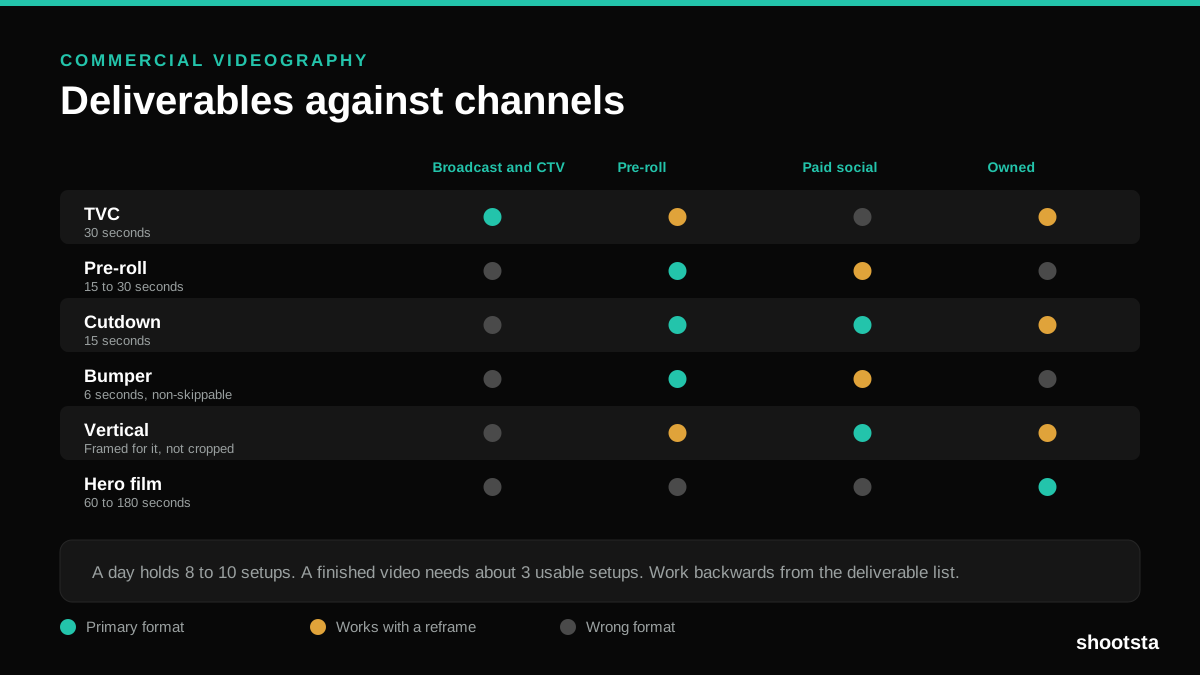
Commercial Videography: Cost and Scope
Commercial videography is priced by the day and judged by the deliverable. Most projects go wrong because those two numbers were never reconciled.
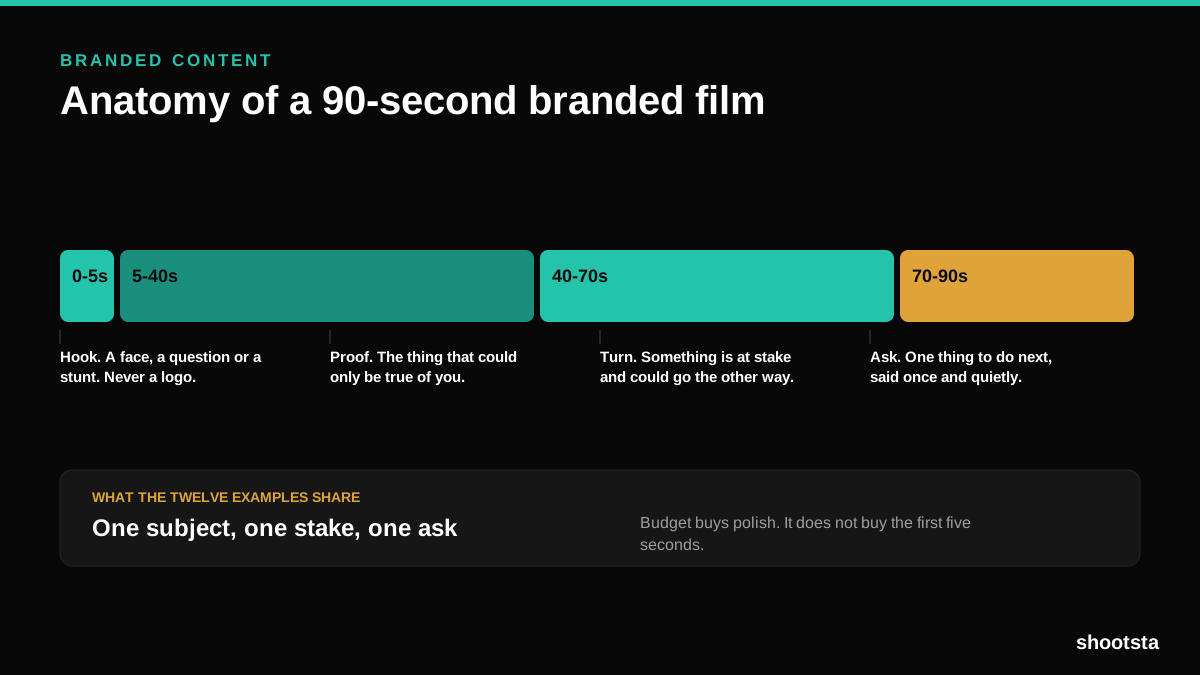
12 Branded Content Examples That Worked
Twelve pieces of branded content that people chose to watch, what each one got right, and the structure underneath all of them.
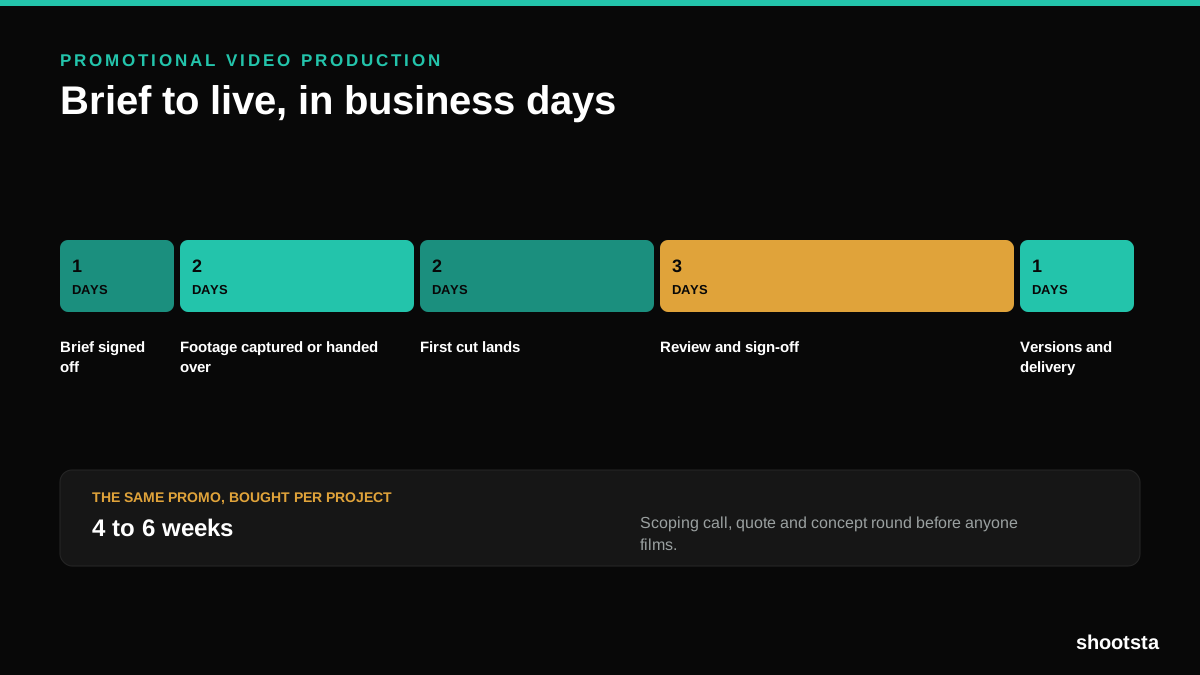
Promotional Video Production: Cost and Time
Most promotional video production schedules are not slow because of the edit. They are slow because of the approval chain. Here is where the days go.
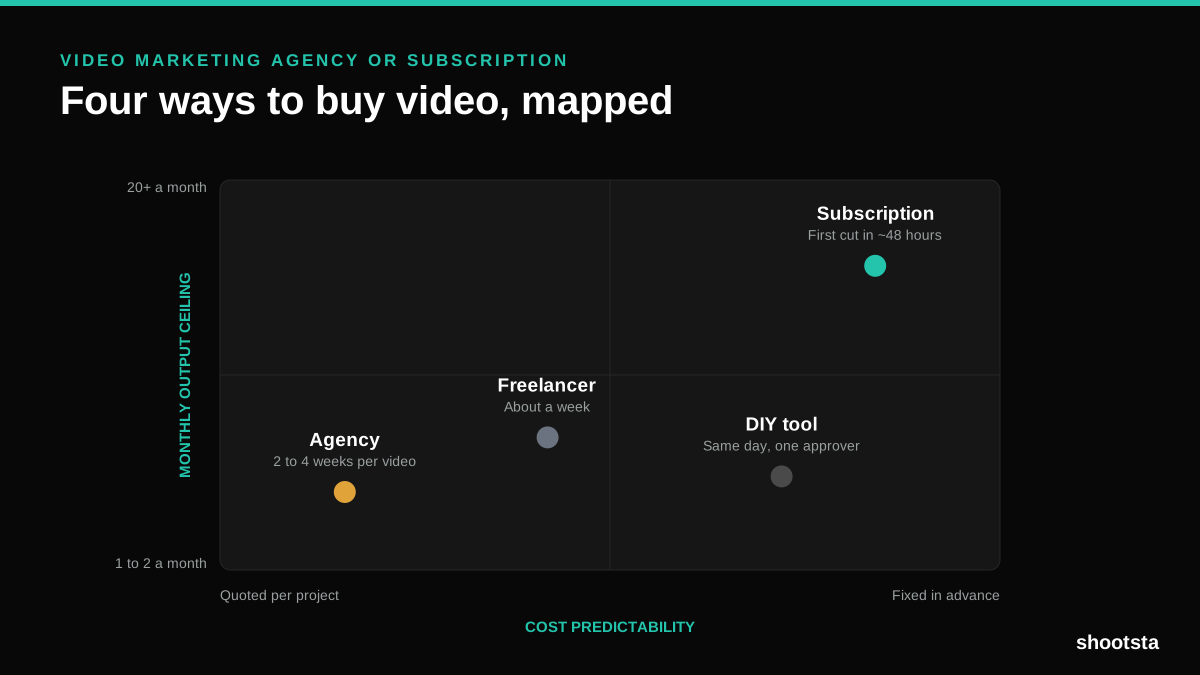
Video Marketing Agency or Subscription?
A video marketing agency prices per project and works in weeks. A subscription prices the year and works in days. Which one fits depends on how often you publish, not on which is better.

B2B Video Production: Costs and Buying Models
There are five ways to buy B2B video production. Each one works well up to a point and then breaks, usually at a volume nobody planned for. Here is what each costs and where the ceiling sits.
How to Measure Video Speed-to-Market
How to Measure Video Speed-to-Market
Speed-to-market is the lag between needing a video and publishing it. For marketing teams it is a revenue metric. Here is how to measure and improve it.