
shootsta.
Video Content Strategy for B2B Companies
By Mark Ashworth · Published July 3, 2025 · Updated October 2026
Understanding B2B Video Content Strategy Fundamentals
A B2B video content strategy ties each video to a business objective, a stage of the buyer journey and the person who will watch it. Your audience is busy and wants evidence that you have solved this problem before. To plan well, you need to know how your buyers make decisions and who has a say. B2B differs from B2C here: messages run deeper, technical detail matters more and decisions take months rather than minutes.B2B Buyer Journey and Video Content Alignment
A B2B buyer moves through several stages. They spot a problem, research possible fixes, compare vendors and then plan the rollout. Each stage calls for a different type of video and a different message. When you map videos to stages, you give buyers something useful wherever they are. That matters in a long sales funnel where a deal passes through many touchpoints and several approvals before anyone signs. B2B Buyer Journey Video Mapping- Awareness Stage: Educational content addressing industry challenges and emerging trends
- Consideration Stage: Solution-focused videos demonstrating capabilities and approaches
- Evaluation Stage: Case studies, testimonials, and detailed product demonstrations
- Decision Stage: Implementation guides, onboarding previews, and executive endorsements
- Advocacy Stage: Success stories, expansion opportunities, and partnership content
- Retention Stage: Training materials, feature updates, and strategic consulting content
B2B Audience Segmentation for Video Strategy
Your B2B videos have to speak to several groups at once. Technical evaluators want detail, finance wants cost and risk, and executive sponsors want the business case. Each group needs a different message and level of depth. Segmenting your audience lets you make videos for specific roles and their concerns. It also helps the buying group decide together.Strategic Content Planning for B2B Video Marketing
B2B video marketing needs a content plan. The plan should cover your business objectives, how you are positioned against other options and what buyers need to learn. Good planning weighs teaching against selling. Give buyers ideas they can use, and you become a trusted advisor in their eyes rather than one more vendor in the inbox.Content Pillars and Topic Strategy
Many B2B video plans rest on industry expertise, what your solution can do and proof from customers who succeeded with it. Together these pillars build authority and answer the questions buyers ask before they decide. When you choose topics, start with what buyers search for and what rivals already cover. Then fill the gaps with topics deep enough to survive review by several stakeholders.- Thought Leadership: Industry insights, trend analysis, and strategic guidance for market education
- Solution Education: Product demonstrations, feature explanations, and implementation methodologies
- Customer Success: Case studies, testimonials, and results-focused success stories
- Process Transparency: Behind-the-scenes content showing expertise and operational excellence
- Executive Insights: Leadership perspectives on industry developments and strategic direction
- Training and Support: Educational content supporting customer success and product adoption
Content Calendar and Production Planning
A content calendar keeps your video production and publishing steady. Build it around your business cycle and the industry events your buyers attend. Your production plan should list who is needed, who approves each video and when it goes live. Leave room in the calendar, so when the market shifts or a rival makes news, you can respond while the topic is current.B2B Video Formats and Content Types
B2B video comes in many formats, from executive talks and product demos to customer interviews, webinar recordings and educational series. Each one has a specific job in your marketing and sales enablement plan. Pick the format by asking what your audience prefers and how complex the message is. Whatever you choose, keep the quality professional and the brand consistent across every format and platform.Executive and Leadership Content
Executive videos build trust in your organization. They give senior decision-makers a view of where the market is going and how your leaders think. Leadership videos should show expertise and vision in plain language. Executive Video Content Types- CEO Insights: Strategic market commentary and company vision presentations
- Industry Analysis: Expert perspectives on market trends and business implications
- Quarterly Updates: Business performance reviews and strategic direction communications
- Event Presentations: Conference speeches and industry forum participation content
- Customer Conversations: Executive-to-executive discussions about strategic partnerships
- Innovation Announcements: Product launches and strategic initiative presentations
Product and Solution Demonstrations
Product demo videos show buyers what your solution can do. They also answer technical questions that often decide whether a product makes the shortlist. A good demo weighs technical depth against business value. Show the feature, then show the result it produces.B2B Video Distribution and Channel Strategy
B2B video distribution means putting each video where your buyers already spend time. Each platform has its own audience and habits, so adjust the cut to suit it. Plan distribution around how your audience behaves on each platform and what format each one rewards. Keep the message and brand the same everywhere.Professional Platform Optimization
B2B video performs differently on each platform. LinkedIn is built for professional networking, and YouTube is where people search for how-to answers. Industry publications favor expert content that serves their readers. To get the most from each channel, learn what its audience expects and which formats they watch. Then adapt the message to fit. B2B Platform Strategy Guidelines- LinkedIn: Professional insights, company updates, and executive thought leadership content
- YouTube: Educational tutorials, product demonstrations, and comprehensive solution explanations
- Website: Landing page conversions, product pages, and comprehensive resource libraries
- Email Marketing: Personalized video messages, campaign support, and nurture sequence content
- Sales Enablement: Proposal support, presentation materials, and follow-up resources
- Industry Publications: Expert commentary, sponsored content, and partnership announcements
LinkedIn is the highest-performing organic channel for most B2B video programs. For a step-by-step approach, read our LinkedIn video strategy guide or see how to measure LinkedIn video ROI for B2B.
Sales Team Integration and Enablement
Your B2B video strategy should help the sales team. Give reps tailored videos, short clips to add to proposals and follow-up pieces that answer a prospect's specific concerns. Reps need to find the right video fast. They also need a way to adapt it, such as adding a short intro recorded for one account.Measuring B2B Video Marketing Performance
To measure B2B video performance, connect what people watch to what they do next. Your tracking has to cope with long sales cycles and with buyers who see many touchpoints before they convert. Look at engagement and business impact side by side. The goal is data that tells you which videos to make more of and where to spend next quarter's budget.Key Performance Indicators for B2B Video
Track a handful of KPIs for B2B video: how deeply people engage, how good the resulting leads are, how video influences deals and how many customers it helps win. Attribution in B2B is messy, and your measurement plan should admit that. Even so, it should show what is working and where time and money should go.- Engagement Quality: Video completion rates, replay frequency, and interaction depth measurements
- Lead Generation: Form completions, contact requests, and demo bookings attributed to video content
- Sales Influence: Deal progression, proposal success rates, and sales cycle acceleration
- Account Penetration: Stakeholder engagement across target accounts and buying committee reach
- Content Performance: Topic effectiveness, format preferences, and messaging resonance analysis
- Customer Journey Impact: Stage progression, nurturing effectiveness, and conversion attribution
Attribution and ROI Analysis
For B2B video ROI, use a multi-touch attribution model. It follows the buyer across many touchpoints and links video views to revenue and customer lifetime value. Measure over months, because B2B deals rarely close inside a single quarter. Count direct conversions, such as a demo booked from a video page. Count indirect influence too, such as an account that watched three videos before a sales call.B2B Video Content Production and Quality Standards
B2B video production has to look professional, because the quality reflects on your organization. You also have to weigh cost against how many videos you need. Set your quality bar by what your audience expects and what others in your market already publish. The aim is a standard that supports your business goals without slowing every project down.Production Quality and Brand Consistency
Professional B2B video needs a consistent look, clean audio and a steady message. That consistency helps people recognize your brand. When every video looks and sounds like you, buyers recognize you at each touchpoint. That builds the trust you need for complex B2B decisions and long customer relationships. B2B Video Quality Standards- Visual Quality: HD resolution minimum with professional lighting and composition standards
- Audio Excellence: Clear speech, consistent levels, and professional audio processing
- Brand Integration: Consistent logos, colors, fonts, and visual identity across all content
- Content Structure: Clear introductions, logical flow, and strong conclusions with calls-to-action
- Technical Specifications: Platform optimization, loading speed, and mobile compatibility
- Professional Presentation: Executive presence, clear communication, and authoritative delivery
Scalable Production Processes
Your B2B video strategy needs a production process that scales. It should let you publish on a steady schedule and keep costs in check. Quality should hold whether you make two videos a quarter or twenty. A scalable process trades off speed and quality with care. It also keeps the program running after the first campaign ends.Frequently Asked Questions
How does B2B video strategy differ from B2C video marketing approaches?
A B2B video strategy puts teaching, expertise and relationships ahead of emotional appeal. It often needs longer videos that deal with complex business problems and a group of decision-makers. Your B2B videos lean on thought leadership, detailed product explanations and customer stories. B2C video leans on entertainment, impulse buying and one person deciding. B2B videos also tend to last longer and get reused at several points in a long sales cycle.What video content types generate the best B2B lead generation results?
Educational webinars, product demos and customer case study videos tend to bring in the strongest B2B leads. Webinars capture contact details at sign-up, and demos attract buyers who are already comparing options. The approach that works best pairs useful teaching with a clear next step, such as booking a call or downloading a guide. Purely promotional videos give the viewer less reason to raise a hand.How long should B2B video content be for optimal engagement?
B2B video length depends on the type of video and the buyer's stage. As a rough guide, educational videos often run 3-8 minutes and product demos 5-15 minutes. Webinars can run 30-60 minutes. On LinkedIn, keep videos under 3 minutes, while YouTube tutorials can stretch to 10-20 minutes. Match the length to what the video delivers. B2B audiences will watch longer videos if each minute gives them useful business insight they can act on.What budget allocation is appropriate for B2B video content strategy?
The right budget for a B2B video content strategy depends on how many videos you need, how many markets you serve and who makes them. Split the budget across production, distribution and promotion, and the strategy and review work that improves each round. Production usually takes the largest share. If cost is the main blocker, a managed video partner can cut the per-video cost to 50-60% below agency rates.How can B2B companies measure video content ROI effectively?
To measure B2B video ROI, use multi-touch attribution that links video views to leads, sales progress and new customers. Measure across the length of your sales cycle, which in B2B often runs many months. Useful metrics include cost per lead, how often video touched a won deal, how much faster those deals closed and customer lifetime value. Use your marketing automation platform to track video views through the funnel. Add unique tracking codes to each campaign so you can see which videos led where.Strategic Implementation Framework for B2B Video Success
To put a B2B video strategy in place, tie each video to a business objective. Then build a production process you can keep running and a way to measure results. Those three pieces carry the program past its first campaign. B2B Video Strategy Benefits- Lead Generation: Videos with a clear next step turn viewers into contacts your sales team can follow up
- Engagement Quality: Visitors who press play spend more time with your content and understand it better
- Sales Acceleration: Reps can answer common questions with a video, so meetings focus on the deal
- Authority Building: Regular expert videos make your brand a known source in your market
- Customer Education: Product and training videos help customers adopt what they bought
- Competitive Advantage: Thought leadership sets you apart when products look alike on paper
B2B Video Strategy Readiness Assessment
Use this checklist to see how ready your organization is to roll out a full B2B video content strategy: B2B Video Strategy Assessment Rate your current capabilities on a 1-5 scale: Strategic Foundation- Clear understanding of buyer journey stages and content requirements for each phase
- Defined target audience segments and stakeholder mapping for decision-making processes
- Established business objectives and KPIs for video marketing initiatives
- Executive support and budget allocation for comprehensive video strategy implementation
- Subject matter expertise and thought leadership positioning in target markets
- Access to executives and customers for authentic content creation
- Production capabilities or vendor relationships for professional video creation
- Brand guidelines and quality standards for consistent video content
- Multi-channel distribution strategy across professional platforms and sales processes
- Marketing automation and attribution tracking for performance measurement
- Sales team alignment and enablement for video content utilization
- Optimization processes for continuous improvement and strategic refinement
- 48-60 points: Excellent readiness for comprehensive B2B video strategy implementation
- 36-47 points: Good foundation requiring targeted development in specific strategy areas
- 24-35 points: Moderate preparation needed before launching full-scale B2B video initiatives
- Below 24 points: Foundational work required in strategy, content, and measurement capabilities
Next Steps for B2B Video Marketing Excellence
Start by studying your audience and mapping the buyer journey. Then set a clear content strategy and a production process you can repeat. With those in place, your B2B video marketing can grow one quarter at a time. Put early effort into thought leadership and sales enablement videos. They show your expertise and help every stakeholder in a complex B2B decision get the answer they need. Strategic Implementation Roadmap- Strategy Development: Buyer journey analysis, content planning, and objective definition for B2B video initiatives
- Content Creation: Thought leadership, product demonstration, and customer success content development
- Production Systems: Quality standards, brand consistency, and scalable creation processes
- Distribution Planning: Multi-channel strategy, sales enablement, and audience targeting
- Measurement Implementation: KPI tracking, attribution modeling, and performance optimization
- Sales Integration: Team training, content accessibility, and personalization capabilities
- Optimization and Scaling: Performance analysis, strategic refinement, and program expansion
Accelerate B2B Growth Through Strategic Video Content
Shootsta helps B2B organizations run their video content strategy without building a full production team. We work alongside your in-house marketers, with a first cut back in about 48 hours and a per-video cost 50-60% below agency rates. That lets you publish the volume a long B2B sales cycle needs. Complete B2B Video Solutions:- Strategic consultation and content planning aligned with B2B buyer journeys and business objectives
- Professional production capabilities creating thought leadership and sales enablement content
- Multi-format content creation supporting diverse B2B marketing and sales requirements
- Performance measurement and optimization tools for ROI maximization and continuous improvement
- Sales team integration and enablement support for comprehensive video utilization
Keep reading
Take this article with you
Read the latest at shootsta.com/blog/b2b-video-content-strategy-guide
You might also like

Shootsta at Day 1 of B2B Marketing Leaders Forum
Shootsta is at B2B Marketing Leaders Forum Asia in Singapore on 14 and 15 October 2026. Watch our day 1 video, edited overnight and ready before the first coffee break on day 2.
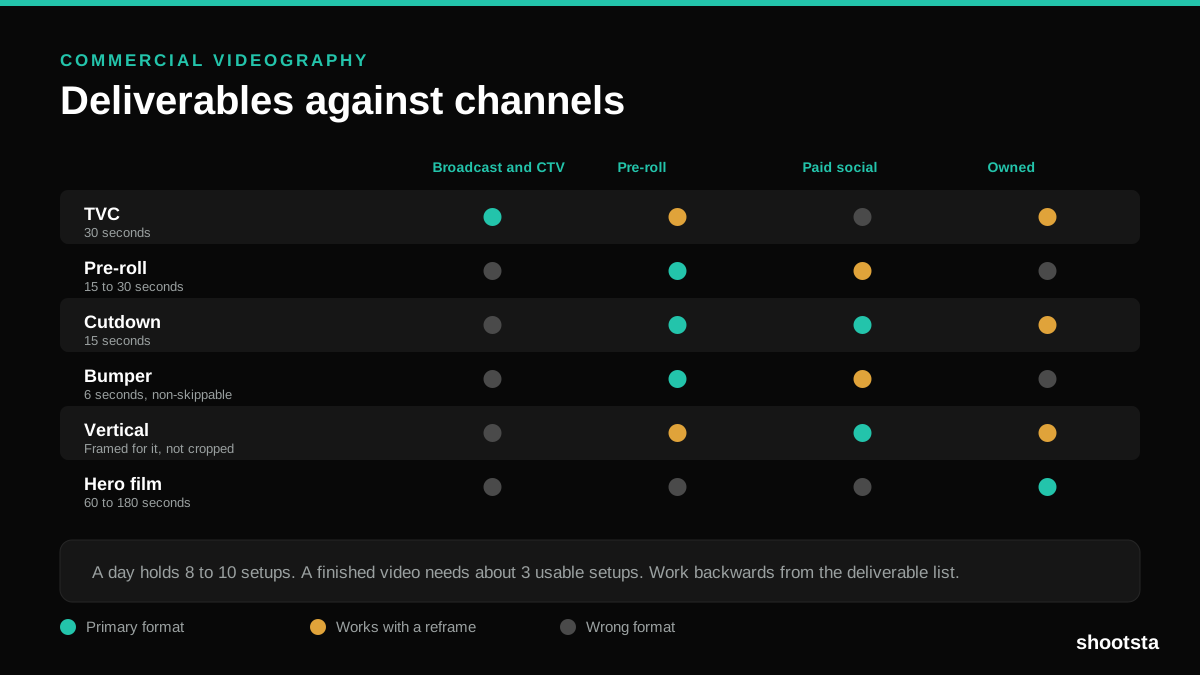
Commercial Videography: Cost and Scope
Commercial videography is priced by the day and judged by the deliverable. Most projects go wrong because those two numbers were never reconciled.
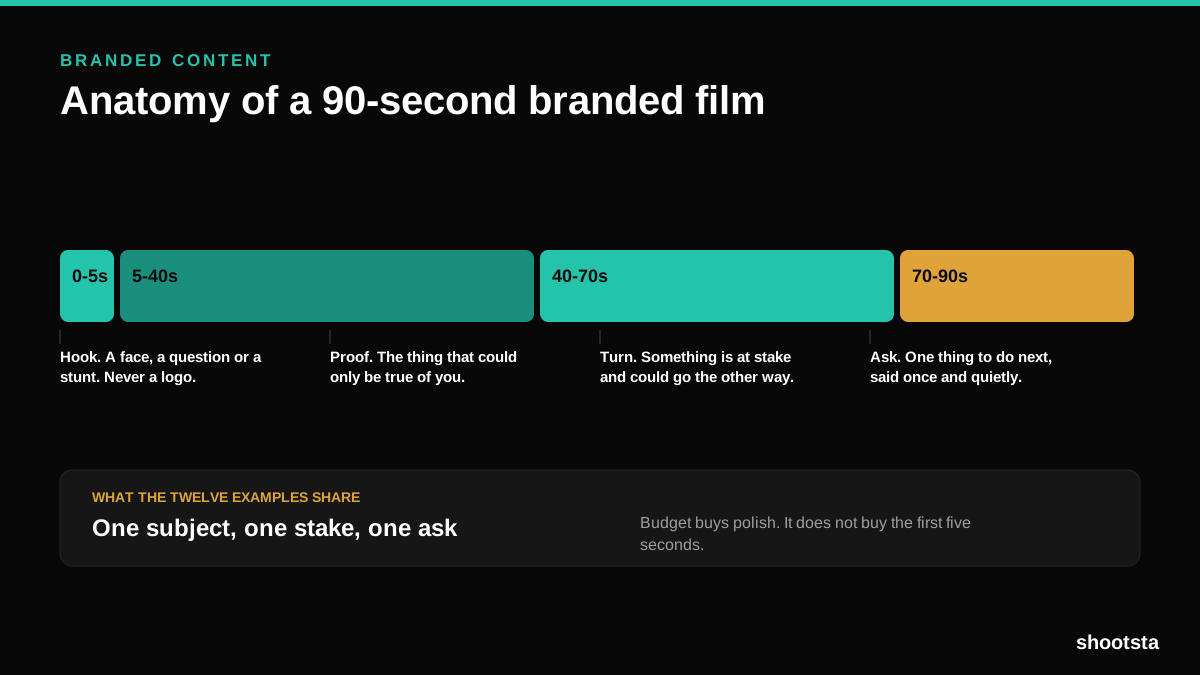
12 Branded Content Examples That Worked
Twelve pieces of branded content that people chose to watch, what each one got right, and the structure underneath all of them.
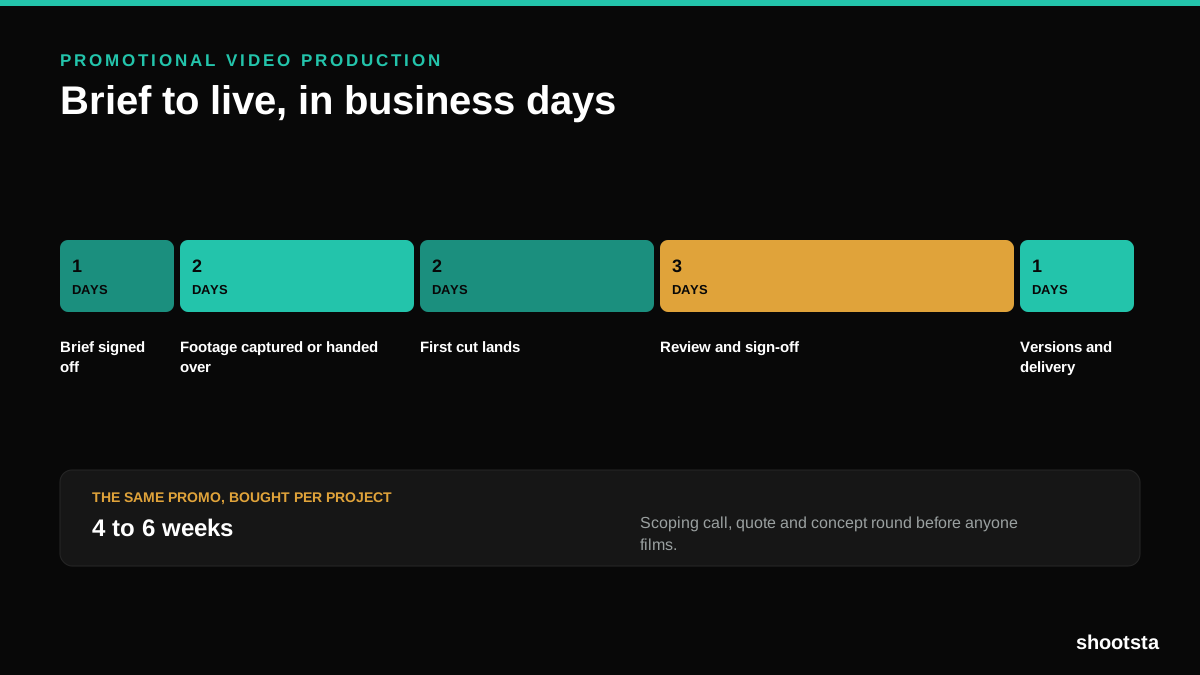
Promotional Video Production: Cost and Time
Most promotional video production schedules are not slow because of the edit. They are slow because of the approval chain. Here is where the days go.
Video Marketing Agency or Subscription?
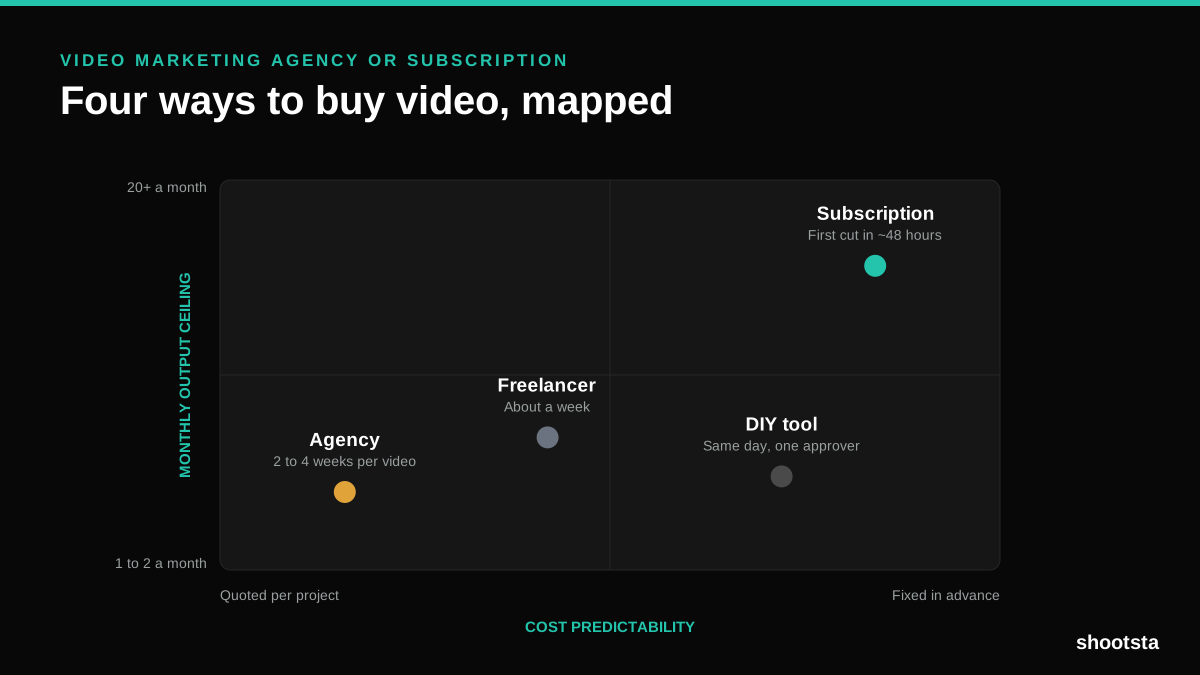
A video marketing agency prices per project and works in weeks. A subscription prices the year and works in days. Which one fits depends on how often you publish, not on which is better.

B2B Video Production: Costs and Buying Models
There are five ways to buy B2B video production. Each one works well up to a point and then breaks, usually at a volume nobody planned for. Here is what each costs and where the ceiling sits.