
How to Choose a Corporate Video Production Company
shootsta.
How to Choose a Corporate Video Production Company
By Shootsta · Published February 5, 2026 · Updated October 2026
Choosing a corporate video production company is harder than it looks. Here is what to evaluate, what questions to ask, and how to avoid the most common mistakes.
What should you look for in a corporate video production company?
There are thousands of video production companies, and many look alike on paper. You see a reel of polished work, a list of clients and a promise to "bring your vision to life." The differences that will affect your project are harder to spot from a website.
Corporate video buyers have different needs than someone commissioning a wedding video or a short film. You need a partner who understands business communication and works within your brand guidelines. They also need to deliver at the pace your organization sets. The sections below cover what to evaluate.
What is the difference between a video agency and a video production company?
The terms get used interchangeably, but there is a real difference. A video agency typically offers strategy, scripting, creative direction, and production as a full-service package. You pay for the thinking and the making. A video production company focuses on the production itself, which means filming and editing.
If your marketing team already has a strategy and knows what videos they need, a production-focused partner is more cost-effective. If you need someone to develop the video strategy from scratch, an agency model makes sense. Some companies, Shootsta among them, offer a hybrid that pairs production at scale with strategic support. Compare the traditional agency model vs Shootsta to see the differences in detail.
What questions should you ask before hiring?
How do you handle volume?
If you need 5+ videos per month, ask how the company scales. A small boutique shop can hit capacity quickly. Ask about their typical monthly output, their turnaround times and whether pricing changes at different volumes. A subscription model is usually more cost-effective than per-project pricing at volume.
Who handles filming?
Some production companies require their crew to film everything. Others let your team film with guidance and handle the editing. The second model is faster and cheaper for formats like talking-head videos, internal updates, and training content. Reserve crew-filmed production for hero content and high-stakes projects.
How do you maintain brand consistency?
If you are producing videos across multiple departments and locations, every video needs to look like it came from the same company. Ask whether the production company uses a brand kit system. That means locked-in intros, lower thirds, fonts, colors, and music that apply to every edit automatically.
What is your turnaround time?
Traditional production companies often take several weeks per video. If your marketing calendar moves faster than that, you need a partner with 48-hour turnaround. Ask about rush options and whether they charge extra for speed.
Can you show me results, not just a reel?
Every production company has a good reel. Ask for case studies with measurable outcomes, such as how the videos performed and what the client was producing before and after. Ask how many videos per month the client now makes. Those answers tell you more than a highlight reel of their prettiest work.
What are the main pricing models for corporate video production?
Per-project pricing
You pay a fixed fee for each video, and the fee rises with complexity. This works for one-off productions but gets expensive at volume. You also face scope creep, as revisions, extra formats and unexpected costs add up.
Day rate
You pay for the crew's time, charged by the day. This works when you have several videos to shoot in one session. The risk is that a day on set does not guarantee a finished product, because editing is usually billed separately.
Subscription / retainer
You pay a flat monthly fee for a set amount of production capacity. Your per-video cost drops as you produce more. This is the model that scales best for teams producing regular content. See how Shootsta's subscription pricing works.
When should you consider a platform instead of a company?
A traditional corporate video production company works well when you need a crew on location and full creative direction. Many business videos do not need a crew, such as leadership updates, training videos, social media clips and product walkthroughs. For those, a production platform is faster and cheaper.
With a platform like Shootsta, your team films on their own devices using guided prompts. Professional editors apply your brand kit and deliver a polished video within 48 hours. You get the quality of a production company with the speed and cost structure of an internal team.
You would still bring in a production company for flagship work. The platform takes the high-volume, fast-turnaround videos that traditional production models are not built to handle. Read our enterprise video playbook to see which formats fit each model.
How do you evaluate the right fit?
Start with a pilot. A reputable production company will usually agree to a small first project so both sides can test the fit. Produce 3-5 videos, then measure turnaround time, how well they communicate and whether the output meets your expectations.
If you want to compare approaches, talk to our team about how Shootsta works for corporate video production at your scale.
Take this article with you
Read the latest at shootsta.com/blog/how-to-choose-corporate-video-production-company
You might also like

How to Plan Video Team Capacity Around Leave
Your only editor just booked two weeks off, and you already know which projects will slip. Chad Lakin explains how to plan video team capacity so the work keeps moving when someone is away.
Corporate Video Editing Standards: Full Guide
A two-page editing standard does more for consistency than a forty-page brand book. Here is what it should cover, who owns each part, and how to enforce it with an in-house editor or an outside partner.
Quality Control in Outsourced Video Editing
When editing leaves the building, quality has to be checked by a system rather than by whoever happens to look. Here is the system: acceptance criteria, two QA gates, counted revision rounds and a quarterly audit.
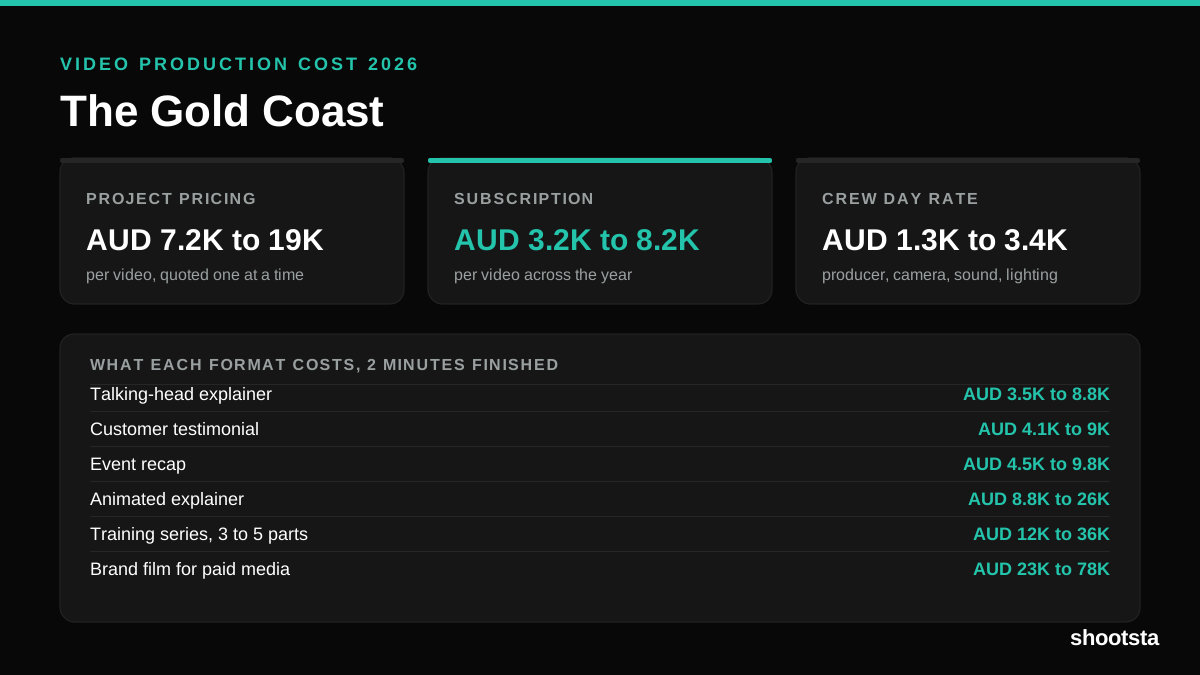
Video Production Cost on the Gold Coast 2026
Video production in the Gold Coast costs AUD 3,200 to AUD 8,200 per finished video on a subscription model, and AUD 7,200 to AUD 18,500 for one-off project work. Here is what you are paying for, and how the three pricing models compare.
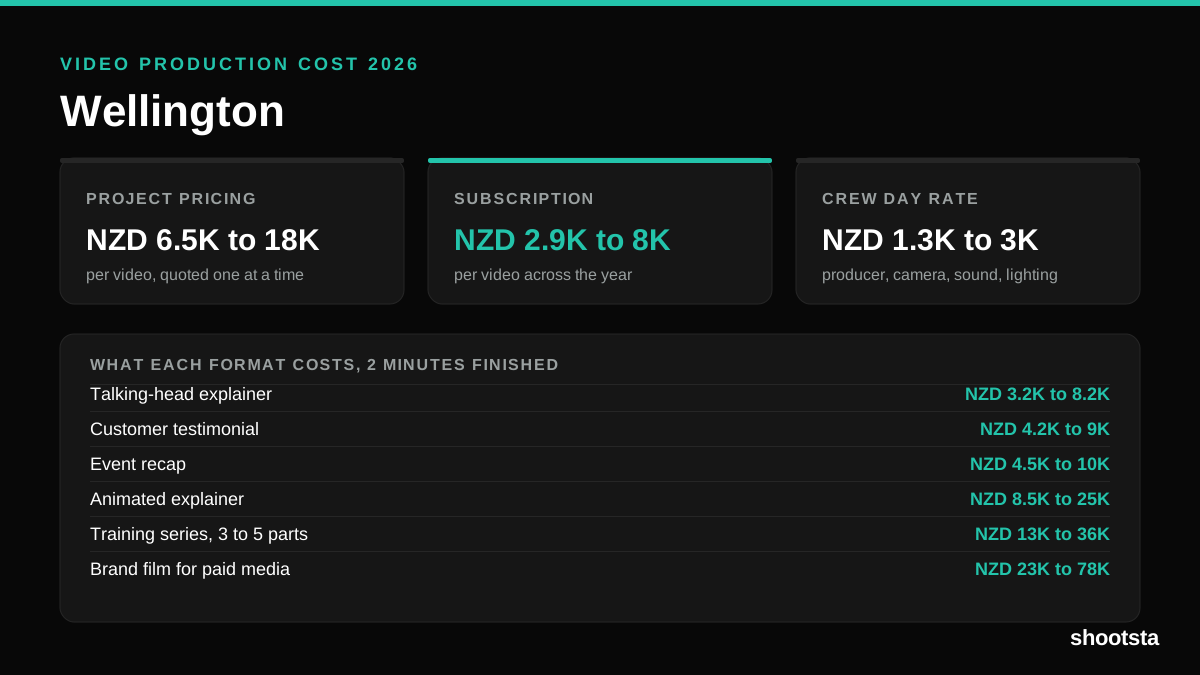
Video Production Cost in Wellington (2026)
Video production in Wellington costs NZD 2,900 to NZD 8,000 per finished video on a subscription model, and NZD 6,500 to NZD 18,000 for one-off project work. Here is what you are paying for, and how the three pricing models compare.
Video Production Cost in Berlin (2026)
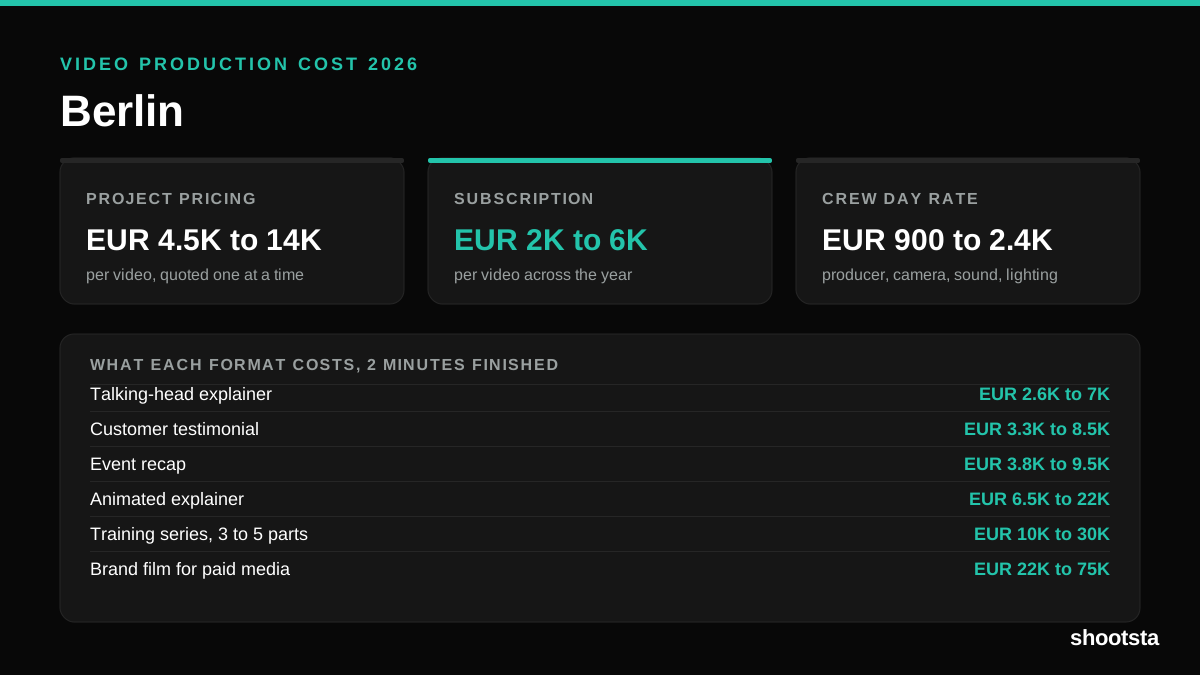
Video production in Berlin costs EUR 2,000 to EUR 6,000 per finished video on a subscription model, and EUR 4,500 to EUR 13,500 for one-off project work. Here is what you are paying for, and how the three pricing models compare.