
How Enterprises Scale Animated Video
shootsta.
How Enterprises Scale Animated Video
By Shootsta · Published June 23, 2026 · Updated October 2026
Producing one animation is a project. Producing a steady stream of them across a large organization is a system. Here is how enterprises run animated video at scale without it falling apart.
How do enterprises scale animated video?
Enterprises scale animated video by treating it as a repeatable system instead of a series of one-off projects. They build a shared style kit once, work from a central library that holds every file, and use a team model that can flex with demand. The output is dozens of on-brand animations a year, produced without starting from zero each time.
The reason it usually breaks is the opposite habit: briefing each animation as a bespoke project. That works for one hero film, but it collapses when a large company needs explainers, training and internal comms in animation at the same time.
Start with the formats that scale
Not everything should be animated, but four formats carry most of the volume: educational and training content, product explainers, social content, and webinar or event material. These are where animation earns its place first, because the subject is conceptual and the demand is constant. For the full map, see animation use cases for enterprise teams.
Build a style kit once, reuse it everywhere
The biggest lever for scale is a reusable animation style kit: brand assets, an illustration library, motion templates and a defined look. You build it once and every later animation reuses it, so each new video starts from that kit rather than a blank page. This is also what keeps a hundred videos looking like one brand.
Resource it with a hybrid team
Few enterprises can justify a full in-house animation studio, and briefing an agency project by project is hard to sustain at ongoing volume. The model that scales keeps briefing, brand, and approvals in-house and hands production to a partner working inside your style kit. We break this down in how to build a hybrid animation team.
Run it from a central library
When every file lives in one hub, updating a two-year-old animation is a small amendment that leaves the rest of the file untouched. That is what makes animation durable at scale: the library stays current with small edits instead of full re-productions. The economics behind this are in why animated video lasts longer than live action.
What breaks first at scale?
Brand consistency and approval speed usually break first. As volume climbs, videos drift from the brand without a shared kit, and approvals jam without one named owner per stage. Both are operations problems, and both are solved before they start by the system above rather than by adding people. For the broader production model, see enterprise video production at scale.
Go deeper with the Business Animation Playbook
This framework is one chapter of The Business Animation Playbook, our free guide to running animation as a repeatable system rather than a one-off project. It covers the formats that scale, the hybrid team model, keeping videos current and proving the return. Download the Business Animation Playbook as a free PDF.
Where to start
Pick the one animation format you produce most, build the style kit around it first, and make every future animation reuse it. Then explore our animation production services.
Take this article with you
Read the latest at shootsta.com/blog/how-enterprises-scale-animated-video
You might also like

How to Plan Video Team Capacity Around Leave
Your only editor just booked two weeks off, and you already know which projects will slip. Chad Lakin explains how to plan video team capacity so the work keeps moving when someone is away.
Corporate Video Editing Standards: Full Guide
A two-page editing standard does more for consistency than a forty-page brand book. Here is what it should cover, who owns each part, and how to enforce it with an in-house editor or an outside partner.
Quality Control in Outsourced Video Editing
When editing leaves the building, quality has to be checked by a system rather than by whoever happens to look. Here is the system: acceptance criteria, two QA gates, counted revision rounds and a quarterly audit.
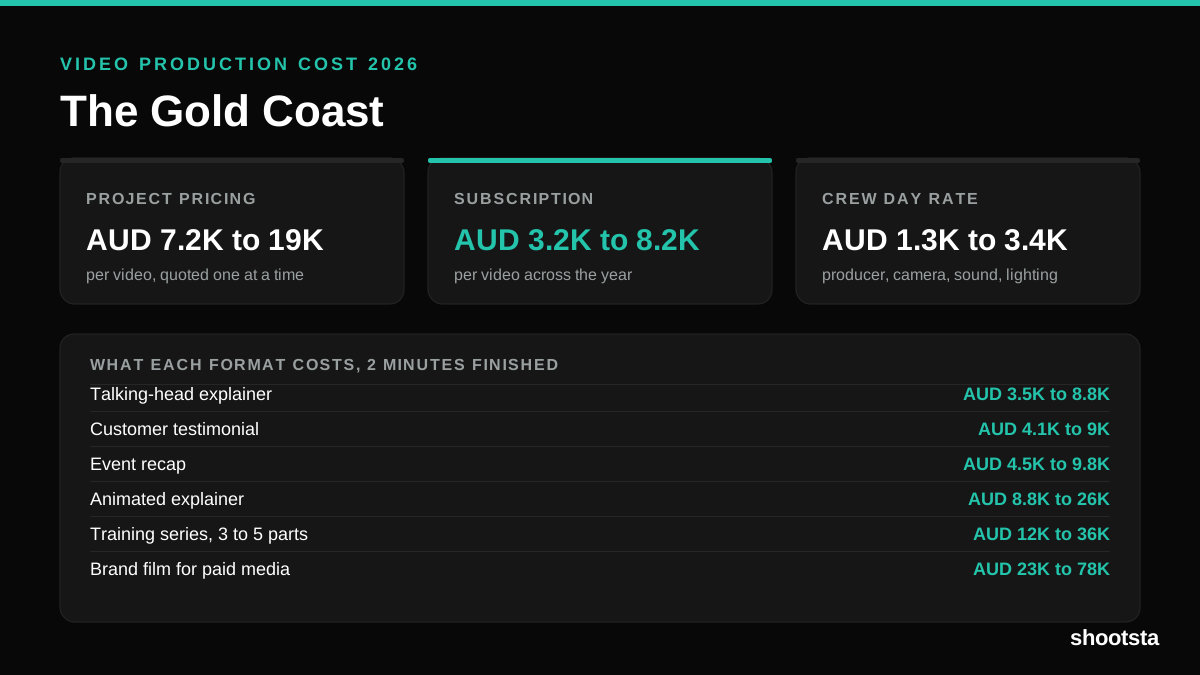
Video Production Cost on the Gold Coast 2026
Video production in the Gold Coast costs AUD 3,200 to AUD 8,200 per finished video on a subscription model, and AUD 7,200 to AUD 18,500 for one-off project work. Here is what you are paying for, and how the three pricing models compare.
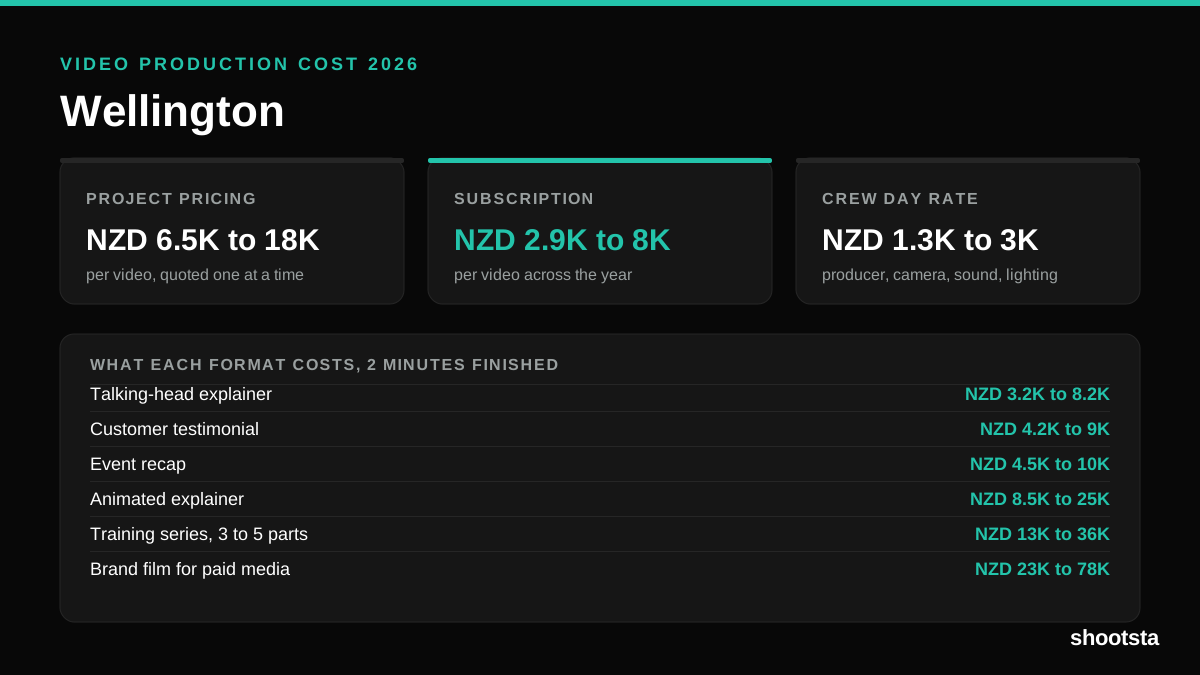
Video Production Cost in Wellington (2026)
Video production in Wellington costs NZD 2,900 to NZD 8,000 per finished video on a subscription model, and NZD 6,500 to NZD 18,000 for one-off project work. Here is what you are paying for, and how the three pricing models compare.
Video Production Cost in Berlin (2026)
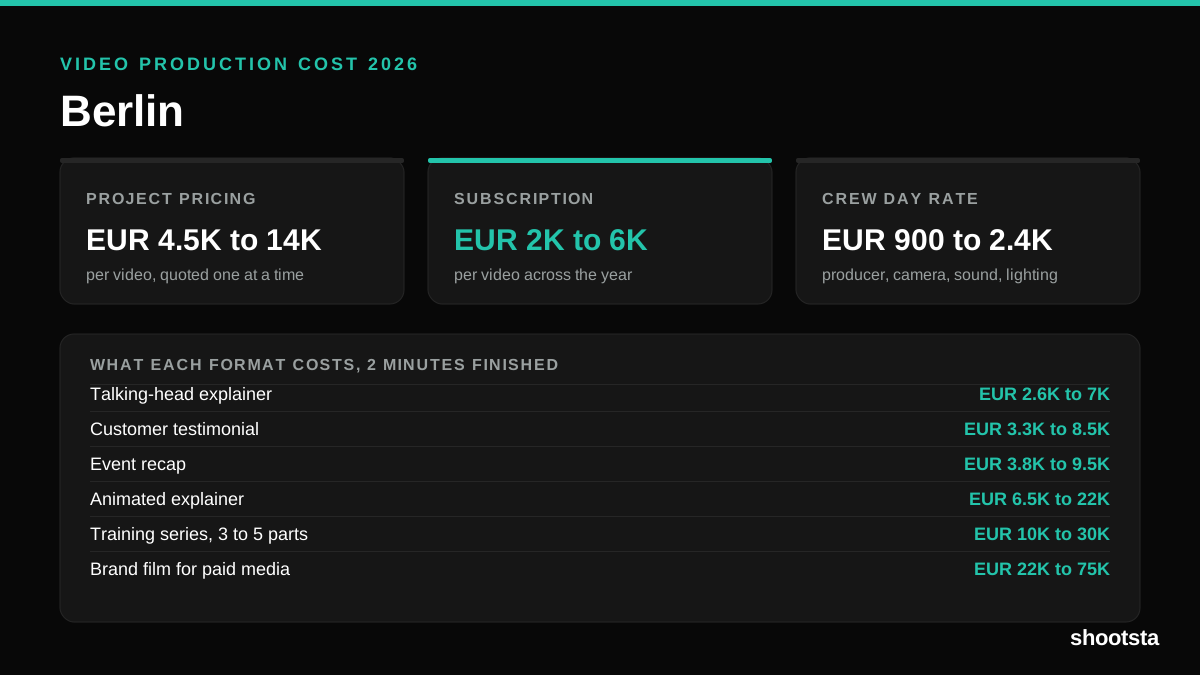
Video production in Berlin costs EUR 2,000 to EUR 6,000 per finished video on a subscription model, and EUR 4,500 to EUR 13,500 for one-off project work. Here is what you are paying for, and how the three pricing models compare.