
The CMO video scorecard for 2026
shootsta.
The CMO video scorecard for 2026
By Shootsta · Published August 2, 2026 · Updated October 2026
Most CMOs cannot say whether their video program is working, because they grade it on output instead of the things that decide whether video drives pipeline. Here is a five-part scorecard: coverage across functions, brand consistency at scale, turnaround, cost per video, and measurement. Score each out of five and you will see exactly where the program is leaking.
Many CMOs cannot say whether their video program is working, because they grade it on how many videos went out instead of the five things that decide whether video drives pipeline. Score your program out of five on coverage, brand consistency at scale, turnaround, cost per video, and measurement. Anything under 20 out of 25 is leaking value you are already paying for.
Video is now a standing line in many enterprise marketing budgets rather than a one-off campaign expense. That shift changes the CMO's job from approving films to running a program, and a program needs a scorecard. Below are the five measures, what a strong score looks like on each, and what a weak score costs you.
If you would rather answer questions than grade yourself, take the interactive CMO video scorecard. It has ten questions and takes about two minutes. It returns the same total out of 25, with the measure to fix first.
1. Coverage: does every function get video, or just marketing?
A mature video program serves marketing, sales, internal comms, L&D, customer success, and recruitment from one workflow. A weak one serves marketing and leaves every other function to fend for itself with a different vendor and a different look.
Score 5: any team can brief a video into the same pipeline and get it back on brand. Score 1: marketing owns video and every other team improvises. Low coverage is how an enterprise ends up with several video vendors before anyone notices. We broke down the fix in how a CMO should think about enterprise video.
2. Brand consistency: does video hold together at scale?
Making one polished film is easy. Making hundreds of videos a year that all look like the same brand is harder, and it is where fragmented programs fall down. When brand consistency depends on a person catching mistakes in review, it slips the moment volume rises.
Score 5: the brand kit (logos, fonts, colors, lower thirds, music, intro and outro) is enforced on every output automatically. Score 1: consistency is manual and drifts across teams and regions. Enforced brand governance keeps working as volume grows, while manual checking falls further behind with every extra video.
3. Turnaround: how long from idea to published video?
Slow production is where many programs lose relevance. A video that takes six weeks can miss the moment it was made for, and slow turnaround limits how much video a team tries to make at all.
Score 5: a first cut comes back in about 48 hours and revisions run in hours. Score 1: every video is a multi-week project. If your team drops ideas because production is too slow, you have a turnaround problem, even though it can look like a lack of ideas.
4. Cost per video: do you know it, and does it fall with volume?
If you ask a marketing team what a video costs, the answer is often the agency invoice for the last hero film. The number that matters is the blended cost per video across the whole program, and whether it drops as you produce more.
Score 5: you know your cost per video and it falls with volume. Score 1: every video is priced per project, so cost scales linearly with output. Per-project pricing is why programs stall at the point where they should scale. You can pressure-test your own number with the video production cost estimator or against subscription pricing.
5. Measurement: are you reporting outcomes or view counts?
The programs that survive budget cuts are the ones reported as pipeline, retention, and cost per qualified hire. The ones that get cut are reported as views and impressions, which read as vanity to a CFO.
Score 5: video maps to pipeline influenced, brand movement, retention, and talent. Score 1: the deck leads with view counts. Good measurement decides whether video is treated as infrastructure or becomes the first thing cut in a tight quarter. Our customer video results show what outcome-led video looks like in practice.
How to read your score
Add up your five scores. 20 to 25: you are running a real program; protect and scale it. 12 to 19: the program works but leaks, usually on brand consistency or cost per video. Under 12: you have a pile of videos rather than a program, and consolidating the vendor stack into one operating model is the fastest lift.
If you would rather not score it by hand, the interactive version of this scorecard asks ten questions and grades all five measures for you. You can download the result as a PDF for the budget conversation or share it with your team.
Mature programs tend to follow the same pattern. They consolidate production into one brand-governed workflow so any function can brief in, the brand holds, turnaround is measured in days, and cost per video falls as volume rises. That is the model behind enterprise video production at scale.
We talked through this scorecard with marketing leaders at the CMO Assembly in Nashville. The write-up is in what we heard at the CMO Assembly in Nashville.
Frequently asked questions
What should a CMO measure to know if video is working?
Measure five things: coverage across functions, brand consistency at scale, turnaround from idea to published video, blended cost per video, and outcomes such as pipeline influenced and retention. Output counts and view numbers tell you a program is busy, but they do not tell you whether it is working.
What is a good cost per video for an enterprise program?
There is no single number, because it depends on format and volume. The signal that matters is direction: in a healthy program the blended cost per video falls as output rises, because setup and workflow are reused rather than re-bought for every project. If your cost per video is flat or rising with volume, you are on per-project pricing that does not scale.
How do you fix a video program that scores low?
Start with consolidation. Low-scoring programs usually score low because video is spread across several vendors with no shared brand system, workflow, or measurement. Moving to one brand-governed operating model lifts coverage, brand consistency, turnaround, and cost per video at the same time, which is why it is usually the first move.
To grade your own program and see where it leaks, book a free consultation.
Take this article with you
Read the latest at shootsta.com/blog/cmo-video-scorecard-2026
You might also like

How to Plan Video Team Capacity Around Leave
Your only editor just booked two weeks off, and you already know which projects will slip. Chad Lakin explains how to plan video team capacity so the work keeps moving when someone is away.
Corporate Video Editing Standards: Full Guide
A two-page editing standard does more for consistency than a forty-page brand book. Here is what it should cover, who owns each part, and how to enforce it with an in-house editor or an outside partner.
Quality Control in Outsourced Video Editing
When editing leaves the building, quality has to be checked by a system rather than by whoever happens to look. Here is the system: acceptance criteria, two QA gates, counted revision rounds and a quarterly audit.
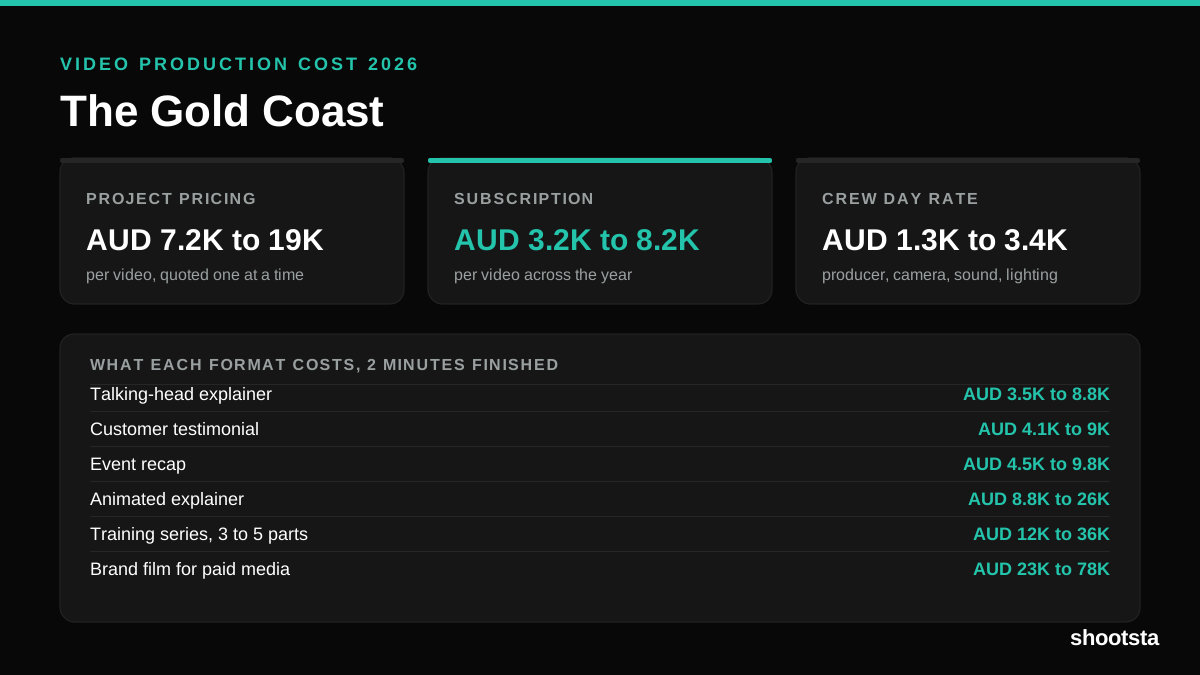
Video Production Cost on the Gold Coast 2026
Video production in the Gold Coast costs AUD 3,200 to AUD 8,200 per finished video on a subscription model, and AUD 7,200 to AUD 18,500 for one-off project work. Here is what you are paying for, and how the three pricing models compare.
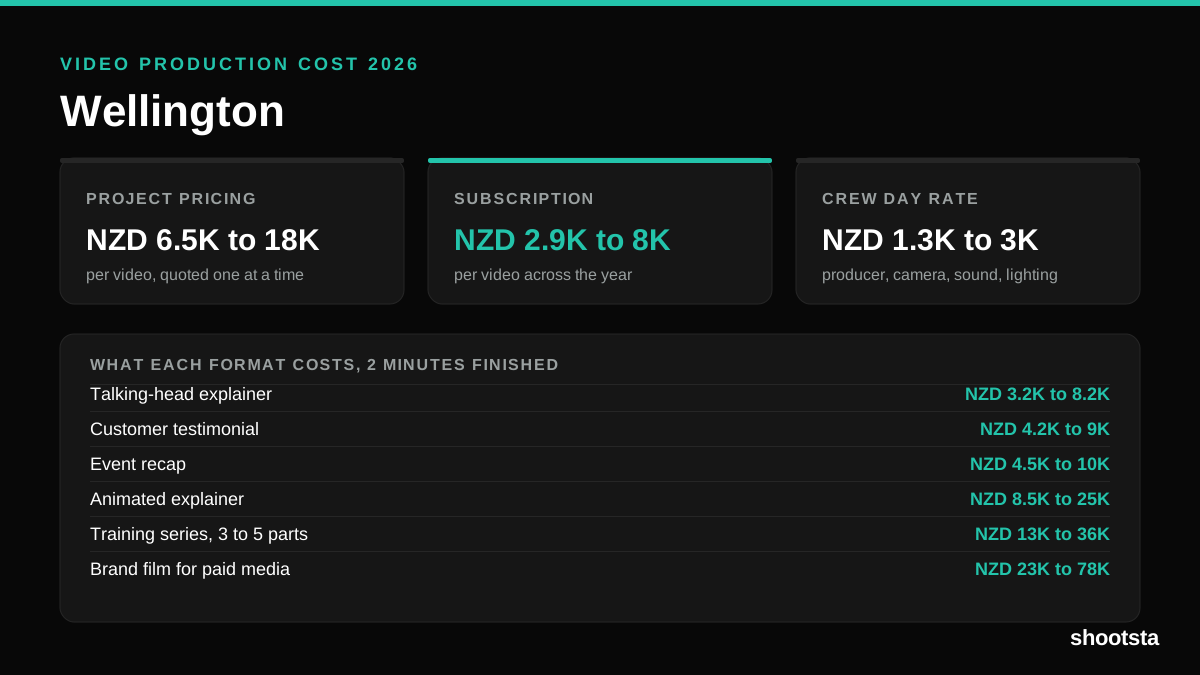
Video Production Cost in Wellington (2026)
Video production in Wellington costs NZD 2,900 to NZD 8,000 per finished video on a subscription model, and NZD 6,500 to NZD 18,000 for one-off project work. Here is what you are paying for, and how the three pricing models compare.
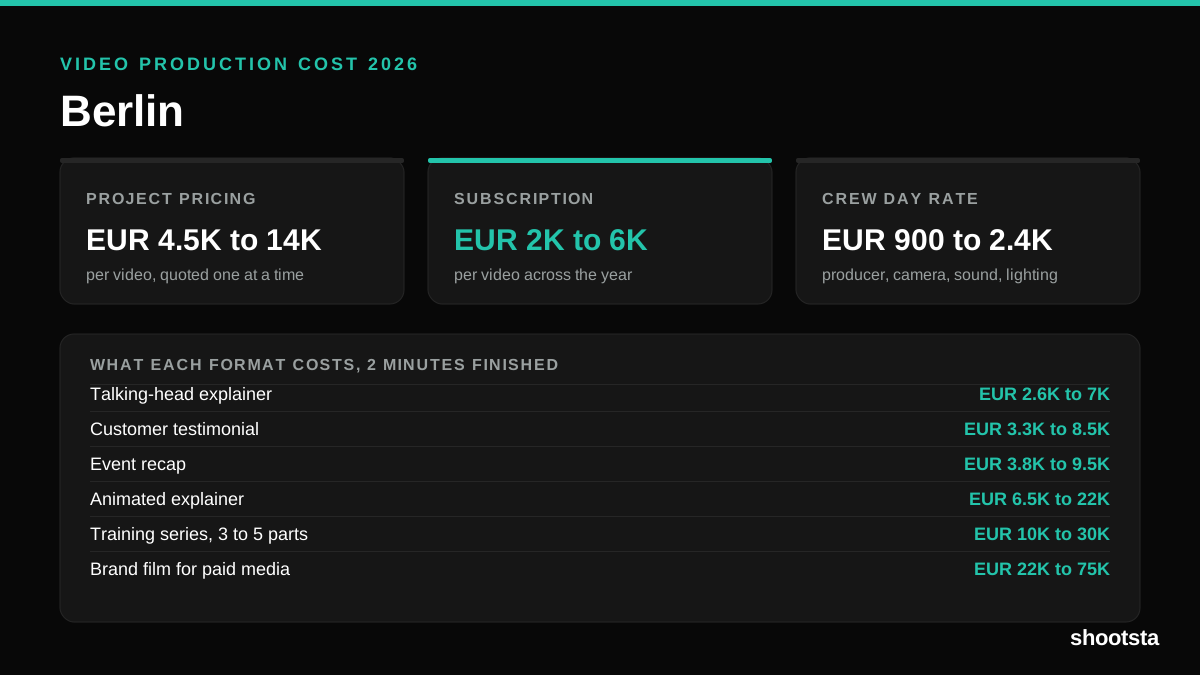
Video Production Cost in Berlin (2026)
Video production in Berlin costs EUR 2,000 to EUR 6,000 per finished video on a subscription model, and EUR 4,500 to EUR 13,500 for one-off project work. Here is what you are paying for, and how the three pricing models compare.