
shootsta.
Creative Video Ideas for UK Businesses
By Mark Ashworth · Published November 11, 2025 · Updated October 2026
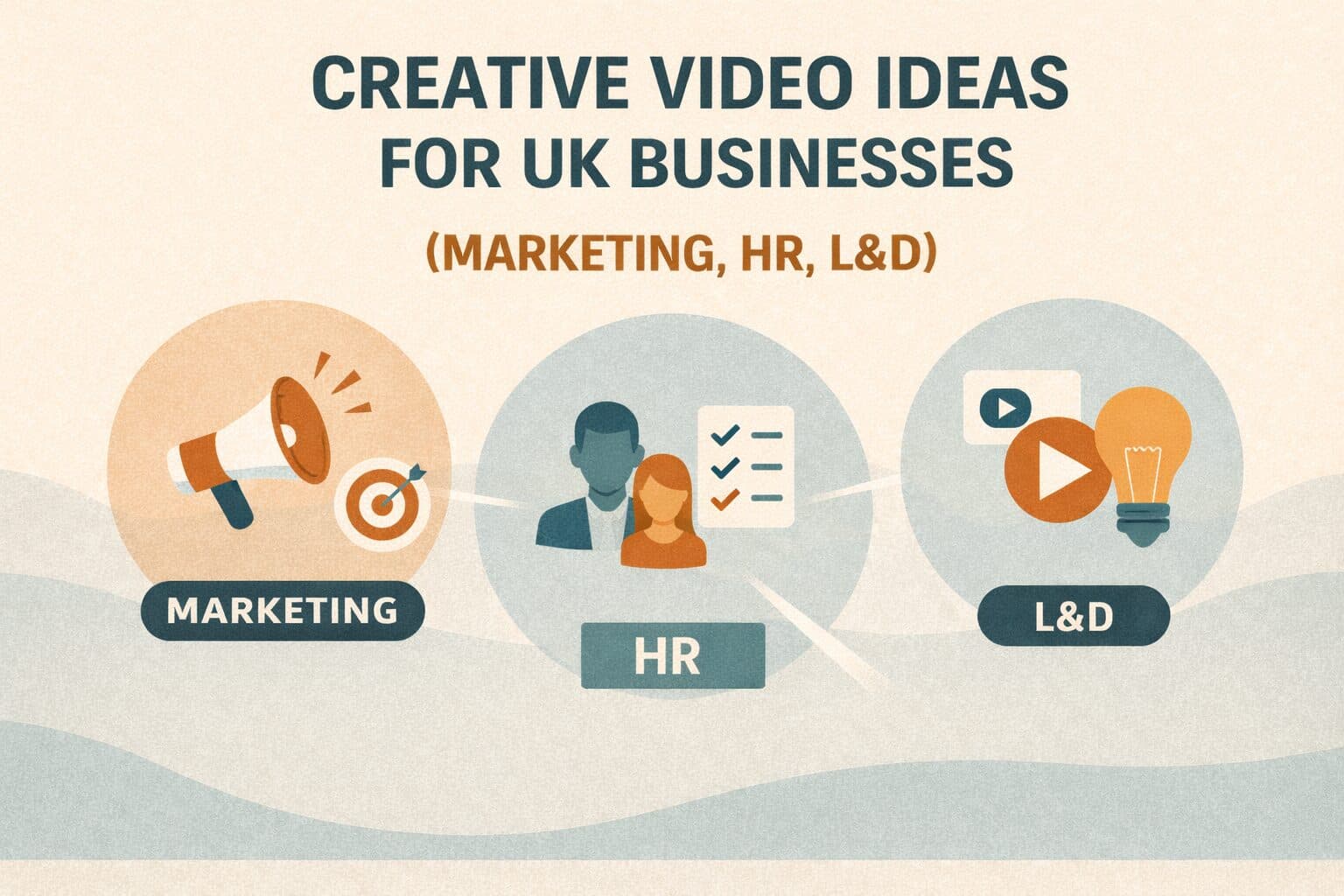
Practical video ideas UK businesses can implement across marketing, HR, and learning. Proven videography ideas UK and corporate video ideas with implementation guidance.
UK businesses often struggle to decide what videos to make. Marketing teams can brainstorm for weeks without settling on a direction. HR departments know they need video but have no specific concepts, and learning teams want engaging training without knowing where to start. That creative block stops organizations from using video well, even when they know it matters.
Successful video programs rarely need wild creativity. They take real business problems and solve them with proven formats, adapted to your own context.
This guide gives practical video ideas UK businesses can act on right away. It covers marketing, HR, and learning & development, and it shows how to turn vague video plans into a calendar of specific videos.
Marketing Video Ideas for UK Businesses
Marketing teams need video that supports customer acquisition, engagement, and retention across the full buyer journey.
Customer Testimonials and Case Studies
Client success stories provide strong social proof that sways buying decisions. Interview happy customers about their challenges, why they chose you, how the rollout went, and what results they got. Keep testimonials focused, with 2-3 minutes on specific outcomes rather than general praise.
Film multiple customers to build a library covering different industries, use cases, or objections. These videography ideas UK work especially well for B2B businesses where trust drives long sales cycles.
Product Demonstrations and Explainers
Visual demos make it clear how products work and what problems they solve. Screen recordings of software, physical product demos, or animated explainers all help prospects grasp your value quickly.
Build demos around what customers want to achieve, and use the feature list only where it supports that. Show how your product gets people to the outcomes they care about.
Behind-the-Scenes Content
Showing how you work builds trust and sets you apart. Show how products are made, introduce team members, tour your office, or explain your process. This corporate video ideas approach makes your brand feel human and creates connections beyond the sale. Behind-the-scenes content does well on social media, where unpolished footage often gets more comments than a slick ad.
Thought Leadership and Educational Content
Position your executives as industry experts with regular commentary on market trends, challenges, or opportunities. Educational content that answers common customer questions builds authority while giving real value. These videos support long-term brand building rather than quick conversions, but they shape credibility that influences later buying decisions.
Event Coverage and Recaps
Conferences, trade shows, product launches, and customer events give you ready-made content. Capture keynote moments, interview attendees, film booth activities, or create highlight reels. Event videos extend your reach beyond who showed up in person. Post recaps within 48 hours while the event is still fresh.
User-Generated Content Campaigns
Encourage customers to share their experiences on video. Give them simple prompts, branded templates, or incentives. User-generated content gives you a volume and a candour that professional production alone can't match, and it builds a community around your brand.
Content Strategy
Successful marketing video programs balance evergreen content that stays relevant with timely content that rides current opportunities. Build libraries of testimonials, product demos, and educational content. Then produce regular event coverage, trending topic commentary, and campaign-specific material. That mix keeps a steady pipeline of videos while the timely pieces keep you current.
HR and Internal Communications Video Ideas UK
HR teams need video for recruitment, onboarding, culture building, and employee engagement.
Recruitment and Employer Brand Videos
Help candidates understand your culture, values, and what it's like to work there. Show office spaces, interview team members about what they love, or follow a "day in the life" of different roles. Honest recruitment videos attract candidates who fit and put off poor matches, which saves you from costly hiring mistakes.
Cover what candidates ask most: growth paths, work-life balance, team dynamics, and company mission.
Onboarding and Welcome Videos
Onboarding videos standardize first impressions and scale to multiple hires at once. Create welcome messages from leadership, office tour walkthroughs, team introductions, culture explainers, or practical guides on systems and tools. Video onboarding speeds up integration while keeping messaging consistent no matter who runs orientation.
Leadership Communications
Regular executive video messages build leadership visibility and organizational alignment. CEOs and senior leaders should deliver quarterly business updates, strategic direction comms, change management messages, or recognition of achievements. For internal audiences, a natural, conversational delivery matters more than polish.
Employee Spotlights and Recognition
Use video to celebrate individual contributors, team wins or milestone achievements. Recognition videos lift morale and reinforce the behaviors you want to see more of. Feature employees across departments, levels and locations so the recognition is spread widely. People who see their work named on screen feel valued, and the rest of the business sees what good looks like.
Policy and Procedure Updates
Turn dry policy documents into engaging visual comms. Explain new benefits, health and safety updates, compliance needs, or workplace policies. Video is easier to understand and remember than a written policy. It also shows that leadership values employees' time by making the information easy to find and quick to take in.
Culture and Values Content
Bring corporate values to life through stories that show them in action. Instead of abstract statements, capture real examples of employees living the values. Show how values guide decisions, shape customer interactions, or define workplace dynamics. This makes culture feel like something people do every day.
Internal Video Caution
Avoid overly polished internal videos that feel like corporate propaganda. Employees respond better to plain, conversational videos. Save production polish for external marketing, because internal audiences care more about relevance and honesty than cinematic quality. See tips on effective executive delivery.
Learning & Development Video Ideas UK
Training teams need video for skill building, knowledge transfer, and continuous learning at scale.
Process and Procedure Training
Visual demos teach operational procedures better than written manuals. Show how to use systems, complete common tasks, follow safety protocols, or apply quality standards. Screen recordings with voice-over work well for software training, while filmed demos suit physical procedures.
Build training as modular segments so employees can access specific guidance exactly when they need it.
Compliance and Regulatory Training
Required compliance training often feels tedious, so people tune out and forget it. Video improves the experience through scenario-based learning, realistic examples, and interactive elements. Show what non-compliance looks like, demo proper behaviors, or use stories to make abstract rules concrete. These videography ideas UK help organizations meet training rules and change how people behave at work.
Soft Skills Development
Communication, leadership, customer service, and teamwork skills benefit from visual demos. Role-play scenarios showing effective and poor behaviors help learners spot patterns in their own work. You can also interview skilled practitioners about their methods, so learners see the skill modeled with concrete examples they can copy.
Subject Matter Expert Knowledge Transfer
Capture expertise before retirements, role changes, or team shifts. Interview subject matter experts about their processes, decision frameworks, or problem-solving approaches. These videos preserve institutional knowledge while scaling expert guidance beyond one-on-one interactions. Build searchable libraries so employees can access expertise on demand.
Micro-Learning Content
Short, focused videos (under 5 minutes) that teach one concept suit busy schedules and mobile viewing. Break big training into bite-sized modules people can finish in spare moments. People remember micro-learning better than marathon sessions, and it fits into the workday without blocking out an afternoon.
Product Knowledge and Sales Enablement
Give customer-facing teams deep product understanding through feature walkthroughs, competitive comparisons, objection handling tips, or customer success story sharing. Sales enablement videos speed up rep productivity and keep messaging consistent. Update them regularly as products evolve or the competitive picture shifts.
Benefits of Systematic Video Production
Running video programs across several business functions brings benefits that go beyond any single video.
Enhanced Communication Effectiveness
Video explains complex information better than text or static images. A visual demo or a story told on camera is easier to follow, and people remember it for longer. Messages delivered through video are more likely to change what people do afterwards.
Scalable Content Distribution
Once a video is made, showing it to more people costs almost nothing. One training video can serve every learner in the business, a marketing video can reach thousands of prospects, and an internal update can reach teams in every office from a single production. The cost per viewer falls as more people watch.
Improved Engagement Metrics
People spend longer with video than with text. Marketing videos can lift conversion rates, and training videos help people retain what they learn. Internal updates on video tend to get more views than the same message in an email, which helps the message reach the people it is meant for.
Competitive Differentiation
Video use keeps growing, yet many organizations still underuse it. Companies that plan video across marketing, HR and learning get ahead of competitors who rely on documents and slides. That lead grows as the team gets better at making video.
ROI Evidence
Organizations that run video across several functions tend to see the gains in more than one place. Training sticks better, marketing pages convert more visitors, internal updates get watched, and clear how-to videos cut repeat support questions. Measure your own baseline first so you can show the change. Learn more about how to scale production to achieve these results.
Implementation: From Ideas to Execution
Turning video concepts into finished videos takes a system that can handle production at scale.
Build a Content Calendar
Plan video production on a schedule instead of on the fly. Map quarterly calendars showing which videos to make, when, who owns each project, and how content supports broader goals. Calendars prevent last-minute rushes and keep output consistent.
Establish Production Workflows
Set up repeatable processes for briefing, production, review, and distribution. Clear workflows speed up delivery while keeping quality high. Document who approves content, how feedback works, and what counts as final delivery. A clear process lets you produce far more than ad hoc requests ever will.
Choose Appropriate Production Approaches
Match production quality to the purpose of each video. A flagship marketing campaign deserves professional production, while routine training updates suit a simpler approach. Hybrid models work well, with internal teams handling the straightforward videos and professionals taking the complex projects. Modern video platforms let you keep quality high as volume grows.
Measure and Iterate
Track video performance to find what works and what doesn't. Watch view rates, completion percentages, engagement metrics, and business outcomes. Use the data to guide future videos by doing more of what works and reworking or dropping what doesn't.
Video Planning Checklist
Use this framework to turn video ambitions into actionable production plans.
Content Development Checklist
Strategic Planning:
- Business objectives each video should support clearly defined
- Target audiences identified with understanding of their needs
- Success metrics established measuring video effectiveness
- Content calendar mapping next quarter's production schedule
Marketing Videos:
- Customer testimonials capturing diverse use cases and industries
- Product demonstrations addressing key purchase decision factors
- Thought leadership content establishing expertise and authority
- Event coverage extending reach beyond physical attendance
HR & Internal Communications:
- Recruitment videos showing culture and employee experience
- Onboarding content standardizing new employee integration
- Leadership messages building visibility and alignment
- Recognition videos celebrating achievements and reinforcing values
Learning & Development:
- Process training showing procedures visually
- Compliance content meeting regulatory needs engagingly
- Soft skills scenarios modeling desired behaviors
- Micro-learning modules fitting naturally into workflow
Production Readiness:
- Clear ownership assigned for each video project
- Approval workflows defined preventing production delays
- Production approach selected matching content needs
- Distribution plan ensuring content reaches target audiences
- Measurement framework tracking performance and impact
Taking Action on Video Content Strategy
Moving from ideas to finished videos means making decisions early and following through on them, instead of planning forever.
Start by talking to stakeholders across marketing, HR, and learning teams. Ask what communication problems they face, where text falls short, and what videos would help their work. Those answers show which video ideas UK will have the biggest impact, so you avoid making videos nobody needs.
Prioritize based on business impact and production feasibility. Some high-value videos need complex production, while others deliver big benefits for little spend. Start with quick wins that prove video's value before tackling bigger projects.
Run small pilots before rolling out across the organization. Make 3-5 customer testimonials, start a quarterly leadership video series, or develop a training module library. Use pilots to test assumptions, refine processes, and build internal skills before scaling.
Build production capacity that matches your content volume goals. Ad hoc production limits you to the occasional video and leaves most of the value on the table. Whether you build internal capabilities, partner with agencies, or use platform solutions, make sure your setup supports consistent delivery.
Platforms that combine human creativity with AI tools enable professional quality at scales traditional approaches can't match, with a first cut in about 48 hours that keeps projects moving.
Set up measurement from day one. Track view rates, engagement metrics and business outcomes, and connect each video to a result you care about. Successful formats deserve more investment, while weaker ones need reworking or replacing.
Create content calendars 3-6 months out. A regular schedule prevents last-minute scrambles and keeps output steady. Balance evergreen content with timely pieces, foundational videos with experiments, and high-production flagships with efficient volume content.
Successful video programs improve through iteration, so do not wait for perfection. Your first videos may feel awkward, your processes will have gaps, and some videos will flop. That is a normal part of learning what works for your audience.
Organizations that treat video as a skill to build, rather than a one-off project, get better with every round. A competitor waiting for the perfect first video falls behind while you are already on your tenth.
Frequently Asked Questions About Video Content Creation
How do we choose which video ideas to prioritize?
Rank video ideas UK by business impact and production feasibility. High-impact, easy-to-produce content like customer testimonials or simple training videos deserve immediate action. High-impact but complex productions like thought leadership series need more planning but justify the effort.
Push low-impact videos down the list, however easy they are to make. Ask stakeholders about their biggest communication gaps: the messages that aren't landing, the audiences they can't reach and the targets they keep missing. Videos that fill these gaps deliver the most value.
Start with 3-5 concepts to prove video works before expanding. Quick wins build momentum and justify bigger investment. Also look at what you already have, such as written materials that would work better as video, email campaigns that need visual support, or training documents nobody reads.
Turning existing content into video often gives you the clearest starting points with known demand and proven messaging.
How frequently should we produce new video content?
Frequency depends on capacity and audience appetite. Marketing teams producing weekly social content, monthly thought leadership, and quarterly campaign videos maintain steady presence without overwhelming production. HR teams might do bi-weekly internal comms, monthly employee spotlights, and quarterly onboarding updates.
Learning teams often work in bursts, producing course modules in focused sprints and then shifting to maintenance and updates. Aim for a pace that matches your capacity. Consistent monthly output beats ambitious weekly plans you quickly abandon.
Start conservatively: quarterly flagship pieces and monthly routine content. Increase frequency as processes mature and team confidence grows.
Different video types need different cadences. Evergreen videos like product demos or training modules need an update now and then rather than constant new production. Timely content like news commentary or event coverage needs fast turnaround. Balance your mix to keep both types flowing.
Should we build internal video capabilities or outsource production?
A hybrid approach suits many organizations. Build internal skills for high-volume, simple videos such as social posts, routine training updates or basic testimonials. Bring in a partner for complex work that needs specialist skills, such as flagship campaigns, advanced animation or high-stakes leadership updates.
This mix gives you flexibility and keeps costs under control. A fully internal team only makes sense for organizations producing a very high volume of video every year, with the production setup to match.
For many UK businesses, a video platform with a production team behind it is the best fit, with professionals for complex work plus templates and tools for routine videos. Consider your realistic annual volume, content complexity, and available management time.
Internal teams need ongoing oversight, training, and equipment investment that's often underestimated upfront. External partnerships give variable capacity that scales with demand and carries no fixed overhead.
How long should our corporate video ideas be?
Match length to purpose and audience attention. Marketing videos rarely go past 2 minutes: 30-60 seconds for social, 90 seconds for website product demos and 2 minutes for testimonials.
Internal comms can run longer: 2-4 minute executive updates or 3-5 minute policy explainers work fine since the audience is captive. Training works best as modular 3-7 minute segments teaching one concept each, rather than 30-minute marathons that lose people.
The trend favors shorter videos, so if you can say it in 90 seconds instead of 3 minutes, choose the shorter cut. Don't cut useful material just to hit an arbitrary time limit, though. Make each video as short as it can be while it still does its job.
Check completion rates to see where viewers drop off. If 60% leave at 2:30, your content is too long or not engaging enough. Different platforms suit different lengths: Instagram stories work at 15-30 seconds, LinkedIn accepts 2-3 minutes, YouTube handles 5-10 minutes. Match length to each channel's norms.
How do we measure if our videography ideas UK are working?
Measure success through engagement metrics and business outcomes together. Engagement includes view counts, completion rates (what percent watch to the end), shares, comments, and click-through rates. These show whether content connects with audiences.
Business outcome metrics connect video to real results. Marketing videos should improve conversions, shorten sales cycles, or grow deal sizes. Training videos should boost knowledge retention, cut errors, or speed up skill development. Internal comms should lift engagement survey scores or reduce info-seeking queries.
Track both types. High engagement without business impact means people enjoy the video but it isn't moving anything. Low engagement with strong outcomes suggests distribution or discovery problems.
Set targets before production - "this testimonial should generate 500 views and 10 qualified leads" or "this training video should hit 80% completion and 90% pass rate on knowledge checks."
Regular tracking shows which videography ideas UK deliver value worth scaling versus those that need rework or retirement.
Keep reading
Take this article with you
Read the latest at shootsta.com/blog/creative-video-ideas-uk
You might also like
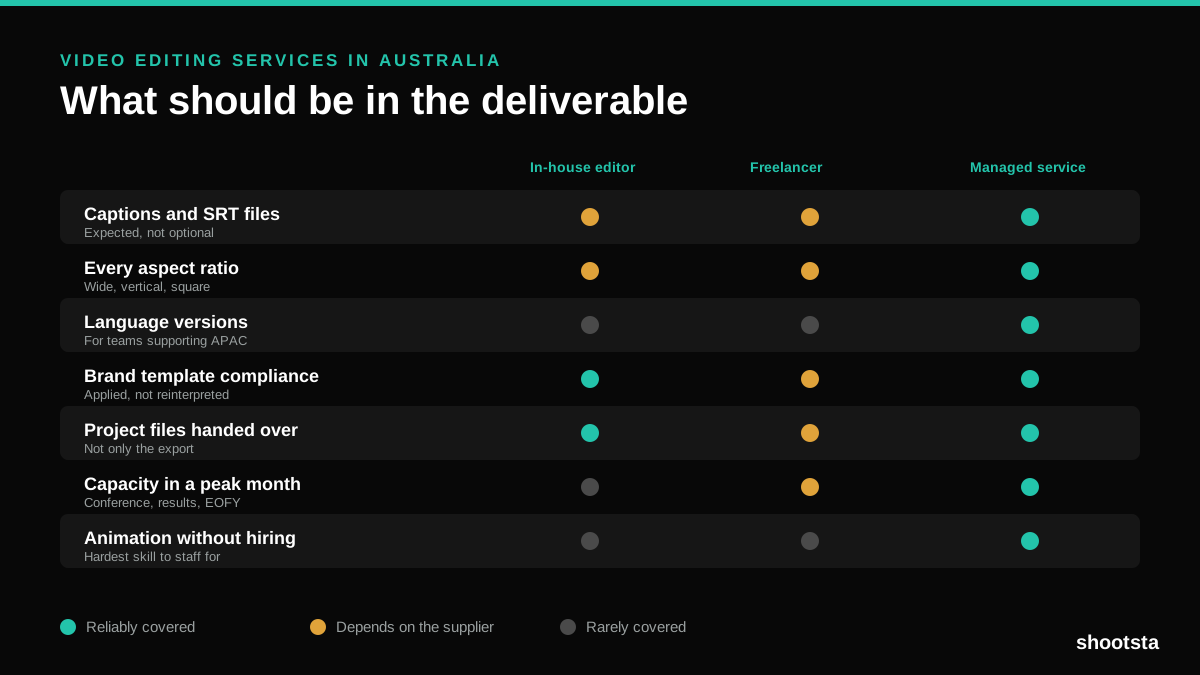
Video Editing Services in Australia
Australian teams are spread across time zones and offices, so the editing queue matters more than the editing. Here is what to expect on cost and turnaround.
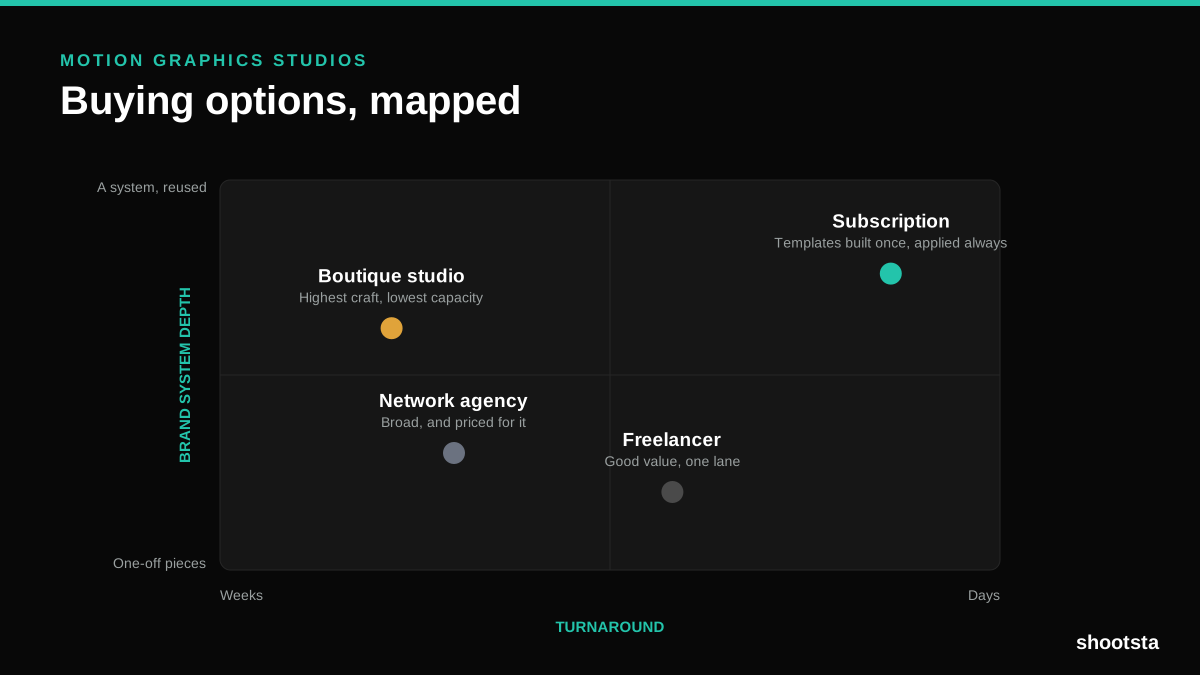
How to Choose Between Motion Graphics Studios
Every motion graphics studio has a good reel. The reel is the one thing that will not tell you how the fifth project goes. These ten criteria will.
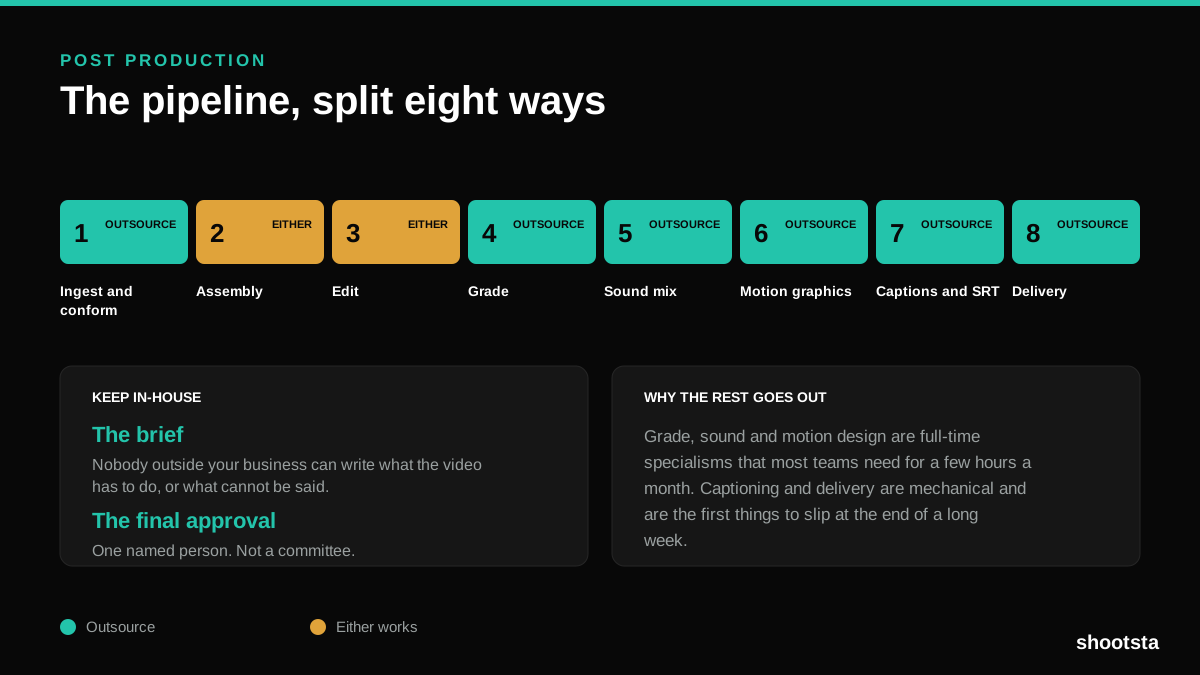
Post Production Agency or In-House Team?
Post production is eight stages, not one. Some of them need context only your team has. The rest are mechanical and are the first things worth handing over.
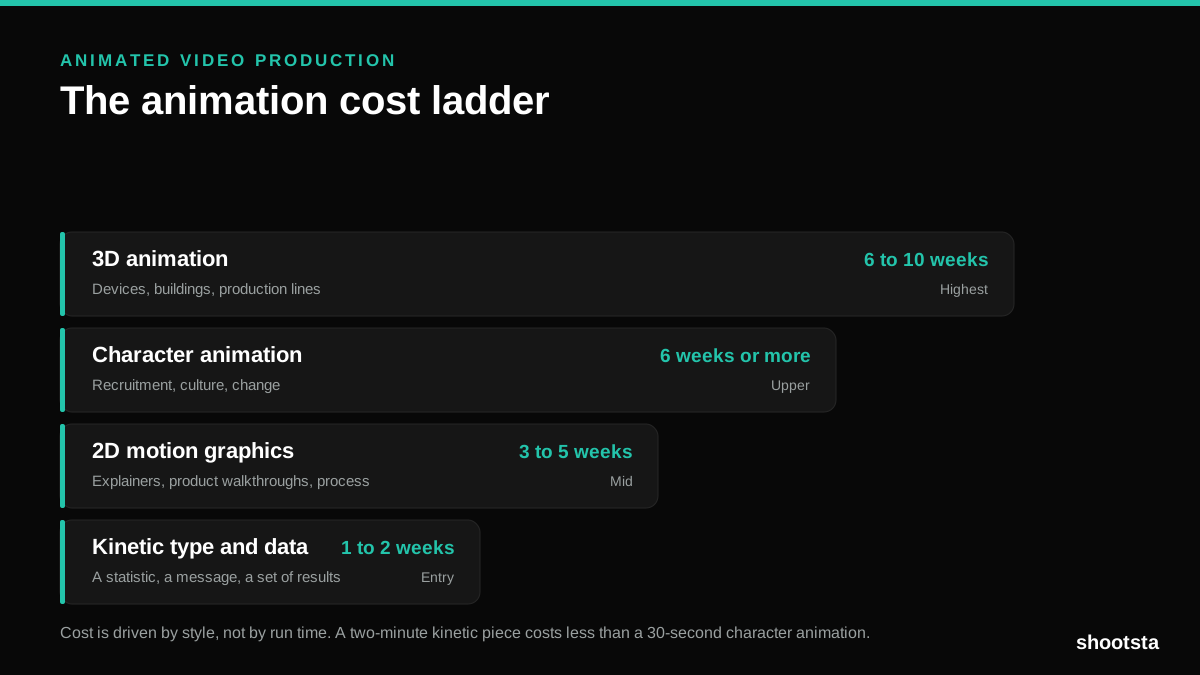
Animated Video Production Cost in the US
Animated video production costs move with style, not with length. Kinetic type, 2D motion, character and 3D sit on four rungs of a ladder. Here is what separates them.
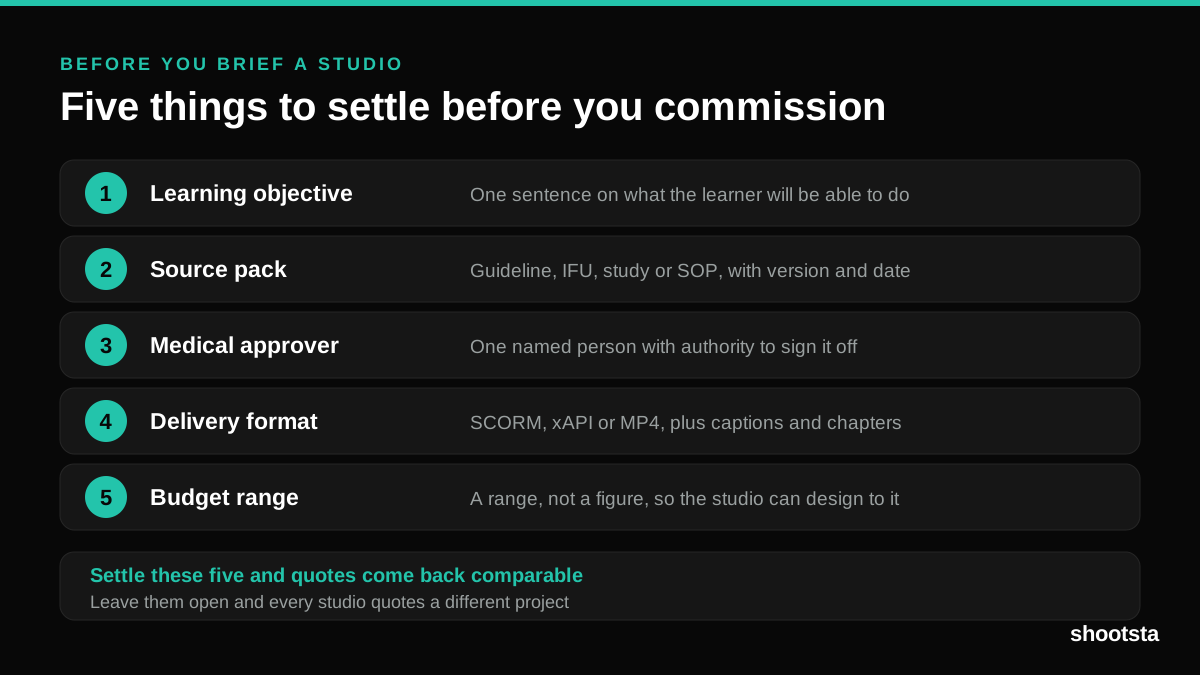
How to Commission Medical Training Animation
Commissioning a medical training animation is mostly decisions you make before anyone animates a frame. The brief fields that matter, what to ask a studio, how much expert time to budget, and the contract terms that stop a rebuild in two years.
How to Write an Animation Brief
How to Write an Animation Brief
Most animation briefs cause delays because they over-specify the visual style and under-specify the outcome. Here are the nine fields an animation production team needs to quote accurately and start without rework.