
Corporate Video Production for UK Companies
shootsta.
Corporate Video Production for UK Companies
By Mark Ashworth · Published July 11, 2025 · Updated October 2026

Plan corporate video production for a UK company, from what your audiences need to workflow, platforms and budget. The guide also shows how to measure performance and return.

You likely know corporate video helps your UK business compete. The hard part is a production process that eats time and money for mixed results.
The gap is building a system that matches the speed, quality and cost your business needs.
Many UK companies have moved away from one-off, high-cost video projects. They now run ongoing production that supports marketing, training and internal comms. That shift needs know-how and a clear plan.
Market Reality Check: UK companies that run video as a planned, repeatable process tend to get a lower cost per video than teams that book an agency job by job. Shootsta customers see 50-60% lower per-video cost vs. agencies.
Understanding Modern Corporate Video Needs
Corporate video needs have changed fast. You now need executive updates, product demos, training, testimonials and campaigns, all on brand.
Hiring an agency for each project struggles to keep up. You need a system that supports regular output and keeps brand standards consistent.
Strategic Video Applications for UK Businesses
Corporate video now goes well beyond marketing. Internal comms, training, sales support, customer service and stakeholder reporting all benefit from professional video, because it explains complex information clearly.
Each use case needs its own approach. A training video has to be clear and memorable, while an executive update has to sound credible. Knowing this helps you plan production and budget.
Essential Corporate Video Types:
- Executive communications and company updates
- Product demonstrations and sales presentations
- Employee training and onboarding content
- Customer testimonials and case studies
- Internal process documentation and procedures
- Marketing campaigns and promotional content
- Event coverage and conference presentations
- Crisis communication and stakeholder updates
Quality Standards and Brand Consistency
Every video you publish should meet the same brand standards. That takes a repeatable approach to visuals, messaging and production values.
Brand consistency in video covers more than logos and colors. It also covers tone, visual style, message order and production quality, so viewers recognize you from one video to the next.
UK Market Considerations for Corporate Video
Video production in the UK has its own cultural preferences, regulatory rules and competitive pressures. Knowing them helps you make videos that connect with British audiences.
UK business culture tends to reward quiet confidence and clear expertise over flashy production. Videos that do well here focus on substance, with credible spokespeople and practical information the viewer can use.
Cultural Preferences in UK Corporate Video
British business audiences prefer a conversational style that shows expertise without sounding boastful. That preference affects who you put on camera, how you write the script and how the video looks.
Credibility in UK corporate video comes from visible competence and industry knowledge as much as from high production values. Put substance first.
Regulatory and Compliance Considerations
UK video production has to follow data protection rules, advertising standards and the compliance rules of your sector. Knowing them up front avoids costly mistakes and keeps stakeholders confident.
GDPR affects how you handle employee consent, customer testimonials and any personal data in your production workflow. Build consent and storage steps into the process.
Production Process and Workflow Management
A good workflow balances quality against your timelines and budget. Traditional production often chases creative perfection at the cost of speed and budget, so projects run late.
The UK companies that do this well standardize routine decisions and stay flexible for the big pieces. Standard choices cut production time and cost and keep quality steady.
Pre-Production Planning and Strategy
Pre-production planning has the biggest effect on how a video turns out. This phase covers audience research, messaging, structure and resource planning. Get it right and the shoot and edit go smoothly.
Bring in people from other departments early so the video serves the whole business. Their input now prevents costly revisions later.
Pre-Production Checklist:
- Clear objective definition and success metrics
- Target audience analysis and messaging strategy
- Content outline and key message hierarchy
- Visual style guide and brand compliance review
- Resource allocation and timeline planning
- Stakeholder approval process and sign-off procedures
- Distribution strategy and platform requirements
- Performance measurement and evaluation criteria
Production Execution and Quality Control
The shoot itself has to balance technical quality with efficiency. That balance decides whether you can keep up regular video output or end up back on expensive one-off projects.
Quality control should hold the standard without slowing everything down. Use a written technical spec, a brand check and a content review, and run them at set points so projects keep moving.
Post-Production and Distribution Strategy
Post-production turns raw footage into a finished video through editing, graphics and versions for each channel. This phase shapes how the final video looks and how well it performs.
Plan distribution during the edit, so each version suits its platform. Set up tracking at the same time.
Technology and Platform Considerations
Modern video platforms let your team brief, review and approve videos without deep technical skills. The one you pick shapes how well the program holds up.
Cloud platforms let people in different UK offices work on one project. They also give you version control, approvals and asset management.
Production Technology Integration
Integrated tools keep planning, creation, review and distribution in one place. That cuts down on large file transfers, version mix-ups and slow email threads.
Most video platforms now include templates, brand asset libraries and automated workflows. These make regular output practical even without a video team.
Collaboration and Approval Workflows
Good collaboration tools let several stakeholders give feedback without holding up the project. Timestamped comments, approval tracking and notifications keep each round moving.
This matters for UK businesses with several offices and a formal executive sign-off, which is a common decision-making structure in British companies.
Budget Planning and Cost Management
Video production costs vary widely with complexity, volume and quality expectations. Once you know what drives the cost, you can build a program your budget can sustain year after year.
Per-project pricing often works poorly for regular video needs. Costs are hard to predict and each new format is a new quote. A subscription or retainer gives you a predictable budget.
Cost Structure Analysis
The full cost of a video includes more than the production fee. Add internal time, revision cycles, project management and the cost of a late video.
Internal costs are the easiest to miss, such as the hours spent on revisions, approvals and coordination. A repeatable process cuts those hidden costs.
Key Cost Factors:
- Content planning and strategy development
- Script writing and creative development
- Production coordination and project management
- Technical production and equipment requirements
- Post-production editing and graphics creation
- Revision cycles and approval processes
- Distribution setup and optimization
- Performance measurement and reporting
ROI Optimization Strategies
To get the best ROI, find out which video types drive the strongest business results and put more of your budget there. Review it each quarter.
Customer testimonials, product demos and training videos usually lead, because they support revenue or cut costs directly. General company updates and event coverage still add value, but their effect is harder to measure.
Measuring Corporate Video Performance
Good measurement shows you what to improve and gives you evidence for stakeholders. Match your metrics to business goals, then use them to make better production choices over time.
Track the numbers (views, engagement rates) and the feedback (whether viewers found the video useful). Together they give a fuller picture.
Key Performance Indicators
Look at immediate engagement and at longer-term business impact. Engagement data shows which videos work, while business impact data is what justifies the budget next year.
Match each metric to the video type. A training video is measured by completion rates and test scores, and a marketing video by leads and conversions.
Essential Corporate Video KPIs:
- View completion rates and engagement metrics
- Lead generation and conversion attribution
- Training effectiveness and knowledge retention
- Internal communication reach and feedback
- Brand awareness and recognition improvement
- Cost per engagement and production efficiency
- Stakeholder satisfaction and approval ratings
- Time-to-market and production cycle efficiency
Frequently Asked Questions
What makes corporate video production different from marketing video production?
Corporate video covers wider business needs, such as internal training, executive comms and stakeholder reporting, alongside marketing. It puts clear information and professional credibility ahead of entertainment. That means it needs its own production approach and its own success metrics.
How long should corporate video production typically take from concept to completion?
With a set workflow and templates, a standard video can reach a first cut in about 48 hours. Projects that need custom creative take longer, and traditional agency timelines often stretch to several weeks. It depends on complexity and approvals.
What budget should UK companies allocate for corporate video production?
Budgets vary a lot with volume and quality needs, so start from the number of videos you need each year. A subscription or retainer usually works better than one-off projects for regular output. It gives you predictable costs and makes it easy to keep producing.
How can companies ensure brand consistency across all corporate video content?
Use a visual style guide, a messaging framework, templates and a clear approval workflow. A production platform that builds your brand guidelines into the edit and checks them on every video works better than manual reviews.
What skills should internal teams develop to support corporate video production?
Focus on content strategy, project management and basic video planning rather than technical production. A good production partner or platform handles the technical side, so your team can spend its time on strategy, stakeholder coordination and performance tracking.
Strategic Advantages of Professional Corporate Video
When video production runs as a steady process, communication improves and the brand looks more credible. The savings also add up over time, and they grow as video becomes the format people expect for business news.
Measurable Business Benefits:
- Communication Effectiveness: A short video often gets a message remembered where a long email is skimmed
- Training Efficiency: Recorded training can be watched on demand, so trainers repeat the same session less often
- Sales Enablement: Product videos help sales teams explain the offer the same way to every prospect
- Brand Credibility: Consistent corporate video builds professional reputation and trust
- Operational Efficiency: Templates and a fixed workflow cut the time each new video takes to produce
Professional video also helps you respond faster when the market shifts and reach teams spread across offices. Over time, it builds stronger relationships with the people who watch it.
ROI and Business Impact Analysis
The return from a steady video program comes from several places at once. It shows up as lower communication costs, faster training, stronger sales conversations and less time lost to rework.
Some impact is harder to put a figure on, such as stronger employee engagement and clearer answers for customers.
Where You Can Measure the Business Impact:
- Communication reach and response, compared with email and intranet posts
- Training delivery costs and trainer time per learner
- Sales conversations, conversion rates and time to close
- Production speed from brief to approved video
- Stakeholder engagement and how well key messages are recalled
Implementation Strategy and Planning
Roll out video production in phases, so you build skills step by step and still ship useful videos early. A phased start keeps your team from being swamped while the lasting processes take shape.
Start by looking at your current resources, tech needs and business priorities. Pick video types that matter a lot but are simple to make, then move to more advanced formats as your team gets comfortable.
Phase 1: Foundation Building
In the first phase, set up the basics and make a few videos that prove the value. Train the key people, pick a production platform and build templates for the video types you make most.
This is also the time to set up approval workflows, brand guidelines and a way to measure results. They let you grow without quality slipping.
Phase 2: Process Optimization
Once the basics are in place, tune the workflow, add new video types and use automation and templates to work faster. Your aim in this phase is to cut production time while keeping quality at least where it was.
Tighten the approval process and build a library of approved videos and assets. Set up performance tracking as well, so decisions about what to make next rest on data.
Phase 3: Strategic Expansion
In the third phase, you produce in several formats at once and tie video into your wider marketing and comms programs. Video then becomes a capability that serves several business goals at the same time.
This stage often adds tailored versions for different audiences, more automation and analytics linked to your other systems. Each of these makes the impact easier to show to the business.
Corporate Video Production Readiness Assessment
Use this checklist to rate how ready your organization is to run corporate video production as an ongoing program.
Rate Your Current Capabilities (1-5 scale):
- Strategic Alignment: Video production goals match business objectives and communication needs
- Resource Allocation: Enough budget and team capacity for ongoing video production
- Technical Infrastructure: Production platforms and workflows support efficient content creation
- Content Strategy: Clear understanding of video types and business uses
- Brand Guidelines: Set visual and messaging standards for consistent video production
- Approval Processes: Efficient review and sign-off workflows for timely delivery
- Performance Measurement: Systems to track video effectiveness and business impact
- Team Capabilities: Internal skills to manage video production programs
- Distribution Strategy: Clear plans for video distribution and audience engagement
- Continuous Improvement: Processes for making production better over time
Assessment Results:
- 40-50 points: Excellent foundation for advanced video production
- 30-39 points: Good basics with areas to strengthen
- 20-29 points: Gaps that need attention and investment
- Below 20 points: Build the basics before launching a video program
Next Steps for Corporate Video Success
Start with an audit of your current video needs, existing resources and business goals. Then pick the improvements that matter most and are easy to deliver, so you can prove value quickly.
Build a plan that covers the videos you need now and the capability you want in a year. Include timelines, resource needs and success metrics, so you can track progress and report it to stakeholders.
Immediate Action Plan
- Needs Assessment: Identify current video content needs and strategic opportunities
- Resource Evaluation: Determine budget, team capacity, and technical requirements
- Platform Research: Evaluate production platforms and tech solutions for your needs
- Content Strategy: Build frameworks for video types and business uses
- Workflow Design: Create approval processes and production workflows
- Team Training: Build internal skills for video production management
- Pilot Program: Launch first video projects to test processes and prove value
Transform Your Corporate Video Production
Shootsta helps UK companies set up video production that runs at the pace the business needs. Our editors in London, Sydney, Singapore and San Diego work through one platform where your team briefs, reviews and approves.
Comprehensive Corporate Video Solutions:
- A first cut in about 48 hours on standard edits
- Template systems and brand guidelines for consistent quality across all content
- Collaboration tools built for UK corporate approval processes and team coordination
- Performance measurement and optimization features that show clear business value
- Predictable pricing at 50-60% lower per-video cost vs. agencies
Simplify Your Corporate Communications: From executive updates to training, Shootsta helps UK companies make professional video that improves communication and costs less to produce. It works alongside your in-house team rather than replacing it.
If you want to plan corporate video production for your UK company, Contact Shootsta. We can show you how it would fit your current process.
Keep reading
Take this article with you
Read the latest at shootsta.com/blog/corporate-video-production-uk-guide
You might also like

How to Plan Video Team Capacity Around Leave
Your only editor just booked two weeks off, and you already know which projects will slip. Chad Lakin explains how to plan video team capacity so the work keeps moving when someone is away.
Corporate Video Editing Standards: Full Guide
A two-page editing standard does more for consistency than a forty-page brand book. Here is what it should cover, who owns each part, and how to enforce it with an in-house editor or an outside partner.
Quality Control in Outsourced Video Editing
When editing leaves the building, quality has to be checked by a system rather than by whoever happens to look. Here is the system: acceptance criteria, two QA gates, counted revision rounds and a quarterly audit.
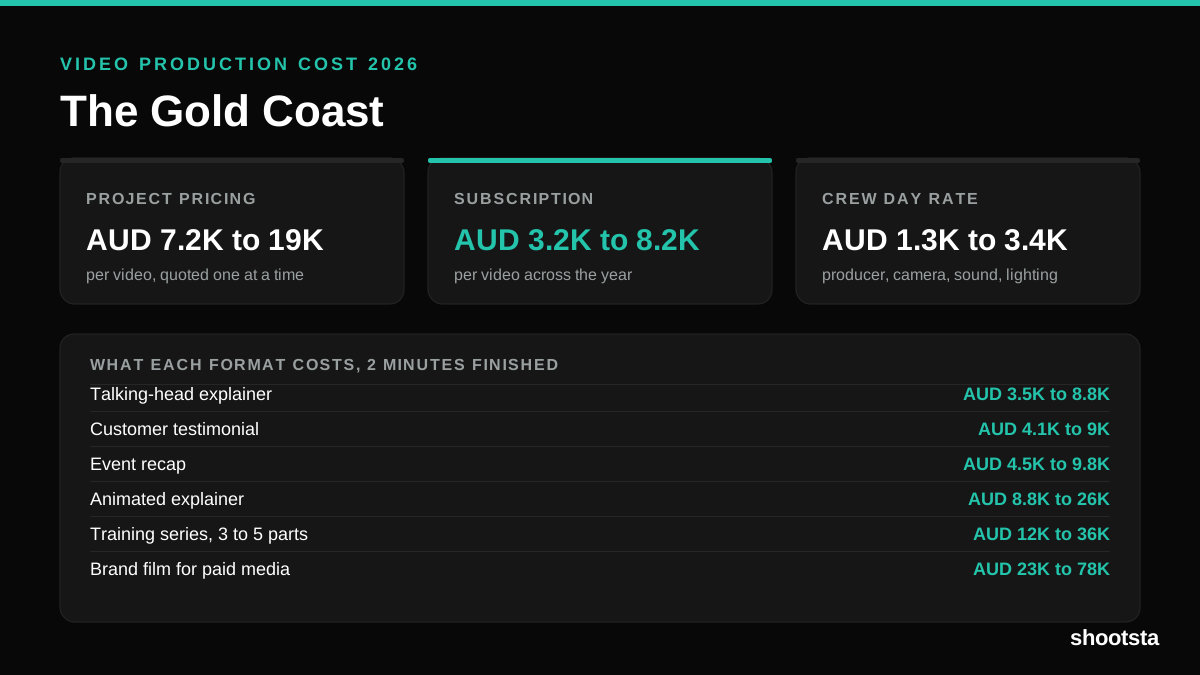
Video Production Cost on the Gold Coast 2026
Video production in the Gold Coast costs AUD 3,200 to AUD 8,200 per finished video on a subscription model, and AUD 7,200 to AUD 18,500 for one-off project work. Here is what you are paying for, and how the three pricing models compare.
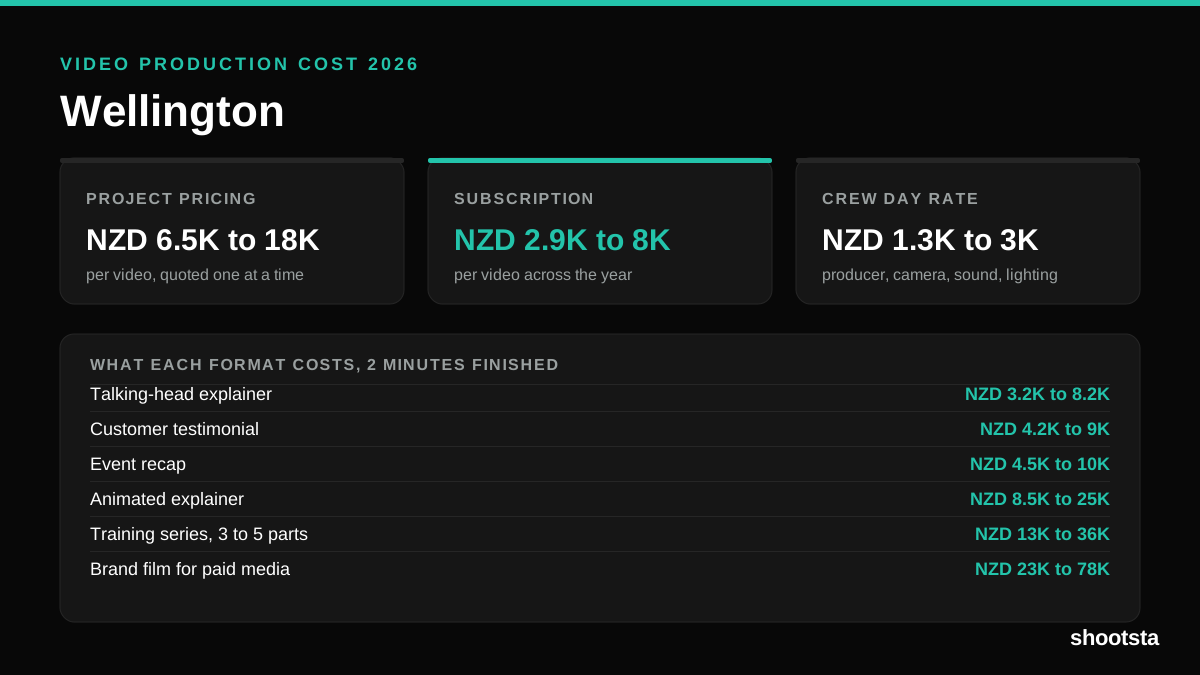
Video Production Cost in Wellington (2026)
Video production in Wellington costs NZD 2,900 to NZD 8,000 per finished video on a subscription model, and NZD 6,500 to NZD 18,000 for one-off project work. Here is what you are paying for, and how the three pricing models compare.
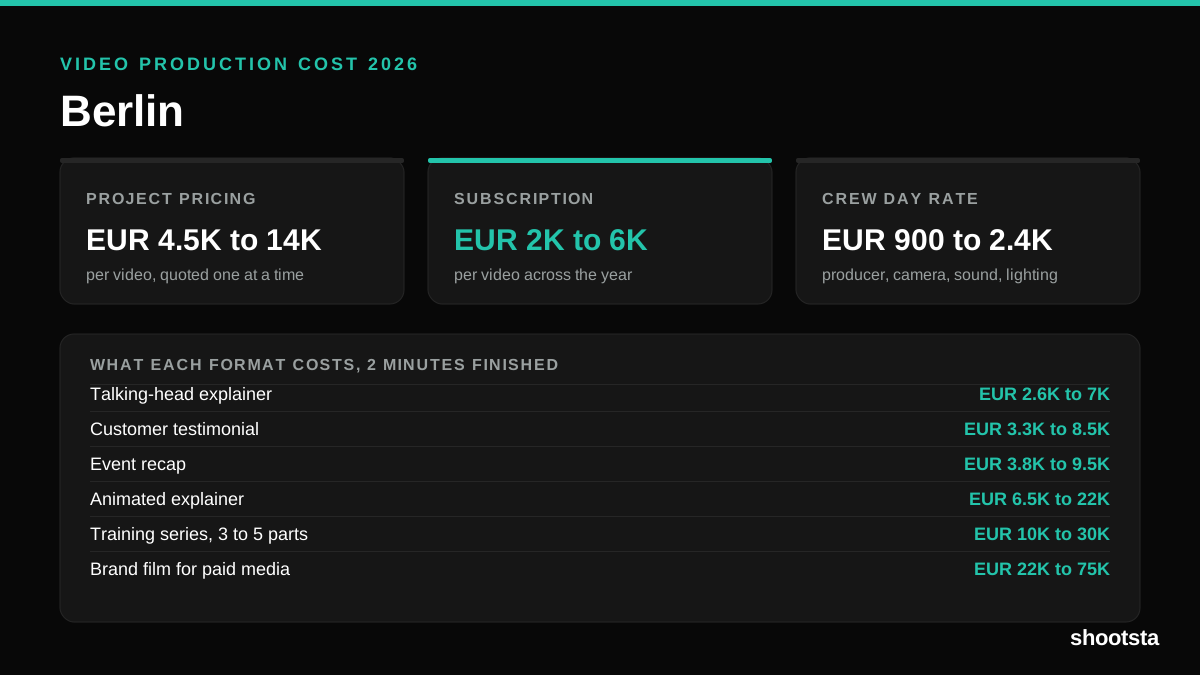
Video Production Cost in Berlin (2026)
Video production in Berlin costs EUR 2,000 to EUR 6,000 per finished video on a subscription model, and EUR 4,500 to EUR 13,500 for one-off project work. Here is what you are paying for, and how the three pricing models compare.