
Commercial Videography: Cost and Scope
shootsta.
Commercial Videography: Cost and Scope
By Shootsta · Published September 24, 2026 · Updated October 2026
Commercial videography is priced by the day and judged by the deliverable. Most projects go wrong because those two numbers were never reconciled.
Short answer. Commercial videography is filming made to sell something, delivered as an ad, a product film or a campaign asset. It is bought by the day and judged by the deliverable, which is why so many shoots overrun. A day holds roughly eight to ten camera setups, and a finished video needs about three usable setups. Work backwards from the number of videos you need, not forwards from the shot list.
Commercial videography is one of the few video categories still bought by the day. You book a crew, a camera and a location for a half day or a full day, and what you get back depends entirely on how well the shot list was planned.
That mismatch is where projects go wrong. The budget covers one day, while the brief expects a handful of finished videos. Often nobody reconciles those two numbers until the light is going and half the list is unshot.
This is a buyer guide to commercial videography: what it covers, what a day realistically produces, which deliverables each channel needs, and how to plan a shoot that fits.
What is commercial videography?
Commercial videography is filming produced to sell a product, a service or a brand. It covers television commercials, pre-roll advertising, product films, campaign assets and the cutdowns each channel needs.
It is distinct from corporate video, which informs an internal or partner audience, and from branded content, which earns attention by being worth watching in its own right. Commercial videography has a job to do and is measured on whether people act.
What does a commercial videographer do?
A commercial videographer films video for a business, as opposed to a wedding or a live event. On a typical job they plan the shots with you, light the set, film, record clean audio and hand over the footage. Some also edit, and many do not, so ask before you book.
Before you hire a commercial videographer, check who owns the raw footage and what the day rate covers. Travel, a second camera and editing are often extra. Ownership matters most, because it decides whether you can re-cut the footage for new channels later.
What deliverables does commercial videography produce?
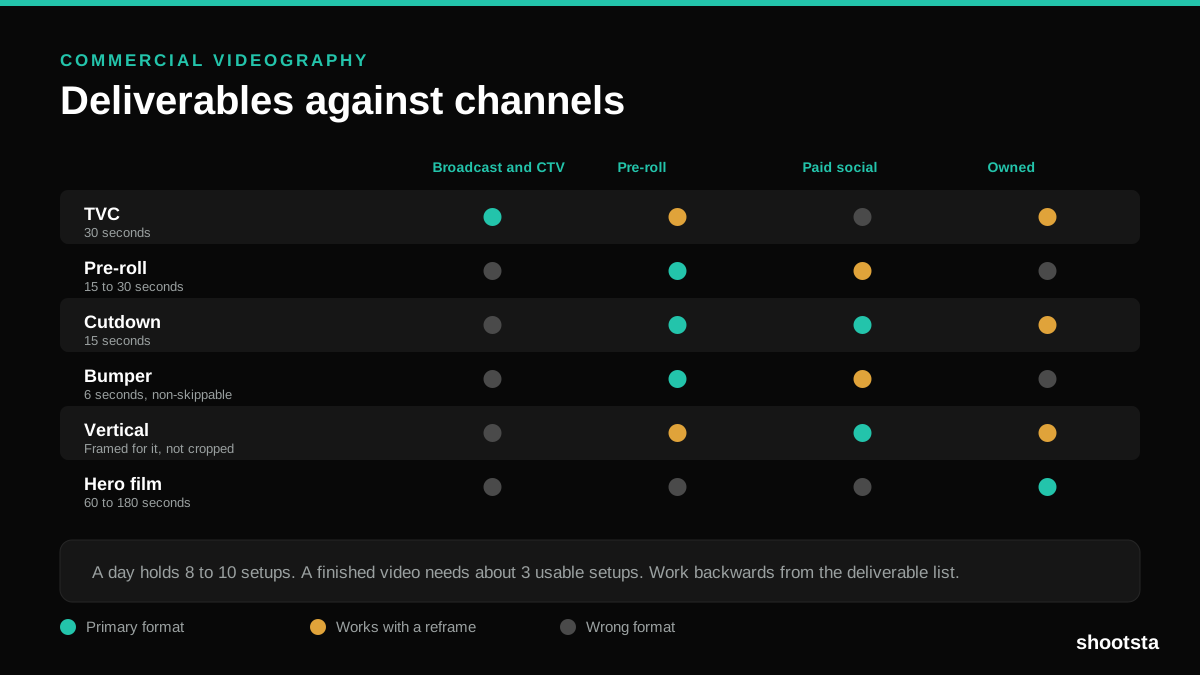
A modern commercial videography brief produces a set of assets rather than a single film, and the vocabulary is worth knowing before you read a quote.
| Deliverable | Typical length | Where it runs |
|---|---|---|
| TVC | 30 seconds | Broadcast and connected TV |
| Pre-roll | 15 to 30 seconds | Video platforms, skippable after five seconds |
| Cutdown | 15 seconds | Paid social and display |
| Bumper | 6 seconds | Non-skippable pre-roll |
| Vertical | 15 to 60 seconds | Mobile-first feeds, watched muted |
| Hero film | 60 to 180 seconds | Website, sales, trade shows |
Two things follow from that table. Every one of those is a separate finished asset, so scope them at the brief rather than after delivery. And the vertical version is not a crop of the widescreen one, because a shot framed for a wide frame usually loses its subject when it is reframed.
How much can one shoot day produce?
Set the crew, locations, setups and talent, and see whether the shot list fits the day.
Interactive
Plan the shoot day
Four inputs. The planner works out whether the shot list fits a half day, a full day or more, and how many finished videos that day can actually produce.
Who is on camera?
Crew size
A larger crew moves faster between setups but costs more per hour.
Shoot length
Full day
About 7.5 hours on the floor.
Finished videos
2
Roughly three usable setups per finished piece.
Setups per hour
0.8
A crew resets while the next shot is lit.
Where the hours go
- Shooting45 minutes per setup at this crew size.5 hrs
- Moving between locationsManageable at this number.1 hrs
- Talent and briefingStaff brief quickly on the day.2 hrs
A full day, with no slack
About 7.5 hours, which is a full day with almost nothing spare. Trim two setups or drop a location if anything on the list has to happen. That gives you roughly 2 finished videos from the day.
See commercial video productionA planning guide built from typical shoot pacing, not a quote. Assumes a signed-off shot list, a scouted location and daylight where it matters. Setup time drops with more crew and rises with more talent to manage. Post production time is separate.
What does commercial videography cost?
Cost divides into three parts, and only one of them is the camera.
The shoot. Priced by the day and driven by crew size, locations and talent. Every location move costs roughly an hour of daylight you are not filming in.
Post production. Usually the larger half. Edit, grade, sound, graphics and every version on the deliverable list.
Usage and licensing. The part that surprises buyers. Cast talent, music and stock all carry usage terms tied to a territory and a period. Running a commercial for a second year can cost more than making it did.
For the editing side of that, Shootsta prices in video credits under a fixed monthly fee, where one credit covers editing one finished video. There are no per-project fees, which is what keeps the cutdowns affordable once the footage exists.
What does high-end brand video look like?
A brand film produced by Shootsta Premier. Commercial videography at this level is a scheduled production rather than a booking, and the planning is what makes the day work.
How many setups fit in a day?
Roughly eight to ten with a small crew, fewer if you are moving between locations or working with talent who have a limited window.
A setup is one camera position and one lighting arrangement. Changing either one is a new setup, and each takes between 35 and 60 minutes depending on how many hands are on the crew. That is the number that decides your day, not the length of the finished video.
Work backwards. A finished video needs about three usable setups once you allow for coverage and the shots that do not work. Three videos means nine setups, which is a full day with nothing spare.
How do you avoid overrunning a shoot day?
You avoid it by making four decisions before anyone arrives on set. Each one protects the hours you have paid for.
- Cut locations before you cut setups. One move costs an hour. One setup costs forty minutes.
- Book executive talent first. Their window is the least flexible thing on the schedule, so build the day around it.
- Scout, or at least see photographs. Most overruns start with a room that was smaller or louder than expected.
- Agree the must-haves. Name the three shots that make the day a success, so that when the light goes there is no argument about what to drop.
How do you choose a commercial video production company?
Showreels are the worst way to build a shortlist. A reel tells you what a company can make once and nothing about what it costs to make forty.
The questions that matter are turnaround per video, how brand consistency is enforced on the hundredth output, and what cost per finished video looks like at your real annual volume. For how the main options answer those, read our comparison of the best corporate video production companies.
Do you need a commercial videography crew at all?
Sometimes you do not, and it is worth asking before you book one. A crew earns its cost when the shoot itself is the hard part: talent, lighting, a location that has to look expensive. For a product film, a customer story or a campaign asset, a small kit and a trained person on site will often get footage that edits perfectly well.
A split that works for many brands is to book a crew for the flagship shoot once or twice a year. Your team films everything else, and a partner handles the editing. That keeps the volume affordable without giving up the pieces that need craft.
How long does commercial videography take?
The shoot is a day. The schedule around it is usually four to six weeks, and almost none of that is filming.
Pre-production takes the longest, because scripting, casting, location access and approvals all have to line up. Post production runs from days to weeks depending on the deliverable list. Shootsta holds a first cut at about 48 hours from footage landing, which compresses the back half considerably once the shoot is done.
Where to go next
For the service itself, see commercial video production, which covers formats, crews and turnaround.
If you are planning the creative rather than the logistics, read videography for advertising and how to cut video for every social platform. To model the cost against your annual volume, use the cost calculator, or read our guide to promotional video production cost and turnaround.
To plan a commercial videography shoot against a real deliverable list, book a free consultation.
About Shootsta
Shootsta is a global video production service that helps enterprises create on-brand videos at scale and operationalize video production across every business touch-point. We have produced 70,000+ videos for 920+ brands since 2014, with a first cut in about 48 hours and 4.9 / 5 customer satisfaction across post-delivery surveys. Editors work from offices in Sydney, London, Singapore and San Diego.
Last updated 24 September 2026.
Take this article with you
Read the latest at shootsta.com/blog/commercial-videography
You might also like

Shootsta at Day 1 of B2B Marketing Leaders Forum
Shootsta is at B2B Marketing Leaders Forum Asia in Singapore on 14 and 15 October 2026. Watch our day 1 video, edited overnight and ready before the first coffee break on day 2.
12 Branded Content Examples That Worked
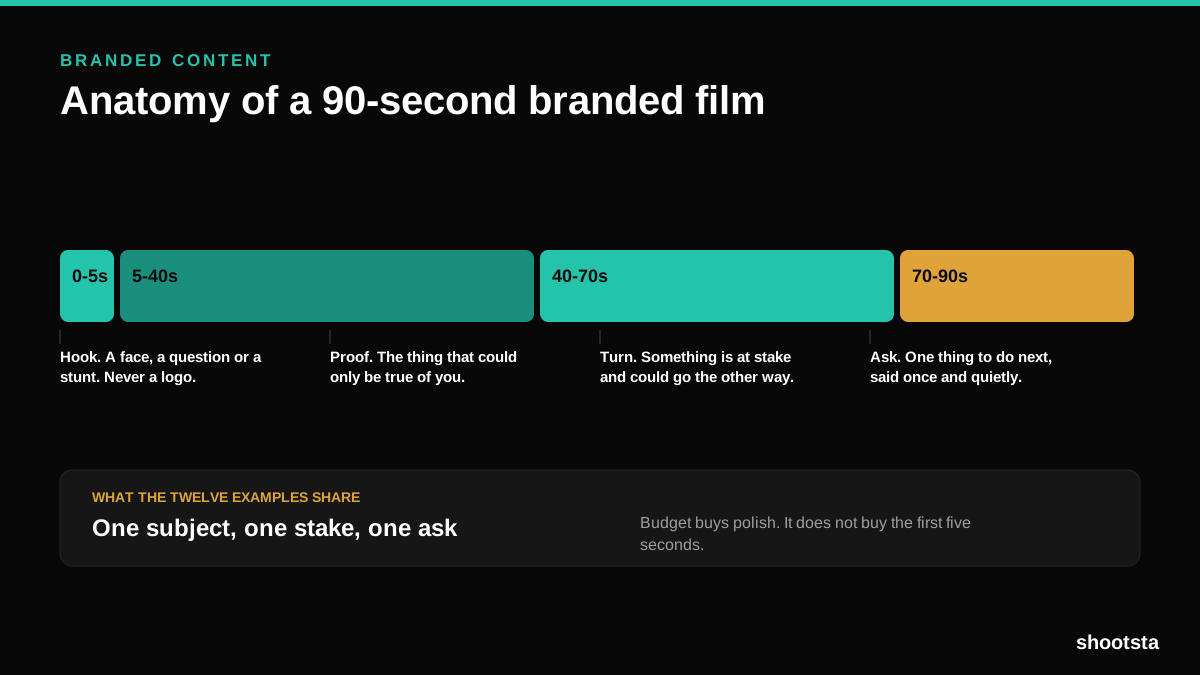
Twelve pieces of branded content that people chose to watch, what each one got right, and the structure underneath all of them.
Promotional Video Production: Cost and Time
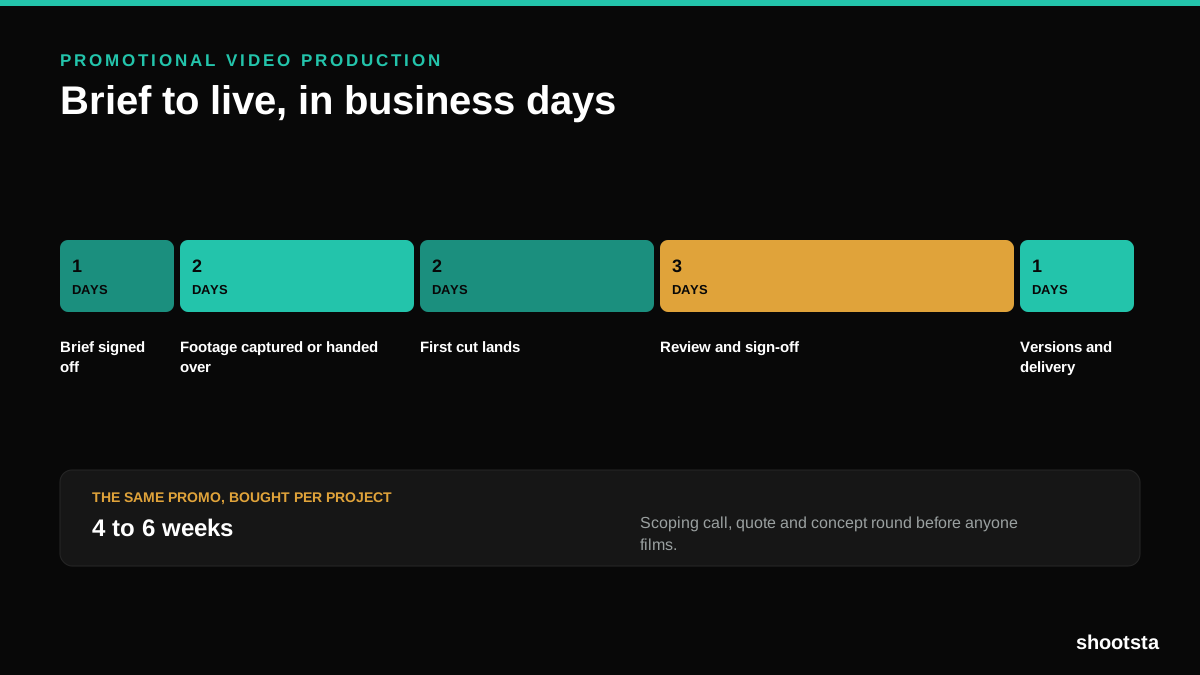
Most promotional video production schedules are not slow because of the edit. They are slow because of the approval chain. Here is where the days go.
Video Marketing Agency or Subscription?
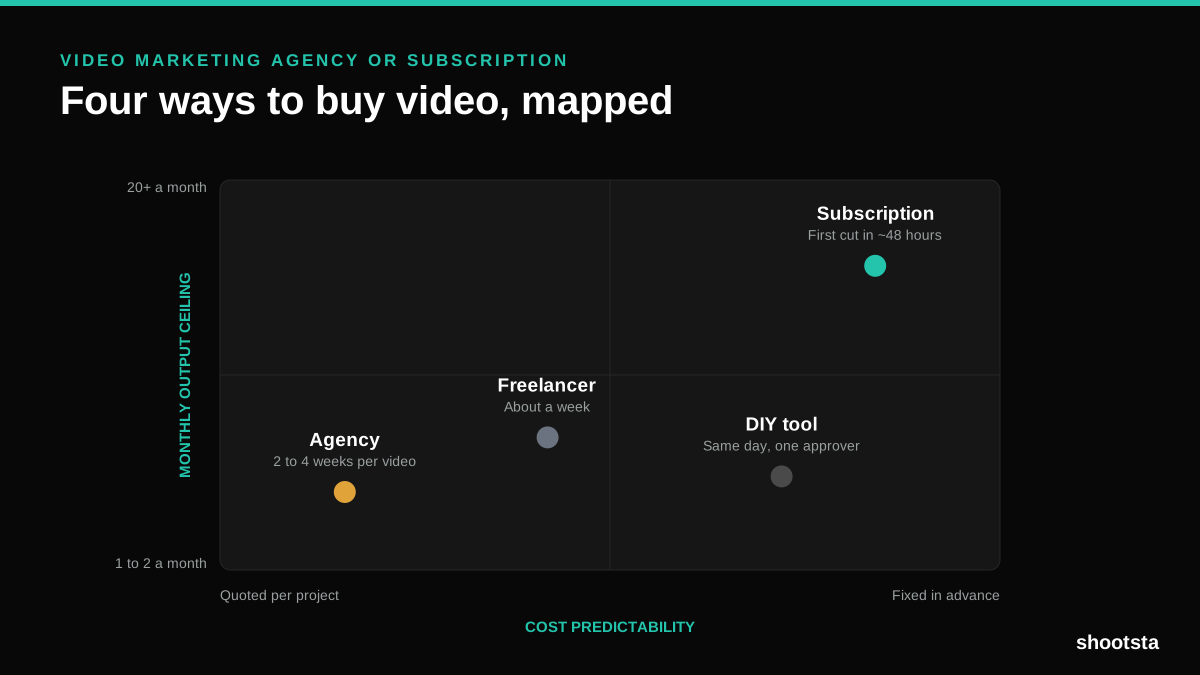
A video marketing agency prices per project and works in weeks. A subscription prices the year and works in days. Which one fits depends on how often you publish, not on which is better.

B2B Video Production: Costs and Buying Models
There are five ways to buy B2B video production. Each one works well up to a point and then breaks, usually at a volume nobody planned for. Here is what each costs and where the ceiling sits.
How to Measure Video Speed-to-Market
How to Measure Video Speed-to-Market
Speed-to-market is the lag between needing a video and publishing it. For marketing teams it is a revenue metric. Here is how to measure and improve it.