
How to Measure Video Speed-to-Market
shootsta.
How to Measure Video Speed-to-Market
By Shootsta · Published July 21, 2026 · Updated October 2026
Speed-to-market is the lag between needing a video and publishing it. For marketing teams it is a revenue metric. Here is how to measure and improve it.
What is video speed-to-market?
Video speed-to-market is the time between deciding you need a video and publishing it. It covers briefing, production, editing, review and approval. For a marketing team it belongs with the revenue metrics, because campaign impact decays with every week of delay.
Why does it matter to revenue?
McKinsey research links every week of delay to a measurable loss of campaign impact. A campaign that slips a month can lose a large share of its potential before it launches. Speed-to-market decides whether a video supports a campaign at its peak or arrives as the moment fades. You can model the cost with the enterprise video ROI calculator.
How do you measure it?
Track the full lag from request to publish, with the edit as one part of it. Time-stamp four points: request raised, brief approved, first cut delivered and final published. The gaps between them show where the time goes, and briefing and approval often turn out to take longer than the editing. The turnaround benchmark is in what a good video turnaround time looks like.
What slows it down?
- Long briefs that turn into meetings.
- Review chains with more approvers than the work needs.
- Per-project production timelines that treat every video as new.
- A single in-house bottleneck that cannot absorb campaign spikes.
How do you improve it?
Use one brief template for every request, cap the approval chain and define revisions up front. Then pick a production model built for repeatable turnaround, so campaigns launch on time and keep their full impact. To take the case to finance, pair the speed numbers with the business case for enterprise video.
Where to start
Measure speed-to-market on your next campaign video using the four time-stamps above, then run the enterprise video ROI calculator to value the lag.
Sources
- McKinsey: campaign impact lost per week of delay.
- HubSpot: engagement decline from delayed time-sensitive content.
- Gartner: annual cost of training delays per 1,000 employees.
- Salesforce: share of workplace failures linked to poor communication.
- Shootsta customer reporting across 70,000+ videos produced.
Take this article with you
Read the latest at shootsta.com/blog/video-speed-to-market
You might also like

Shootsta at Day 1 of B2B Marketing Leaders Forum
Shootsta is at B2B Marketing Leaders Forum Asia in Singapore on 14 and 15 October 2026. Watch our day 1 video, edited overnight and ready before the first coffee break on day 2.
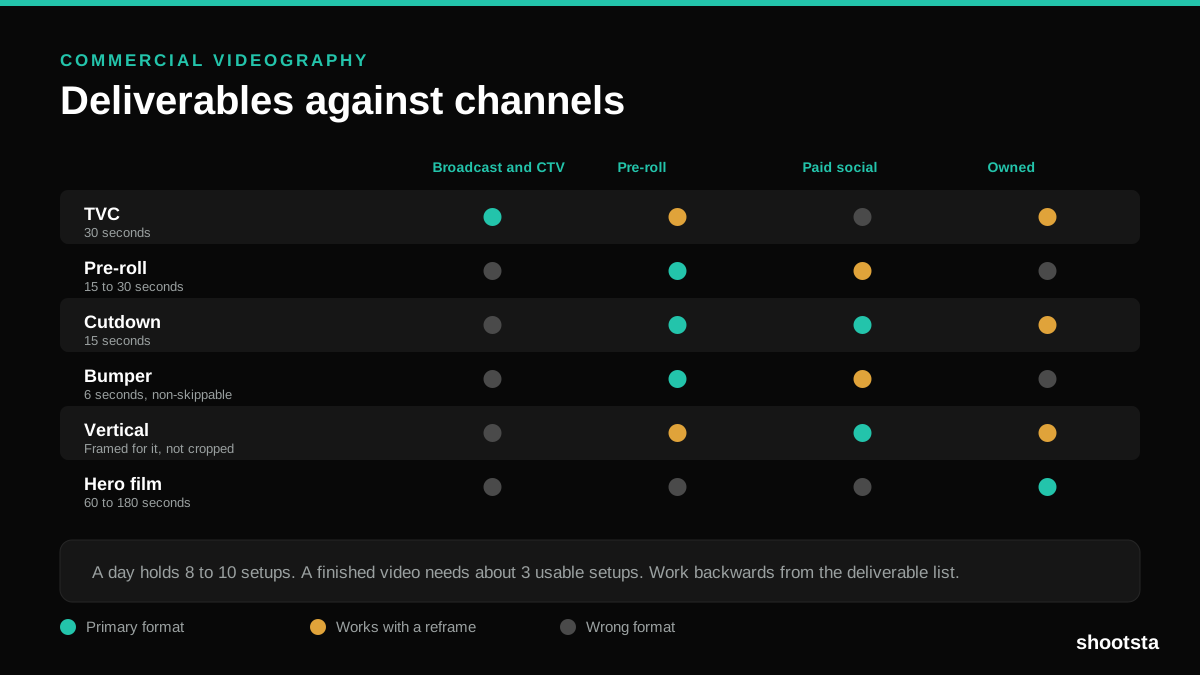
Commercial Videography: Cost and Scope
Commercial videography is priced by the day and judged by the deliverable. Most projects go wrong because those two numbers were never reconciled.
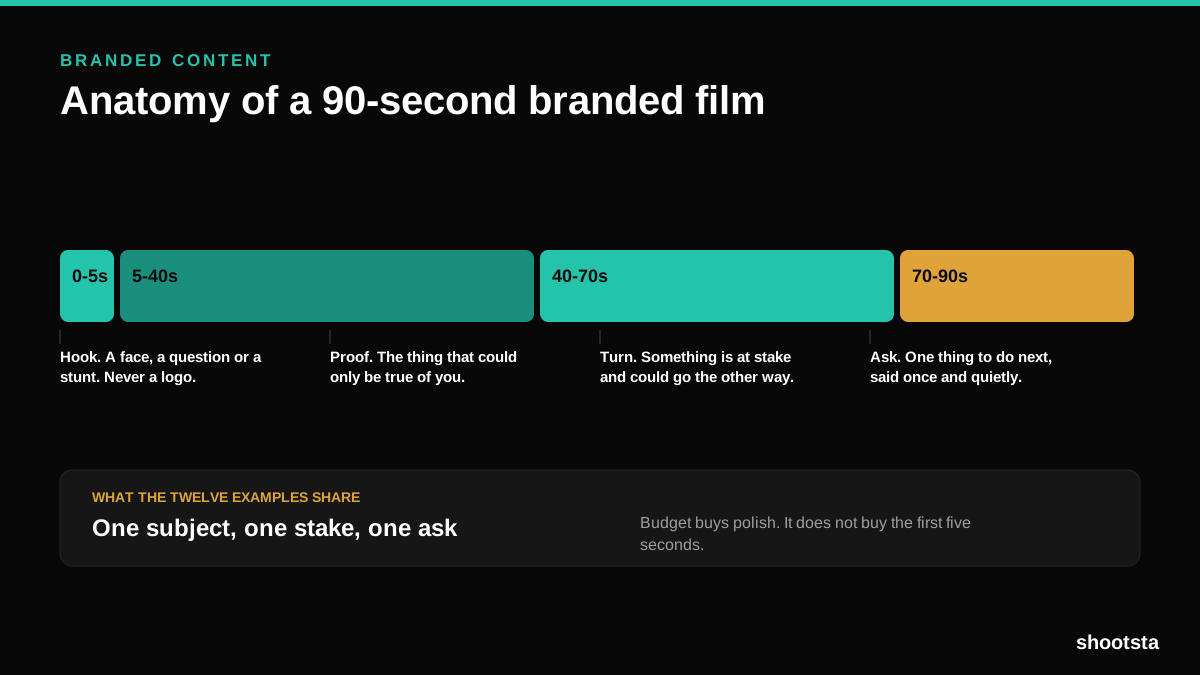
12 Branded Content Examples That Worked
Twelve pieces of branded content that people chose to watch, what each one got right, and the structure underneath all of them.
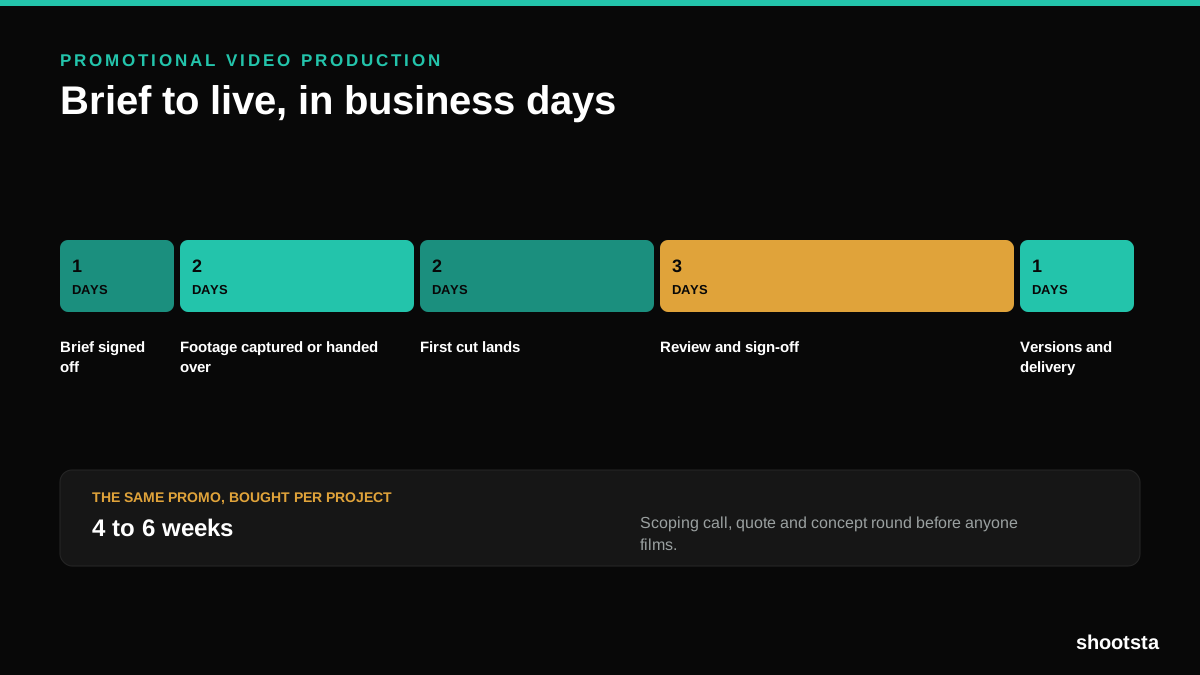
Promotional Video Production: Cost and Time
Most promotional video production schedules are not slow because of the edit. They are slow because of the approval chain. Here is where the days go.
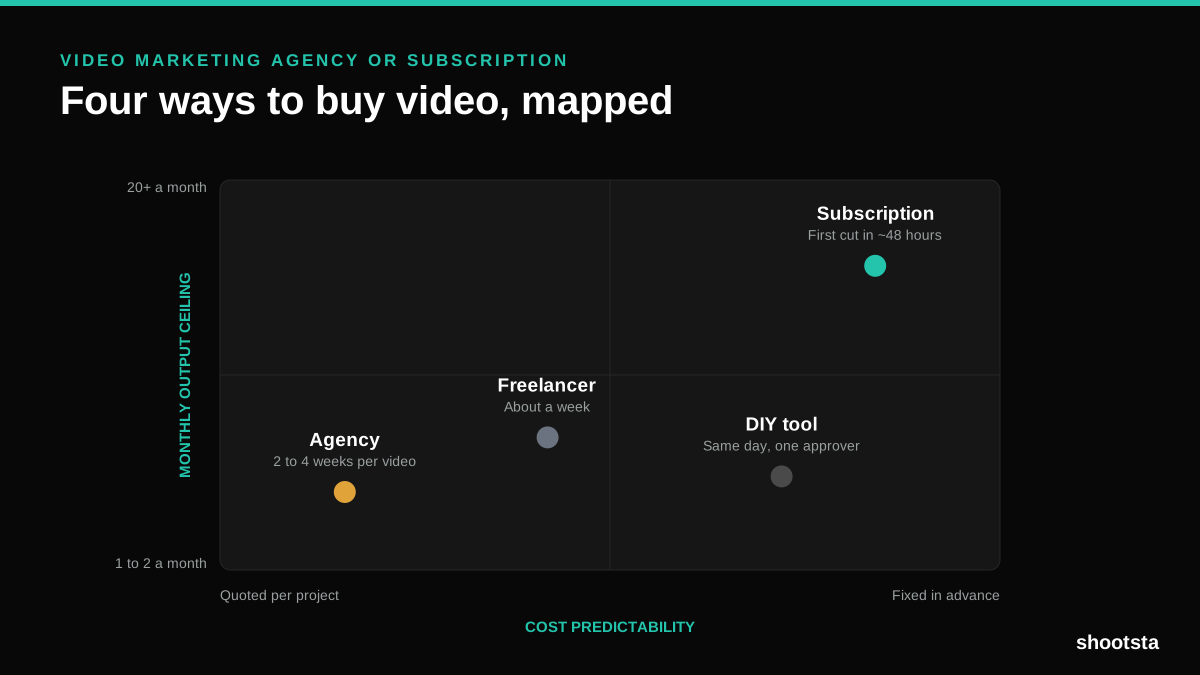
Video Marketing Agency or Subscription?
A video marketing agency prices per project and works in weeks. A subscription prices the year and works in days. Which one fits depends on how often you publish, not on which is better.

B2B Video Production: Costs and Buying Models
There are five ways to buy B2B video production. Each one works well up to a point and then breaks, usually at a volume nobody planned for. Here is what each costs and where the ceiling sits.