
Video Marketing Agency or Subscription?
shootsta.
Video Marketing Agency or Subscription?
By Shootsta · Published September 14, 2026 · Updated October 2026
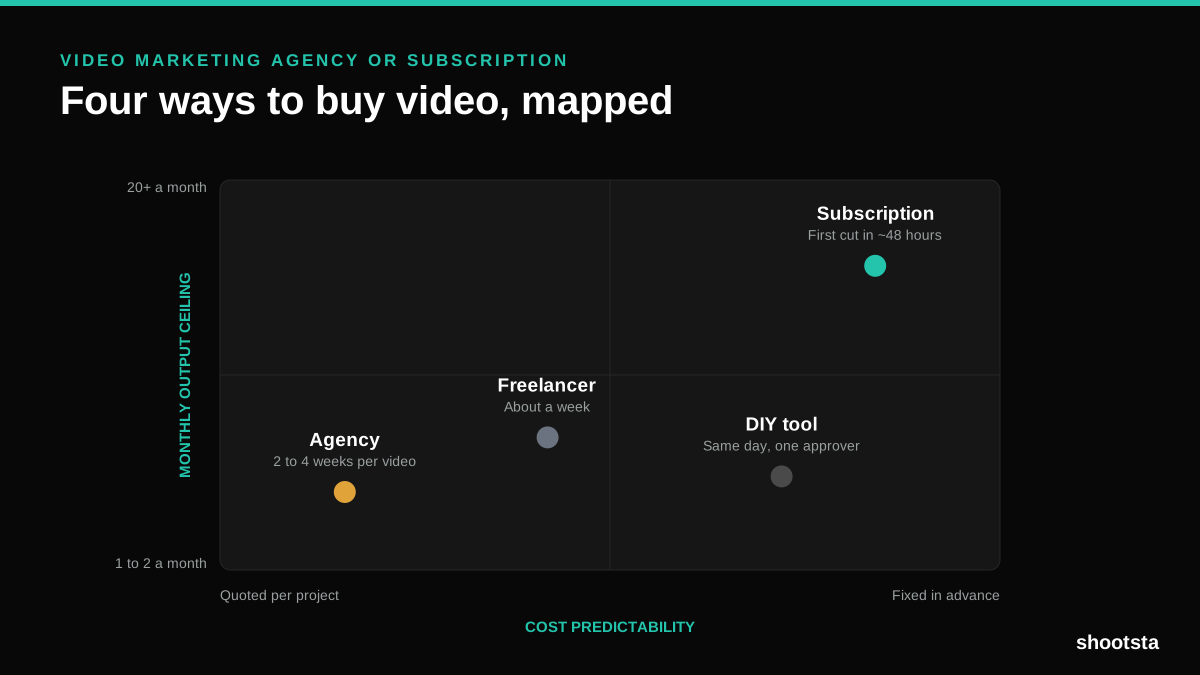
A video marketing agency prices per project and works in weeks. A subscription prices the year and works in days. Which one fits depends on how often you publish, not on which is better.
Short answer. A video marketing agency sells concept-led projects, priced per job and delivered in weeks. A video subscription sells capacity, priced per month and delivered in days. Agencies win on craft for a small number of flagship pieces. Subscriptions win on cost per video and on speed, once you publish more than about twice a month. If you publish weekly, you will probably end up using both, with the agency reserved for the two or three films a year that need a crew.
Every team that buys video reaches the same fork. Do you hire a video marketing agency, or do you buy production capacity by the month?
The question often gets argued as though one model is simply better, but they are built for different problems, and the honest answer depends almost entirely on how often you publish and how fixed your budget has to be.
This is a comparison of the two models at category level: what each one is good at, what each costs, and the point at which teams switch.
What is a video marketing agency?
A video marketing agency is a creative business that takes a brief, develops a concept and delivers finished video, usually priced per project. The service typically covers strategy, scripting, a crew on location, direction, post production and delivery.
You buy outcomes rather than hours. The agency owns the creative thinking, brings a director and a producer, and hands back a finished piece. That is a valuable thing to buy, and it is why a video marketing agency is still the right call for a brand film that has to carry a year of positioning.
What is a video subscription?
A video subscription is a fixed monthly fee that covers a set number of finished videos. Your team supplies the footage, either filmed in-house or already sitting in a drive, and a dedicated editing team turns it around against brand templates that are set up once.
You buy capacity rather than a concept. The creative direction sits with you, and the production machinery sits with the supplier. That trade is what makes the cost per video drop and the turnaround shrink to days.
How do the two models compare?
The differences that matter are not about quality. A good video marketing agency and a good subscription both make good video. They behave very differently as volume rises.
| What you are comparing | Video marketing agency | Video subscription |
|---|---|---|
| How you pay | Per project, quoted each time | Fixed monthly fee, set in advance |
| Typical first cut | Two to four weeks | About 48 hours from footage landing |
| Cost per video at volume | Highest of the models | 50 to 60% below agency for the same volume |
| Who has the idea | The agency | Your team |
| Where the footage comes from | A crew the agency hires | Your team, or footage you already hold |
| Output ceiling | Limited by budget and scoping time | Limited by the plan you buy |
| Best at | Flagship films, launches, brand positioning | Steady volume across many formats and markets |
A video marketing agency takes longer because concept work takes time, and that time is most of what you are paying for. The slower pace says nothing about the quality of the work.
Read the turnaround row carefully, because it decides more than it looks. A four-week cycle means video can only be attached to things planned four weeks out. A two-day cycle means video can attach to anything, including the product update that landed this morning.
Which model should you choose?
Seven questions to sort a video marketing agency from a subscription. The result comes with a confidence band rather than a verdict, and it names the two answers that moved the score most.
Interactive
Agency or subscription?
Seven questions. You get a recommendation with a confidence band rather than a hard verdict, and the two answers that moved the score most.
A confidence band, not a verdict. When two models score within two points the tool says so, because at that point the decision turns on things a quiz cannot see: your team, your calendar and who you already trust.
What does a video marketing agency cost?
A video marketing agency prices per project, so the real cost is the annual total rather than the quote in front of you. Twelve videos means twelve quotes, twelve scoping calls and twelve rounds of concept development, each of which is billable time before anyone films anything.
Subscription pricing removes that overhead. Shootsta charges a fixed monthly fee covering a set number of video credits, where one credit covers professional editing of one video. There are no per-project fees, so a busy month costs the same as a quiet one. Unused credits roll over inside the contract period.
Across the teams we work with, that lands 50 to 60% below what a traditional agency charges for the same volume. To model your own numbers, use the video production cost calculator.
Why choose a subscription instead of paying per project?
Three reasons come up repeatedly, and none of them is price alone.
The first is that finance can plan. A fixed line item survives a budget review far better than a series of unpredictable invoices, because it can be defended as capacity rather than as a string of individual decisions.
The second is that the quote stops being a gate. When every video needs a scope and a price, small useful videos never get made. The recruitment clip, the internal explainer and the conference recap all die at the estimate stage.
The third is brand consistency. Templates get built once and applied every time, rather than being reinterpreted by whoever wins the next brief.
When is a video marketing agency the better answer?
An agency is the better answer when the video has to carry an idea nobody in your team has had yet. Agencies are good at concept work, and a strong creative team will produce something you would not have arrived at internally.
An agency also makes sense when the shoot itself is the hard part. A film needing a director, a lighting crew, cast talent and three locations is agency work, and a subscription is the wrong tool for it.
Hiring a video marketing agency is a sound choice for that kind of film. The mistake is to hire one for every video on the calendar when only a few of them need a crew and a concept.
Can you use both?
Yes, and if you publish weekly it is often the cheapest arrangement you can set up.
The split runs along craft. The two or three films a year that need a crew and a concept go to a video marketing agency. Everything else, which is the great majority by count, runs through a subscription at a fraction of the per-video cost. Your budget then buys real craft where it shows and volume everywhere else.
What if we already have an in-house team?
Then the question changes shape. The real choice is less about a video marketing agency versus a subscription and more about which work your own team should hand off.
In-house teams are usually strongest at the work that needs context: brand judgement, executive relationships, knowing what will not fly. They are usually swamped by the work that needs none of it, like resizing social versions and cutting webinar highlights. A partner absorbing that queue is what lets an in-house team do the work it was hired for. We set out the split in how a video partner extends your in-house team.
Where to go next
This page compares the models. For the vendor-level question, read our comparison of a video agency and Shootsta. It covers turnaround, ownership and what changes on day one.
If your volume is the deciding factor, the cost calculator models agency, in-house and subscription against the same number of videos. For the buying question in a business context specifically, see our guide to B2B video production costs and buying models.
To talk through which model fits your calendar, book a free consultation.
About Shootsta
Shootsta is a global video production service that helps enterprises create on-brand videos at scale and operationalize video production across every business touch-point. We have produced 70,000+ videos for 920+ brands since 2014, with a first cut in about 48 hours and 4.9 / 5 customer satisfaction across post-delivery surveys. Editors work from offices in Sydney, London, Singapore and San Diego.
Last updated 14 September 2026.
Take this article with you
Read the latest at shootsta.com/blog/video-marketing-agency-or-subscription
You might also like

Shootsta at Day 1 of B2B Marketing Leaders Forum
Shootsta is at B2B Marketing Leaders Forum Asia in Singapore on 14 and 15 October 2026. Watch our day 1 video, edited overnight and ready before the first coffee break on day 2.
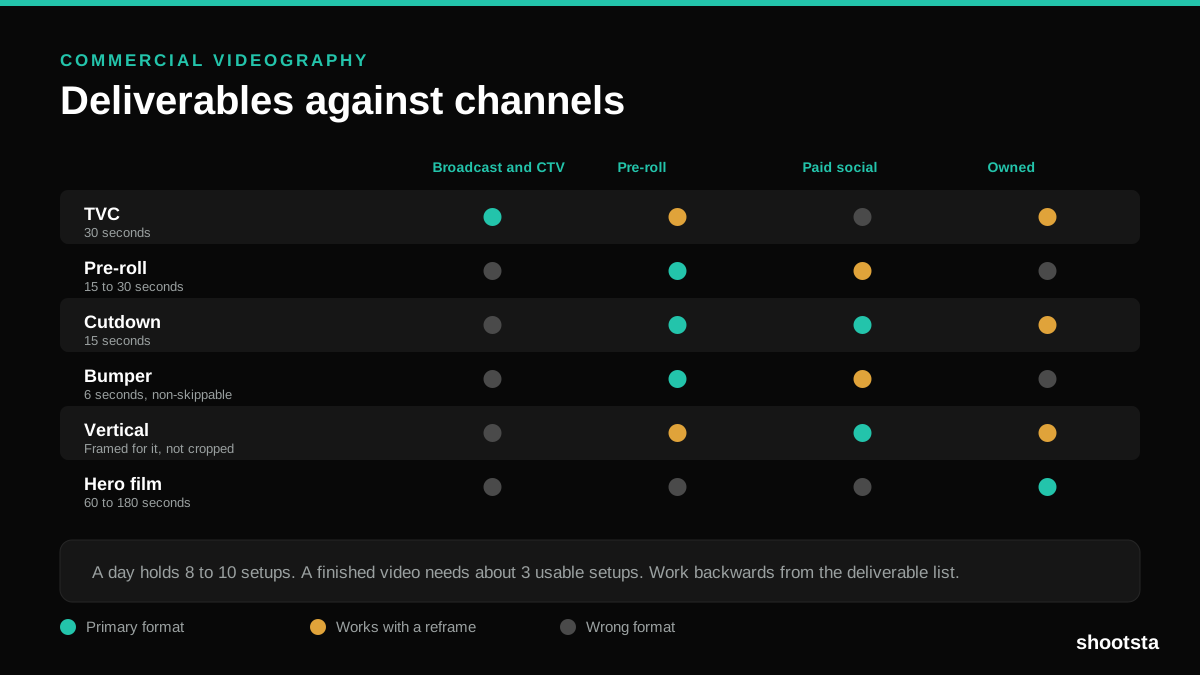
Commercial Videography: Cost and Scope
Commercial videography is priced by the day and judged by the deliverable. Most projects go wrong because those two numbers were never reconciled.
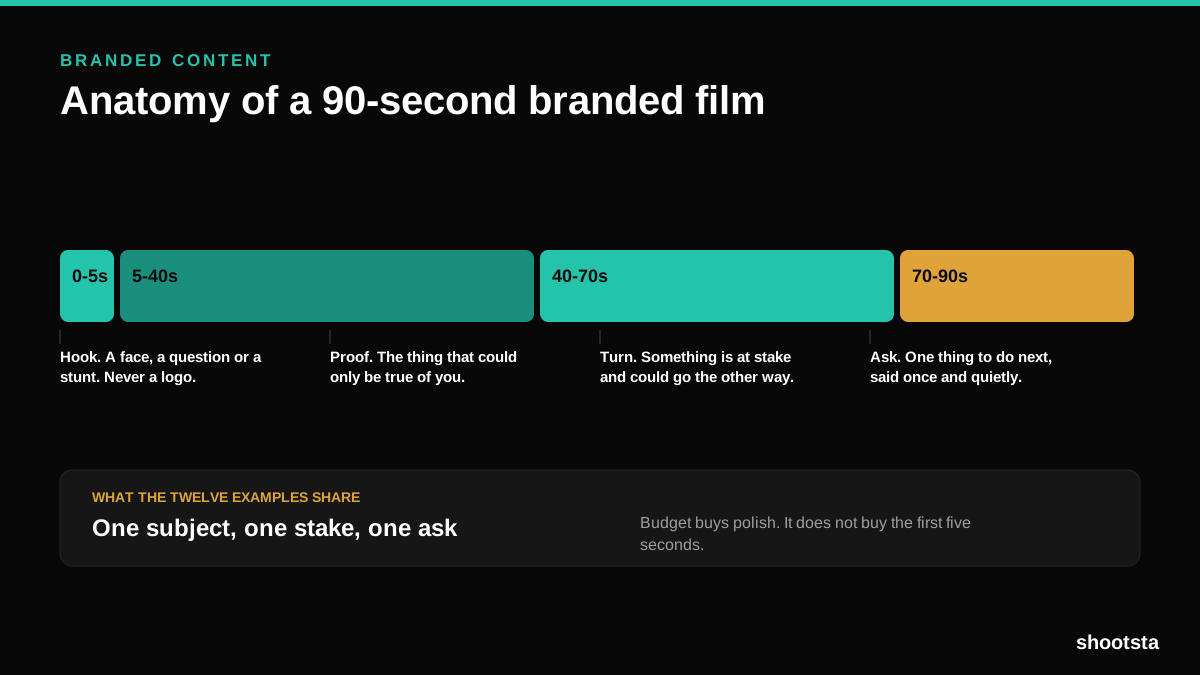
12 Branded Content Examples That Worked
Twelve pieces of branded content that people chose to watch, what each one got right, and the structure underneath all of them.
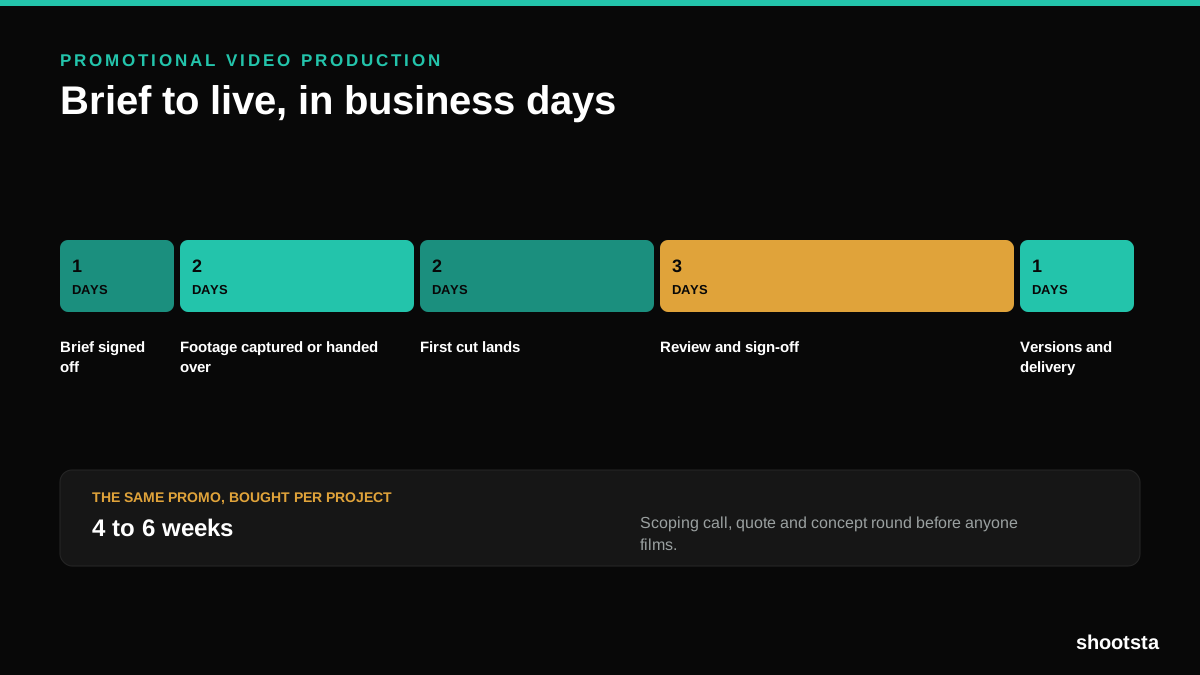
Promotional Video Production: Cost and Time
Most promotional video production schedules are not slow because of the edit. They are slow because of the approval chain. Here is where the days go.

B2B Video Production: Costs and Buying Models
There are five ways to buy B2B video production. Each one works well up to a point and then breaks, usually at a volume nobody planned for. Here is what each costs and where the ceiling sits.
How to Measure Video Speed-to-Market
How to Measure Video Speed-to-Market
Speed-to-market is the lag between needing a video and publishing it. For marketing teams it is a revenue metric. Here is how to measure and improve it.