
B2B Video Production: Costs and Buying Models
shootsta.
B2B Video Production: Costs and Buying Models
By Shootsta · Published September 11, 2026 · Updated October 2026

There are five ways to buy B2B video production. Each one works well up to a point and then breaks, usually at a volume nobody planned for. Here is what each costs and where the ceiling sits.
Short answer. B2B video production is the making of video for a business audience: demos, customer stories, training, internal comms and campaign content. There are five ways to buy it. A DIY tool, a freelance editor, an agency booked per project, a video subscription, or an in-house team. Each one works to a point and then breaks, and the thing that breaks it is almost always volume. Pick the model that survives your busiest month, because your quietest month will never test it.
Most guides to B2B video production explain why video works. You already know that, or you would not be reading a page about how to buy it.
The harder question is which way to buy. A team making one video a quarter and a team making eight a month need different answers, and the model that suits the first will quietly fail the second. That failure rarely looks like a crisis. It looks like a video that slips two weeks, then a campaign that ships without one, then a plan that stops including video at all.
This is a buyer's guide to B2B video production: the five models, what each one costs, and the volume at which each stops working.
What is B2B video production?
B2B video production is the process of making video for a business audience rather than a consumer one. That covers product demos, customer stories, sales enablement, training modules, internal updates and campaign content.
The work itself is the same craft as any other video. What differs is the surrounding machinery. B2B video production usually involves more approvers, tighter brand rules, longer sales cycles and a much higher volume of small, unglamorous assets that never appear on a showreel.
That last point matters more than it sounds. A consumer brand might make four beautiful films a year. A B2B marketing team makes those four plus a long tail of smaller pieces: webinar cutdowns, case studies, event recaps, onboarding modules and the product update video nobody planned for.
What are the five ways to buy B2B video production?
Every B2B video production arrangement is one of five models, or a mix of two. They are listed here from lowest cost to highest commitment.
1. A DIY tool
Template software with stock footage and a drag-and-drop editor. It is cheap and immediate, and it works well enough for internal updates where nobody is judging the craft.
Where it breaks: the second approver. The moment brand consistency has to be enforced or a second person has an opinion, the template becomes a constraint rather than a shortcut.
2. A freelance editor
One trusted person who knows your brand and turns footage into finished video. Good value, low overhead, and the quality is usually far better than the price suggests.
Where it breaks: once the queue outgrows one person, or in the first week they take leave, because there is no second lane. A freelancer is a single point of failure that works beautifully right up until it does not.
3. An agency, booked per project
A creative team that takes a brief, brings a concept and delivers a finished piece. This is the right model for the two or three films a year that need a director, a crew and a concept built from scratch.
Where it breaks: on cost per video and on speed. Agencies are built for considered work, so a three-week turnaround is normal and a scoping call comes before every job. At volume, the per-video cost is the highest of the five models.
4. A video subscription
A fixed monthly fee covering a set number of finished videos. Your team captures the footage or supplies existing assets, and an editing team turns it around against agreed brand templates.
Where it breaks: on very low volume, where a subscription costs more than the two videos you made that quarter, and on concept-led work that needs a crew on location.
5. An in-house team
Editors, and eventually a producer and a motion designer, on your payroll. Full control, deep brand knowledge, and the fastest turnaround of all when the team is not already busy.
Where it breaks: on animation and on spikes. Almost no in-house B2B video production team can justify a full-time motion designer, and every one of them has a month where demand spikes well past what the team can cover.
Which B2B video production model fits your volume?
The tool below asks six questions. Volume and turnaround carry the most weight, because those two are what break a model in practice.
Interactive
Which B2B video model fits you?
Six questions on volume, skills, brands, approvals, budget and deadline. The answer is the model that holds up at your volume, plus the two answers that decided it.
A guide, not a quote. Volume, turnaround and approval layers carry the heaviest weights because they are what break a model in practice. Shootsta pricing is a fixed monthly fee covering a set number of video credits.
What does B2B video production cost?
Cost per finished video is the only number worth comparing in B2B video production, and it moves enormously with volume.
An agency piece is priced per project, so twelve videos means twelve quotes and twelve scoping calls. A freelancer charges a day rate, which is predictable until the queue backs up and you pay for rush work. A subscription prices the whole year in advance, which is why finance teams tend to prefer it. Shootsta pricing works this way: a fixed monthly fee covering a set number of video credits, with no per-project fees.
Across the buyers we work with, a managed subscription lands 50 to 60% below what a traditional agency charges for the same volume. The gap comes from cutting out the scoping call, the concept round and the quote from every single job.
To model your own numbers against the three main routes, use the video production cost calculator.
Do you still need a partner if you have an in-house team?
This is the first objection almost every B2B marketing leader raises, and it is a fair one. If you have hired editors, paying someone else to edit looks like paying twice.
In practice the two sit together rather than competing. Your in-house team holds the work that needs context: the brand judgement, the executive relationships, the things that need someone in the room. A partner absorbs the queue that has no strategic content but still has a deadline.
The clearest signal is what your editors are doing on a Tuesday afternoon. If they are cutting webinar highlights and resizing social versions, that is skilled people spending their week on work that does not need them. We covered the split in detail in how a video partner extends your in-house team.
How fast should a first cut arrive?
It should arrive while the video is still relevant. For most B2B video production work, that means a wait measured in days rather than weeks.
Slow turnaround is the quiet tax on B2B video production. A four-week wait delays one video, and it also teaches the rest of the business to stop asking.
Shootsta holds a first cut at about 48 hours from footage landing. Speed matters here for a practical reason. A two-day turnaround lets you attach video to things that move quickly, like a product release or a conference, instead of only to the campaigns planned six weeks out.
What should be in a B2B video production contract?
Four things, and they are the four that cost money later if you skip them.
- Ownership. The contract should say you own the footage, the finished video and the project files. Get it in writing, including anything a previous supplier still holds.
- Turnaround as a commitment. A stated number of business hours for a first cut, and what happens when it slips.
- What counts as a revision round. Define one round and what the second one costs, before the first project rather than during it.
- Capacity in your peak month. Ask what happens when you send four times the usual volume in a week. The answer tells you whether the model survives your calendar.
How many videos does a B2B team need?
More than the plan says, and in smaller pieces than expected. Teams tend to budget for the campaign films and then discover that most of the year is spent on cutdowns, updates and versions.
Counting honestly is the useful exercise. List everything that shipped last year, including the internal videos and the ones made in a hurry. That number, not the campaign plan, is the volume your B2B video production model has to survive.
Where to go next
If you are shortlisting suppliers, start with our comparison of the best B2B video production companies, which sets out how the main providers differ on turnaround, brand control and pricing shape.
If you are still working out what to make rather than who should make it, what actually works in B2B video marketing covers the formats that earn attention from a business audience. For the wider category picture, see marketing video production.
To pressure-test the five models against your own volume and calendar, book a free consultation.
About Shootsta
Shootsta is a global video production service that helps enterprises create on-brand videos at scale and operationalize video production across every business touch-point. We have produced 70,000+ videos for 920+ brands since 2014, with a first cut in about 48 hours and 4.9 / 5 customer satisfaction across post-delivery surveys. Editors work from offices in Sydney, London, Singapore and San Diego.
Last updated 11 September 2026.
Take this article with you
Read the latest at shootsta.com/blog/b2b-video-production-cost-and-buying-models
You might also like

Shootsta at Day 1 of B2B Marketing Leaders Forum
Shootsta is at B2B Marketing Leaders Forum Asia in Singapore on 14 and 15 October 2026. Watch our day 1 video, edited overnight and ready before the first coffee break on day 2.
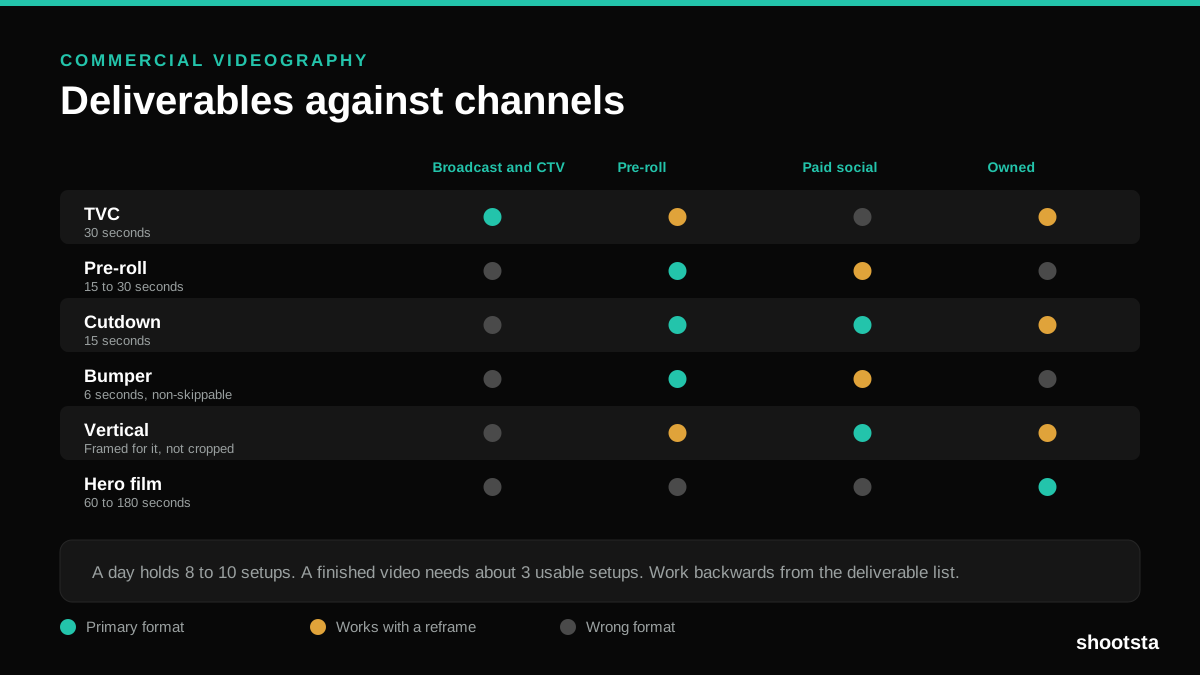
Commercial Videography: Cost and Scope
Commercial videography is priced by the day and judged by the deliverable. Most projects go wrong because those two numbers were never reconciled.
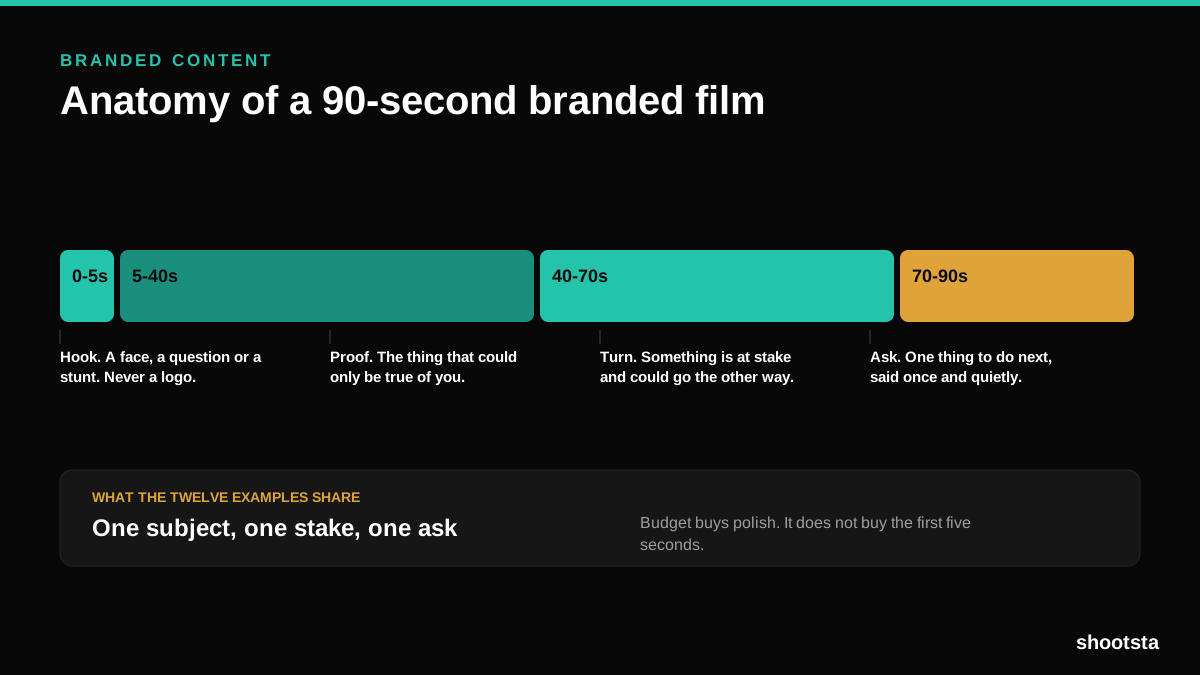
12 Branded Content Examples That Worked
Twelve pieces of branded content that people chose to watch, what each one got right, and the structure underneath all of them.
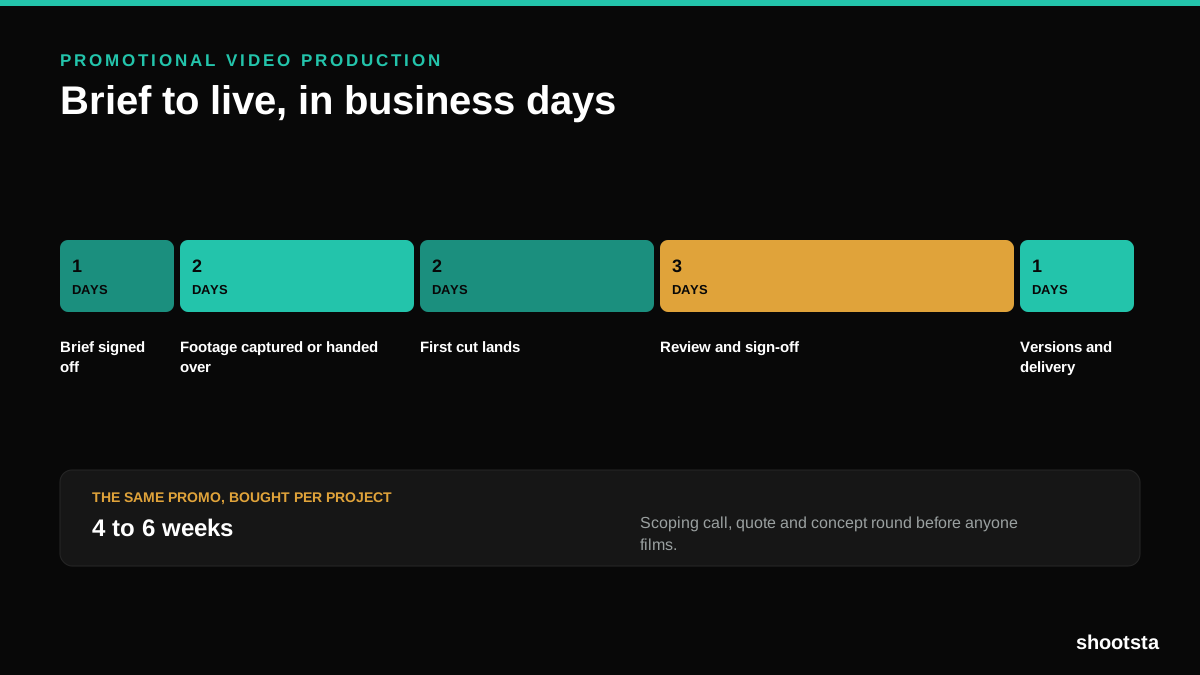
Promotional Video Production: Cost and Time
Most promotional video production schedules are not slow because of the edit. They are slow because of the approval chain. Here is where the days go.
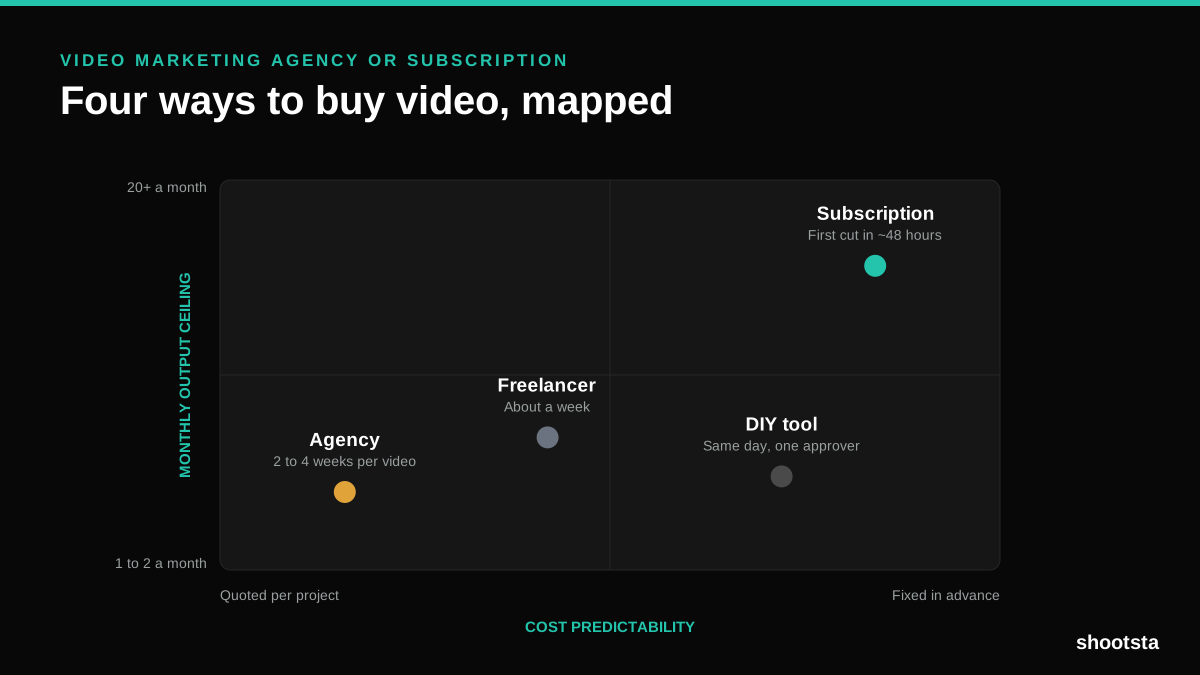
Video Marketing Agency or Subscription?
A video marketing agency prices per project and works in weeks. A subscription prices the year and works in days. Which one fits depends on how often you publish, not on which is better.
How to Measure Video Speed-to-Market
How to Measure Video Speed-to-Market
Speed-to-market is the lag between needing a video and publishing it. For marketing teams it is a revenue metric. Here is how to measure and improve it.