
What we heard at the CMO Assembly in Nashville
shootsta.
What we heard at the CMO Assembly in Nashville
By Shootsta · Published August 9, 2026 · Updated August 2026
Two days at the Millennium Alliance CMO Assembly in Nashville with marketing leaders from some of the world's biggest brands. Three things came up in almost every conversation: volume is up while budget is flat, brand drifts as volume rises, and speed decides whether a video still matters. Here is what we heard and what we shared.
We spent two days at the Millennium Alliance CMO Assembly in Nashville with marketing leaders from some of the world's biggest brands. The same three problems came up in almost every conversation, and none of them were technology problems.
What the two days were about
The Assembly ran August 5-6 at The Four Seasons in Nashville. The agenda was mostly about the technology changing how marketing gets made, and one question kept surfacing under all of it: as AI gets more capable, how do brands stay human?
Nobody in the room was anti-AI. The tools help teams move faster, produce more and understand more of what they already have. What people kept circling back to was the other half. Trust still comes down to people, and so does knowing which idea is worth putting in front of a customer. We wrote up that argument separately in how brands stay human as AI gets more capable.
What kept coming up in the hallway conversations
Volume is up and budget is flat. Marketing teams are being asked for more video than last year on the same money, which is a production model problem before it is a budget problem. Per-project pricing makes every extra video cost the same as the last one, so the program stalls at exactly the point it should scale.
Brand drifts as volume rises. One polished film is easy. Two hundred videos a year that all look like the same brand is the hard part. When consistency depends on someone catching mistakes in review, it slips the first week output doubles.
Speed decides relevance. A video that takes six weeks is a different video by the time it lands. Slow turnaround also quietly caps what teams even attempt, because nobody briefs an idea they know will miss the moment.
Free Consultation
Want a hand with your next video?
Talk to a Shootsta producer about your goals, timeline, and budget. There is no pitch, just advice you can use.
What we shared in Nashville
We were one of the solution providers in the room, and what we brought was the Video Operating Model: how enterprise teams keep video moving at pace without trading away quality or brand consistency.
The short form is four pillars. Capacity that flexes with your volume instead of capping it. One intake route so any team can brief a video without a side deal. Brand built into the workflow rather than caught in review. Measurement tied to business outcomes instead of view counts. The full breakdown, and a free playbook, are in the Enterprise Video Operating Model.
If you want a read on your own program first, the CMO video scorecard grades it out of 25 in about three minutes and points at the pillar that is leaking.
Frequently asked questions
What is the Millennium Alliance CMO Assembly?
It is a two-day invite-only gathering for senior marketing leaders, run by the Millennium Alliance. The 2026 edition ran August 5-6 at The Four Seasons in Nashville and mixed keynotes and panels with one-to-one meetings between marketing leaders and solution providers.
What did Shootsta share at the Assembly?
The Video Operating Model: the system enterprise teams use to produce video repeatedly rather than occasionally. Flexible capacity, one intake route, brand governance inside the workflow, and measurement tied to business outcomes, backed by 70,000+ videos produced and a first edit back in about 48 hours.
How do enterprise teams keep video on brand as volume rises?
By moving brand from the review stage into the workflow. When logos, fonts, colors, lower thirds, music and intros are applied by the system that produces the video, consistency holds at any volume. When it depends on a person spotting mistakes, it slips as soon as output grows.
Thanks, Nashville
A lot of good conversations packed into two days. Thanks to everyone who stopped by, shared an idea, pushed back on our thinking or just said hello.
If you missed us there, start with the Enterprise Video Operating Model breakdown and playbook, or book a free consultation and we will pick up where the hallway conversation left off.
Take this article with you
Read the latest at shootsta.com/blog/cmo-assembly-nashville-2026-recap
You might also like
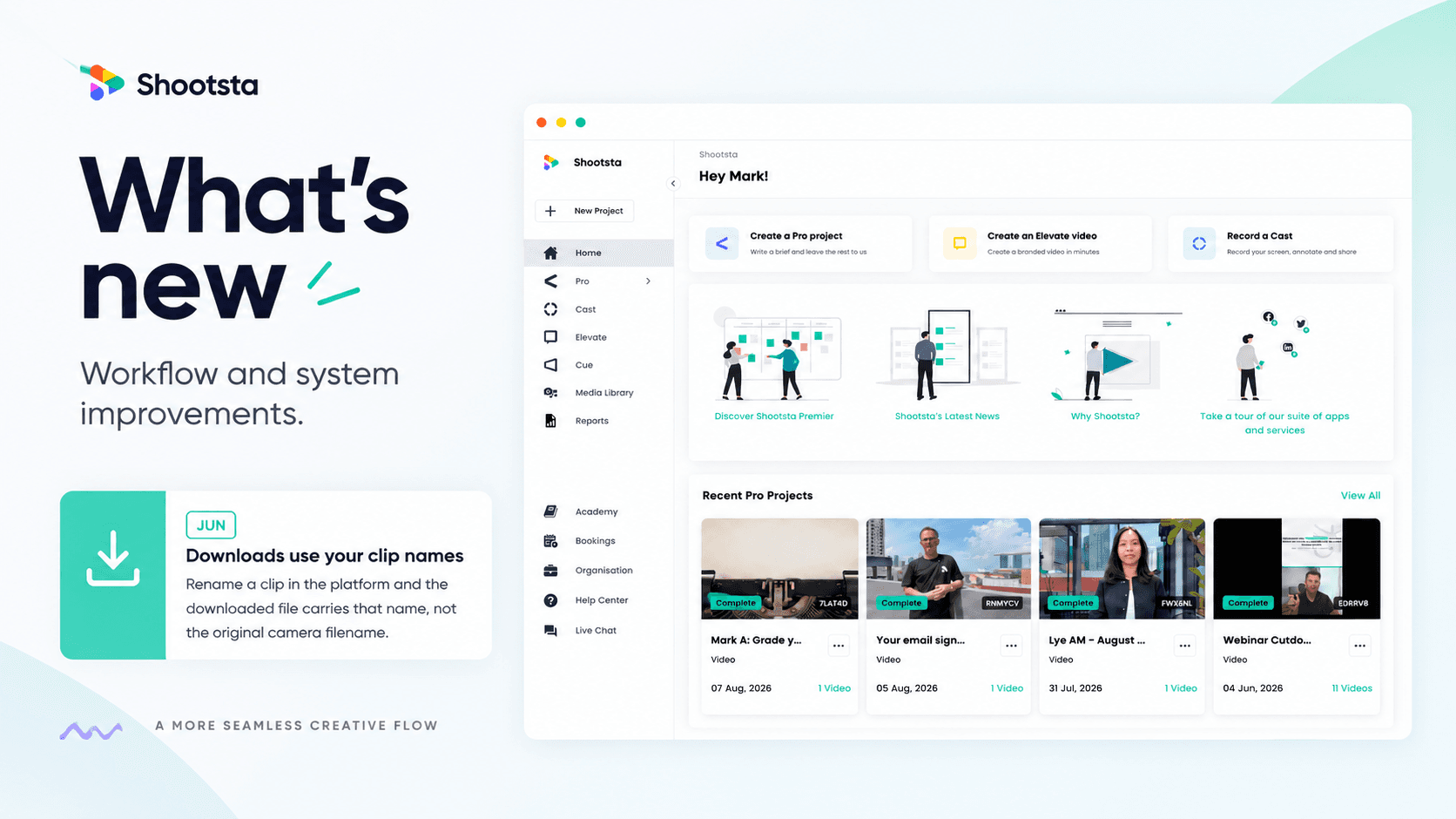
Less Admin, More Video: 15 Shootsta Updates
Fifteen platform updates from June to August 2026, covering video review, your media library, uploads and captions. Here is what changed and why it helps.
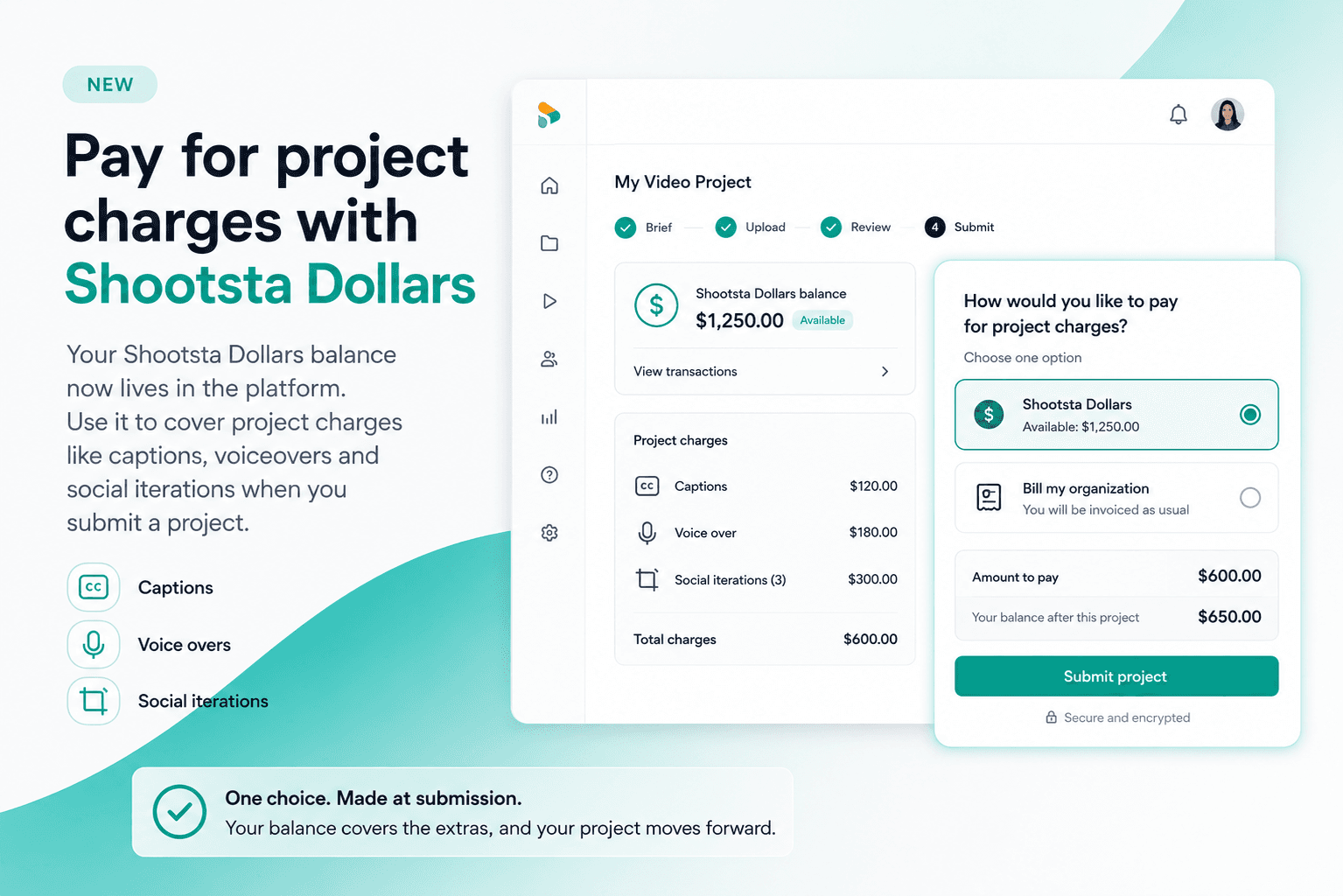
Pay for project charges with Shootsta Dollars
Your Shootsta Dollars balance now lives in the platform. Use it to cover project charges like captions, voiceovers and social iterations when you submit a project.
Shootsta Impact Video Awards 2026: How to Enter
Shootsta Impact Video Awards 2026: How to Enter
Entries are open for the Shootsta Impact Video Awards 2026. Here is what the awards recognise, who can enter, the 14 categories, how the panel judges, and how to nominate your team before July 31.
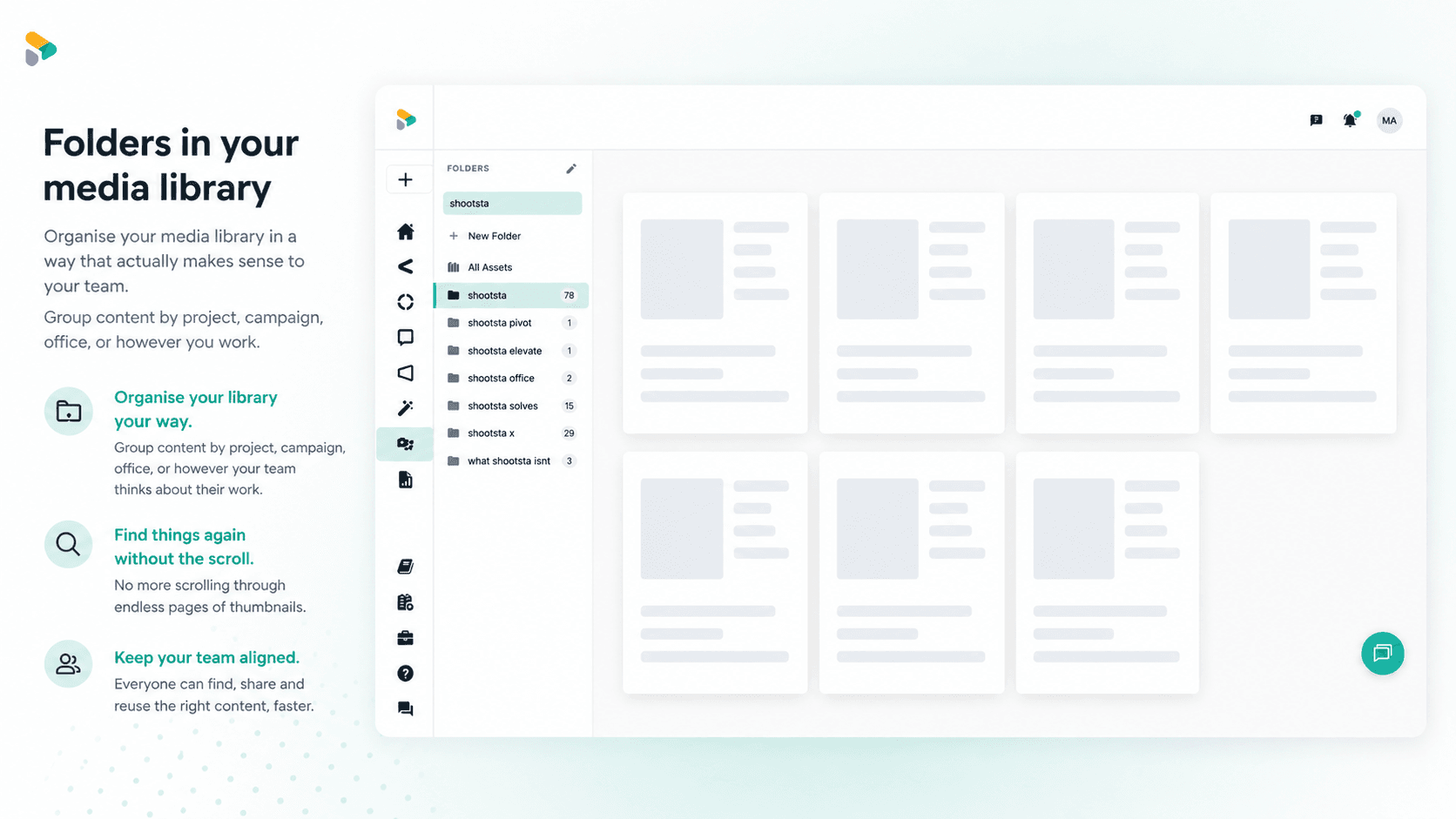
How to Use Media Folders in Shootsta
Organize your video assets into folders directly inside the Shootsta media library. Here is how to create folders, move assets, and keep your library clean as it grows.
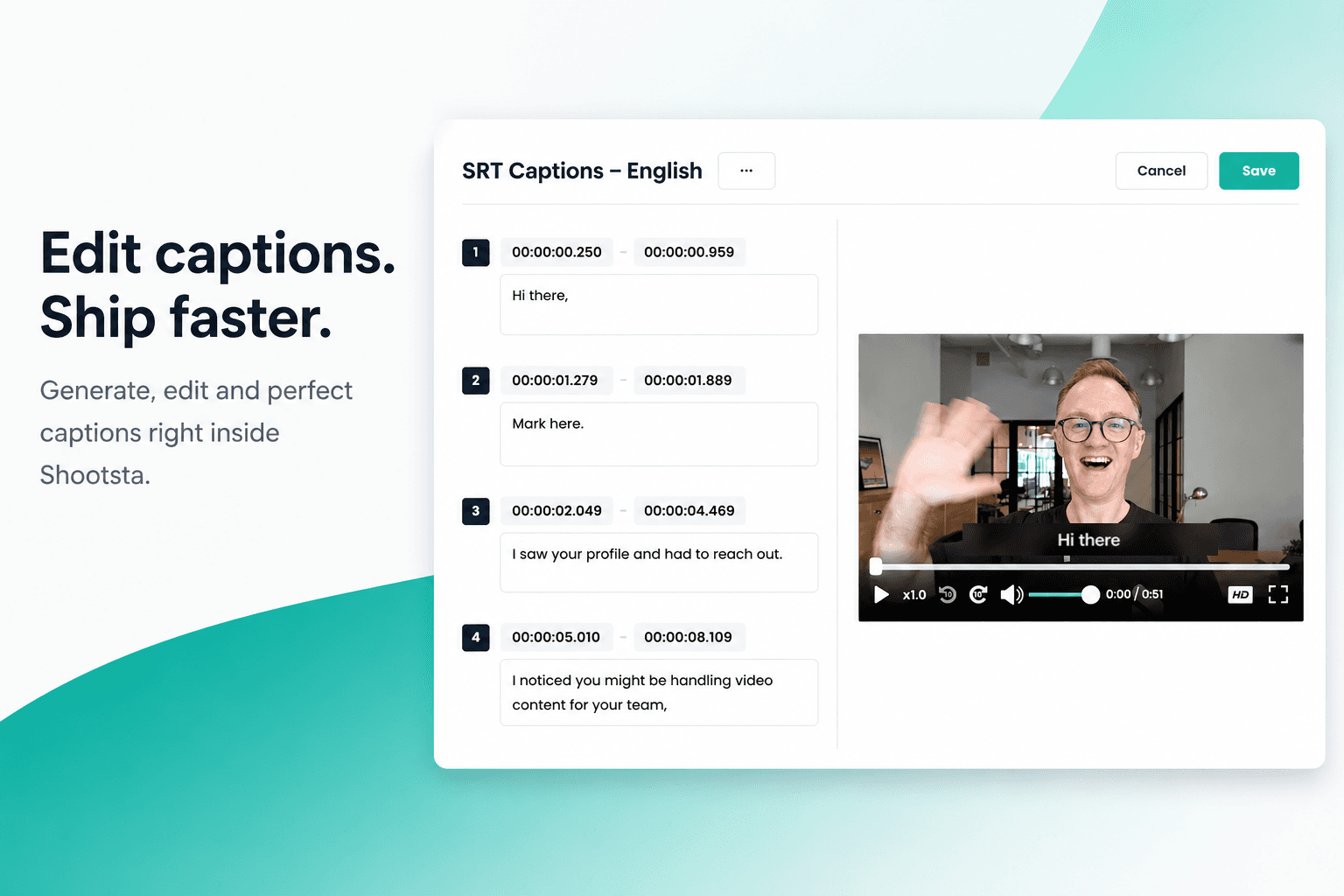
How to Add Captions in Shootsta
Generate and edit captions directly inside the Shootsta platform. No request forms, no back and forth, no waiting on turnaround. Here is how it works.
