
Animation Use Cases for HR & Recruitment Teams
shootsta.
Animation Use Cases for HR & Recruitment Teams
By Shootsta · Published June 29, 2026 · Updated October 2026
HR and recruitment teams explain a lot of things that are hard to film: policies, benefits, growth paths. Here is where animation does the work a camera cannot.
Why does animation fit HR and recruitment?
HR teams spend most of their time explaining things that have no obvious thing to film: benefits, policies, career paths, how a process works. That is where animation does work a camera cannot, and it does it without booking talent or a crew for every update.
Animation also pairs with the live action HR already values. Real employees carry the culture and the proof. Animation carries the information. Together they cover the full employee journey, which is the same logic we lay out in animation use cases for enterprise teams.
1. Employer brand and careers content
Values, growth paths and the way your teams work day to day are hard to film convincingly. Animation carries the structure of the employer story, then you cut to a real employee for the human proof. That blend is stronger than either piece alone, and it scales across every role and region.
2. Onboarding and pre-boarding
New hires need the same core information delivered consistently, the first time and the hundredth. Animated welcome, brand, and "how we work" videos do that without a facilitator repeating the same session, and they stay current with a quick edit when a policy or a tool changes.
3. Benefits and total rewards explainers
Benefits are confusing, the choices matter, and few employees read the PDF to the end. A short animated explainer that walks through health cover, retirement, and leave answers the questions employees ask most. It earns its keep during open enrollment, when the same questions flood the HR inbox.
4. Policy changes and compliance
Policy updates and mandatory training are the least-loved content in any organization. Short animated modules hold attention better than recorded slides, and the scripted format makes legal sign-off cleaner because every word is fixed before production.
5. Culture and recognition campaigns
Animation can carry company-wide campaigns, values rollouts, and milestone moments in a consistent style across a distributed workforce. It keeps the message on-brand whether it lands in headquarters or a remote team.
When should HR still use live action?
Use live action anywhere the value is a real person. Employee testimonials, day-in-the-life content, and leadership messages depend on authenticity animation cannot fake. Use animation for the explaining, and keep the camera for the people. The decision logic is in animation vs live action for internal comms.
Where to start
Begin with the benefits explainer or the onboarding sequence, whichever generates the most repeat questions. To scope an HR program, read The Business Animation Playbook or explore our animation production services.
Take this article with you
Read the latest at shootsta.com/blog/animation-use-cases-hr-recruitment
You might also like

How to Plan Video Team Capacity Around Leave
Your only editor just booked two weeks off, and you already know which projects will slip. Chad Lakin explains how to plan video team capacity so the work keeps moving when someone is away.
Corporate Video Editing Standards: Full Guide
A two-page editing standard does more for consistency than a forty-page brand book. Here is what it should cover, who owns each part, and how to enforce it with an in-house editor or an outside partner.
Quality Control in Outsourced Video Editing
When editing leaves the building, quality has to be checked by a system rather than by whoever happens to look. Here is the system: acceptance criteria, two QA gates, counted revision rounds and a quarterly audit.
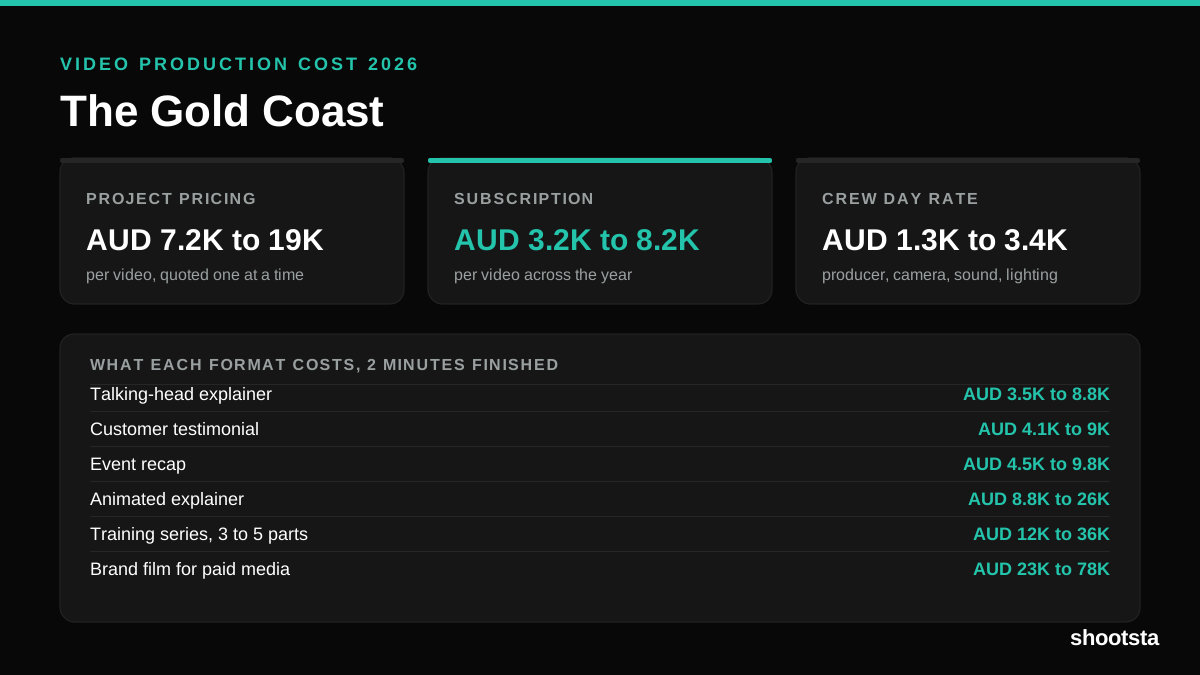
Video Production Cost on the Gold Coast 2026
Video production in the Gold Coast costs AUD 3,200 to AUD 8,200 per finished video on a subscription model, and AUD 7,200 to AUD 18,500 for one-off project work. Here is what you are paying for, and how the three pricing models compare.
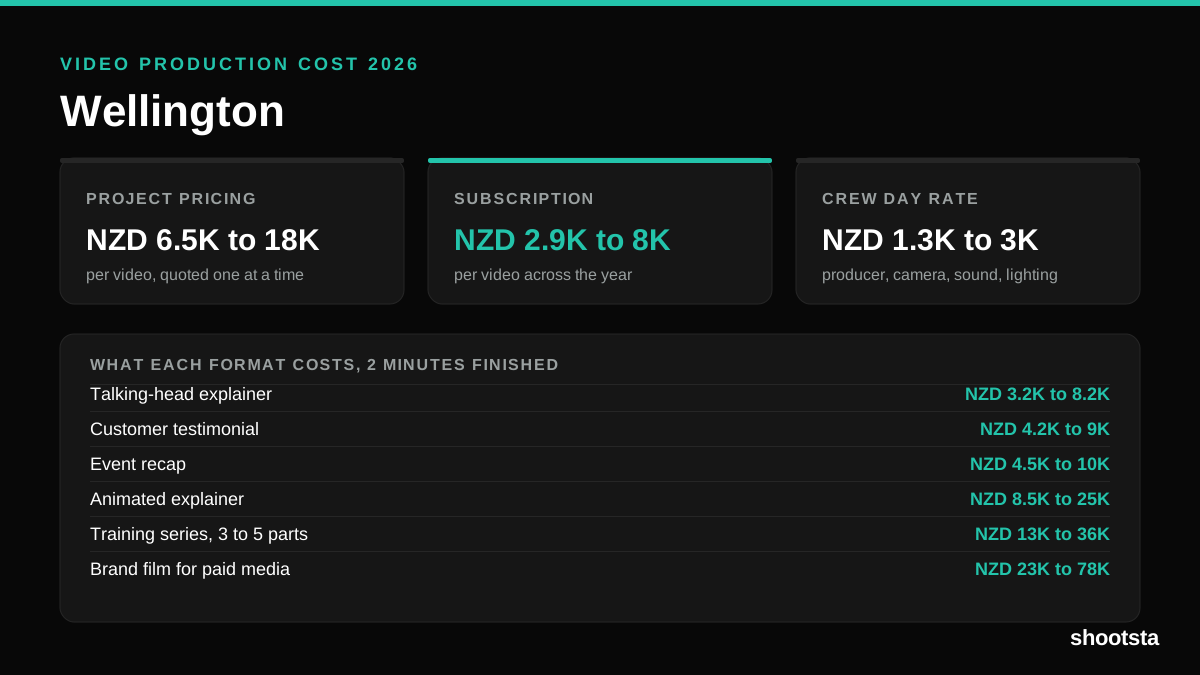
Video Production Cost in Wellington (2026)
Video production in Wellington costs NZD 2,900 to NZD 8,000 per finished video on a subscription model, and NZD 6,500 to NZD 18,000 for one-off project work. Here is what you are paying for, and how the three pricing models compare.
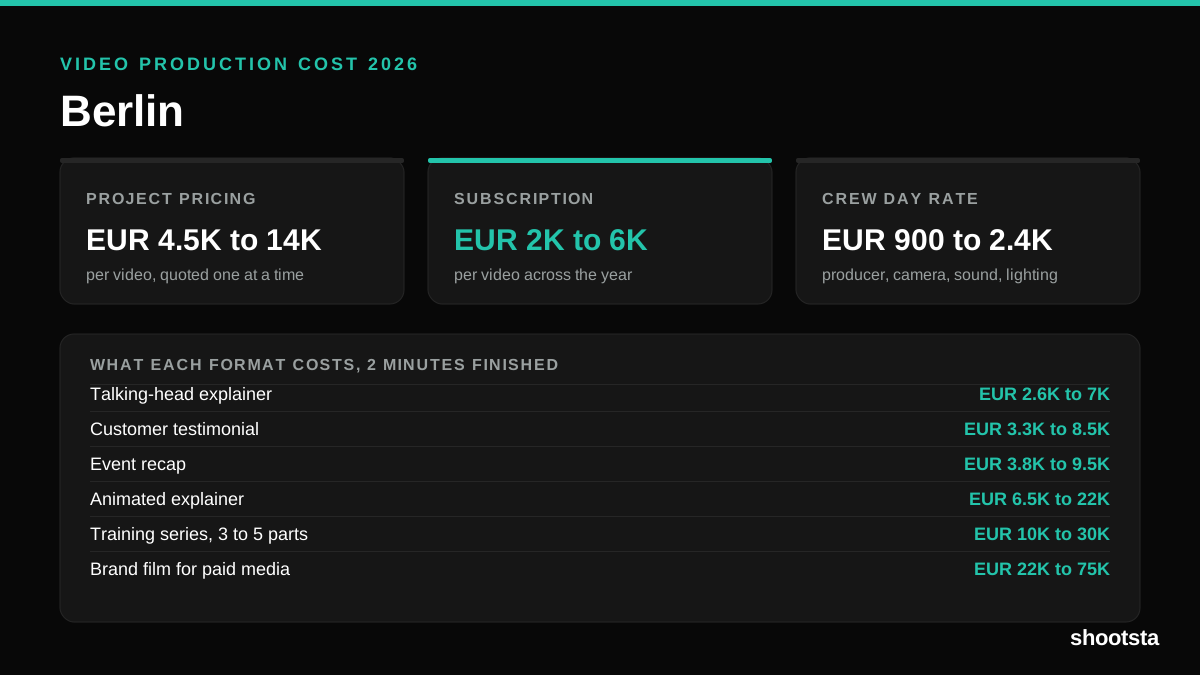
Video Production Cost in Berlin (2026)
Video production in Berlin costs EUR 2,000 to EUR 6,000 per finished video on a subscription model, and EUR 4,500 to EUR 13,500 for one-off project work. Here is what you are paying for, and how the three pricing models compare.