
LinkedIn Video Posting Frequency and Best Times
shootsta.
LinkedIn Video Posting Frequency and Best Times
By Mark Ashworth · Published April 20, 2026 · Updated October 2026
How often should you post video on LinkedIn? What times get the most engagement? Here is what the data says and how to stay consistent without burning out.
How often should you post video on LinkedIn?
Post video on LinkedIn at least once a week, on both personal profiles and company pages. If you post less often than that, you lose momentum with the algorithm and with your audience.
Once a week is the minimum, and there is room to go higher. Here is how different cadences stack up based on what we see working for B2B brands in 2026.
Bare minimum (1 video per week): You stay visible, the algorithm treats you as an active creator, and your audience keeps you in mind between posts. This is the right cadence if you are just getting started or have limited production capacity.
Good (2-3 videos per week): This is where many B2B brands with steady results sit. You post often enough to test different formats, reach different segments of your audience, and build real familiarity. Two to three posts per week is the sweet spot between consistency and sustainability.
Aggressive (daily): Some executives and thought leaders post video every business day. This works if you have a system for batch filming and a library of content to draw from. The compound effect at this cadence is significant, but it requires a real production workflow behind it.
The right cadence depends on your team and resources. Pick a frequency you can keep up for at least 3 months, because consistency matters more than volume. Posting 3 times a week for 2 weeks and then going silent for a month does more harm than posting once a week every week for a year.
What are the best times to post LinkedIn video?
B2B engagement data tends to point to the same windows. The best times to post video on LinkedIn are Tuesday through Thursday, between 7-8am and 5-6pm in your target audience's timezone. The timezone part is easy to miss, and it changes the result for a global audience.
Morning posts catch people during their commute or as they start their workday. Late afternoon posts hit the wind-down period when people are scrolling before logging off. Both windows align with when B2B professionals are most active on the platform.
Monday and Friday tend to underperform. On Monday morning people are catching up on the week's tasks, and by Friday afternoon their attention has drifted to the weekend. Weekends are dead for most B2B content, though some niche audiences are surprisingly active on Sunday evenings.
One important caveat: these are averages. Your specific audience might behave differently. Use LinkedIn analytics to track when your followers are most active and adjust your posting schedule accordingly. Treat the general guidelines as a starting point and let your own numbers decide the schedule.
For a complete posting calendar template and more platform-specific timing data, the LinkedIn Video Strategy Guide covers this in detail.
How do you stay consistent without burning out?
Knowing you should post 2-3 times a week is easy, while doing it week after week for months is hard. These tactics make it easier to keep going.
Batch filming is the single most effective thing you can do. Set aside 60-90 minutes once a week or every two weeks. Film 4-8 short videos in one session. Change your shirt between takes if you want them to look like different days. You now have a week or two of content ready to go.
Repurposing multiplies your output without multiplying your effort. A long conversation can become several short clips, and a blog post can become a video summary. A client call, recorded with permission, can turn into a case study clip. You don't need to create everything from scratch.
Mix scrappy and polished videos. Many of your posts can skip a full production. Monday might be a 15-second phone video reacting to industry news. Wednesday might be a polished explainer with graphics. Friday might be a selfie-style tip from the field. Mixing formats keeps things interesting for your audience and manageable for your team.
As Stephanie Simmonds puts it: "Just get started. Your competitors already are." The brands that do well on LinkedIn video tend to be the ones that show up every week, whatever their budget, while others are still planning their "video strategy."
Free PDF Guide
Get the LinkedIn Video Strategy Guide
The posting cadence, best times, and consistency playbook for B2B LinkedIn video.
What is the compound effect of consistent posting?
Video marketing on LinkedIn has a long ramp-up period. Expect small results in the first month or so, with momentum building around the 3-month mark. By 6 months the compounding effect is usually easy to see in your analytics.
The reason is that every video you post teaches the algorithm more about your audience. It learns who engages with your content, what topics resonate, and when your audience is active. The more data it has, the better it distributes your content.
Your audience is doing the same thing. The first time someone sees your video, they might scroll past. After a few more, they may stop to watch, and later they start to comment or visit your website. Building familiarity takes repetition, and repetition takes time.
This is the same principle behind any effective LinkedIn video strategy. The brands that see real pipeline impact from video are the ones that committed to a cadence and stuck with it through the slow early months.
Does posting frequency differ for company pages vs personal profiles?
Yes, though perhaps in a different way than you expect. Company pages typically get lower organic reach than personal profiles on LinkedIn. That is a reason to post from both, rather than to post less from your company page.
For company pages, 2-3 video posts per week is a good target. These should be brand-level content: product updates, company news, customer stories, industry insights. The company page is where you build the brand.
For personal profiles (especially executives and sales teams), 2-5 video posts per week is ideal. These should be more personal: opinions, reactions, behind-the-scenes looks, direct-to-camera insights. Personal profiles are where your people build relationships.
Running both works well because your company page gives you the official brand presence while your people's profiles add the human connection. Together they cover more ground than either one alone. Understanding which video lengths work best for each type of profile helps you plan content more effectively.
What tools help you maintain a consistent schedule?
You don't need expensive software to post consistently, although a few tools make the process smoother.
A content calendar is non-negotiable. Even a simple spreadsheet with dates, topics, and status columns keeps your team accountable. Plan 2-4 weeks ahead so you are never scrambling for content the morning of.
Scheduling tools like LinkedIn's native scheduler, Hootsuite, or Buffer let you queue posts in advance. You can film on Monday and schedule posts for Tuesday to Thursday, which covers the whole week in one sitting.
A simple filming setup that stays ready to go removes friction. If you have to set up lights and a camera every time, you will find excuses not to film. A permanent phone mount, a ring light, and a quiet corner of the office that is always ready makes batch filming painless.
What should you do this week?
Start by picking your cadence. If you are posting zero videos right now, commit to one per week for the next month. If you are already posting occasionally, bump it to twice a week and hold that cadence for 90 days.
Block 60 minutes on your calendar this week for batch filming. Write 3-4 talking points before the session, film them all in one sitting and schedule them across the week. Repeat that each week and you have a working system.
For detailed posting templates, a 12-week content calendar, and format recommendations by funnel stage, download the LinkedIn Video Strategy Guide. And to understand how to measure whether your posting frequency is paying off, set up your measurement framework alongside your content calendar.
Take this article with you
Read the latest at shootsta.com/blog/linkedin-video-posting-frequency-and-best-times
You might also like
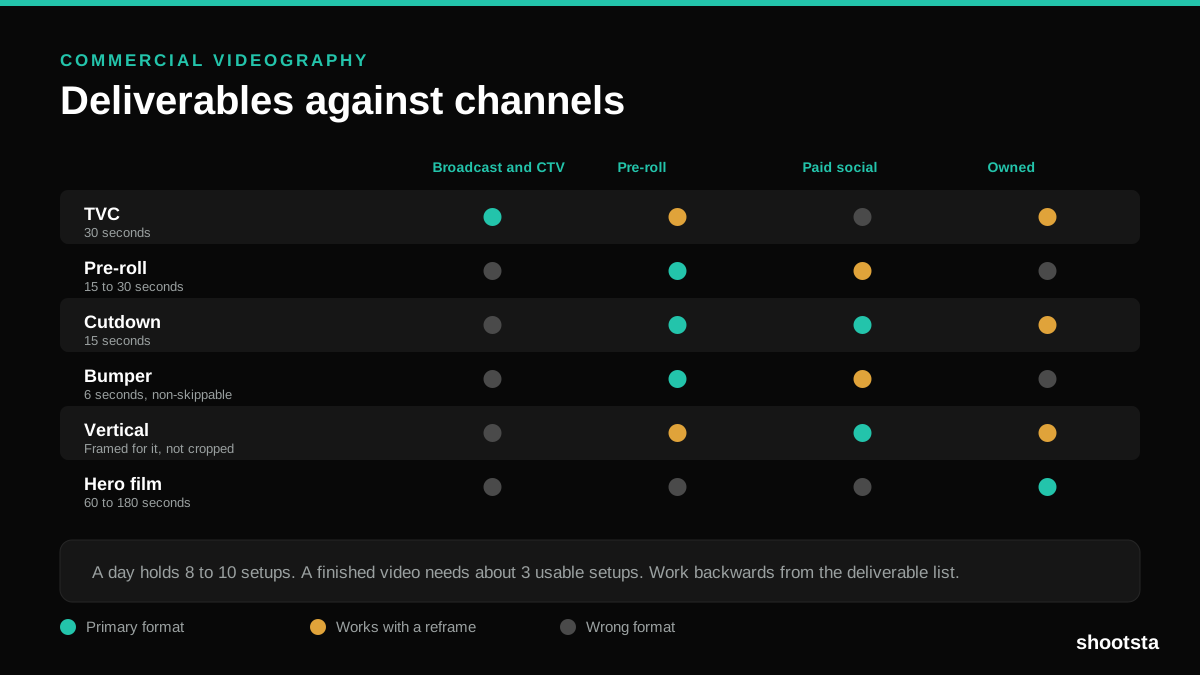
Commercial Videography: Cost and Scope
Commercial videography is priced by the day and judged by the deliverable. Most projects go wrong because those two numbers were never reconciled.
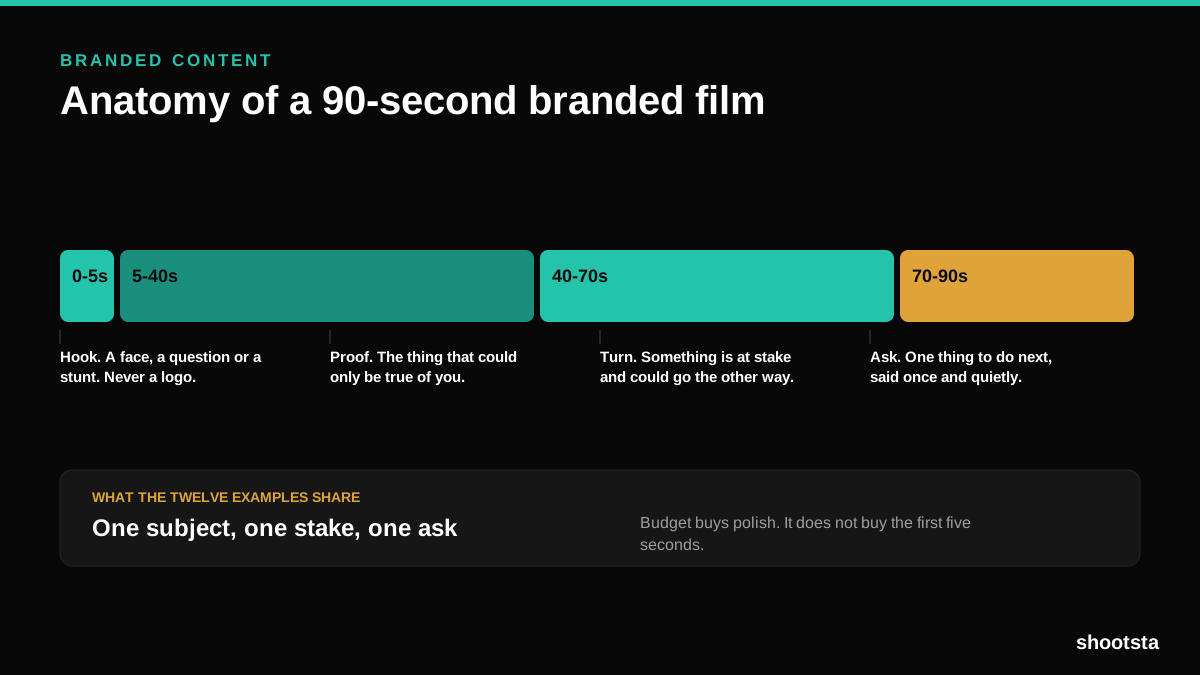
12 Branded Content Examples That Worked
Twelve pieces of branded content that people chose to watch, what each one got right, and the structure underneath all of them.
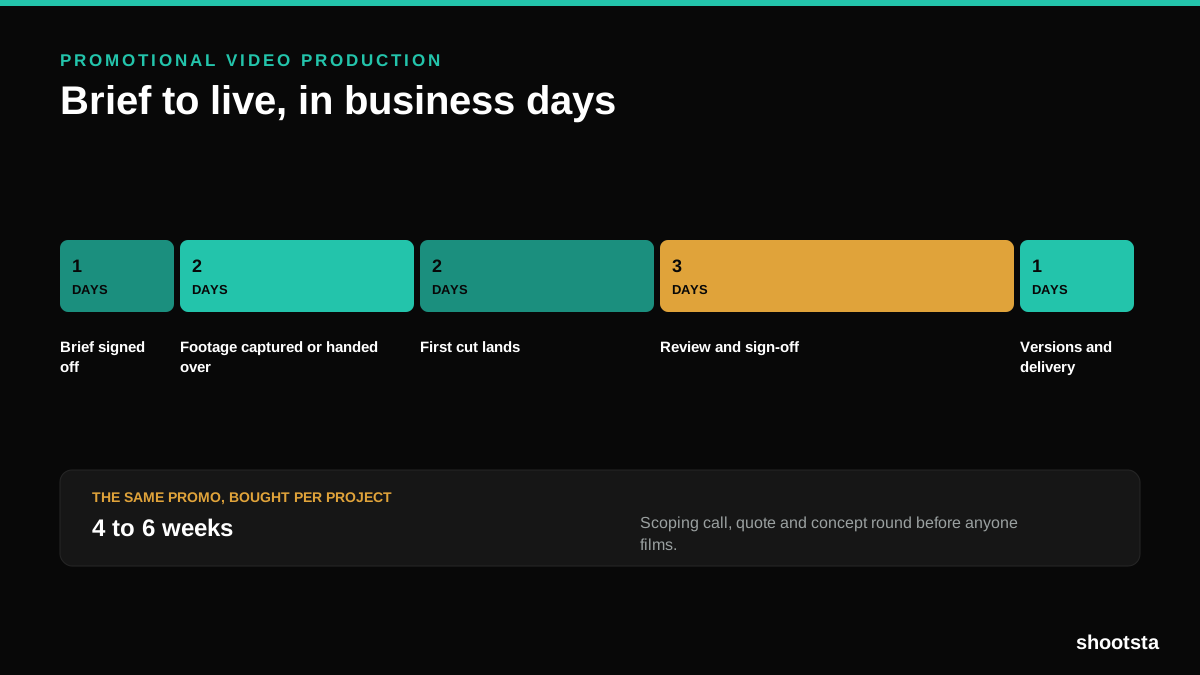
Promotional Video Production: Cost and Time
Most promotional video production schedules are not slow because of the edit. They are slow because of the approval chain. Here is where the days go.
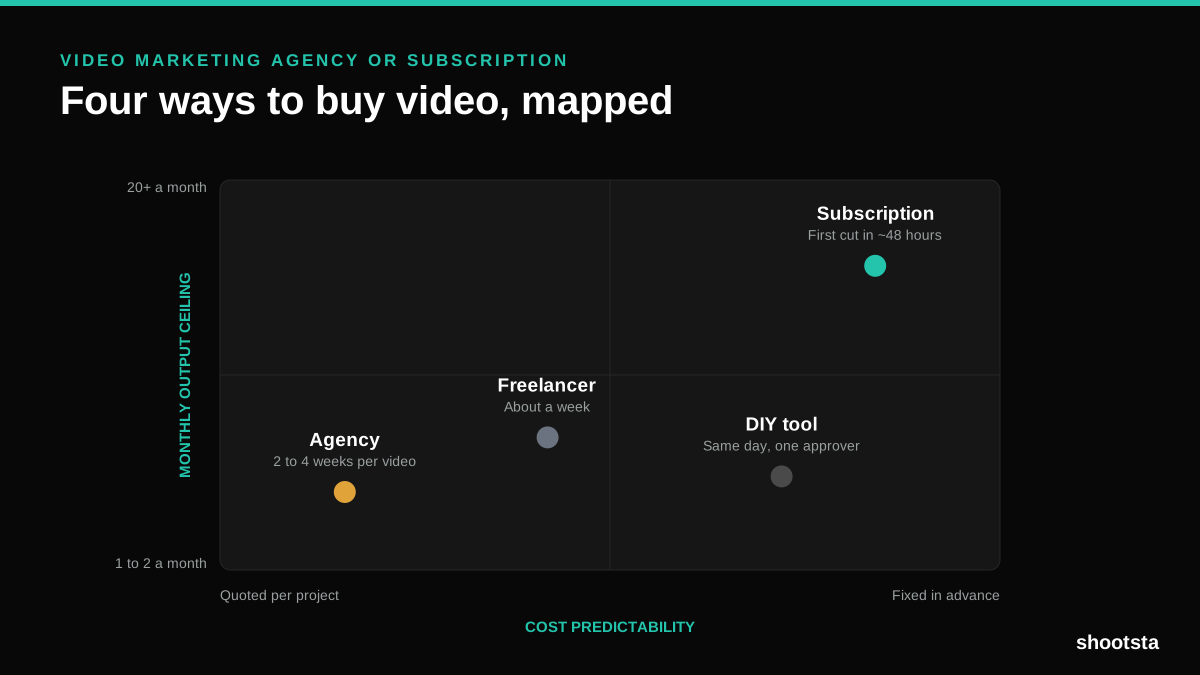
Video Marketing Agency or Subscription?
A video marketing agency prices per project and works in weeks. A subscription prices the year and works in days. Which one fits depends on how often you publish, not on which is better.

B2B Video Production: Costs and Buying Models
There are five ways to buy B2B video production. Each one works well up to a point and then breaks, usually at a volume nobody planned for. Here is what each costs and where the ceiling sits.
How to Measure Video Speed-to-Market
How to Measure Video Speed-to-Market
Speed-to-market is the lag between needing a video and publishing it. For marketing teams it is a revenue metric. Here is how to measure and improve it.