
shootsta.
Video Sales Letter Examples That Work
By Shootsta · Published April 13, 2026 · Updated October 2026
Eight video sales letter examples from B2B sales teams - covering cold outbound, ABM, proposal walkthroughs, and renewals. Plus what makes each one work.
Studying real video sales letters beats reading another best-practices post. Patterns that look smart on paper fall apart on camera, and tactics that feel obvious once you watch them are easy to copy.
This piece walks through eight VSL formats B2B sales teams use, with the structure of each, what makes it work, and where teams trip up. If you want the script formulas behind them, see our video sales letter script template. If you want a production team to film and edit these for you, our video sales letter production service ships them in 48 hours.
What is a video sales letter example worth studying?
A useful VSL example is one you can reverse-engineer. It shows a clear hook in the first five seconds, a named problem, a specific solution, visible proof, and a low-friction ask. The format and use case are obvious from the first watch. The eight examples below are anonymized composites drawn from real B2B sales motions - the patterns are exactly what working teams ship.
1. The "I noticed" cold outbound VSL
Use case: First-touch cold outreach to a named prospect.
Length: 60-75 seconds.
Format: Rep on camera, lower-third with prospect name, single screen recording cut at the 35-second mark.
The video opens with the rep saying "Hi Daniel, I noticed your team posted three new BDR roles last week" while a screenshot of the LinkedIn job listing appears on screen. The rep then names a specific scaling problem ("most BDR teams hitting that hire rate plateau on output around month four"), drops a credible reference ("we just helped Gong's team do X"), and ends with "worth a 15-minute call next Tuesday?"
Why it works: The hook is verifiable - the prospect can see their own job listing on screen. The pain is specific to their stage. The CTA names a day, not "let me know."
Where reps trip up: Generic triggers ("saw your company is growing"). If the hook does not name something the prospect could only know, the video gets closed.
2. The LinkedIn DM 30-second VSL
Use case: Sent inside a LinkedIn DM after a connection accept.
Length: 30-45 seconds.
Format: Vertical 9:16 mobile-first, captions burned in, rep filming on phone.
The rep references something from the prospect's LinkedIn feed ("liked your post on hybrid sales teams last week"), states one specific reason their company is relevant ("we built our outbound product specifically for the hybrid team problem you described"), and asks one question ("would you be open to a 10-minute call?"). No screen recording, no music, no logo intro.
Why it works: Captions handle silent autoplay. Vertical format fills the LinkedIn feed. The 30-second cap forces the rep to be specific.
Where reps trip up: Reps often film horizontally, and LinkedIn crops the frame. The video then looks lazy in the feed.
3. The ABM tier-one named-account VSL
Use case: One of the top 50 named accounts in your ABM program.
Length: 90-120 seconds.
Format: Higher production value, rep on camera with a branded backdrop, three customer logos on a lower-third, one short screen recording.
The rep names a specific account-level signal ("saw the announcement that you are entering the EMEA market in Q3"), states a hypothesis ("which means your CRO is probably under pressure to stand up an EMEA pipeline machine in the next 90 days"), and walks through how two comparable customers solved that exact problem with named outcomes. The CTA is "I am not asking for a meeting today, I am asking if I have read the priority right."
Why it works: The buyer feels understood before anyone pitches to them. Two comparable named customers do more credibility lifting than any feature list.
Where reps trip up: Pitching the product before earning permission. If the CTA comes before the buyer feels heard, the video gets ignored.
4. The proposal walkthrough VSL
Use case: Sent with a proposal so the champion can share internally without scheduling another call.
Length: 2-3 minutes.
Format: Picture-in-picture - small webcam circle of the rep in the corner while the proposal PDF or slide deck plays full screen.
The rep walks through three things: scope and what is excluded, price and what drives it, and the next step with a specific date. They preempt the two or three objections the CFO and CTO will probably raise, answering each in one sentence. The closing line is "if you want to push back on anything, reply and I will re-record."
Why it works: The champion can forward this to a CFO who never spoke to the rep, and the CFO walks away with the same context. It compresses what would have been three internal meetings into one watchable asset.
Where reps trip up: Reading the proposal slide-by-slide. If the video is just the deck with narration, the buyer would rather read the deck.
Free PDF Guide
Get the VSL Script Template
The seven-block structure behind these examples, as a fill-in-the-blanks script you can copy.
5. The mid-funnel re-engagement VSL
Use case: Reviving a deal that has gone quiet for 14-30 days.
Length: 45-60 seconds.
Format: The rep talks to camera with no production. It is often filmed at a desk, sometimes on a phone.
The rep acknowledges the gap directly ("I noticed our last conversation was three weeks ago and I have not heard back"), surfaces what they think is blocking it ("usually when this happens, it is X, Y, or Z"), gives the prospect an out ("totally fine if priorities have shifted, just want to know either way"), and ends with a binary question ("are you still in market for this in Q2?").
Why it works: The directness disarms. The video gives the prospect a graceful way to say no, which paradoxically leads to more yes responses.
Where reps trip up: Sounding desperate. The tone has to stay confident, and the rep should never plead for a reply.
6. The renewal and expansion VSL
Use case: Sent by customer success 60-90 days before a renewal date.
Length: 60-90 seconds.
Format: CSM on camera, on-screen graphic showing usage stats and outcomes from the past 12 months.
The CSM recaps three specific outcomes the customer hit, names the renewal date and what is changing, and proactively flags one expansion opportunity tied to a goal the customer mentioned. The CTA is to book a renewal review.
Why it works: The data on screen makes the renewal conversation easier internally for the buyer. The expansion mention plants a seed without making the renewal feel like an upsell trap.
Where reps trip up: Burying the value. If the outcomes are not on screen by the 20-second mark, the video reads as a generic check-in.
7. The event follow-up VSL
Use case: First-touch follow-up after a trade show, conference, or webinar.
Length: 45-60 seconds.
Format: Rep filmed at the event itself, or shortly after, often with the event banner visible behind them.
The rep references the specific conversation ("appreciated the chat about your data infrastructure problem at the booth on Tuesday"), recaps the specific solution they discussed, and proposes a 15-minute call to walk through the implementation plan they sketched out.
Why it works: Memory is short after events. A face-and-voice video reactivates the in-person conversation in a way email cannot.
Where reps trip up: Generic follow-up that could have been written before the event. If the video does not reference the actual conversation, the prospect knows it is templated.
8. The competitive switch VSL
Use case: Reaching out to prospects who are using a known competitor.
Length: 60-90 seconds.
Format: Rep on camera, side-by-side comparison of the competitor screen and your product screen.
The rep names the competitor directly ("I know you are using [Competitor X]"), states one specific problem that competitor has at the prospect's stage ("teams running 50+ seats usually hit a workflow ceiling around month nine"), shows a 15-second screen comparison of the two products doing the same task, and proposes a 20-minute migration scoping call.
Why it works: The video is specific. Generic "switch from us" videos fail, while a specific stage-level pain plus a visual comparison makes the case in 90 seconds.
Where reps trip up: Bashing the competitor. The tone has to be "they are good at X, here is what we do that is different at Y." Anything else reads as petty and the prospect tunes out.
What patterns separate good video sales letter examples from bad ones?
Across the eight examples, the same five patterns show up:
- The hook in the first five seconds names something only the prospect would know
- The pain is tied to one stage of the buyer's process rather than the whole category
- Visual proof appears on screen by the 50-second mark
- The ask is a specific day, time, or binary question
- The video looks like a person talking, not a brand advertising
VSLs that miss any one of these usually still get watched - they just do not get replied to.
Video sales letter examples FAQs
What does a good video sales letter look like?
A good video sales letter is 60 to 120 seconds for B2B outbound, opens with a specific hook the prospect can verify, names a stage-specific pain, shows visible proof in the form of customer logos or a screen recording, and ends with a low-friction ask. The rep is on camera with their face visible, not a faceless screen recording.
How long should a B2B video sales letter be?
Aim for 60-75 seconds on first-touch cold outbound and 30-45 seconds in LinkedIn DMs. Named-account ABM videos can run 90-120 seconds, and proposal walkthroughs can run 2-3 minutes. Watch-through drops sharply after 90 seconds in outbound and after 3 minutes in proposals.
Should the rep be on camera or just voice over a screen recording?
The rep should be on camera almost every time. The trust lift from showing a face is the whole reason VSLs outperform written email. Voice-over-screen can work for proposal walkthroughs (picture-in-picture is the standard) but pure voice-over outbound rarely beats a written email.
Can video sales letters be reused, or do they have to be unique per prospect?
Two patterns work well. First, batch-record 20-50 short tailored intros in one filming session, then attach a shared body to each. Second, record one generic VSL and use the prospect's first name and company in the email subject line and lower-third. Pure 1:1 tailoring converts best but does not scale. Pure mass-send video is the easiest to scale, but it loses the tailored edge.
What is the biggest mistake reps make in video sales letters?
The most common mistake is a generic opening. "Hi, my name is X from Y" or "Hope this email finds you well" is the fastest way to lose the watch. The first five seconds have to name something the prospect could only know about themselves - their job posting, their funding round, their recent post, a comparable customer. If the hook is not specific, the video gets closed before the value prop lands.
Build your own video sales letter cluster
Scripting a VSL is rarely where a sales team gets stuck. Recording one VSL is fine, but recording 50 tailored VSLs a week without dropping quality is the part that breaks. Shootsta runs the production half so reps only have to film. See the video sales letter production service for what is included, or read the full VSL strategy guide for context on where they fit in the broader sales motion.
Who produces VSLs for B2B teams?
A VSL only earns its place if you can test several versions, which means production needs to be cheap and fast enough to iterate rather than a one-off project you defend for a year. Compare the best B2B video production companies on turnaround and cost per finished video, and the best explainer video companies if your offer is better animated than filmed.
Take this article with you
Read the latest at shootsta.com/blog/video-sales-letter-examples
You might also like
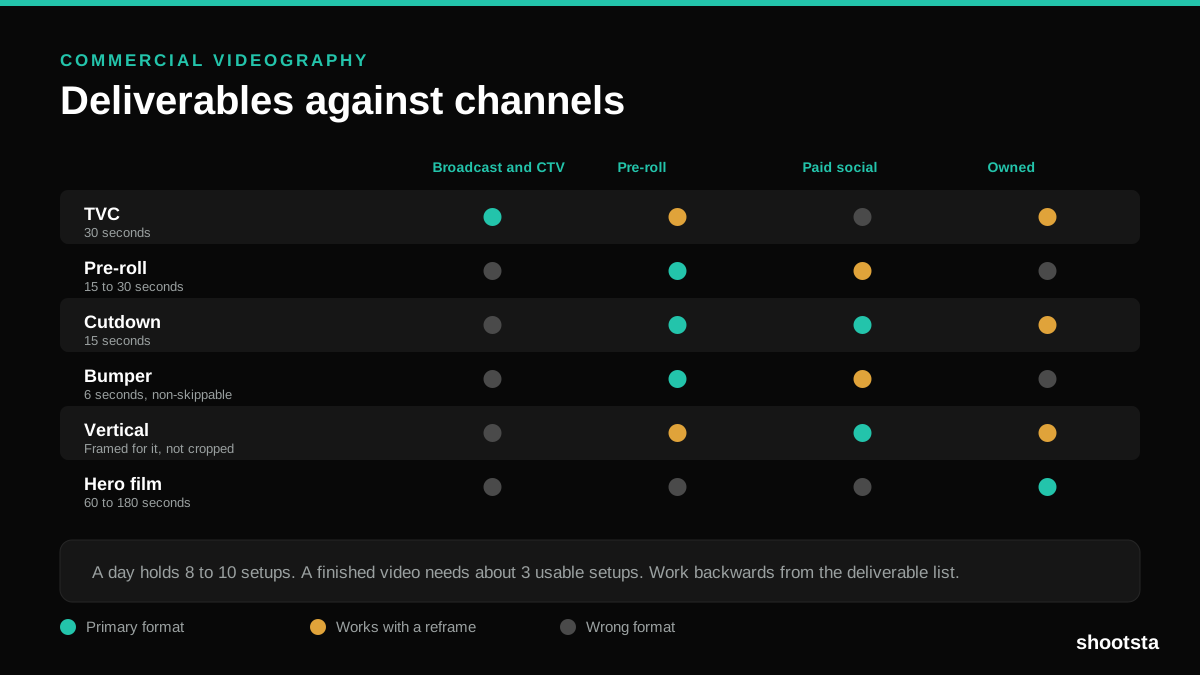
Commercial Videography: Cost and Scope
Commercial videography is priced by the day and judged by the deliverable. Most projects go wrong because those two numbers were never reconciled.
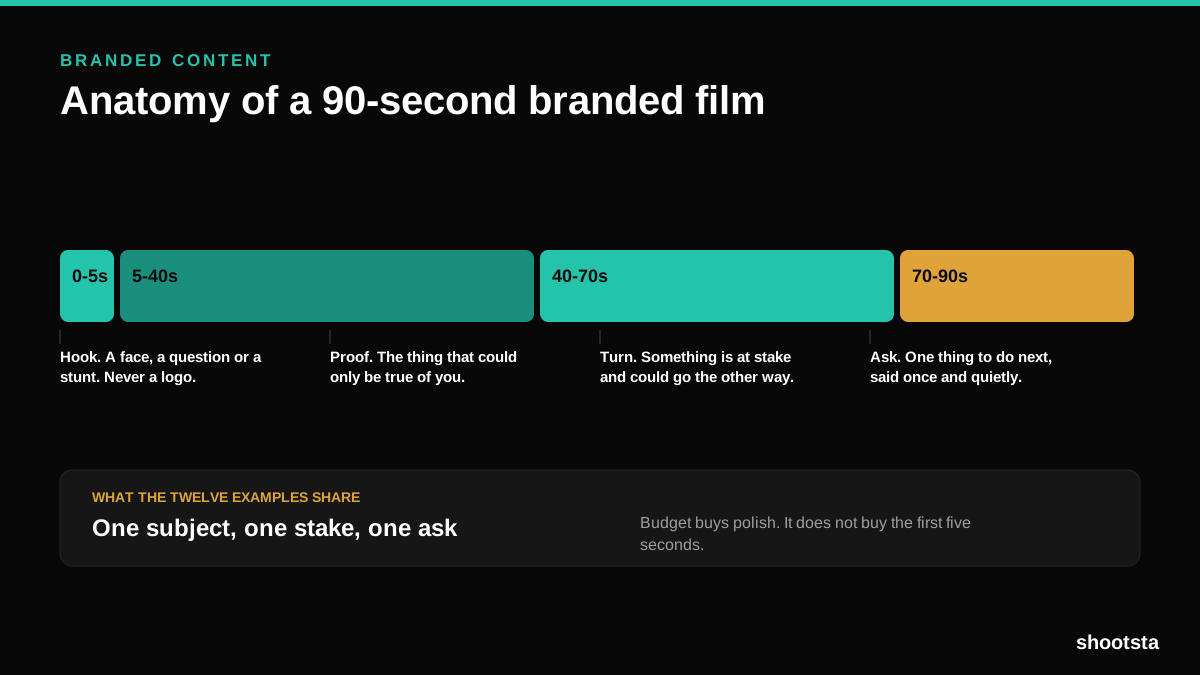
12 Branded Content Examples That Worked
Twelve pieces of branded content that people chose to watch, what each one got right, and the structure underneath all of them.
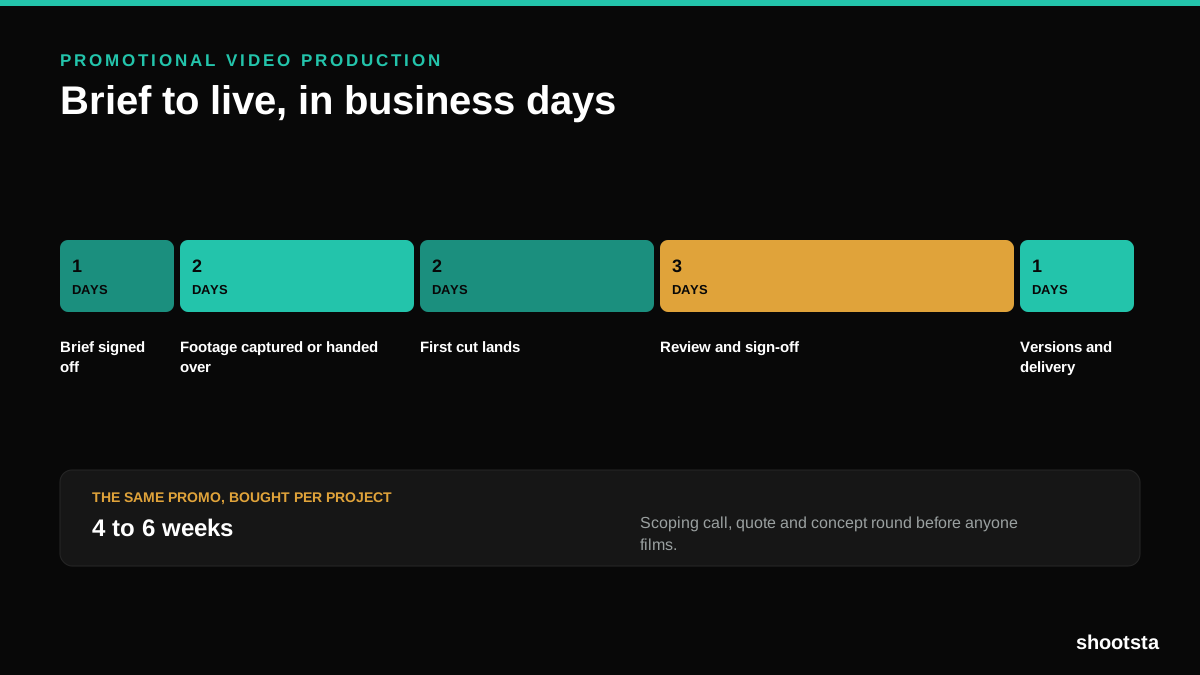
Promotional Video Production: Cost and Time
Most promotional video production schedules are not slow because of the edit. They are slow because of the approval chain. Here is where the days go.
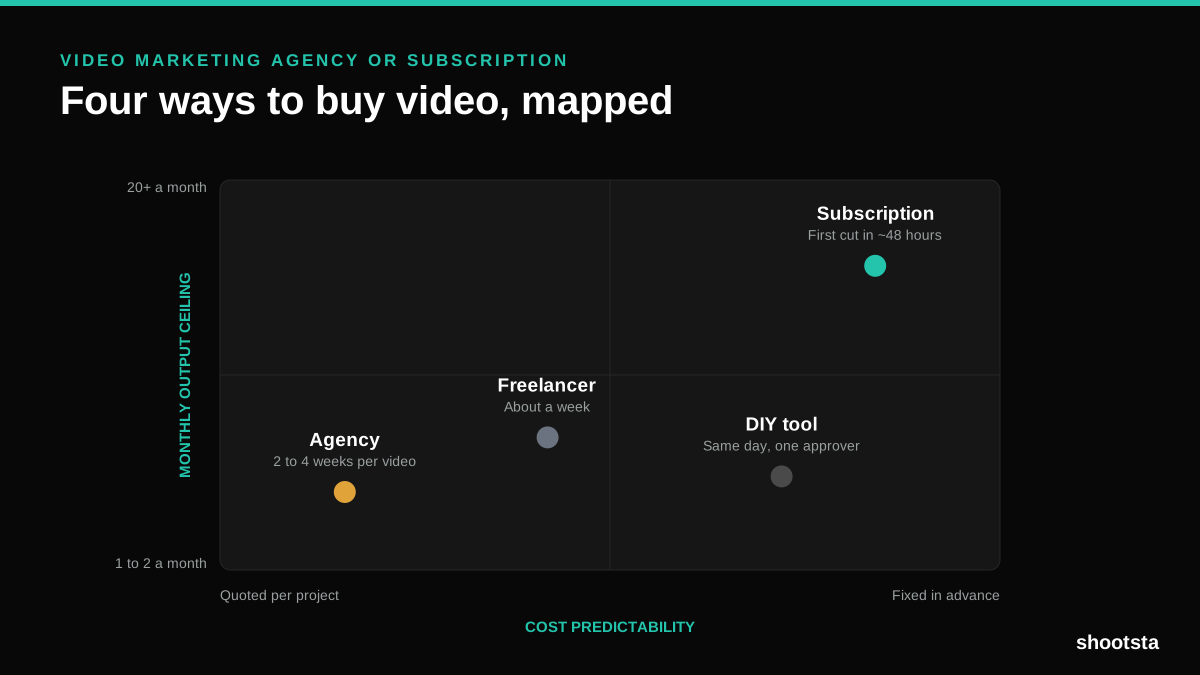
Video Marketing Agency or Subscription?
A video marketing agency prices per project and works in weeks. A subscription prices the year and works in days. Which one fits depends on how often you publish, not on which is better.

B2B Video Production: Costs and Buying Models
There are five ways to buy B2B video production. Each one works well up to a point and then breaks, usually at a volume nobody planned for. Here is what each costs and where the ceiling sits.
How to Measure Video Speed-to-Market
How to Measure Video Speed-to-Market
Speed-to-market is the lag between needing a video and publishing it. For marketing teams it is a revenue metric. Here is how to measure and improve it.