
Post Production Agency or In-House Team?
shootsta.
Post Production Agency or In-House Team?
By Shootsta · Published September 17, 2026 · Updated October 2026
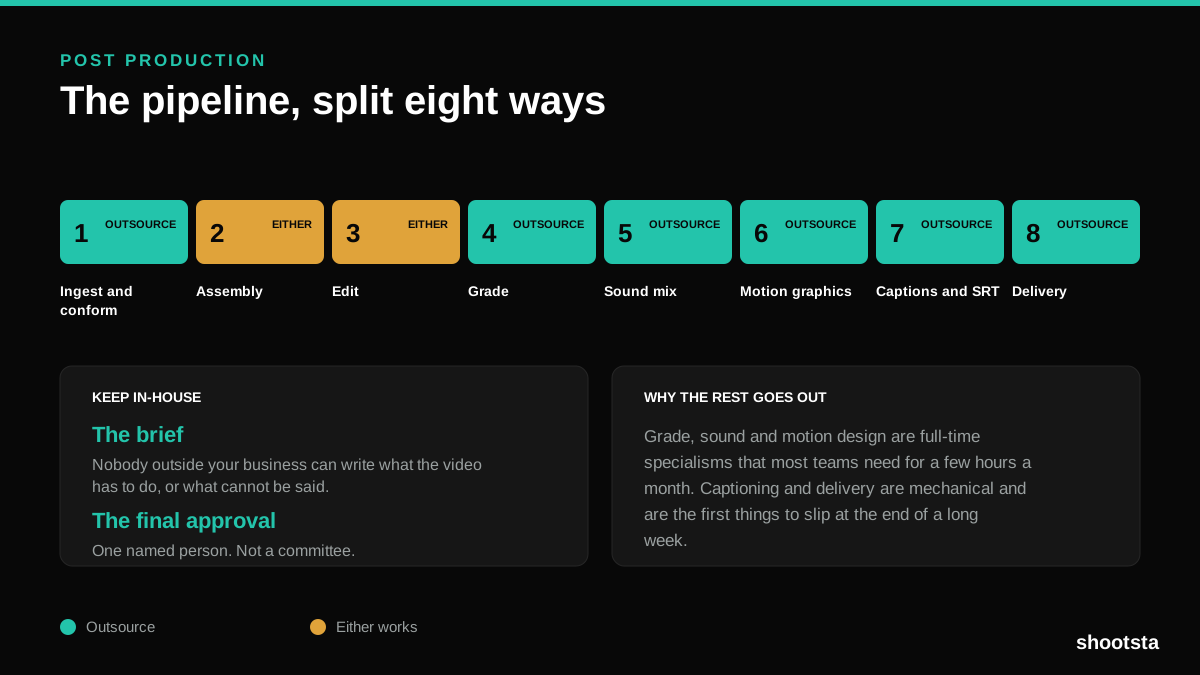
Post production is eight stages, not one. Some of them need context only your team has. The rest are mechanical and are the first things worth handing over.
Short answer. Post production is the work that happens after filming: ingest, assembly, edit, grade, sound, motion, captions and delivery. Keep the two stages that need context, which are the brief and the final approval. Outsource the mechanical middle, which is most of the hours. A post production agency is worth using when your queue is lumpy, your deadlines are fixed, or you need skills you cannot justify hiring for, such as grading and motion design.
Post production tends to be discussed as though it were one job, when in practice it is eight separate stages with very different skill requirements.
That distinction matters, because the outsourcing decision is not all or nothing. Some stages need someone who knows the business, the politics and what the executive meant when they asked for it. Others need a skilled pair of hands and a clear spec, and it makes very little difference whose hands they are.
This is a stage-by-stage look at post production: what each stage involves, which ones are safe to hand over, and which ones you should keep.
What is post production?
Post production is everything that happens to footage after it is filmed and before it reaches an audience. It covers ingest, assembly, editing, grading, sound mixing, motion graphics, captions and delivery.
Filming is usually a single day, while post production is usually the other three weeks, and that imbalance is why post is the stage where video programs either scale or quietly stall.
What are the eight stages of post production?
Each stage has a different answer to the keep-or-outsource question, so it helps to look at them one at a time. The list below runs in the order the work happens.
1. Ingest and conform
Getting footage off cards, backed up, sorted and named so it can be found again. The work is purely mechanical, so outsource it or automate it.
2. Assembly
Building a rough sequence from the usable takes. This needs judgement about the story but not about the business. You can keep it or hand it over, and it is usually safe to hand over once the brief is good enough.
3. Edit
The cut itself: pacing, structure, what stays and what goes. This is where a post production agency earns its money, and also where a bad brief costs the most.
4. Grade
Matching every shot to every other shot, and then to the brand look. It is specialist work that almost no in-house team can justify staffing full time, so this is a stage to outsource.
5. Sound mix
This stage covers levels, noise removal, music and the loudness target each platform expects. It is the most underrated stage, because bad audio loses viewers faster than a soft image does, and a specialist mixer is the person to fix it.
6. Motion graphics
Titles, lower thirds, data and animated sequences all sit here. It is the hardest skill to hire for and the most common gap in an in-house team, so outsource it unless you already have a motion designer.
7. Captions and accessibility
This stage covers burned-in captions, SRT files and readable contrast. Viewers now expect captions as a matter of course. The work is mechanical, so outsource it, but insist it is part of the standard deliverable rather than an extra.
8. Delivery
Aspect ratios, codecs, file naming and getting each version where it belongs. The work is mechanical, and it is the stage most likely to be done badly at the end of a long week, which is a good reason to outsource it.
What should you keep in-house?
Two things are worth keeping, and neither of them is the editing itself.
Keep the brief. Nobody outside your business can write what the video has to do, who is watching, and what cannot be said. A weak brief is the root of nearly every post production problem that gets blamed on the editor.
Keep the final approval, held by one named person rather than a committee. The number of approvers is the single biggest driver of how many revision rounds you pay for.
Is your post production ready to outsource?
Ten statements about how post runs today. The score tells you how much you can hand over now, and which gaps to close first.
Interactive scorecard
Is your post production ready to outsource?
Ten statements about how post runs today. Mark each one. The score tells you how much of the pipeline you can hand over now, and which gaps to close first.
1. Every job starts from a written brief
One document naming the audience, the deliverables and the deadline. Not a forwarded email thread.
2. Brand templates exist as project files
Titles, lower thirds, end frames and a grade, saved as something an editor can open. Not a PDF guideline.
3. Footage lands somewhere consistent
One place, one naming convention, with the camera originals kept intact.
4. One named person approves the final cut
Not a committee. The single biggest driver of how many revision rounds you pay for.
5. Revision rounds are counted and capped
You know what one round means and what the second one costs.
6. Review happens as timestamped comments
Comments sit on the frame they refer to, in one place, rather than arriving as prose in an inbox.
7. Delivery specs are written down
Aspect ratios, codecs, caption format, loudness target and where each version goes.
8. Captions and SRT files are part of the standard deliverable
Not an afterthought requested a week after delivery.
9. Finished projects are archived and findable
Project files, not just exports, so a cut can be reopened in a year.
10. You own the footage and the project files
Confirmed in writing, including anything a previous supplier still holds.
The ten statements are the inputs an outside post team asks for in week one. A yes on all ten is what a clean handover looks like. Nothing here is scored on your budget or your volume, only on how ready the pipeline is.
When is a post production agency worth it?
Three situations make a post production agency worth paying for, and volume is only one of them.
When the queue is lumpy. An in-house editor is sized for the average month, which means they are idle in the quiet ones and underwater in the busy ones. A post production agency adds editors to the queue instead of extending it.
When deadlines are fixed. If a video has to exist for a conference or a results announcement, a single-lane team is a risk. One illness moves the date.
When you need skills you cannot justify hiring. Grading, sound and motion design are all full-time specialisms, and a typical in-house team needs each of them for only a few hours a month.
What does a post production workflow look like?
A look behind the scenes at how production and post fit together. Post production is the longer half of almost every project, and it is where turnaround is won or lost.
What should a post production service deliver?
Ask for these five things in writing before the first project.
- A first cut inside a stated number of business hours. Shootsta works to about 48 hours from footage landing, with no rush charges.
- Captions and SRT files as standard. They should be in the price rather than quoted separately after delivery.
- Every version you need. Aspect ratios, cutdowns and language versions scoped up front.
- The project files as well as the export. With those, a cut can be reopened in a year without starting again.
- Ownership of the footage and the finished video. This should be confirmed in the contract.
Does outsourcing post production mean losing control?
It is the fear behind most of the hesitation, and it comes from a real experience: work that comes back off-brand and needs redoing.
That happens when brand rules exist as a PDF rather than as project files. Hand an editor a guideline document and you get an interpretation. Hand them a template holding your fonts, titles, grade and end frames and you get the same result every time, whoever is editing.
Control over post production is a function of how precisely the inputs are specified, rather than a function of where the editor happens to sit.
What if we already have an in-house post team?
Then the goal is to give your team back the work that needs them, and a partner takes the rest of the queue.
In-house post teams are usually strongest on the pieces that need context and relationships. They are usually buried under captioning, resizing and format conversion. Handing that queue to a partner is what turns an overloaded team into a productive one. We covered how the two work together in how a video partner extends your in-house team.
What vocabulary should you expect in a post production quote?
A quote from a specialist post production agency will use language that a general video supplier often avoids, and understanding it is the difference between comparing what each quote includes and comparing headline prices.
Conform means rebuilding the approved edit at full resolution from the original camera files, which is why an offline edit and a finished master are separate stages. Grade refers to the pass that matches every shot to every other shot and then to your brand look, rather than to a filter applied at the end. Mix covers dialogue levels, noise reduction, music balance and the loudness target that each platform enforces before it will play your file at the right volume.
Deliverables is the list of finished files you receive, including every aspect ratio, every language version and every platform-specific export, which is the line item that most often turns out to be shorter than the buyer assumed. SRT is the caption file format that sits alongside a video rather than being burned into the picture, and it should arrive with the master rather than being requested later.
If a supplier cannot explain which of those stages sit inside the price, the quote is not yet comparable to anyone else's.
Where to go next
For a direct comparison, read Shootsta and in-house post production side by side, which covers cost, capacity and what changes in week one.
If quality control is the worry, our guide to video editing QA sets out what a proper check should cover before a cut reaches you. For the wider buying question, see agency or subscription.
To work out which post production stages to hand over first, book a free consultation.
About Shootsta
Shootsta is a global video production service that helps enterprises create on-brand videos at scale and operationalize video production across every business touch-point. We have produced 70,000+ videos for 920+ brands since 2014, with a first cut in about 48 hours and 4.9 / 5 customer satisfaction across post-delivery surveys. Editors work from offices in Sydney, London, Singapore and San Diego.
Last updated 17 September 2026.
Take this article with you
Read the latest at shootsta.com/blog/post-production-services-outsource-or-keep
You might also like
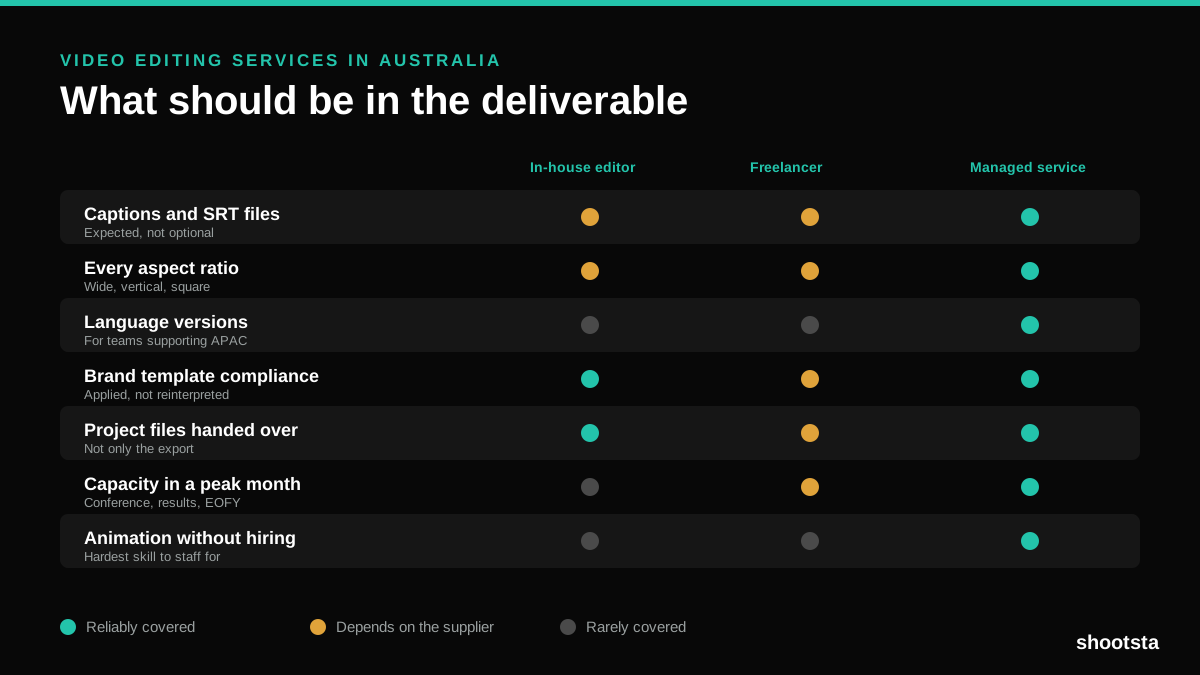
Video Editing Services in Australia
Australian teams are spread across time zones and offices, so the editing queue matters more than the editing. Here is what to expect on cost and turnaround.
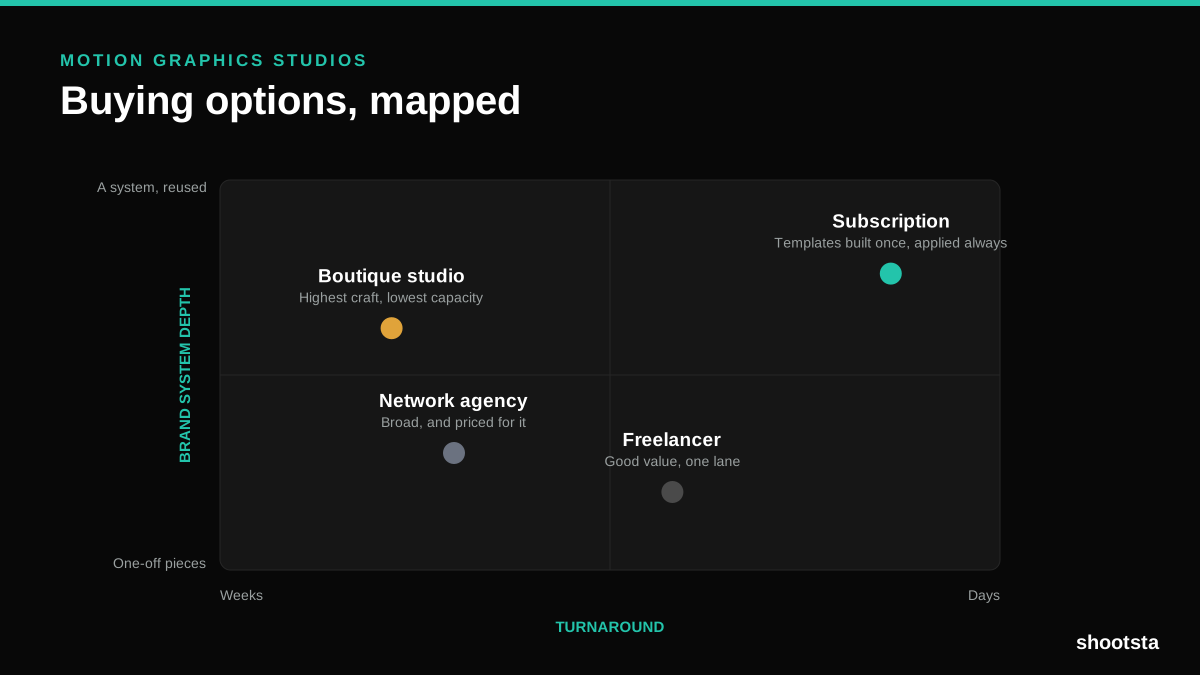
How to Choose Between Motion Graphics Studios
Every motion graphics studio has a good reel. The reel is the one thing that will not tell you how the fifth project goes. These ten criteria will.
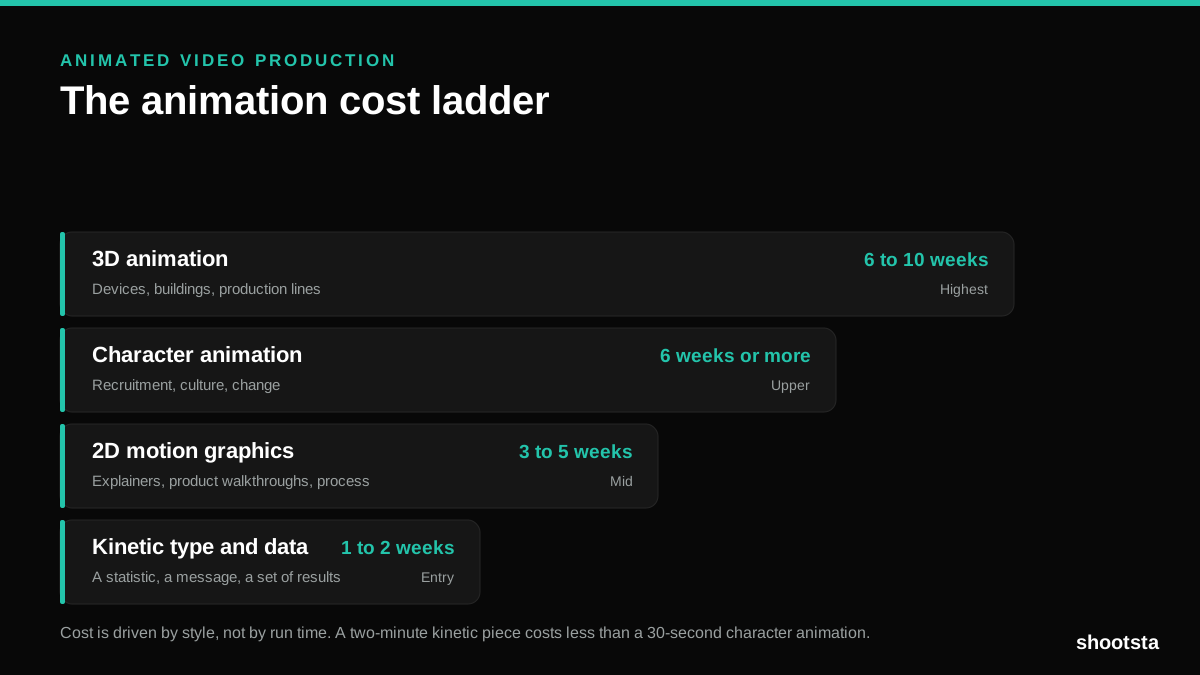
Animated Video Production Cost in the US
Animated video production costs move with style, not with length. Kinetic type, 2D motion, character and 3D sit on four rungs of a ladder. Here is what separates them.
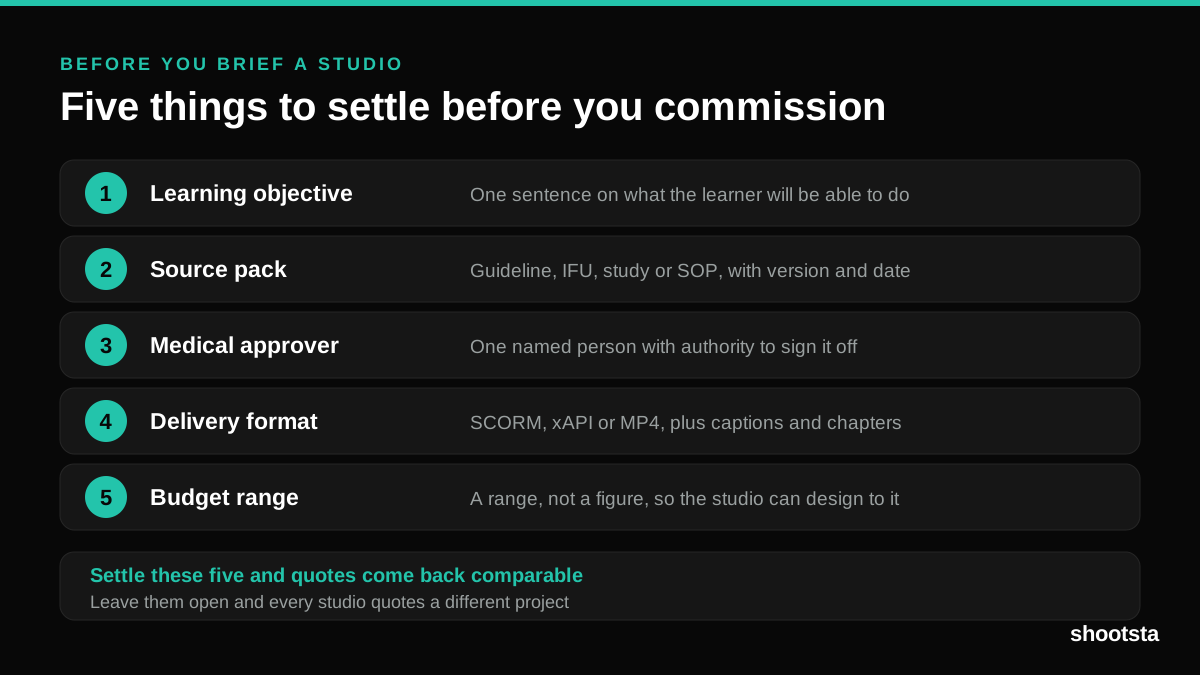
How to Commission Medical Training Animation
Commissioning a medical training animation is mostly decisions you make before anyone animates a frame. The brief fields that matter, what to ask a studio, how much expert time to budget, and the contract terms that stop a rebuild in two years.
How to Write an Animation Brief
How to Write an Animation Brief
Most animation briefs cause delays because they over-specify the visual style and under-specify the outcome. Here are the nine fields an animation production team needs to quote accurately and start without rework.
How to Localize Animated Video at Scale
How to Localize Animated Video at Scale
Animated video is the easiest format to localize because text and audio live in editable layers. Here is how to scale it across languages cleanly.