
How to Commission Medical Training Animation
shootsta.
How to Commission Medical Training Animation
By Shootsta · Published August 27, 2026 · Updated October 2026
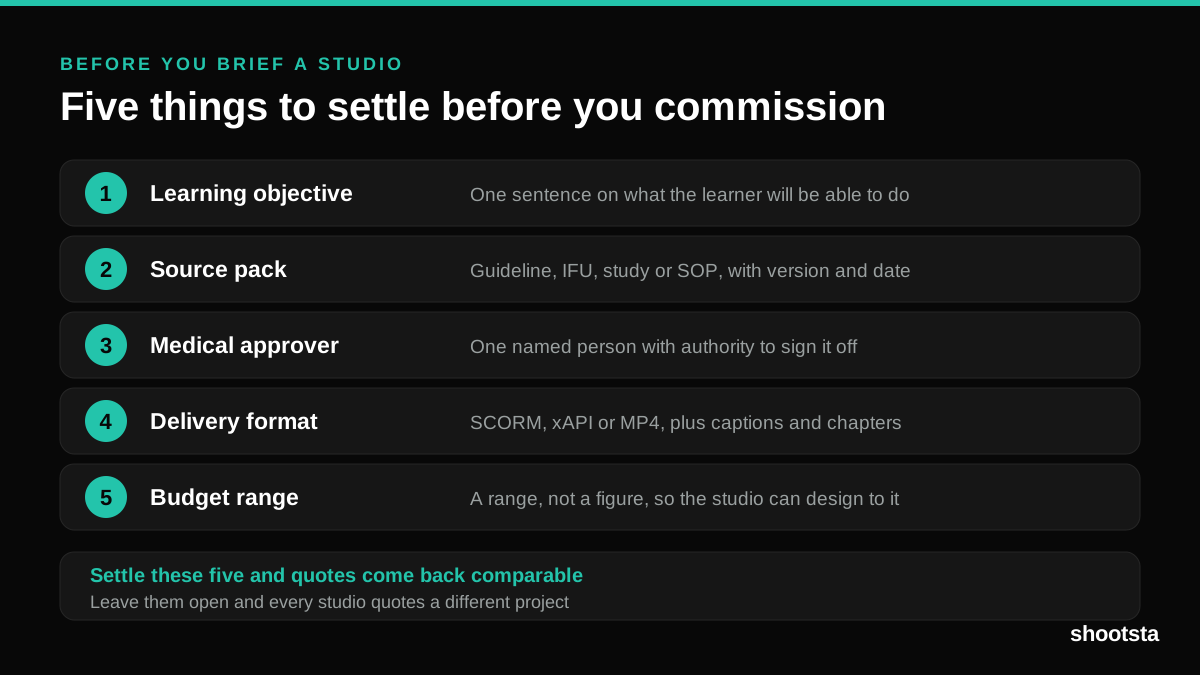
Commissioning a medical training animation is mostly decisions you make before anyone animates a frame. The brief fields that matter, what to ask a studio, how much expert time to budget, and the contract terms that stop a rebuild in two years.
To commission a medical training animation you need five things settled before you approach a studio: the learning objective, the source pack, the named medical approver, the delivery format your learning platform requires, and a realistic budget range. Everything else in the commissioning process follows from those five decisions.
This guide walks through each of them, then covers how to choose a production partner, how much subject matter expert time to budget, and the contract terms that decide whether you edit or rebuild in two years. For the format and cost background, start with our guide to medical training animation.
What does commissioning a medical training animation involve?
Commissioning is the work of turning a training need into a brief that a studio can quote against, In medical work, most of that job is deciding what is true, who says so and who signs it off. The procurement paperwork is the easy part.
If you settle those questions first, the quotes you get back can be compared line by line. If you leave them open, every studio quotes a different project. That is why proposals for the same medical training animation can be wildly far apart.
What goes in a medical training animation brief?
A good brief has nine fields, and any studio worth using will ask you for all of them.
- The learner. Surgeon, scrub nurse, field service engineer or new graduate, and what they already know matters as much as who they are.
- The learning objective. One sentence describing what they will be able to do after watching the module.
- The source pack. The guideline, instructions for use, published study or internal SOP, with the version and the date recorded.
- The medical approver. One named person with the authority to sign the content off.
- The style reference. Existing brand assets, or two or three medical animations whose level of anatomical detail feels right to you.
- The length. A target range rather than an exact figure, since two to four minutes covers most single procedures.
- The delivery format. SCORM, xAPI or MP4, plus captions, a transcript and chapter markers.
- Language versions. Flag these now even if they are a year away, because it changes how the project files get built.
- The review structure. Who reviews at script stage, who reviews at draft stage, and how many rounds the quote includes.
Our general guide to writing an animation brief covers the same ground for non-regulated work. The medical difference is fields three, four and nine, and those are the ones that decide the timeline.
How do you choose a medical training animation partner?
Ask each studio on your list these five questions, and the field will narrow quickly. The answers show you who has done regulated medical work before and who is learning on your budget.
- Show me a module in my category. Device handling and mechanism of action are different crafts, so a beautiful showreel of cell biology says very little about whether a studio can draw your device.
- How do you handle expert review? You are looking for a documented process rather than goodwill, so ask when they involve the expert and exactly what they send.
- What is your revision structure? You want defined rounds at named stages, because open-ended revision is how medical animation budgets slip.
- Do we get the source files? This one answer decides whether an update in two years is a straightforward edit or a full rebuild.
- Can you build a style kit we can reuse? If the answer is no, every module after the first will cost roughly the same as the first one did.
Two warning signs are worth naming when you shortlist a medical training animation studio. A studio that quotes without asking for the source pack has not priced the accuracy work, and a studio that will not commit to a review structure has priced one round and is hoping you will not need a second.
How much subject matter expert time will it take?
A medical training animation needs four to six hours of expert time per module, spread across three points in the schedule. Plan on about an hour at kickoff to walk the studio through the procedure and two hours on the script, where most of the correcting happens. Add another hour to review the animation draft.
In this process, clinicians are much harder to schedule than animators. Booking their time in the calendar before the project starts does more for the schedule than any production decision you can make, and when a medical training animation runs late this is almost always the reason.
What does 3D animation buy you?
3D earns its cost when the learner needs to see depth, rotation or a view that a camera cannot reach. Surgical approaches, implant placement and the inside of a device are good examples. For a protocol, a workflow or a mechanism that reads clearly from one angle, 2D is faster to build and cheaper to update. Ask the studio which scenes in your script need 3D, and expect a good one to suggest fewer than you assumed.
What should the contract cover?
Five terms carry most of the long-term value in a medical training animation contract.
- Source files at handover. The project files, the models and the fonts, because without them you have bought a video rather than an asset.
- Ownership. Be explicit about who owns the finished module and who owns the underlying models it was built from.
- Revision rounds. State the number and the stage they happen at, with the hourly rate for anything beyond that set out up front.
- Update pricing. Agree the rate for a text change or a step change now, before the project starts rather than after it finishes.
- Language versions. Agree the price per extra language, and whether the files are built from day one to support it.
The update clause is the easiest one to skip and the one you are most likely to regret. Clinical guidelines change, and a library that is expensive to update stops being maintained. In clinical training, an out-of-date module does more harm than having none at all.
What does a medical training animation cost?
Simple 2D protocol modules built from an existing style kit sit in the low thousands, custom 2D medical animation for a 60 to 90 second module usually lands in the mid four to low five figures, and detailed 3D anatomy or surgical work runs well into five figures. Our guide to animated explainer video cost breaks down what sits in each tier.
Three habits keep the number predictable. Lock the script before storyboarding, so you never pay to animate a scene that later gets cut. Name one approver per stage to keep revisions tight. It also pays to commission in batches of three or four related modules, so the style kit cost spreads across all of them.
That last point is the biggest single lever on price. The first module in a library carries the setup work, and every module after it reuses that work, which is why a program of ten costs far less per module than ten commissioned one at a time.
Frequently asked questions
How far ahead should you commission a medical training animation?
Start ten to twelve weeks before you need it live. That allows four to eight weeks of production plus buffer for expert availability. If it supports a device launch or an accreditation deadline, say so in the brief.
Should you use one studio or several?
Use one studio for anything that will grow into a library. Consistency in labels, palette and level of detail matters more in medical work than in marketing, because staff learn the visual language alongside the clinical content.
What if the guideline changes mid-project?
Stop at the current stage and update the source pack before continuing. A change caught at script stage costs a rewrite, while the same change caught after animation costs a re-render, which is exactly why the script sign-off gate exists.
Can you commission animation without an in-house L&D team?
Yes. Clinical education, product marketing and regulatory teams commission this work regularly. What you cannot proceed without is the named medical approver, and that role cannot be outsourced to the studio.
Do you need a separate studio for regulated markets?
No, but you do need a partner that understands the review chain and builds it into the schedule. The workflow is covered in how to produce video for healthcare and pharma.
Where to start
Write the one-sentence learning objective and pull the source pack together, because with those two in hand you can brief any medical training animation studio and compare the quotes on equal terms. Then read medical training animation best practices before you sign off the script, or explore our animation production services.
Take this article with you
Read the latest at shootsta.com/blog/how-to-commission-medical-training-animation
You might also like
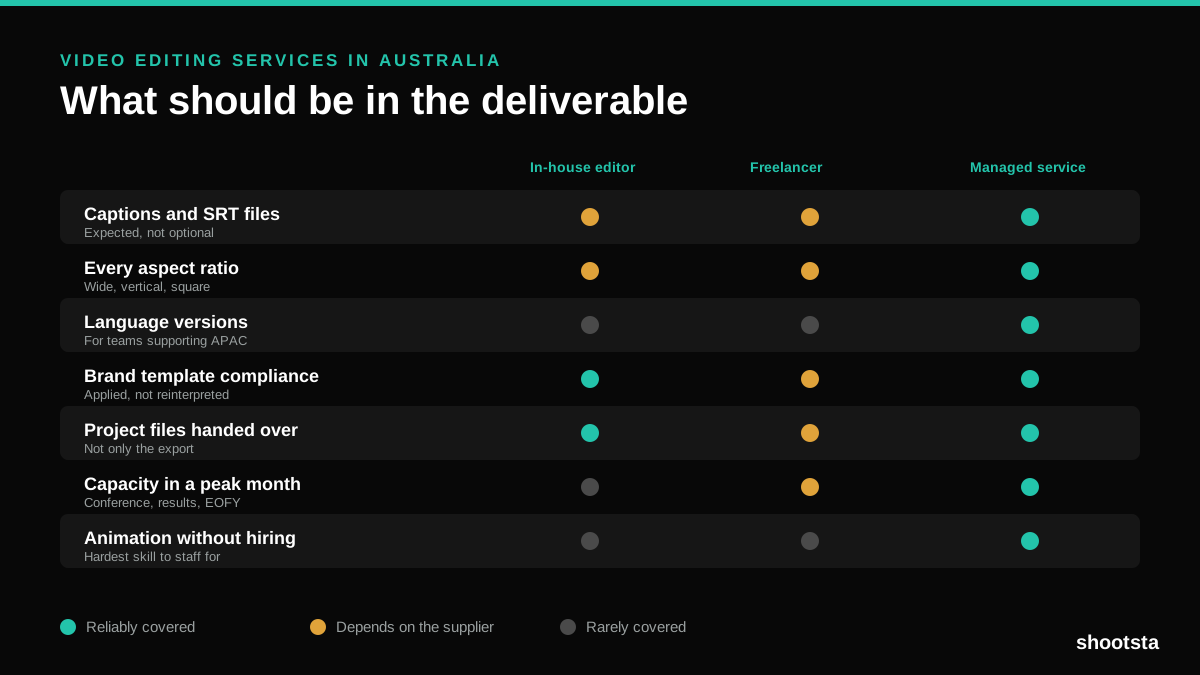
Video Editing Services in Australia
Australian teams are spread across time zones and offices, so the editing queue matters more than the editing. Here is what to expect on cost and turnaround.
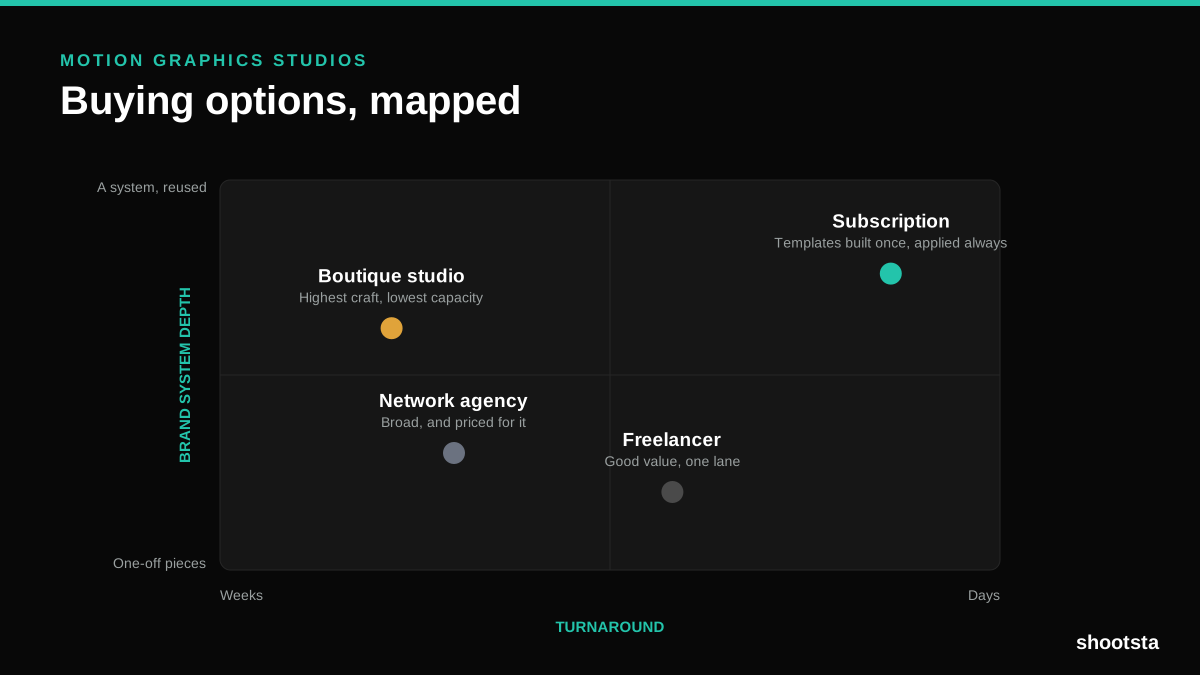
How to Choose Between Motion Graphics Studios
Every motion graphics studio has a good reel. The reel is the one thing that will not tell you how the fifth project goes. These ten criteria will.
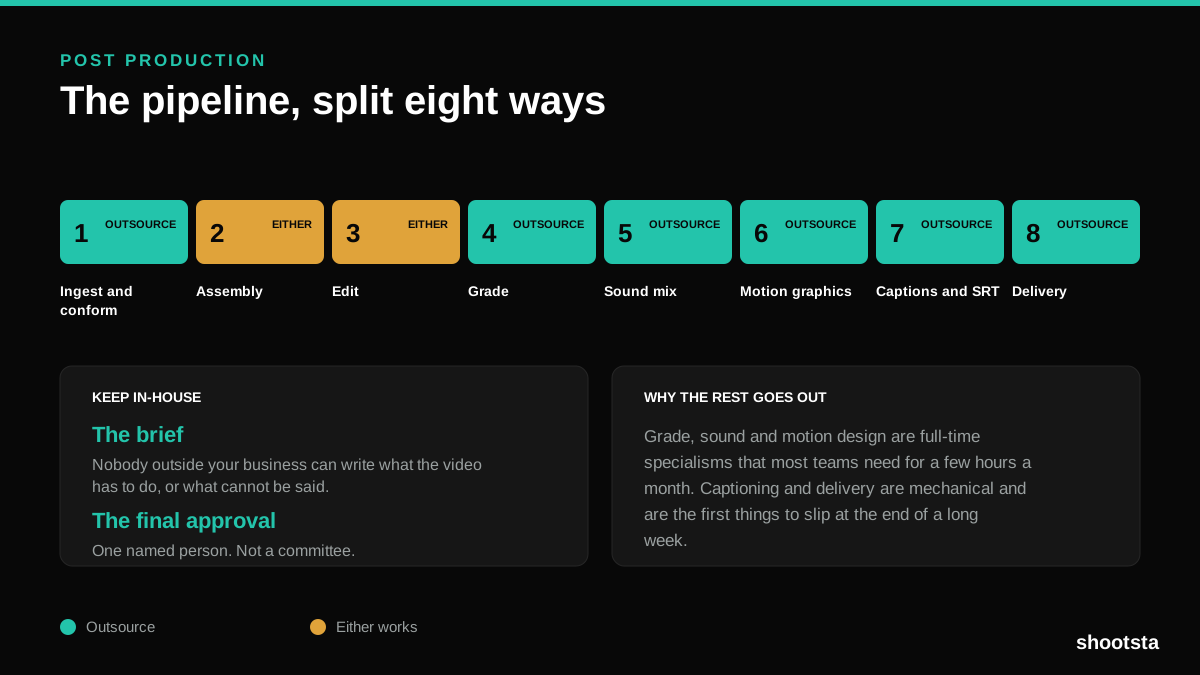
Post Production Agency or In-House Team?
Post production is eight stages, not one. Some of them need context only your team has. The rest are mechanical and are the first things worth handing over.
Animated Video Production Cost in the US
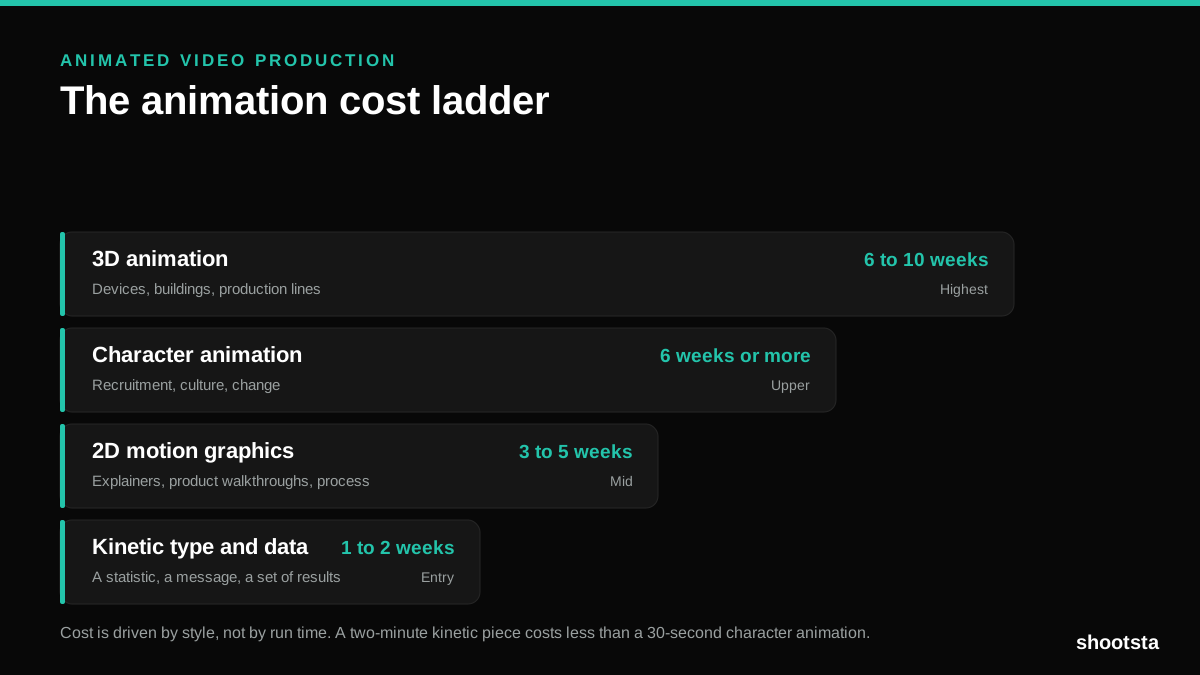
Animated video production costs move with style, not with length. Kinetic type, 2D motion, character and 3D sit on four rungs of a ladder. Here is what separates them.
How to Write an Animation Brief
How to Write an Animation Brief
Most animation briefs cause delays because they over-specify the visual style and under-specify the outcome. Here are the nine fields an animation production team needs to quote accurately and start without rework.
How to Localize Animated Video at Scale
How to Localize Animated Video at Scale
Animated video is the easiest format to localize because text and audio live in editable layers. Here is how to scale it across languages cleanly.