
NYC vs LA for Corporate Video Production
shootsta.
NYC vs LA for Corporate Video Production
By Shootsta · Published June 4, 2026 · Updated October 2026
New York and Los Angeles are the two default bases for high-end US corporate video production. The right choice depends on stakeholder gravity, industry mix, and the kind of work you produce most.
Should you produce your corporate video in New York or Los Angeles?
New York and Los Angeles are the two default bases for high-end US corporate video production. Both have deep crew benches, full post-production capacity and large pools of SAG-AFTRA talent. The right choice usually comes down to four things. They are where your stakeholders sit, your industry mix, the kind of work you make most often, and whether the program sits close to broadcast. The comparison below covers each one for 2026.
Quick answer: NYC vs LA for corporate video
NYC is usually the better base for FS programs governed by the SEC and state regulators. It also suits programs with East Coast stakeholders, brands in advertising, media, retail and B2B, and editorial-style corporate video. LA is usually the better base for entertainment-adjacent brands, broadcast TVCs and OTT-first work. It also suits programs that need entertainment talent and locations, and brands with a West Coast HQ.
Cost: NYC vs LA video production in 2026
The two cities are roughly equivalent on cost. LA runs a few percent cheaper on standard corporate video, and both cost more than mid-tier US markets like Chicago, Atlanta, or Austin.
- Crew day rates: NYC USD 1,500 to USD 3,500. LA USD 1,400 to USD 3,500.
- Standard 2 to 3 minute corporate video, project pricing: NYC USD 6,800 to USD 20,300. LA USD 6,500 to USD 19,800.
- Subscription production: NYC USD 3,000 to USD 9,000 per video. LA USD 2,900 to USD 8,800. The same providers usually serve both markets.
- Animated explainer: NYC USD 9,000 to USD 32,000. LA USD 8,500 to USD 32,000.
- Event recap video: NYC USD 5,500 to USD 14,000. LA USD 5,300 to USD 13,500.
- Broadcast TVC (30s, SAG, full production): NYC USD 80,000 to USD 500,000+. LA USD 80,000 to USD 600,000+.
For a deeper city-by-city breakdown, see our US video production cost guide.
Talent and crew depth
New York
NYC has the deepest editorial, documentary, and corporate-content crew bench in the US. No other US city has as many producers and directors who know financial services, professional services, media and B2B. The SAG-AFTRA pool is strong for commercial work, with plenty of spokespersons, voiceover artists and on-camera business talent. Same-day senior crew booking is straightforward in most weeks.
Los Angeles
LA has the deepest entertainment, broadcast, and advertising-production crew bench in the US. It has more directors and DPs for high-end broadcast and OTT work than any other US city. More on-camera SAG-AFTRA talent lives in LA than anywhere else in the world. For big-budget commercial work, its production crews are the strongest in North America.
Industry mix and stakeholder gravity
This is usually the factor that decides it. Match the base to where your stakeholders, decision makers and brand sit.
- NYC HQ industries: Financial services (JPMorgan, Goldman, Morgan Stanley, BlackRock), media (NBCUniversal, NYT, WSJ), advertising and PR, fashion, professional services, B2B SaaS, consumer brands targeting East Coast.
- LA HQ industries: Entertainment and media (studios, streamers, talent agencies), tech (Snap, SpaceX, Riot), consumer brands targeting West Coast, broadcast and creative production, aerospace, and beauty.
Over a year, the cost of flying stakeholders to shoots usually outweighs any gap in day rates, so produce where your people are.
Turnaround and operational tempo
Both cities can deliver 48 to 72 hour turnaround when the production model is built for it. NYC has a slightly deeper bench of subscription production providers for corporate video. LA is catching up, with strong subscription providers in the tech and brand sectors. For event recap and news-cycle turnaround, both cities can hit same-day or next-day delivery.
NYC has the edge when your work runs to the pace of financial news or morning TV. LA has the edge for entertainment event recaps and OTT delivery cycles.
Compliance and regulated content
NYC dominates for SEC-regulated FS video, state-regulated insurance video, and securities-related corporate content. The compliance teams, FS marketing teams and production crews who know the review process are clustered in NYC. LA is the dominant base for FCC-regulated broadcast content, FDA-regulated pharma DTC advertising, and entertainment-adjacent compliance work.
When to pick NYC
- Your HQ and senior stakeholders sit in NYC or East Coast.
- You produce SEC-regulated FS or state-regulated insurance content.
- You need editorial, documentary, or news-style production.
- Your industry mix is FS, media, professional services, advertising, fashion, or B2B SaaS.
- Your audience and brand context skew East Coast or international.
When to pick LA
- Your HQ and stakeholders sit in LA or West Coast.
- You produce broadcast TVCs, OTT-first content, or entertainment-adjacent brand work.
- You need the deepest SAG-AFTRA on-camera talent bench.
- Your industry mix is entertainment, tech, beauty, lifestyle, or aerospace.
- You need access to LA locations, production stages, or entertainment industry partners.
The hybrid play: produce nationally, shoot in both
If your stakeholders sit on both coasts, a hybrid model often works best. The production program is based wherever the operating model fits (often a third city like San Diego, Chicago, or Austin where overhead is lower), and crews work locally in NYC and LA for shoots that need either city's specific talent or locations. A national partner with crews in both cities can run this without separate vendor contracts. What the team learns about your brand stays in one place, and the footage still looks true to each market.
Many large US enterprise video programs in 2026 run on this model. Shootsta runs it from its San Diego US base, with crews in NYC, LA and across the country.
Frequently asked questions
Is video production cheaper in NYC or LA?
The two cities cost roughly the same. LA runs a few percent cheaper on standard corporate video. The real cost difference is between either premium city and mid-tier US markets like Chicago, Atlanta, or Austin, where similar quality costs noticeably less.
Where should SEC-regulated FS video be produced?
In most cases, NYC is the better choice. The SEC-regulated FS sector is concentrated in NYC, and the production teams comfortable with FS workflow and compliance review are deeper there. LA can run FS video but the bench is thinner. For SEC-regulated investor relations content specifically, NYC also has the broadcast IR studios and the financial-news talent bench that LA lacks.
Where should broadcast TVCs and ad campaigns be produced?
LA is the usual choice for national broadcast and OTT work. It has the deepest advertising production bench, the deepest SAG-AFTRA on-camera talent pool, and the strongest director and DP roster for high-end commercial work. NYC is competitive for editorial-led, B2B, or financial advertising specifically.
Can a NYC production company shoot in LA?
Yes, and most established NYC providers do. A small core crew flies in from NYC and hires local LA production support for the day, and LA providers do the same in New York. For multi-day LA shoots, an LA-based crew is usually more cost-effective than travelling from NYC.
What about Chicago, Atlanta, Austin, San Diego?
All have credible crew bases and cost noticeably less than NYC or LA for similar quality. Chicago is strong for CPG and B2B. Atlanta benefits from production-friendly Georgia state credits and growing crew depth. Austin has growing tech sector adjacency. San Diego has specialist crews for biotech, defense and tourism. For most enterprise programs, the question is whether the premium NYC or LA cost is justified by the specific industry, talent, or location need.
Where to go next
For NYC-specific service detail, see the New York video production hub. For LA, go to the Los Angeles video production hub. For the full US cost picture, read the US video production cost guide. For a scoped quote, get in touch.
Take this article with you
Read the latest at shootsta.com/blog/nyc-vs-la-corporate-video-production
You might also like

How to Plan Video Team Capacity Around Leave
Your only editor just booked two weeks off, and you already know which projects will slip. Chad Lakin explains how to plan video team capacity so the work keeps moving when someone is away.
Corporate Video Editing Standards: Full Guide
A two-page editing standard does more for consistency than a forty-page brand book. Here is what it should cover, who owns each part, and how to enforce it with an in-house editor or an outside partner.
Quality Control in Outsourced Video Editing
When editing leaves the building, quality has to be checked by a system rather than by whoever happens to look. Here is the system: acceptance criteria, two QA gates, counted revision rounds and a quarterly audit.
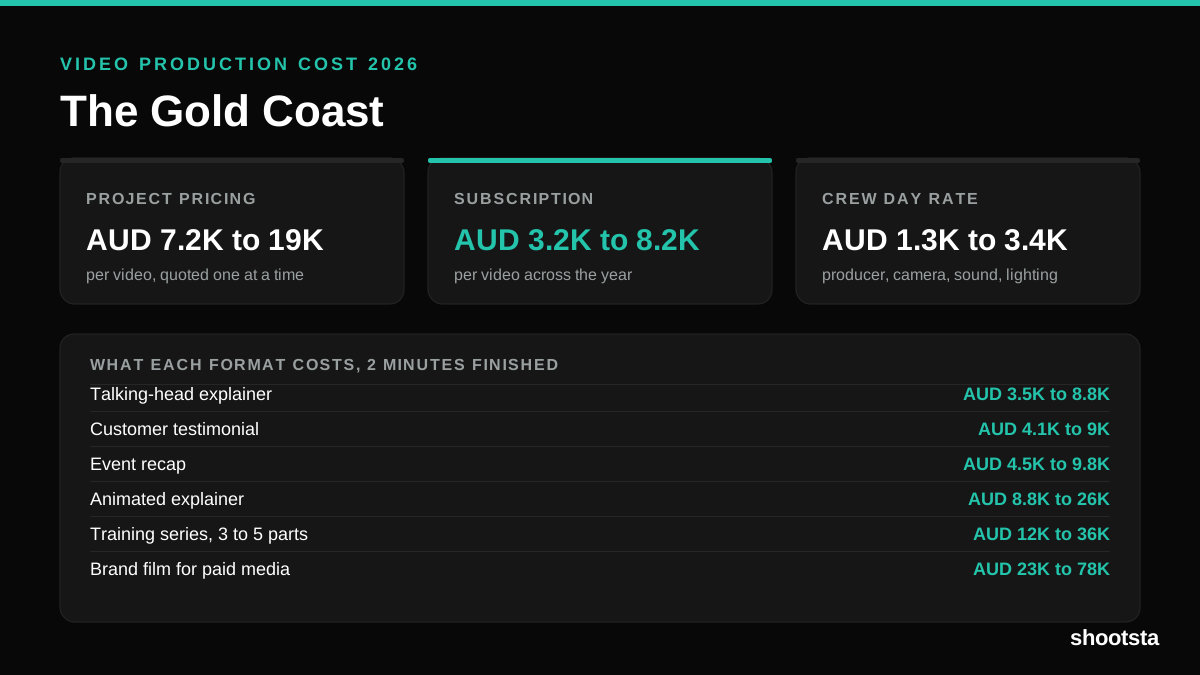
Video Production Cost on the Gold Coast 2026
Video production in the Gold Coast costs AUD 3,200 to AUD 8,200 per finished video on a subscription model, and AUD 7,200 to AUD 18,500 for one-off project work. Here is what you are paying for, and how the three pricing models compare.
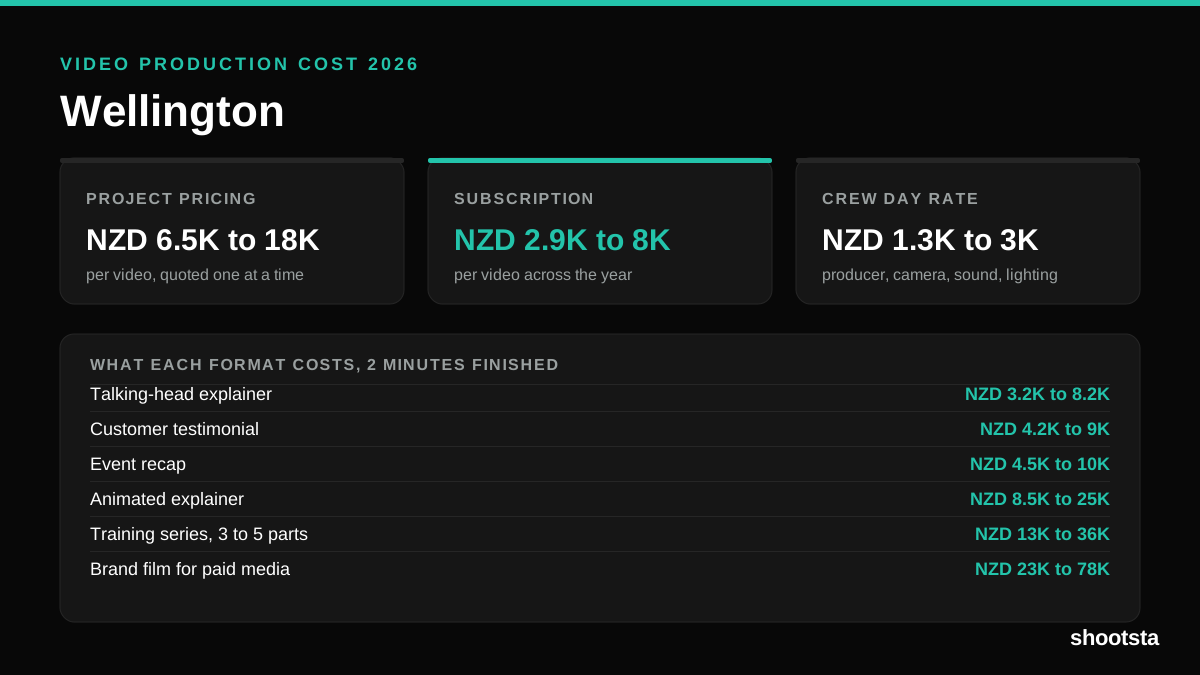
Video Production Cost in Wellington (2026)
Video production in Wellington costs NZD 2,900 to NZD 8,000 per finished video on a subscription model, and NZD 6,500 to NZD 18,000 for one-off project work. Here is what you are paying for, and how the three pricing models compare.
Video Production Cost in Berlin (2026)
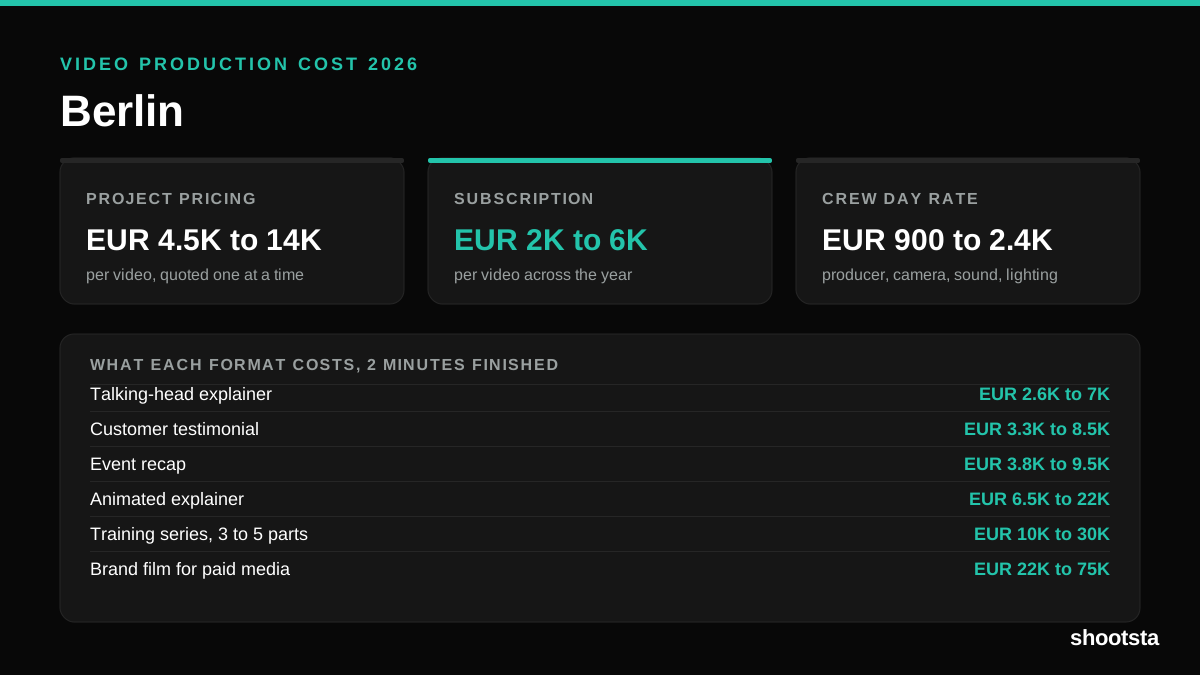
Video production in Berlin costs EUR 2,000 to EUR 6,000 per finished video on a subscription model, and EUR 4,500 to EUR 13,500 for one-off project work. Here is what you are paying for, and how the three pricing models compare.