
Measuring LinkedIn Video ROI for B2B
shootsta.
Measuring LinkedIn Video ROI for B2B
By Mark Ashworth · Published April 18, 2026 · Updated October 2026
Stop guessing whether LinkedIn video works. Here is how to measure B2B video ROI across the full funnel - from impressions to pipeline attribution.
Why does one video never prove anything?
The most common objection from leadership sounds like this: "We posted one video and nothing happened." That is the wrong way to judge it. Video marketing works a bit like dating, where nobody commits after a single meeting. Trust builds across many touchpoints over weeks and months.
LinkedIn's own data backs this up. B2B buyers typically consume 7-10 pieces of content before reaching out to a vendor. If your one video didn't generate a lead, that doesn't mean video failed. It means you stopped before momentum could build.
The real question is not "did this video work?" but "are we measuring the right things at the right stage?" Here is how to set up a measurement framework that answers the questions leadership is asking.
What metrics matter at the top of the funnel?
Top-of-funnel video is about reach and awareness. You are trying to get your brand in front of the right people, not generate leads yet. The metrics that matter here are straightforward.
Impressions tell you how many times your video appeared in someone's feed. Unique reach tells you how many individual people saw it. A high impression-to-reach ratio means the algorithm is showing your content repeatedly to the same audience, which can be good or bad depending on your goals.
Video views on LinkedIn count after 2 seconds of playback (or a click-to-play). That is a low bar, so don't celebrate view counts alone. Look at view-through rate instead - the share of people who saw the video and kept watching. Anything above 30% is solid for organic B2B content.
At this stage, the goal is simple: are the right people seeing our content? Check your follower demographics and post analytics to make sure you are reaching decision-makers in your target industries rather than a random mix of connections.
What metrics matter in the middle of the funnel?
Middle-of-funnel metrics tell you whether people are engaging with your content and moving closer to a buying decision. This is the stage where B2B measurement most often slips.
Dwell time is one of LinkedIn's most underrated metrics. It measures how long someone spends looking at your post, even if they don't click or comment. High dwell time signals that your content is holding attention.
Engagement rate counts the likes, comments, shares and saves a post gets. Some of that engagement is worth far more than the rest. A comment from a VP of Marketing at a target account is worth more than 50 likes from random connections. Track who engaged as closely as you track how many.
Website visits from LinkedIn show whether your video content is driving traffic back to your site. Use UTM parameters on every link you share alongside video posts. Without them, you are flying blind on attribution.
For a deeper look at how these mid-funnel metrics connect to your overall LinkedIn video strategy, start with the platform-specific benchmarks and work backward to your goals.
How do you connect video to pipeline and revenue?
This is the part that matters most to leadership. Bottom-of-funnel metrics tie video directly to business results.
Lead gen form submissions are the most direct metric if you are running LinkedIn video ads with lead gen forms attached. Track cost per lead and compare it against other channels.
Pipeline attribution is harder but more valuable. The question is: did contacts who engaged with our video content eventually enter the sales pipeline? A CRM such as HubSpot or Salesforce can track this once you set up touchpoint tracking.
LinkedIn's Conversions API (CAPI) lets you connect your CRM data back to LinkedIn. This means you can see which LinkedIn video interactions came before a closed deal as well as a form fill. If you are spending real money on LinkedIn video, setting up CAPI is worth the technical investment.
Job applicants influenced by video is an often-overlooked metric. If you are using video for employer branding, track whether applicants mention your LinkedIn content or whether application rates increase after video campaigns.
Download the LinkedIn Video Strategy Guide for a complete measurement framework template you can adapt to your CRM and reporting stack.
Free PDF Guide
Get the LinkedIn Video Strategy Guide
The full B2B video funnel, measurement framework, and A/B testing playbook in one free PDF.
How should you A/B test LinkedIn video?
It is easy to post a video and move on, and that wastes what the post could teach you. Simple A/B testing can dramatically improve your results over time.
The easiest test: cut two versions of the same video with different openings. The first 3 seconds determine whether someone stops scrolling, so test different hooks. Try a question against a bold statement, a face against a text overlay, or a data point against a story.
Test one variable at a time. Presenter often matters more than you would expect. Try the same script delivered by different team members and compare engagement. Length is another obvious variable. You won't know whether your audience prefers 15-second tips or 45-second deep dives until you test both.
Here is the stat that should motivate consistency: 92% of B2B marketers say consistent creative matters for brand building, but only 12% deliver consistent content. The gap between intention and execution is where the opportunity lives. If you maintain a regular posting cadence and test as you go, you will outperform most of your competitors without a bigger budget.
What does a full-funnel measurement dashboard look like?
Keep it simple. A single dashboard with three sections works for most B2B teams.
Awareness tier: impressions, unique reach, follower growth rate, view-through rate. Review weekly.
Engagement tier: dwell time, engagement rate, website visits from LinkedIn, content saves. Review weekly.
Revenue tier: lead gen form submissions, pipeline influenced by LinkedIn video, CAPI-attributed conversions, cost per opportunity. Review monthly.
Do not try to measure everything at once. Start with the awareness metrics, add engagement tracking in month two, and layer in pipeline attribution by month three. This gives you time to set up proper tracking without delaying your video program.
What is the real cost of not measuring?
When you don't measure video at each funnel stage, one of two things happens. Either leadership kills the program because they can't see results, or the team keeps posting without knowing what works and wastes months on content that doesn't move the needle.
Both outcomes are avoidable. The measurement framework above takes a few hours to set up and saves you from the "we tried video and it didn't work" conversation that kills so many B2B video programs before they gain traction.
Understanding which video formats drive the best metrics is part of this equation. Short-form content tends to win on reach and frequency metrics, while longer formats drive deeper engagement. Match your format to the metric you are optimizing for.
What should you do next?
Set up your measurement framework before you post your next video. Define what success looks like at each funnel stage, configure UTM tracking, and explore LinkedIn's CAPI integration if you have the technical resources.
For a ready-made measurement template and the full B2B LinkedIn video playbook, download the LinkedIn Video Strategy Guide. It includes benchmarks by industry so you know what "good" looks like for your specific situation.
Take this article with you
Read the latest at shootsta.com/blog/measuring-linkedin-video-roi-for-b2b
You might also like
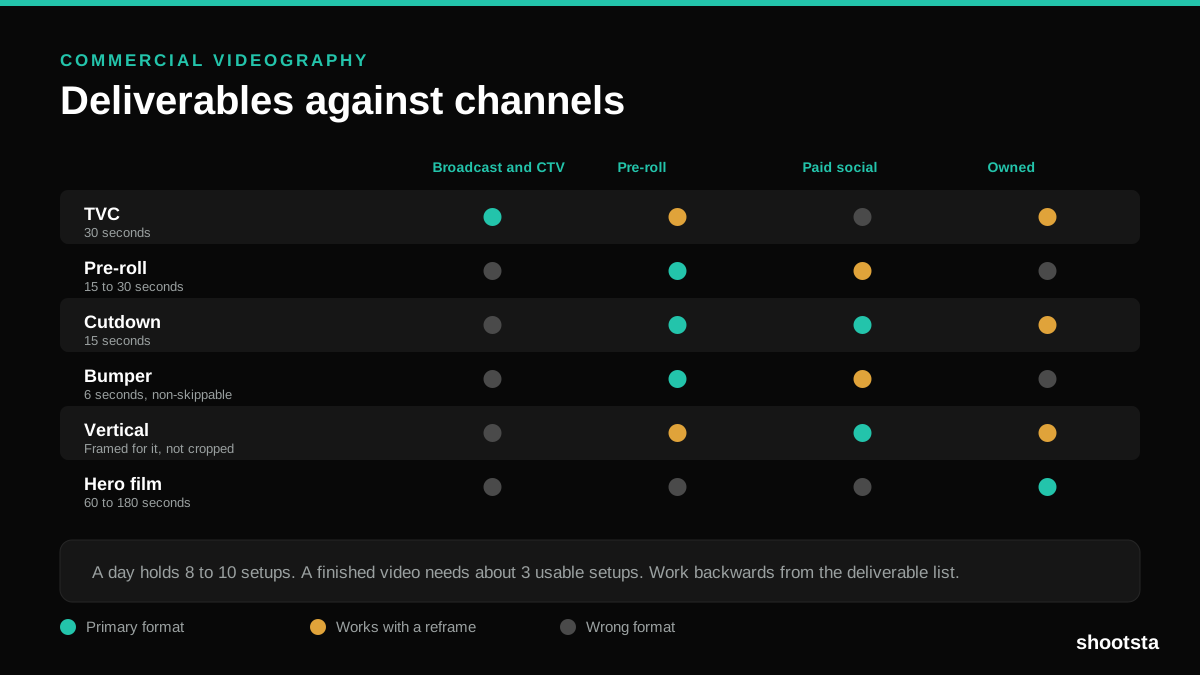
Commercial Videography: Cost and Scope
Commercial videography is priced by the day and judged by the deliverable. Most projects go wrong because those two numbers were never reconciled.
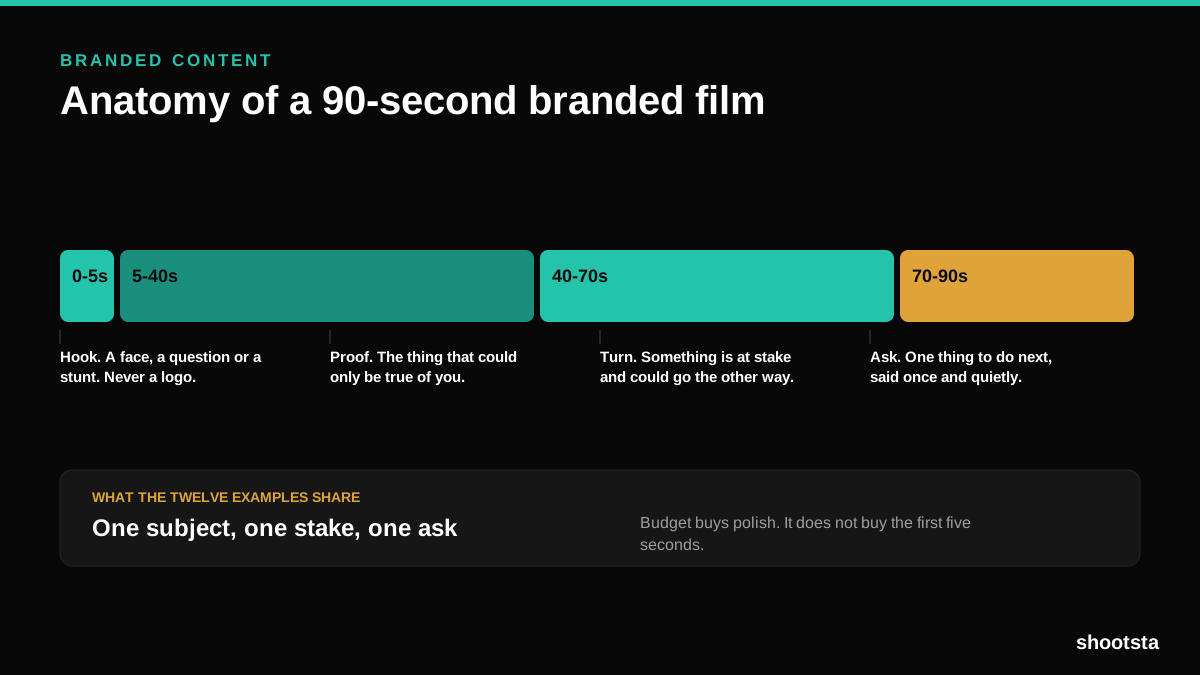
12 Branded Content Examples That Worked
Twelve pieces of branded content that people chose to watch, what each one got right, and the structure underneath all of them.
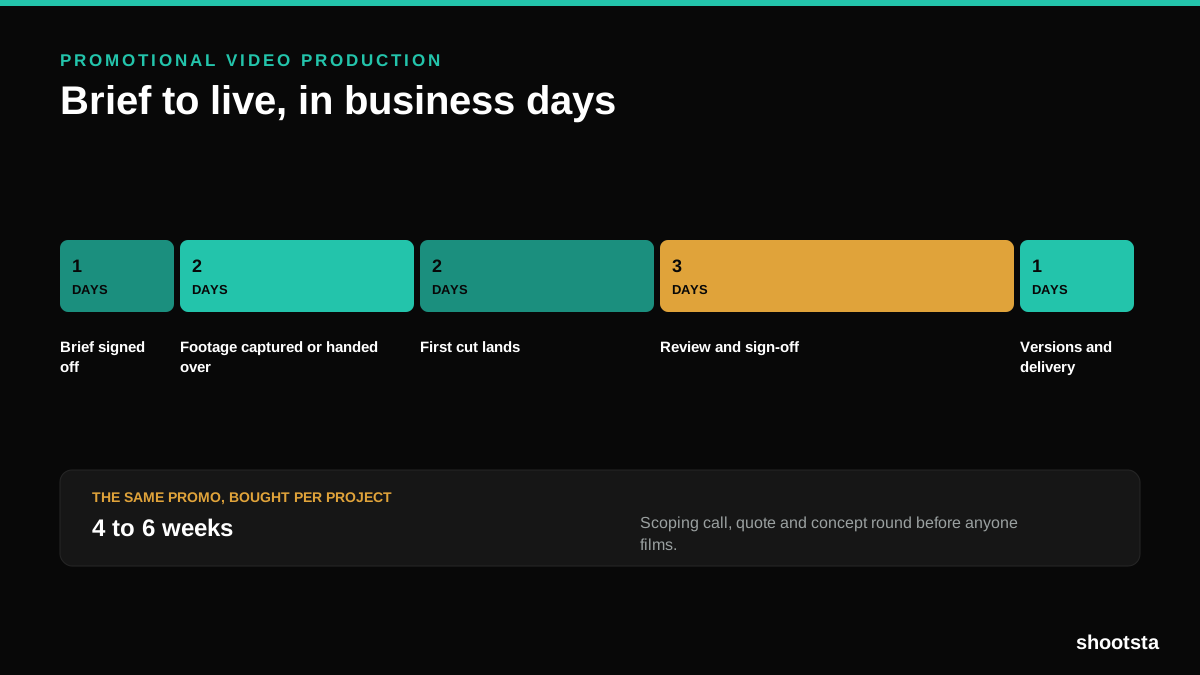
Promotional Video Production: Cost and Time
Most promotional video production schedules are not slow because of the edit. They are slow because of the approval chain. Here is where the days go.
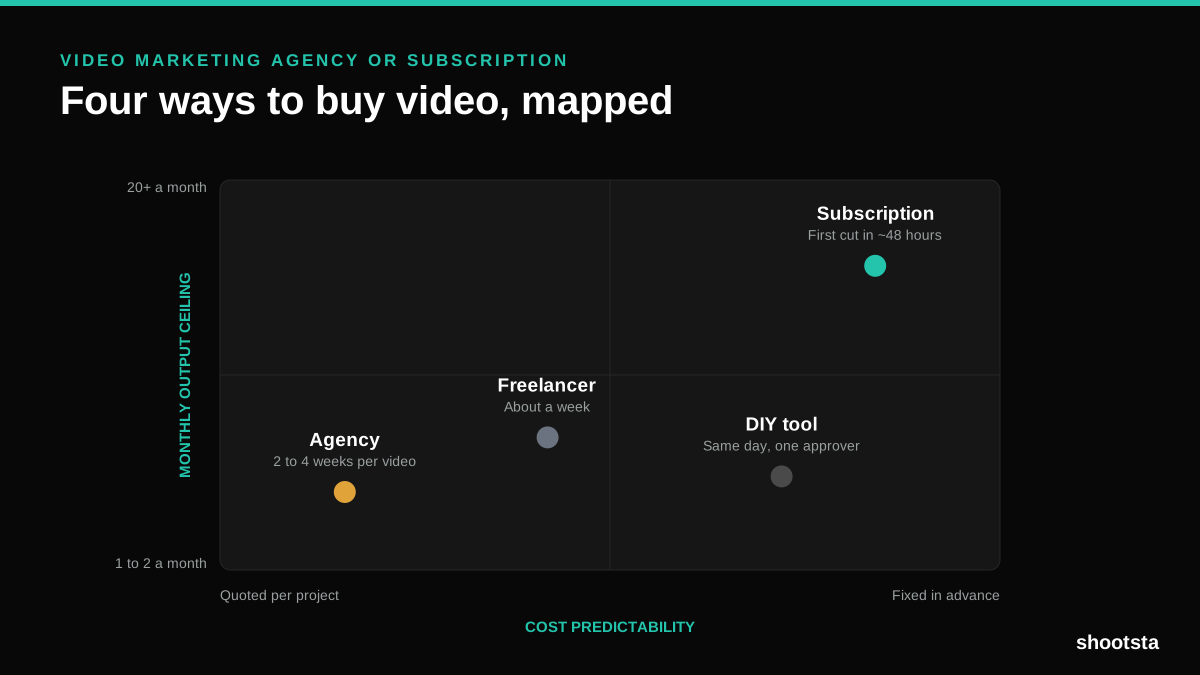
Video Marketing Agency or Subscription?
A video marketing agency prices per project and works in weeks. A subscription prices the year and works in days. Which one fits depends on how often you publish, not on which is better.

B2B Video Production: Costs and Buying Models
There are five ways to buy B2B video production. Each one works well up to a point and then breaks, usually at a volume nobody planned for. Here is what each costs and where the ceiling sits.
How to Measure Video Speed-to-Market
How to Measure Video Speed-to-Market
Speed-to-market is the lag between needing a video and publishing it. For marketing teams it is a revenue metric. Here is how to measure and improve it.