
How to Produce a Promotional Video
shootsta.
How to Produce a Promotional Video
By Shootsta · Published February 17, 2026 · Updated September 2026
A promotional video fails in the first three seconds or not at all. Here is how to plan, film and cut one that holds attention to the end.
Short answer. A promotional video is short video made to sell something. The ones that work do four things: they carry one message, they open with something in the first three seconds, they are cut to the length the platform actually rewards, and they work with the sound off. Plan the shot list backwards from the versions you need, because a version you did not plan for is a second shoot.
This is the how-to. For what it costs and how to buy it, see the guide to promotional video production cost and turnaround.
Most promotional video advice is about production values. Better camera, better lighting, better music.
Those help, but they are not why promotional videos fail. They fail because they try to say four things, or because nothing happens until the eight-second mark, or because they were cut once for a website and then posted everywhere unchanged.
This is a practical guide to producing a promotional video that people finish.
What counts as a promotional video?
A promotional video is short video made to sell something specific: a product, a service, an event, a location or an offer. It has a job and usually a deadline.
That separates it from a brand film, which builds long-term positioning without asking for anything, and from training or internal video, which exists to inform. A promotional video is measured on whether people act.
What makes a promotional video effective?
Four things, and only one of them costs money.
One message
Write the single sentence the video has to land before you write anything else. If you cannot say it without an "and", you have two videos.
This is the decision that saves the most money later. Every extra message adds shots, adds run time and adds an approver with an opinion. Most promotional video projects that overrun did so because a second message arrived in week two.
A hook in the first three seconds
Something has to happen immediately. A face, a question, a number, a movement. Not a logo, and not a music sting over a slow drone shot.
The opening frames are where the audience decides. Everything you spent on the rest of the video is riding on them, which is why it is worth cutting three different openings and picking the best rather than defending the first one.
The right length for the platform
Length is not a creative decision. It follows where the video runs.
- Paid social and pre-roll: 15 to 30 seconds. Assume the viewer can skip at five.
- Organic social: 30 to 60 seconds. Attention holds while something keeps happening.
- Website and landing page: 60 to 180 seconds. The viewer arrived with intent, so they will stay longer.
- Sales and email: under 90 seconds. It has to be watchable between meetings.
It has to work with the sound off
Most social viewing is muted. If the meaning lives in a voiceover, most of your audience gets nothing.
Burn in captions, put the key message on screen as text, and check the cut with your speakers off before you approve it. That last step takes thirty seconds and catches more problems than any review round.
How do you plan the shot list?
Backwards, from the versions you need rather than forwards from the story.
List every finished version first: the wide website cut, the vertical social version, the six-second bumper, the silent loop for the trade show. Then work out which shots each one needs. A vertical version is not a crop of a wide shot, because a subject framed for a wide frame usually falls out of a vertical one.
Filming with the versions in mind costs nothing on the day. Discovering them afterwards costs a second shoot.
What does a promotional video look like?
An event highlights piece produced with Shootsta for Blacktown City Council. It is short, and it is cut around one occasion rather than around the organisation in general.
How do you produce promotional videos without an agency?
By splitting capture from finishing, which is the arrangement most in-house teams end up with.
Filming is the part your own team can genuinely do. A simple kit, a shot list and a little training will produce footage that edits perfectly well for the great majority of promotional work. What in-house teams run out of is editing hours, not shooting ability.
So capture locally and send the footage to an editing team working from locked brand templates. That keeps the cost down without giving up brand consistency, and it removes the quoting step that stops small useful videos from ever being made.
How many revision rounds should you expect?
One, if the brief was clear and one person holds the final say.
Rounds multiply when reviewers comment separately and in sequence. Collect every comment in one place with timestamps, name a single approver, and set a review window rather than waiting for replies. That single change usually saves more calendar time than any production decision.
How do you measure promotional video performance?
Three numbers, and view count is not one of them.
- Three-second retention. Whether the hook worked. Fix this before anything else.
- Completion rate. Whether the length was right for the platform.
- Click or action rate. Whether the ask was clear and singular.
Read them in that order. A low click rate on a video nobody watched past three seconds is a hook problem, not a call-to-action problem.
Where to go next
For what a promo actually costs, who should make it and how long each stage takes, read our guide to promotional video production cost and turnaround.
For the service itself, see promotional video production. To cut one piece properly for each channel, read how to master video on every social platform.
To talk through a specific promo, book a free consultation.
About Shootsta
Shootsta is a global video production service that helps enterprises create on-brand videos at scale and operationalize video production across every business touch-point. We have produced 70,000+ videos for 920+ brands since 2014, with a first cut in about 48 hours and 4.9 / 5 customer satisfaction across post-delivery surveys. Editors work from offices in Sydney, London, Singapore and San Diego.
Last updated 16 September 2026.
Take this article with you
Read the latest at shootsta.com/blog/how-to-produce-promotional-videos-that-get-results
You might also like
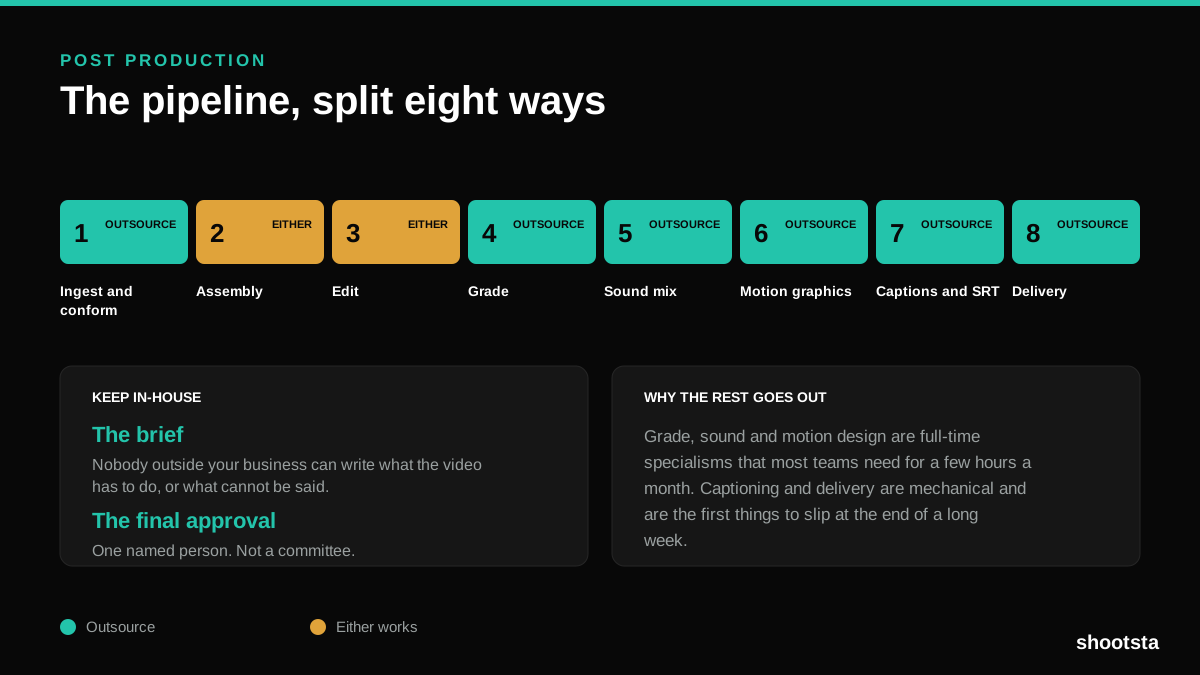
Post Production Agency or In-House Team?
Post production is eight stages, not one. Some of them need context only your team has. The rest are mechanical and are the first things worth handing over.
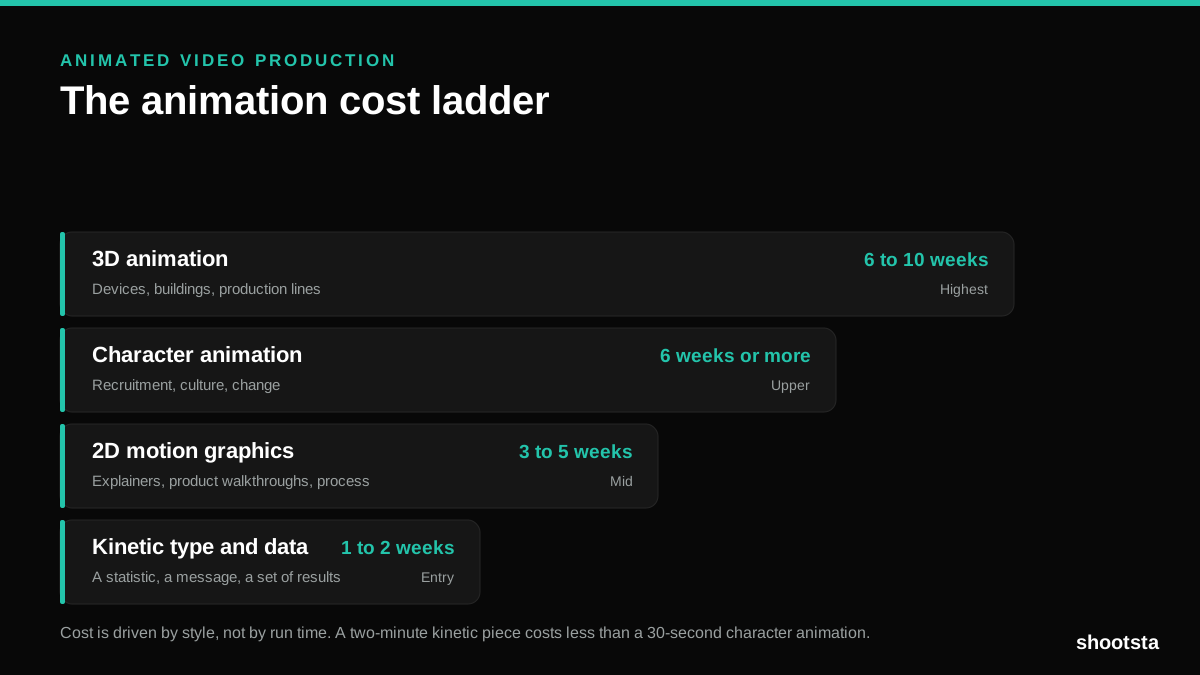
Animated Video Production Cost in the US
Animated video production costs move with style, not with length. Kinetic type, 2D motion, character and 3D sit on four rungs of a ladder. Here is what separates them.
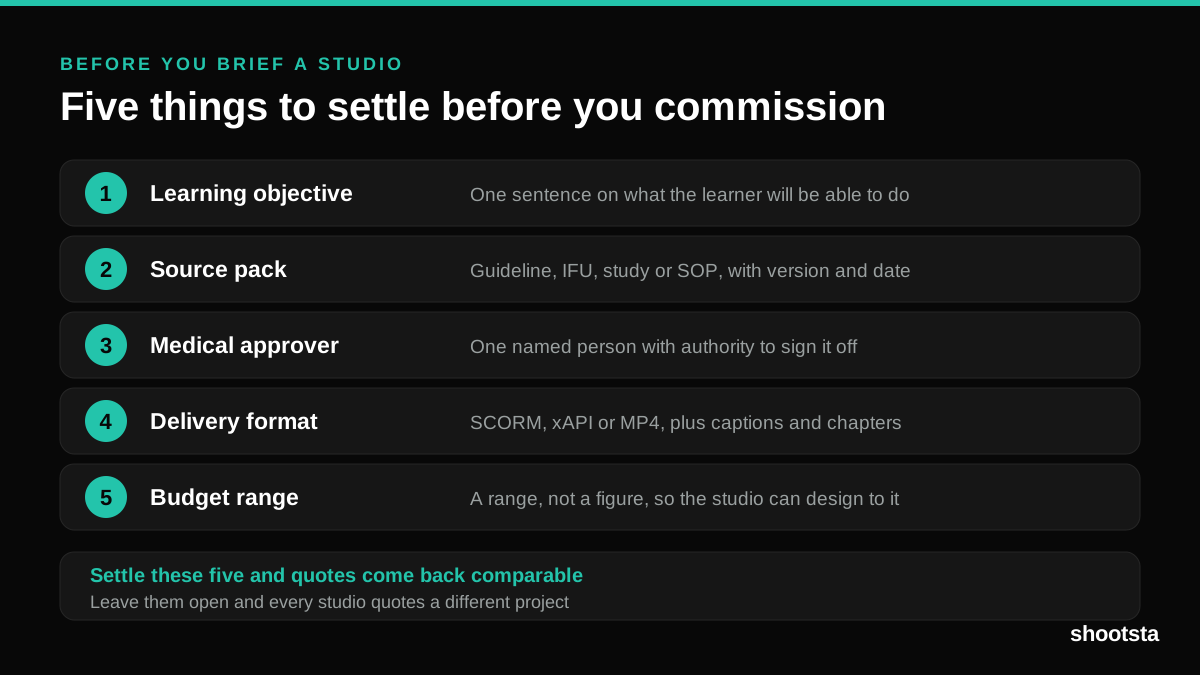
How to Commission Medical Training Animation
Commissioning a medical training animation is mostly decisions you make before anyone animates a frame. The brief fields that matter, what to ask a studio, how much expert time to budget, and the contract terms that stop a rebuild in two years.
How to Write an Animation Brief
How to Write an Animation Brief
Most animation briefs cause delays because they over-specify the visual style and under-specify the outcome. Here are the nine fields an animation production team actually needs to quote accurately and start without rework.
How to Localize Animated Video at Scale
How to Localize Animated Video at Scale
Animated video is the easiest format to localize because text and audio live in editable layers. Here is how to scale it across languages cleanly.
Subtitles, Dubbing or Voiceover for Video
Subtitles, Dubbing or Voiceover for Video
Subtitles, dubbing and voiceover each fit different content and markets. Here is how to choose the right one without blowing the localization budget.