
How to Choose an Animation Company
shootsta.
How to Choose an Animation Company
By Shootsta · Published July 5, 2026 · Updated October 2026
A strong showreel does not tell you whether a studio can deliver at your volume, hit your timelines, or manage a brand library across 50 videos. This guide covers what to check before you sign anything.
Choosing an animation production company is a buying decision that looks simple but often isn't. A strong showreel does not tell you whether a studio can deliver consistently at your volume, meet your internal review process, or handle content updates six months after launch. The evaluation criteria that matter most are the ones studios rarely lead with.
What should you check before you even request a quote?
Before you request a quote, be clear about what you are buying. Many animation vendors sell one project at a time. An enterprise usually needs a repeating program instead. That means a pipeline of videos built on the same brand templates, updated when products or policies change, and delivered fast enough to keep internal stakeholders moving.
If a studio's process does not account for version control, brand updates, or multi-stakeholder review cycles, you will feel that gap on your second or third project. Ask how they handle an update to a video that was produced six months ago. The answer tells you whether they are set up for a program or just a one-off.
This is also the right moment to ask whether the studio builds a reusable brand library or starts from scratch on each video. The library model - where the first project funds the design of characters, icons, motion systems, and templates that every future video draws from - is the only way animation scales at enterprise volume without cost spiralling. We cover what that production process looks like in detail in our guide to producing an animated explainer video.
What does a good animation brief ask for?
A production company worth working with will ask you for a lot of information before pricing. If you get a quote based on "a 60-second animated explainer" with no follow-up questions, that is a warning sign. Studios with real enterprise experience ask about:
- The target audience and the action they should take after watching
- Approvals: how many reviewers, what their authority is, and how many rounds of feedback are expected
- Brand assets: what is available, in what format, and who owns access
- Distribution: where the video will live and what file formats are needed
- Timeline: hard deadline or flexible, and whether there are regulatory review windows
A studio that skips these questions will give you a low quote and expand scope from there. The brief stage is where a production partner's process either builds confidence or starts to cost you time.
How do you evaluate an animation company's portfolio?
Look past the visual quality. Three things in the portfolio matter more than style.
Industry match. If you are in financial services and every portfolio piece is a startup product demo, ask whether they have worked on regulated content. Compliance animation has different structural requirements than a brand campaign. The skills overlap but the brief structure is not the same. For a full picture of the animation types available, read the different kinds of video animation for business - it explains the practical differences between 2D character animation, motion graphics, and whiteboard formats so you can match the portfolio to your actual brief type.
Content type match. A studio that excels at brand identity animation is not automatically strong at compliance training video or product walkthroughs. Ask for portfolio examples in the content category you are commissioning.
Volume evidence. Ask how many videos per month this studio delivers to enterprise clients. A boutique team of three animators will struggle to absorb a program of 20-50 videos per year without pushing delivery times out. If volume is part of your requirements, find out how they staff it.
What should the pricing model look like?
Most studios price per project. Each project pays for setup time: design, illustration, animation, sound, and revision rounds. At volume, that per-project setup compounds quickly.
Enterprise teams producing more than 10 animated videos per year should ask whether the studio offers a brand library model. In this approach, the first project funds designing a full asset library - characters, icons, color palettes, motion systems - that every subsequent video draws from. The first piece costs more. Pieces produced from an established library cost noticeably less, because the design and setup work is already done.
At Shootsta, the brand library is built in the first engagement and every video that follows draws from it. Teams that manage animation across three or four agencies end up with four visual languages and no shared asset base. That creates consistency problems that compound as the program grows.
Ask every shortlisted studio what happens to the assets you commission, whether you own them, and whether you can take them to another vendor. If the studio keeps ownership of your brand library, it holds the stronger hand at renewal time, because moving means rebuilding everything.
Frequently asked questions
How long does animation production typically take?
A motion graphics piece at 60-90 seconds runs 10-14 working days from brief to delivery. A 2D character animation at the same length takes 4-8 weeks because the illustration and character rigging phases are longer. Both timelines assume prompt feedback from your team. Each round of revisions adds 2-4 working days depending on the scope of the change. Enterprise review cycles with multiple approvers typically add 1-2 weeks to the schedule, so build that in from the start.
What is a fair price for a 60-second animated explainer?
A single 60-second 2D animated explainer produced from scratch runs $8,000-$15,000 for the first piece, which includes designing the character library and brand system. From a pre-built brand library, the cost drops to $4,000-$8,000. Motion graphics at 60 seconds runs $2,000-$5,000 without a template, or $800-$2,500 from a pre-built template. These are production-quality prices for enterprise output. Quotes well below these ranges usually involve offshore production or limited revision rounds - ask what is included before comparing on price alone.
What is the difference between a motion graphics studio and a full animation studio?
A motion graphics studio works with shapes, typography, icons, and data in motion - no characters, no narrative. A full animation studio covers character-based storytelling, illustrated environments, and process-driven explainers. Many enterprise programs need both formats at different points. A studio that cannot do both will push every brief toward its specialty regardless of which format fits the content best. Ask shortlisted studios to show examples of both, and ask which they do more of in practice.
Does the location of an animation company matter?
For animated content, location matters less than process. Animation is produced digitally and reviewed asynchronously, so a studio in a different timezone can still work well if the feedback and revision process is structured. The practical considerations are time zone overlap for calls, turnaround times given the working hours difference, and whether your internal approvers can meet the studio's review windows. A global studio with a track record on distributed enterprise programs is a better choice than a nearby studio with no enterprise process.
Where to go next
For a breakdown of the main animation formats - character animation, motion graphics, whiteboard, and 3D - and how each fits different business briefs, read the different kinds of video animation for business. For the step-by-step production process from brief to final delivery, read how to produce an animated explainer video.
To scope an animation program for your team, talk to the Shootsta team.
Take this article with you
Read the latest at shootsta.com/blog/how-to-choose-animation-company
You might also like
How to Plan Video Team Capacity Around Leave
Your only editor just booked two weeks off, and you already know which projects will slip. Chad Lakin explains how to plan video team capacity so the work keeps moving when someone is away.
Corporate Video Editing Standards: Full Guide
A two-page editing standard does more for consistency than a forty-page brand book. Here is what it should cover, who owns each part, and how to enforce it with an in-house editor or an outside partner.
Quality Control in Outsourced Video Editing
When editing leaves the building, quality has to be checked by a system rather than by whoever happens to look. Here is the system: acceptance criteria, two QA gates, counted revision rounds and a quarterly audit.
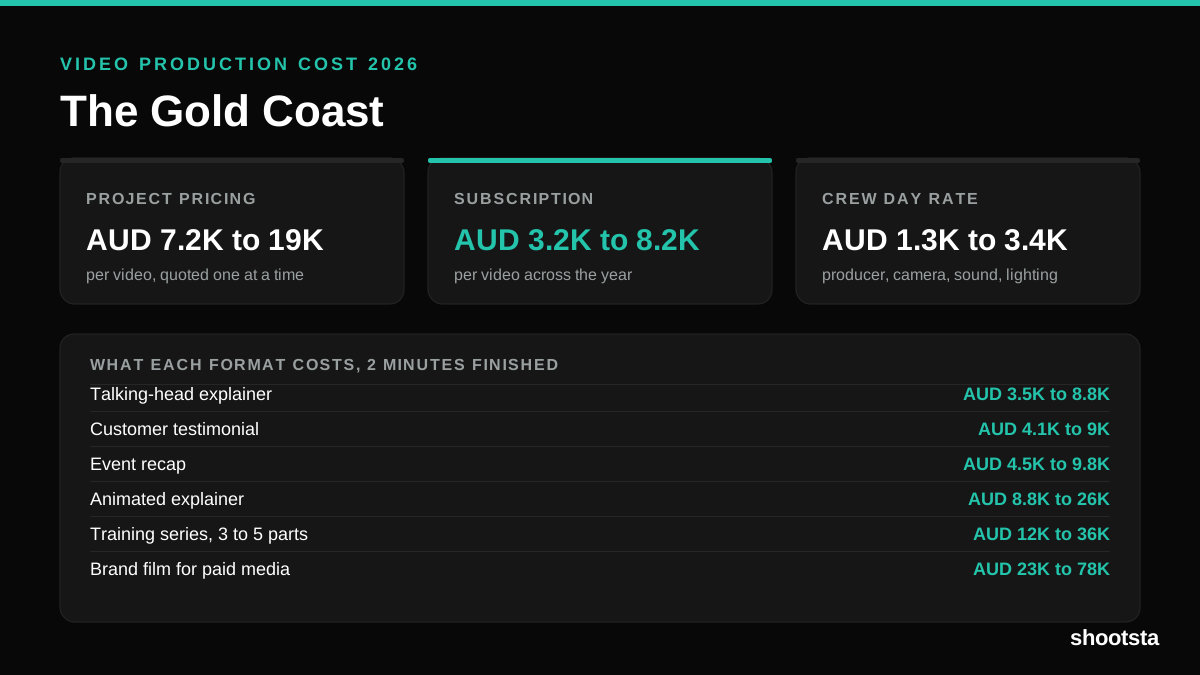
Video Production Cost on the Gold Coast 2026
Video production in the Gold Coast costs AUD 3,200 to AUD 8,200 per finished video on a subscription model, and AUD 7,200 to AUD 18,500 for one-off project work. Here is what you are paying for, and how the three pricing models compare.
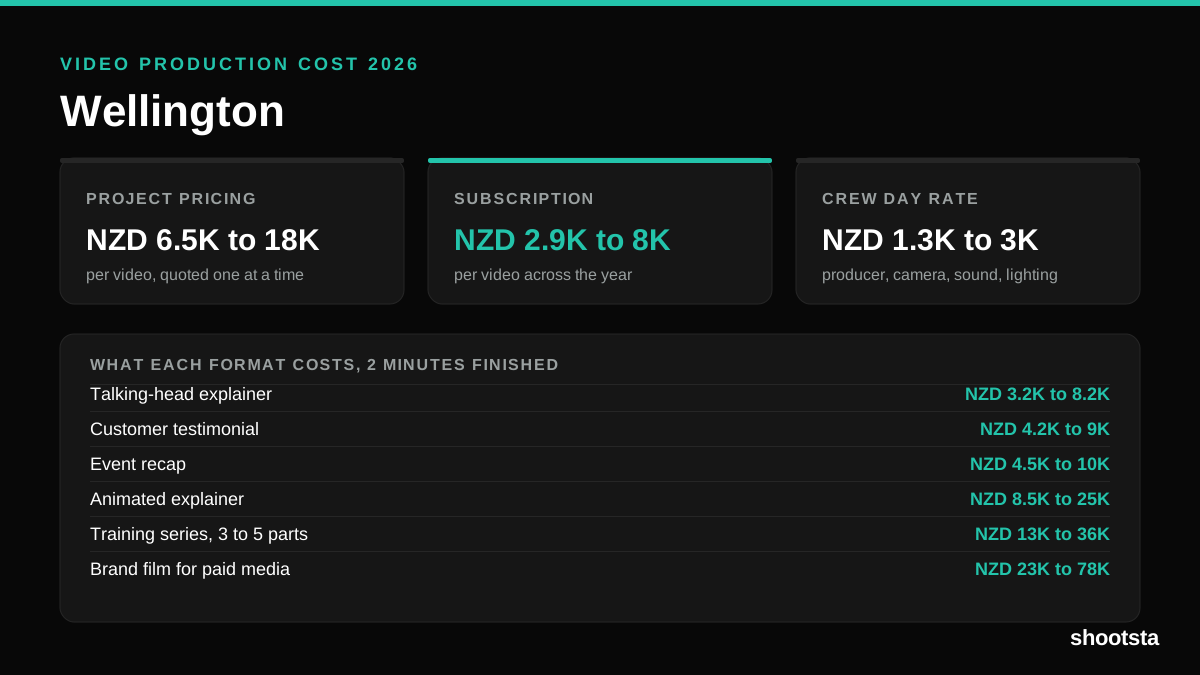
Video Production Cost in Wellington (2026)
Video production in Wellington costs NZD 2,900 to NZD 8,000 per finished video on a subscription model, and NZD 6,500 to NZD 18,000 for one-off project work. Here is what you are paying for, and how the three pricing models compare.
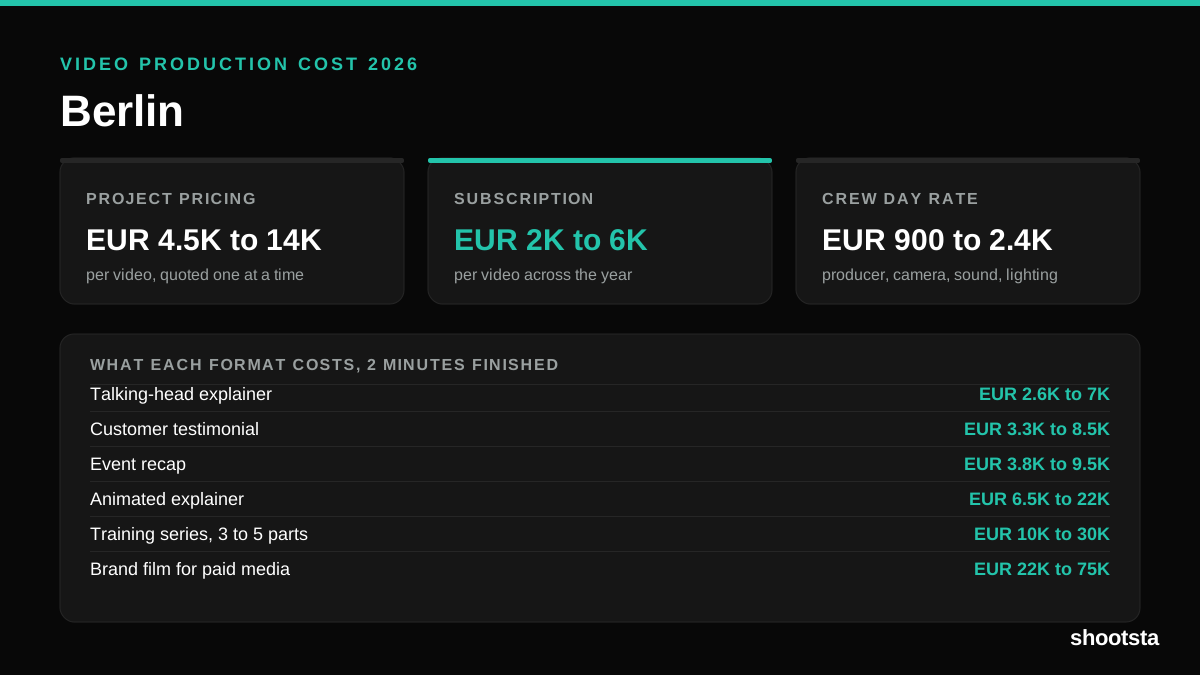
Video Production Cost in Berlin (2026)
Video production in Berlin costs EUR 2,000 to EUR 6,000 per finished video on a subscription model, and EUR 4,500 to EUR 13,500 for one-off project work. Here is what you are paying for, and how the three pricing models compare.