
shootsta.
Engaging Interview Questions for Video
By Shootsta · Published March 6, 2026 · Updated October 2026
The right question turns an interview from awkward to compelling. Here is how to write questions that pull stories out of even the most reluctant subject.
Why interview questions matter
In an interview-led video, the questions are the script. You aren't writing the talent's lines, but you are writing the prompts that shape them. A good interview question pulls a real story out of the subject. A bad one gets a yes/no answer that you can't use in the edit.
What makes a question engaging?
Open, not closed
"Did you like the rollout?" gets "Yes." "Talk me through how the rollout felt for your team" gets a story. An open question can't be answered in one word, and that change alone fixes a lot of weak interviews.
Specific, not generic
"What do you think about video at work?" is too broad. "Tell me about the first time video saved your team time" is concrete enough that the subject can picture the moment. Specific questions get specific answers, and those are much easier to cut.
Past-tense and grounded in events
"What's your philosophy on customer success?" rarely produces watchable footage. "Walk me through what happened last quarter when the support team adopted video" usually does, because a real event gives the editor a story to cut.
Built around the message, not the brand
Your first instinct may be to ask "Why do you love working with us?" A better choice is "What changed for your team after you started shipping more video?" The viewer cares about the change, and your brand comes through as the reason it happened.
The interview question structure that works
Aim for 8 to 12 questions for a 60-minute interview, knowing the team will use 4 to 6 in the edit. Structure them in three arcs:
- Warm-up (2-3 questions). Keep these easy and low-stakes, such as "How did you first hear about Shootsta?" They help the subject relax and find their voice.
- Core (5-7 questions). These are the questions that produce the cuts, so build each one around the key message.
- Open close (1-2 questions). Ask something like "Anything I haven't asked that you'd want people to know?" It often produces the best line of the day.
For the production side of an interview shoot (camera, audio, framing), pair this with our 2-person interview filming guide.
Questions that almost always work
- "What were you doing before this changed?"
- "Tell me about the moment it clicked."
- "What surprised you about the result?"
- "Walk me through a specific example."
- "What would you say to someone in your role who's still on the fence?"
- "What's the hardest part nobody talks about?"
Each of these asks the subject to describe something that happened, so you get a story rather than an opinion.
Watch: powerful stories with video interviews
Interview question mistakes to avoid
- Stacking multiple questions. "Tell me what worked, what didn't, and what you'd do differently." The subject answers one and forgets the other two.
- Leading the witness. "Wouldn't you say it was a great experience?" produces a yes that no one trusts in the edit.
- Reading the script. Learn the question well enough to ask it in your own words. Reading from a sheet breaks the flow of the conversation.
- Skipping the follow-up. The best lines almost always come on the second or third probe of the same question.
For B2B customer interviews, lean on our testimonial production guide for the full workflow from outreach to final cut.
FAQs about interview questions
How many questions should I prepare?
Prepare 8 to 12 for a 60-minute interview. With more than that, the subject feels rushed. With fewer, your team can run out of material if a question doesn't land.
Should I share questions in advance?
Share the themes and keep the exact questions back. The subject can think about the topics without scripting answers, which tend to sound stiff on camera.
What if the subject gives a one-word answer?
Stay silent for 5 seconds. Many people find the silence awkward and will keep talking. If they don't, ask "Can you give me an example?" It works in almost any interview.
Take this article with you
Read the latest at shootsta.com/blog/engaging-interview-questions-for-business-video
You might also like
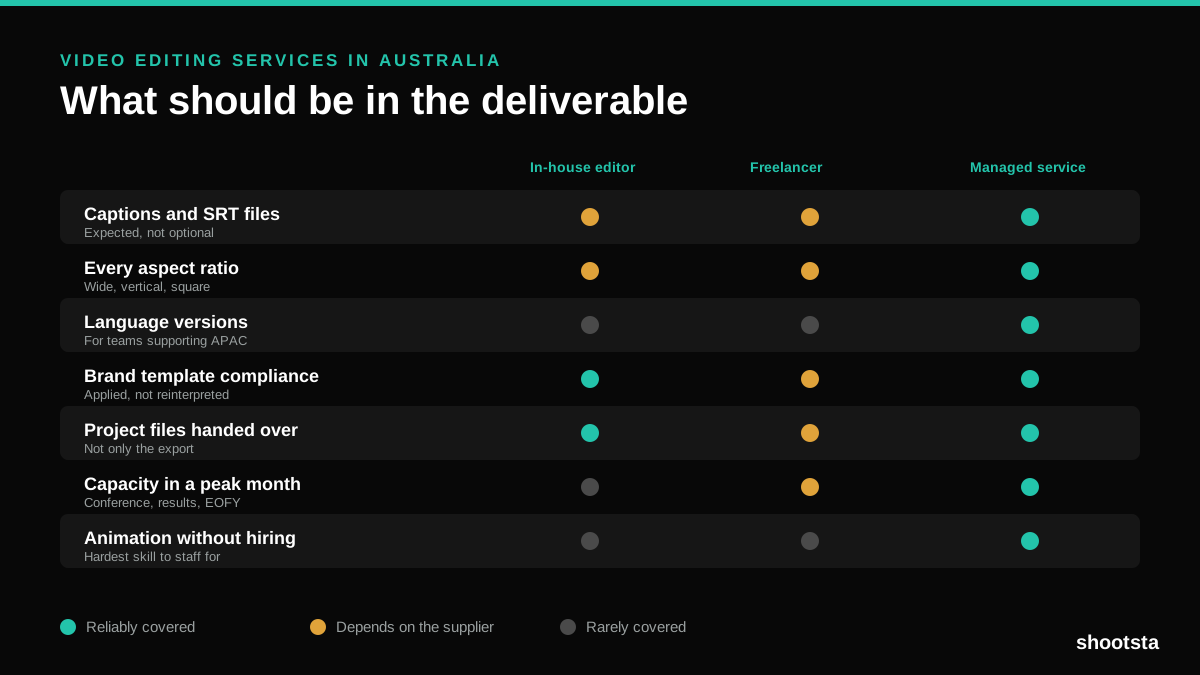
Video Editing Services in Australia
Australian teams are spread across time zones and offices, so the editing queue matters more than the editing. Here is what to expect on cost and turnaround.
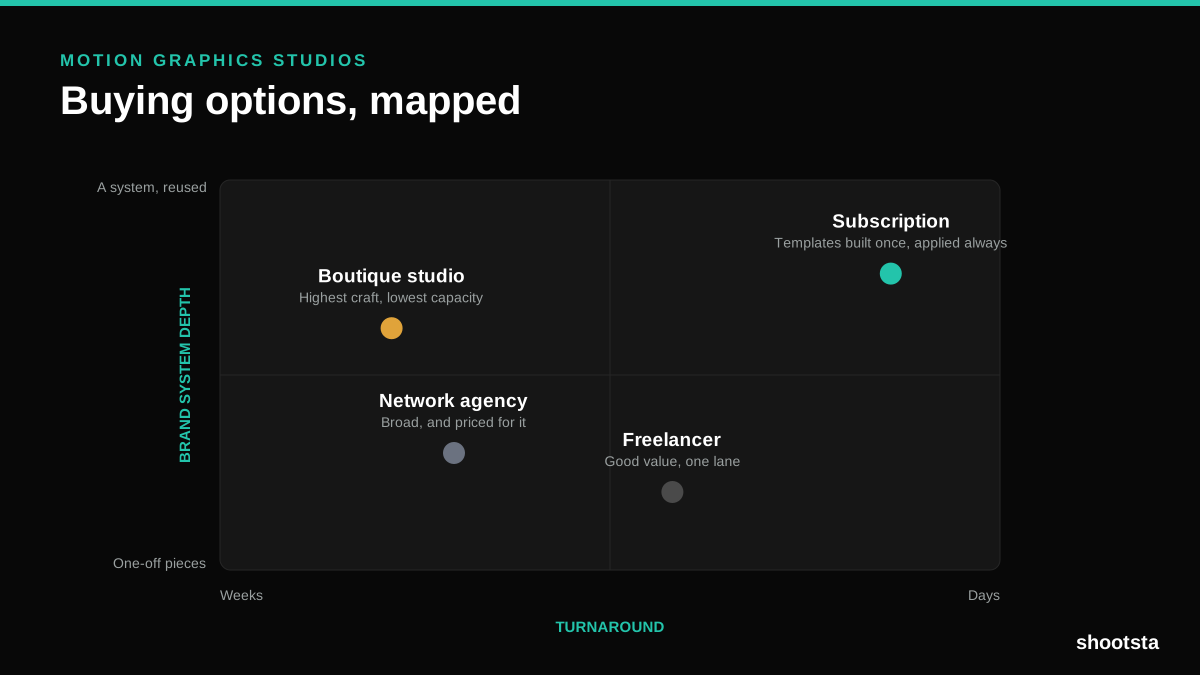
How to Choose Between Motion Graphics Studios
Every motion graphics studio has a good reel. The reel is the one thing that will not tell you how the fifth project goes. These ten criteria will.
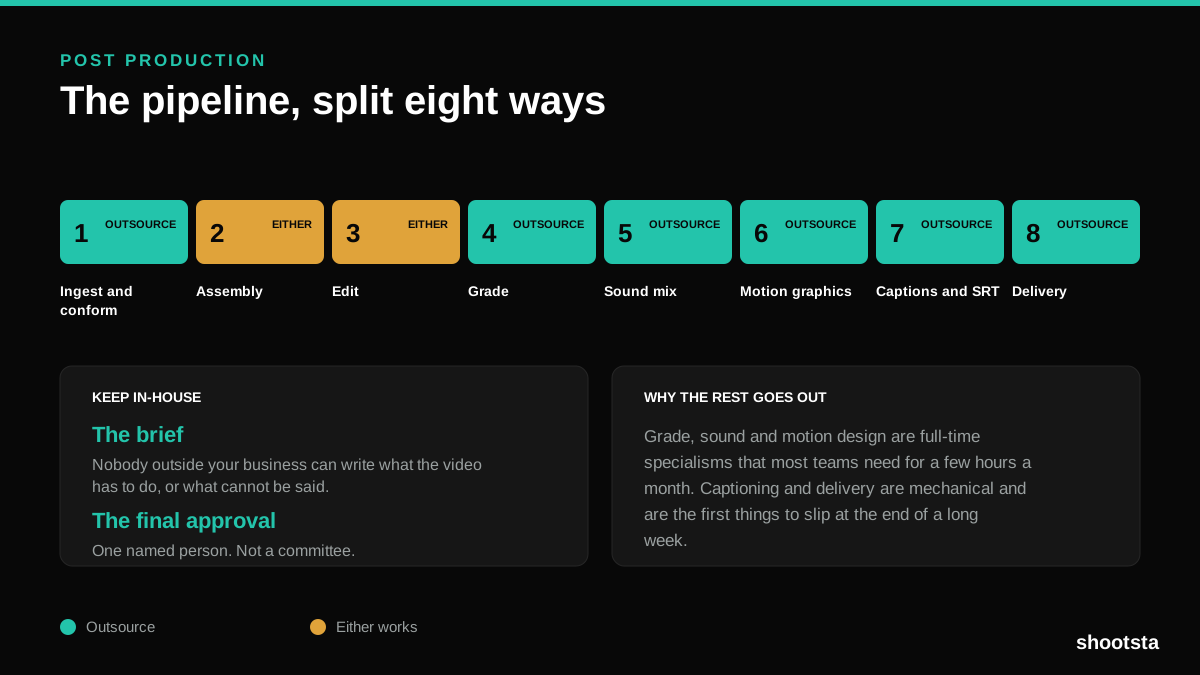
Post Production Agency or In-House Team?
Post production is eight stages, not one. Some of them need context only your team has. The rest are mechanical and are the first things worth handing over.
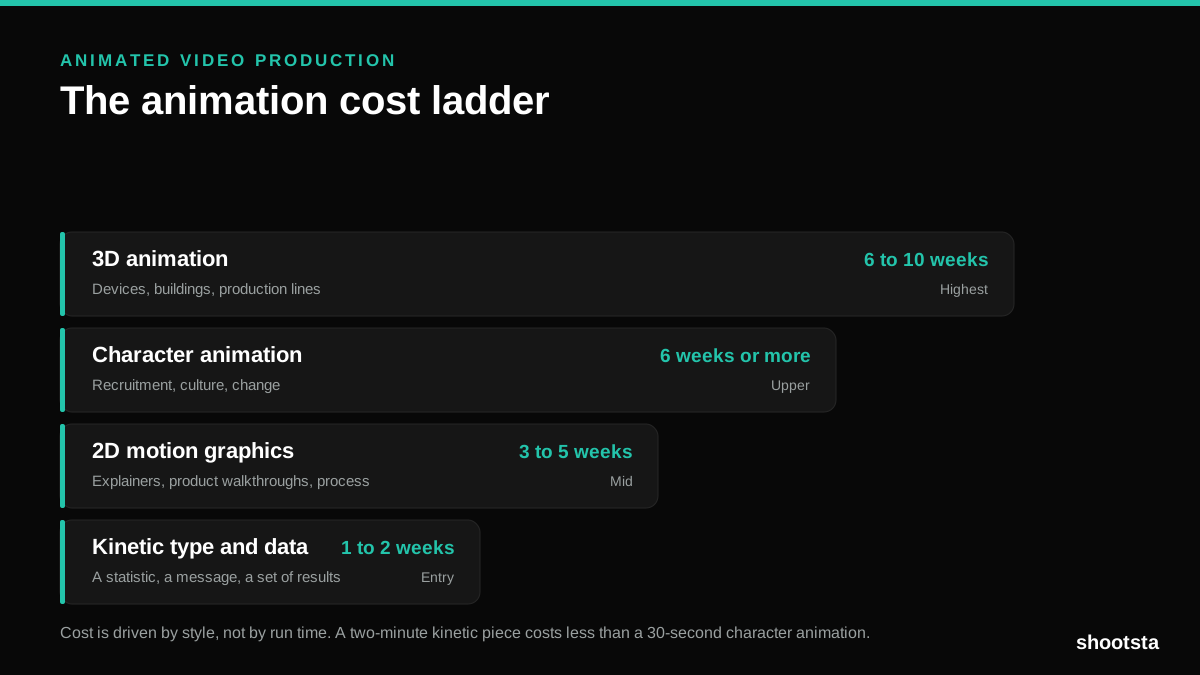
Animated Video Production Cost in the US
Animated video production costs move with style, not with length. Kinetic type, 2D motion, character and 3D sit on four rungs of a ladder. Here is what separates them.
How to Commission Medical Training Animation
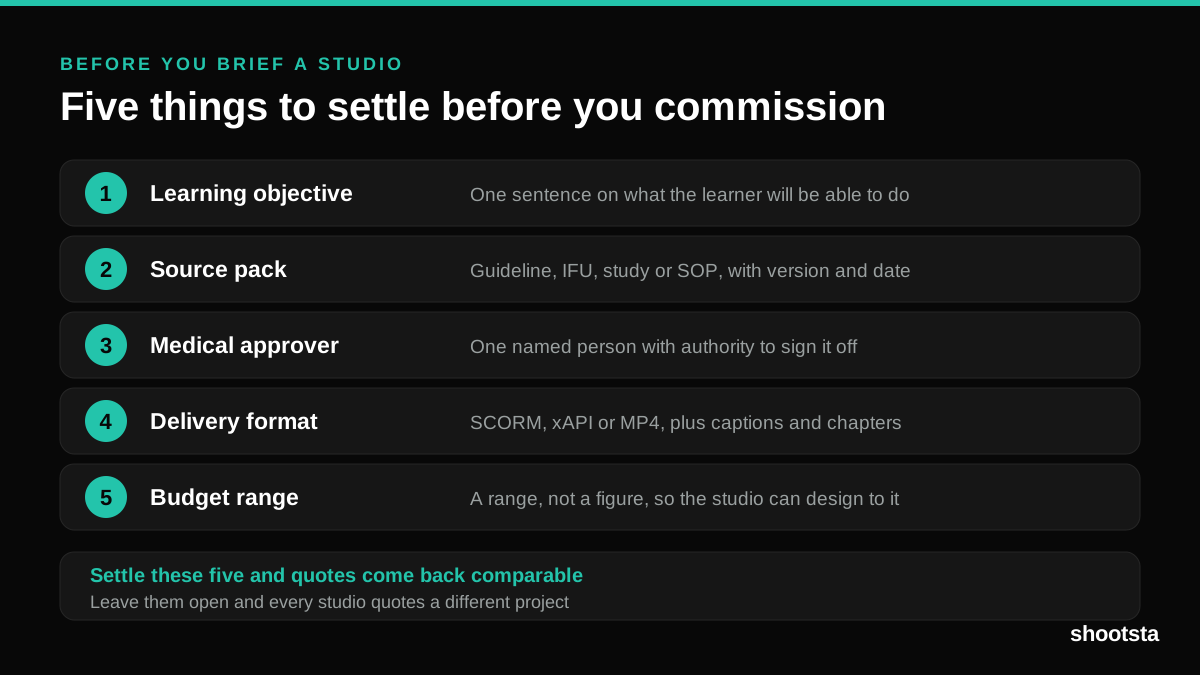
Commissioning a medical training animation is mostly decisions you make before anyone animates a frame. The brief fields that matter, what to ask a studio, how much expert time to budget, and the contract terms that stop a rebuild in two years.
How to Write an Animation Brief
How to Write an Animation Brief
Most animation briefs cause delays because they over-specify the visual style and under-specify the outcome. Here are the nine fields an animation production team needs to quote accurately and start without rework.