
What Your In-House Video Person Should Hand Off
shootsta.
What Your In-House Video Person Should Hand Off
By Shootsta · Published November 24, 2026 · Updated November 2026
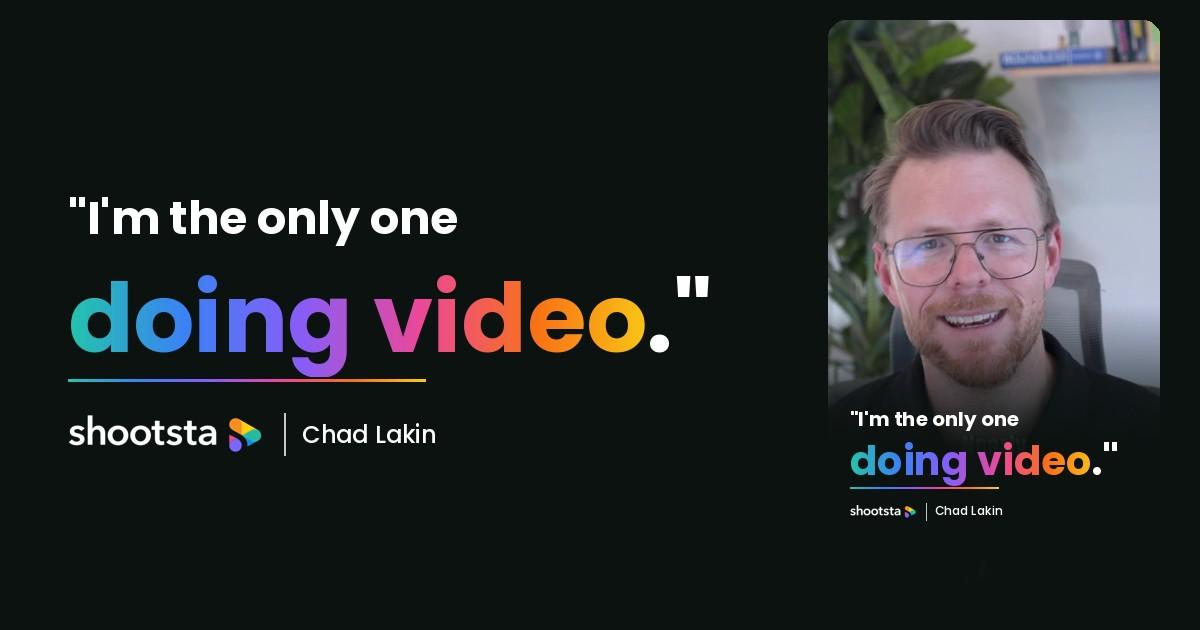
When every video request runs through one or two people, the queue only grows. Chad Lakin explains how brands split the work between the in-house team and a partner without adding headcount.
Nearly half of Chad Lakin's calls with internal video teams start with the same line. Someone tells him they are the only one doing video, usually with the nervous laugh people use so they do not cry. If that sounds like your week, the answer is rarely to work harder, and it starts with deciding which work you keep and which work you hand off.
In this clip, Chad, Senior Vice President of Growth at Shootsta, explains why video requests pile up behind one or two people and how brands are fixing it without adding headcount.
Below, we look at why a solo video team falls behind, the three routes brands are trying, and how to split the work between your in-house team and a partner.
Why do video requests pile up behind one person?
Asking for a video takes a few minutes, while editing it can take hours or even days. Add multiple stakeholders and a round of internal politics, and a single video can sit in review for a week. Meanwhile, new requests keep arriving from across the business.
When every request in a company flows through one or two people, the queue only grows. Those people have a fixed number of hours, and there is no way to scale into the content engine the business wants without hiring more staff. We looked at the early signs of this in when your whole video team is one person.
How are brands trying to fix it?
Chad sees brands take one of three routes, and each has a trade-off worth knowing before you choose.
Using AI tools
Some teams turn to AI to speed up editing. Chad calls the results so far "a bit of a roll of the dice," because quality and brand fit vary from one video to the next, and someone still has to check and fix every output.
Adding freelancers
Others try to scale through freelancers. That can add hours, but it also adds briefing, onboarding and review work for the person who was already stretched. We cover that problem in why re-briefing freelancers wears teams down.
Working with a partner
Most of the teams Chad speaks with are looking for a partner that combines scale, predictable cost and consistent quality. The partner takes on agreed types of work, so the in-house team can grow its output without growing its headcount.
What should your in-house team keep?
The key step, in Chad's view, is working out what your internal team handles and what gets handed to a trusted partner, and when. Your in-house person knows the business, the stakeholders and the sensitive projects better than anyone outside it.
That knowledge is most valuable on work like leadership messages, confidential announcements, creative direction and the relationships with senior stakeholders. Keep those with the in-house team, along with the final say on what counts as on-brand. If you are weighing a bigger internal team, our guide to the cost of in-house video editing sets out the numbers.
What should you hand off to a partner?
The work that suits a partner is the regular, repeatable editing that eats most of the in-house team's week. That usually includes the following kinds of jobs:
- Recurring internal updates, event recaps and social cuts.
- Templated product, feature and customer story videos.
- Caption files, resizes and language versions of finished videos.
- Overflow during launches, campaigns and staff leave.
Write the split down and share it with the people who request video, so they know which route a request will take. Review it each quarter as your volume changes. For a fuller picture of how the two teams work together, read how a video partner extends your in-house team.
How Shootsta works with solo video teams
Shootsta has done this for more than 500 brands across over 80,000 videos. Your brand kit, templates and past projects sit on one platform, and our editors in Sydney, London, Singapore and San Diego pick up briefs and send back a first edit in about 48 hours.
Your in-house person stays in charge of the brand and the projects that need them, while the regular editing moves to a team that can grow with demand. You can add capacity as the business needs it rather than hiring for the busiest month of the year.
Frequently asked questions
How many videos can one in-house video producer handle?
It depends on the mix of work, but a single producer who films, edits and manages approvals can usually finish only a few polished videos a week. Once requests come from several departments, the queue grows faster than one person can clear it.
Should we hire a second video editor?
Hiring makes sense if demand is steady all year and the work needs deep internal knowledge. If the extra load comes in peaks, a partner usually costs less because you are not paying for the quiet weeks.
Can AI replace an in-house video editor?
AI tools can speed up tasks such as rough cuts and captions, but the results still need human review for quality and brand fit. In our experience, AI works best as one step in the workflow rather than as a replacement for an editor.
How do we decide what to outsource?
List the videos your team made last quarter and sort them by how much internal knowledge each one needed. The work that needed little internal context and took the most hours is usually the first to hand off. Our guide on what to outsource and what to keep walks through the decision.
Where to go next
If you are the only one doing video in your business, you do not have to carry every request alone. Talk to us about splitting the work so your team can focus on the projects that need them most, or start with our enterprise video editing service.
Take this article with you
Read the latest at shootsta.com/blog/what-to-hand-off-in-house-video
You might also like
How Creative Directors Keep Brand Consistency
How Creative Directors Keep Brand Consistency
Brand guides were written for things that sit still. This is how creative directors maintain brand consistency in video: the decisions they own on pace, music and the look, where they step into a production, and how their taste holds up when output grows.
Corporate Video Production Cost in the US 2026
Corporate Video Production Cost in the US 2026
What each kind of corporate video costs in the US, from a leadership message to a brand film, and how agency, freelancer, in-house and subscription options compare.
Stop Re-Briefing a New Freelancer Every Time
Every new freelancer needs your brand, tone and feedback process explained again. Chad Lakin explains why that wears teams down and how a video partner keeps the work consistent.
Fix Enterprise Video Editing Bottlenecks (2026)
Fix Enterprise Video Editing Bottlenecks (2026)
Enterprise video editing bottlenecks are an operations problem, not an editing problem. The 5 common constraints, how to diagnose yours, and what to fix first.
Corporate Video Editing Services Compared
Corporate Video Editing Services Compared
How a video agency, freelancer, offshore studio, in-house team, DIY tools and a managed subscription compare on turnaround, cost, brand control and approvals.
How Product Marketers Scale Video With Templates
Product marketing teams often need hundreds of videos with a small team. Chad Lakin explains how grouping the list into categories and building one template per category makes volume easier.