
Video Advertising for Business: Formats That Work
shootsta.
Video Advertising for Business: Formats That Work
By Shootsta · Published February 10, 2026 · Updated October 2026
Video ads outperform static ads across every platform. Here are the formats, lengths, and production approaches that work for B2B and B2C video advertising.
Why does video advertising outperform static ads?
Video ads get more attention because they move. In a feed of still images and text, a video starts playing and the eye goes to it. This is how visual attention works. Video ads on LinkedIn tend to draw more comments than static posts, and YouTube pre-roll is easier to recall than a display banner.
Deciding to run video ads is only the start of a strategy. The format, length, platform and production quality all matter. A high-budget brand film running as YouTube pre-roll performs very differently from a simple talking-head clip on LinkedIn. Knowing which format fits which goal keeps your ad budget from going to waste.
What are the main video advertising formats?
In-feed social video ads
These are native video ads on LinkedIn, Facebook, Instagram and TikTok. They appear in the user's feed alongside organic posts. They work best at 15-60 seconds, with captions (feeds usually play muted by default) and a hook in the first 3 seconds. Production can be simple, because a real, phone-filmed clip often beats a polished ad in a social feed.
YouTube pre-roll and mid-roll
These are skippable (after 5 seconds) or non-skippable (15 seconds) ads that play before or during YouTube videos. Pre-roll is good for brand awareness and retargeting. The first 5 seconds decide the result. If you don't hook the viewer before the skip button appears, the rest of the ad goes unseen.
Connected TV (CTV) and OTT
These are video ads on streaming platforms like Hulu, Roku and Amazon Fire TV. They usually run 15 or 30 seconds, can't be skipped and play on a big screen. Production quality matters more here because the viewing setting is closer to traditional TV.
Programmatic video
Programmatic ads are served across websites and apps through ad networks. They usually run as 15-30 second pre-roll or as outstream (in-article) formats. They reach broad audiences, but targeting quality varies by network.
How long should video ads be?
Match the length to the platform and the goal. The common ranges are below.
On LinkedIn, run 15-30 seconds for awareness and 30-60 seconds for consideration. YouTube pre-roll works at 15 seconds non-skip, or 30 seconds if skippable (but front-load your message). On Instagram and TikTok, keep it to 15 seconds or less. CTV ads use 15 or 30 seconds, the standard broadcast lengths.
As a general rule, shorter ads do better for awareness and longer ones do better for consideration. A 6-second bumper ad builds recall, while a 60-second customer story builds trust. Use both in your media mix.
How do you produce video ads cost-effectively?
You don't need a big-budget production for every ad. Many B2B video ads perform well with simple production, such as a person talking to camera, screen recordings, or a mix of footage and graphics. The idea behind the ad matters more than the production value.
Batch production is the most efficient approach. Film a 30-minute session with your spokesperson, then cut it into a 60-second hero ad, three 15-second versions for A/B testing, a vertical version for Stories and a 6-second bumper. That gives you 6 ad assets from a single session.
With a promotional video production subscription, you can produce a full campaign's worth of ad creative each month without per-project agency fees. See how the economics compare in our agency vs Shootsta comparison.
How do you measure video advertising performance?
Different goals need different metrics. For awareness, track view-through rate, brand lift and cost per completed view. For consideration, look at click-through rate, landing page visits and cost per site visit. For conversion, measure leads generated, cost per lead and pipeline influenced.
The most common mistake is judging every video ad by the same metric. A brand awareness ad judged by conversion rate will always look bad, and a direct-response ad judged by view count will always look good. Match the metric to the objective.
Take this article with you
Read the latest at shootsta.com/blog/video-advertising-for-business-formats-that-work
You might also like
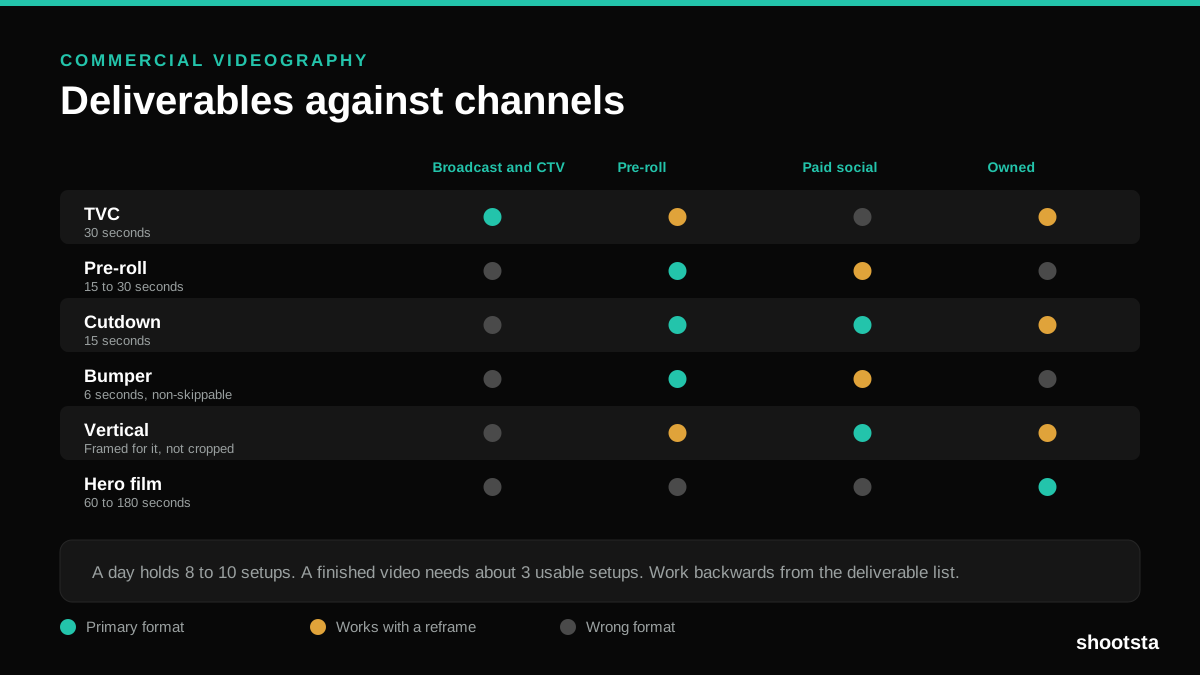
Commercial Videography: Cost and Scope
Commercial videography is priced by the day and judged by the deliverable. Most projects go wrong because those two numbers were never reconciled.
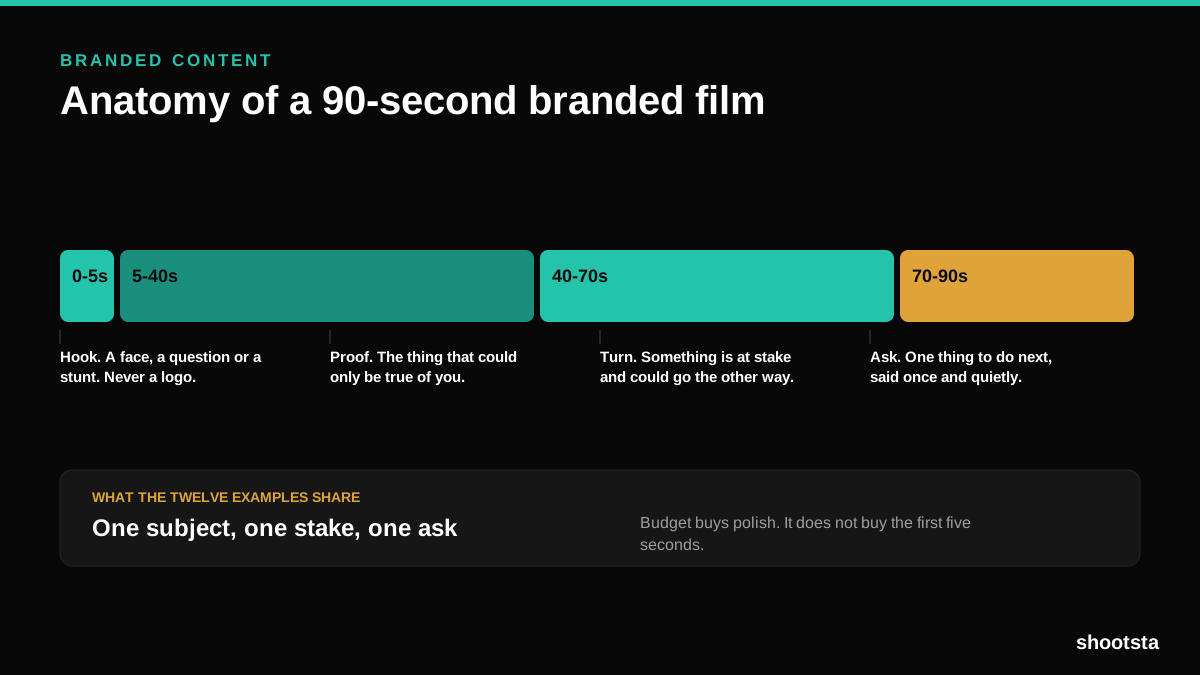
12 Branded Content Examples That Worked
Twelve pieces of branded content that people chose to watch, what each one got right, and the structure underneath all of them.
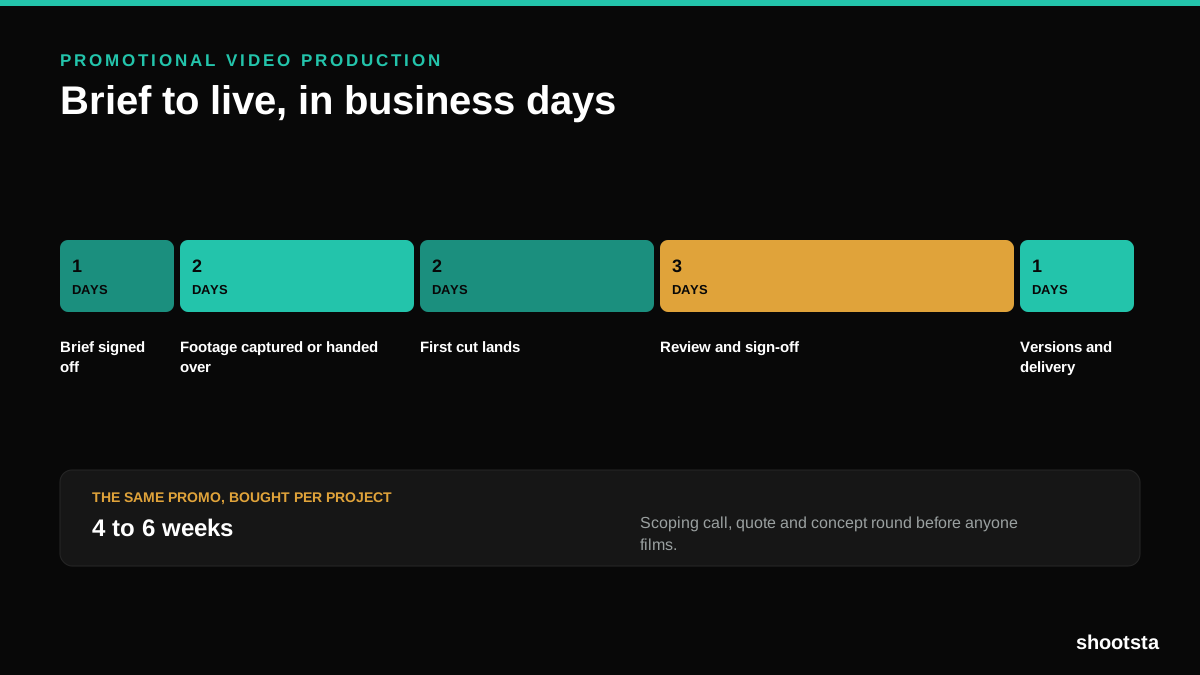
Promotional Video Production: Cost and Time
Most promotional video production schedules are not slow because of the edit. They are slow because of the approval chain. Here is where the days go.
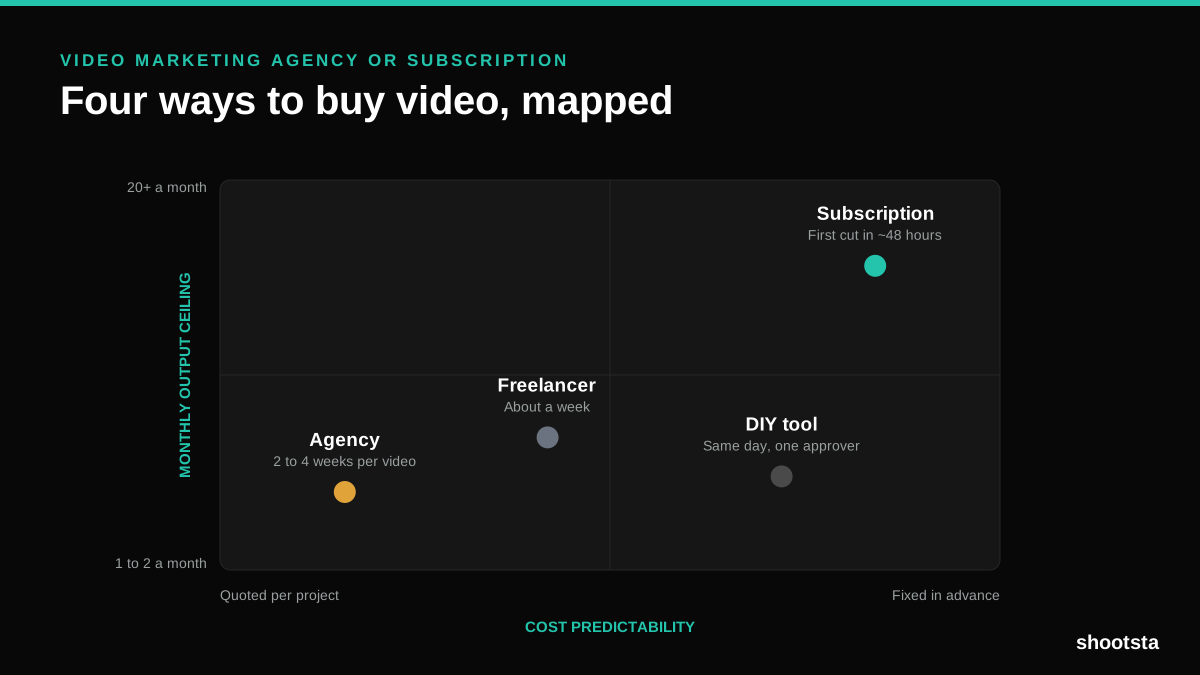
Video Marketing Agency or Subscription?
A video marketing agency prices per project and works in weeks. A subscription prices the year and works in days. Which one fits depends on how often you publish, not on which is better.

B2B Video Production: Costs and Buying Models
There are five ways to buy B2B video production. Each one works well up to a point and then breaks, usually at a volume nobody planned for. Here is what each costs and where the ceiling sits.
How to Measure Video Speed-to-Market
How to Measure Video Speed-to-Market
Speed-to-market is the lag between needing a video and publishing it. For marketing teams it is a revenue metric. Here is how to measure and improve it.