
Recruitment Videos That Actually Work
shootsta.
Recruitment Videos That Actually Work
By Shootsta · Published March 26, 2026 · Updated October 2026
How to produce recruitment videos that attract candidates and show what working at your company is really like. Includes formats, examples of what works, and production tips.
Why do recruitment videos matter?
A job listing is a wall of text competing with thousands of other walls of text. A recruitment video gives candidates something a job description can't, which is a feel for what a normal week at your company looks like. They can see the office, hear from real employees, and get a sense of the culture before they apply.
Video can lift both the number and the quality of your applications, because it pre-qualifies candidates. People who watch your recruitment video and still apply are more likely to be a genuine fit because they already know what they're signing up for.
Types of recruitment video
Day-in-the-life videos
Follow an employee through a typical day. Show the workspace, how the team works together and the tasks that fill the day. This format works because candidates want to picture themselves in the role. Keep it real, since an overly polished day-in-the-life video feels staged and has the opposite effect.
Employee testimonial videos
Let your people talk about why they work here. Ask them what surprised them when they joined and what keeps them around. These videos work best when employees choose their own words instead of reading a script. For filming tips, see our testimonial video production guide.
Culture and values videos
Show your company values in action rather than listing them. If collaboration matters, show a real team working through a problem together. If flexibility is a value, show how different employees structure their day. Abstract values become concrete when demonstrated through video.
Role-specific explainers
For hard-to-fill or misunderstood roles, create a short video that explains what the job involves day to day. A hiring manager or current team member can walk through the responsibilities, the team structure, and what success looks like in the first 90 days.
Office and location tours
A tour is especially useful for roles that need someone to relocate, or for companies with a distinctive workspace. Show the surrounding area, transport links and nearby amenities alongside the office itself. For companies hiring globally, create location-specific versions for each office.
Hiring process explainers
Reduce candidate anxiety by explaining how your hiring process works. Cover how many interview rounds there are, what candidates should prepare and how long the whole process takes. A 60-second video on this makes your company feel open and easy to deal with.
What makes a recruitment video work?
Use real employees. Candidates can tell when someone is an actor. Awkward delivery from a real engineer is more credible than a polished performance from someone who doesn't work there.
Specifics over generics. "We have a great culture" tells a candidate nothing. "Our design team runs a weekly critique where anyone can present work and get honest feedback" is specific, and the candidate can picture it.
Honesty about challenges. Every job has hard parts, and admitting them builds trust. "Our pace is fast and the workload can be intense during launch periods" tells candidates what to expect. The ones who apply anyway are the ones you want.
Keep it under 3 minutes. Recruitment videos compete for attention with social media feeds. Keep the main video short. If you have more to say, create a series of shorter clips for different stages of the candidate journey.
Where to use recruitment videos
Your careers page is only one place for a recruitment video. Share it where candidates already spend their time.
LinkedIn: Video uploaded directly to LinkedIn can reach well beyond your followers. Post role-specific clips with your job announcements, and ask employees to share them with their own networks. See our LinkedIn video strategy guide for platform-specific tips.
Job listings: Embed videos in your job postings on Indeed, Glassdoor and your own careers page. Check each job board's options first, as support for video embeds varies.
Email outreach: Recruiters sending cold outreach can include a video thumbnail that links to a role-specific recruitment video. A face and a voice give the candidate a reason to reply that a text-only email lacks.
University and career fairs: Play your recruitment video on a loop at your booth, or share a QR code that links to it. Candidates can watch it later when they're deciding which companies to apply to.
How do you produce recruitment videos at scale?
If you're hiring across multiple teams and locations, producing a recruitment video for each role sounds expensive. With the right setup, it costs less than you might expect.
With Shootsta, your HR team or hiring managers can film short clips on their phones or with a Shootsta video kit. Upload the footage, add a brief, and receive a branded, edited video within 48 hours. Your employer brand guidelines, including intros, fonts, brand palette and music, are built into every edit.
This means your London office can film a day-in-the-life video on Monday, your Sydney team can film employee testimonials on Tuesday, and both videos are ready to publish by Thursday without a production crew on site.
For companies producing recruitment content regularly, a video production subscription brings the cost per video down a long way compared with hiring an agency for each project.
Measuring recruitment video impact
Track these metrics to understand whether your recruitment videos are working:
Application rate: Compare application rates for job listings with video against those without. If the video is doing its job, the listings that carry it should pull more applications.
Quality of applicants: Check whether candidates who watched the video are a better fit. Track interview-to-offer ratios for video-sourced versus non-video candidates.
Time to fill: Roles with recruitment videos should fill faster because the candidate pipeline is pre-qualified.
Employee referral shares: If your employees are sharing recruitment videos on their own social channels, the video is landing with them. Track share counts and referral source data.
Getting started
Start with one video: an employee testimonial from someone in your hardest-to-fill role. Film it on a phone, keep it under 90 seconds, and let them speak naturally. Post it on LinkedIn alongside your next job listing for that role and measure the difference.
Once you see the results, expand to other formats and roles. Explore internal communications video if you want to extend video beyond recruitment into the full employee experience.
Take this article with you
Read the latest at shootsta.com/blog/recruitment-videos-hr
You might also like
Medical Training Animation Best Practices
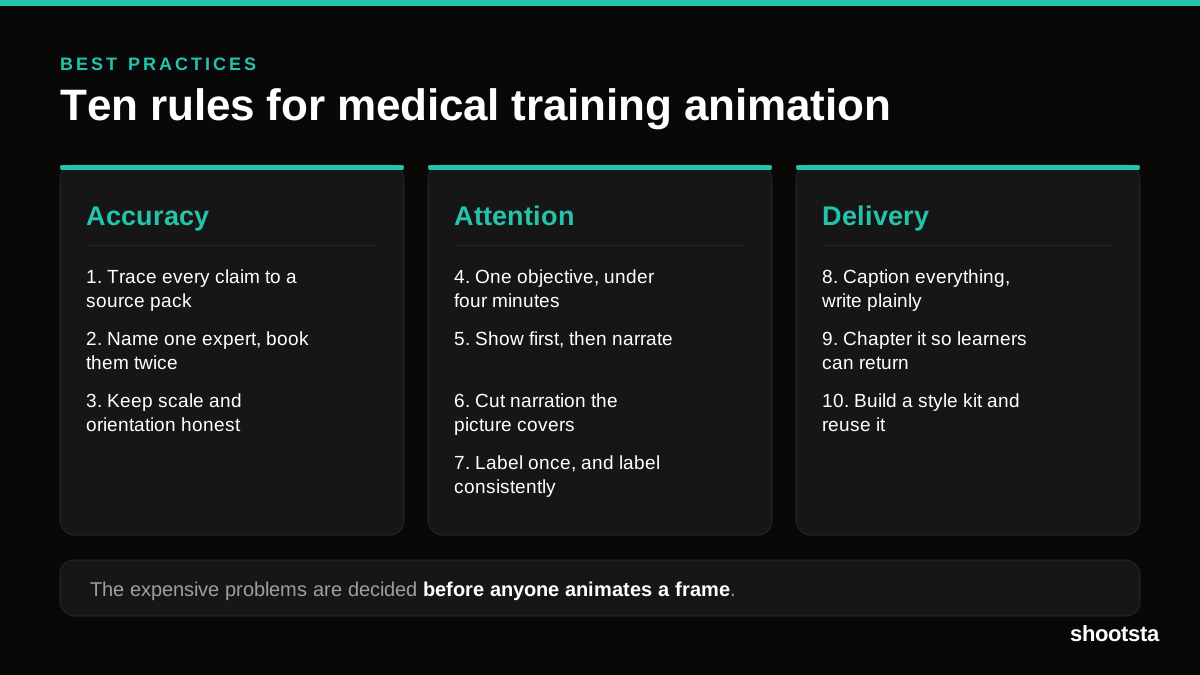
Ten rules that hold up across device training, clinical protocol work and mechanism of action modules. Most medical animation fails for dull reasons: too many objectives, narration that repeats the picture, and review that arrives too late to change anything.
Medical Training Animation: A Complete Guide
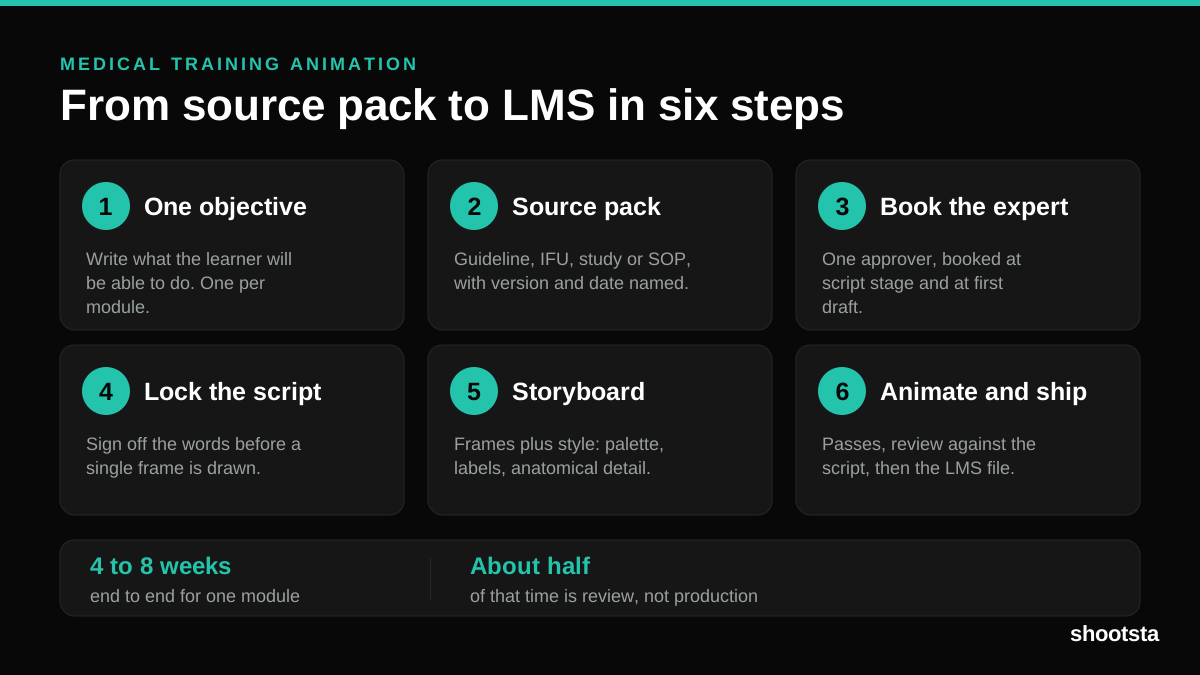
A medical training animation teaches a procedure, a device workflow, or a mechanism the camera cannot reach. Here is how one gets made, what it costs, and how to keep medical review from eating the schedule.
What Delayed Training Videos Cost L&D Teams
What Delayed Training Videos Cost L&D Teams
When training video ships late, employees work without the knowledge for longer. For a distributed enterprise, that backlog has a large, measurable cost.
Australian Corporate Training Video Production
Australian Corporate Training Video Production
A practical guide to corporate training video production for Australian teams: compliance and WHS modules, LMS-ready formats, AEST turnaround, and what a training library costs to build.
What Makes a Great Learning Video
What Makes a Great Learning Video
A great learning video changes what someone can do after watching it. Here is how the best ones are built, the mistakes that lose learners, and how the panel scores them.
Animation Use Cases for L&D Teams
Animation Use Cases for L&D Teams
Learning and development teams get more out of animation than almost any other function. Here are the places it works hardest, and where you should still reach for a camera.