
shootsta.
25 Internal Comms Video Ideas That Land
By Shootsta · Published April 26, 2026 · Updated October 2026
25 internal communications video ideas for enterprise teams - from CEO cadence and town halls to change announcements, employee spotlights, training, and DEI campaigns.
In a large company, the comms team often makes more video than marketing and gets less credit for it. Think of the CEO weekly update, the all-hands recording, the change announcement, the benefits enrollment explainer and the new-hire welcome. This steady run of internal video is easy to underrate until it stops.
Below are 25 internal communications video ideas that a busy enterprise comms team might ship in a quarter. For each one you get the format, the typical length, the audience and the production approach. The list assumes you are producing for 500-50,000 employees, often spread across regions and time zones.
Leadership cadence video ideas
1. CEO weekly or monthly update
This regular 3-5 minute CEO video covers company priorities, business updates and a personal note. It replaces the all-hands email that gets skimmed. Film it in the same place and format each time so employees recognize it.
2. CFO or CRO quarterly results video
In 5-8 minutes, a finance or revenue leader walks through what is on track this quarter and what is behind. Release it the day results are shared internally, so distributed teams hear the leader's tone instead of reading it cold.
3. Executive team round-up video
This 2-3 minute round-up joins short clips from each executive on their focus this quarter. It helps new joiners and distributed teams who rarely see the exec team.
4. Town hall recording (with chapters)
Take the all-hands recording and edit it down to 30-45 minutes with chapter markers. It is often the most-watched internal video of the quarter. Always cut a 5-minute highlights version for employees who cannot watch the full thing.
5. Skip-level or "ask the leader" video Q&A
Employees send in questions ahead of time and the leader answers them on camera in 10-15 minutes. It feels more honest than a scripted exec video, and people watch because the questions came from them.
Change and announcement video ideas
6. Org change announcement video
The leader who owns the change explains in 2-3 minutes what is changing, why and what employees should do. It gets more attention than the same email and fewer anxious Slack threads.
7. Leadership change video
Use a 2-3 minute video to introduce a new exec hire or announce a leader's departure. When the change is at the executive level, the CEO should present it. The video sets the tone for how staff receive the new leader.
8. Strategy or pivot announcement video
This 3-5 minute video walks through a strategy shift, a market pivot or a major repositioning. Pair it with a written FAQ document that answers the questions the video raises.
9. Acquisition or merger announcement video
The CEO, and often the acquired company's CEO, spend 5-10 minutes explaining the deal, what changes and what stays the same. Release it the morning the deal is announced. For many companies it is the highest-stakes internal video they will ever make.
10. Restructure or RIF video
The CEO or CHRO uses 3-5 minutes to explain a restructure or layoff. Film it in a serious tone and release it at the moment affected employees are told. People rewatch it more than almost anything else that year, and criticize it hard if it lands wrong.
Culture and engagement video ideas
11. Employee spotlight or "day in the life"
This 60-90 second profile features an employee, a team or an office, filmed where they work rather than in a studio. Use it in newsletters, on the careers site and on LinkedIn (with consent), where it doubles as recruitment marketing.
12. Office or region spotlight video
A 2-3 minute film introduces one office or country team to the rest of the company. Many employees never visit the other offices, so this helps them feel part of one business.
13. Anniversary or milestone video
Make a 2-3 minute film to mark a company anniversary, an IPO, or a product or revenue milestone. It is often one of the most-watched internal videos of the year. You can reuse it on LinkedIn and the careers site.
14. Wins-of-the-week or quarter video
This 2-3 minute round-up covers the customer, product and people wins from the period. Release it at the end of each month or quarter. It keeps momentum going and shows staff what "winning" looks like here.
15. Values-in-action or "this is what we mean by X" video
In 90 seconds, real employees show one company value in their daily work. It works best as a series, one value at a time, rather than a single "values" film.
Change management and program comms video ideas
16. Tooling or system change video
This 2-3 minute video explains a new tool, system or process. It covers what changes, what stays the same and what each employee must do, and it can cut helpdesk tickets during the rollout.
17. Compliance or policy update video
Use 2-3 minutes to explain a policy change, a regulatory update or a compliance requirement. You may be legally required to confirm that employees received the message, and video views are easier to track than email opens.
18. Strategic program rollout video
This 3-5 minute video kicks off a major internal program, such as DEI, sustainability, customer experience or a productivity drive. Pair it with a written program plan and regular update videos.
Free Consultation
Want a hand with your next video?
Talk to a Shootsta producer about your goals, timeline, and budget. There is no pitch, just advice you can use.
Benefits, HR, and onboarding video ideas
19. Benefits enrollment explainer
This 2-3 minute video walks through the benefits enrollment options. You will refresh it once a year, and it keeps the HR inbox quieter during the enrollment window.
20. Parental leave or major-life-event policy video
This 2-3 minute video explains how to take parental leave, bereavement leave or leave for other major life events. It clears up the rules at the moment an employee needs them most.
21. New hire welcome video from leadership
Send new hires a 2-3 minute welcome video before their start date. It sets the tone and calms first-day nerves, and it starts cultural onboarding before the HR paperwork does.
22. New hire onboarding series (first 30 days)
A series of 2-5 minute videos covers the first 30 days: the tools, who to know, where to find things and how decisions get made. It replaces the long onboarding PDF new starters skim once. See 15 training video ideas your L&D team can produce this month for adjacent training video formats.
DEI, social impact, and ERG video ideas
23. ERG (Employee Resource Group) feature video
This 2-3 minute video features an ERG, what it does and how to get involved. It moves the group out of its Slack channel and turns it into a story the whole company sees.
24. Heritage or cultural celebration video
Make a 2-3 minute video for Pride, Black History Month, Lunar New Year, NAIDOC Week or a similar occasion. It works best when real employees speak, rather than stock corporate messaging.
25. Internal PSA or behavior-change video
This 60-90 second video aims to shift one employee behavior, in areas such as mental health, security awareness, inclusion or ethics. It is modeled on public service ads. The format comes from external comms, but here the audience is your own staff.
How to make internal video that gets watched
When internal video goes unwatched, the cause is usually distribution and rhythm. Production quality is rarely the problem. Four things make the difference:
- Cadence beats production quality. A 90-second weekly CEO video filmed on a phone will reach more people than a polished 10-minute cut once a quarter. Employees get used to the rhythm, and the update becomes part of their week.
- Distribution matters as much as production. A video posted on an intranet page that nobody opens is wasted. Put it where employees already are, such as Slack, Teams, email or the all-hands, and fit it into their morning routine.
- Watch-through, not views. The number to track is how many employees watched to the end. A smaller group that watches the whole message is a better result than a big crowd that drops off after 30 seconds.
- Caption everything. Many employees watch internal video on mute, so without captions they miss the message.
For a deeper read on the planning side see our how to plan internal comms video that works guide and the internal communications video guide.
Internal video production at scale
An enterprise comms team running even half of the formats above ships a lot of video every month. The bottleneck is rarely ideas. It is production capacity, keeping the brand consistent across regions and turning a video around when it has to go out the same day.
Shootsta works alongside enterprise comms teams at this volume. You get templates and brand kits for the regular formats, and our editors take on the higher-stakes pieces. See how internal comms teams use Shootsta, explore the video production platform, or get in touch. For other vertical lists see marketing video ideas, sales video ideas, and the B2B video ideas hub.
Internal communications video FAQs
What is the most-watched type of internal communications video?
The town hall recording (idea 4) and the regular CEO video (idea 1) are usually the most-watched internal formats. Both are part of a rhythm employees already expect, which gives them an audience that one-off productions have to win from scratch.
How long should an internal video be?
The right length depends on the format. CEO updates run 3-5 minutes, and town halls run 30-45 minutes with a 5-minute highlight cut. Change announcements need 2-3 minutes and employee spotlights need 60-90 seconds, while each onboarding module runs 2-5 minutes. The biggest mistake is making a 10-minute video for anything other than a town hall, because employees will not watch it.
Should internal videos be highly produced or quick and casual?
You need both, depending on the format. Weekly CEO updates and exec round-ups work better with light production, because heavy polish every week reads as staged. High-stakes one-offs, such as acquisition announcements, RIF videos and anniversary films, need full production. Their production quality shows how seriously the company takes the moment, and if you get it wrong the message lands wrong.
How do we measure internal video performance?
Track watch-through rate (the share of viewers who finish) and unique viewer rate (the share of the intended audience who watched). Add sentiment from a pulse survey or the comments, and skip raw view counts. Measure an internal video against the size of its intended audience, rather than against external benchmarks.
How quickly can an internal video be produced?
A CEO update recorded on a phone can go out the same day. An edited single-presenter video, such as a change announcement, takes 24-48 hours with the right production partner. A fully produced video like an anniversary film or town hall recap takes 1-2 weeks. A subscription production model like Shootsta delivers that middle category in 48 hours as standard.
Where should internal videos be hosted?
Host them in the tools employees already use, such as Slack, Teams, the intranet or email, rather than a YouTube link. Watch-through is higher when nobody has to click out to another site. For longer videos like town halls and training, a video CMS such as Wistia, Brightcove or Vimeo enterprise sits behind the player.
Take this article with you
Read the latest at shootsta.com/blog/internal-communications-video-ideas
You might also like
How to Plan Video Team Capacity Around Leave
Your only editor just booked two weeks off, and you already know which projects will slip. Chad Lakin explains how to plan video team capacity so the work keeps moving when someone is away.
Corporate Video Editing Standards: Full Guide
A two-page editing standard does more for consistency than a forty-page brand book. Here is what it should cover, who owns each part, and how to enforce it with an in-house editor or an outside partner.
Quality Control in Outsourced Video Editing
When editing leaves the building, quality has to be checked by a system rather than by whoever happens to look. Here is the system: acceptance criteria, two QA gates, counted revision rounds and a quarterly audit.
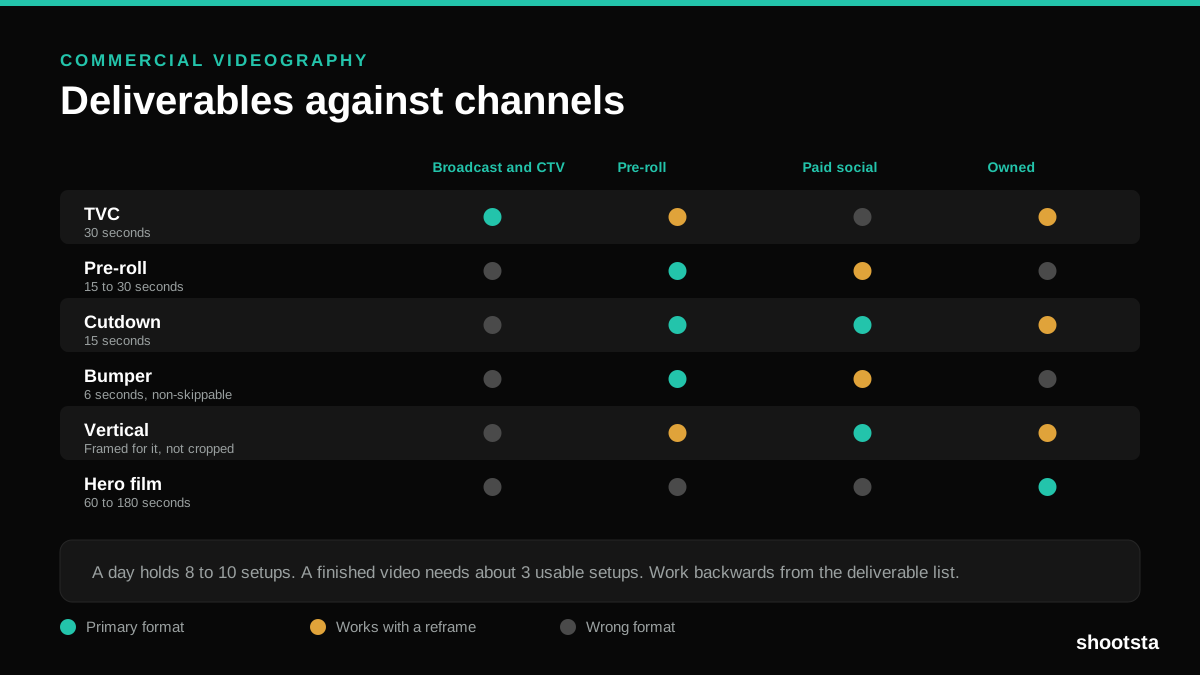
Commercial Videography: Cost and Scope
Commercial videography is priced by the day and judged by the deliverable. Most projects go wrong because those two numbers were never reconciled.
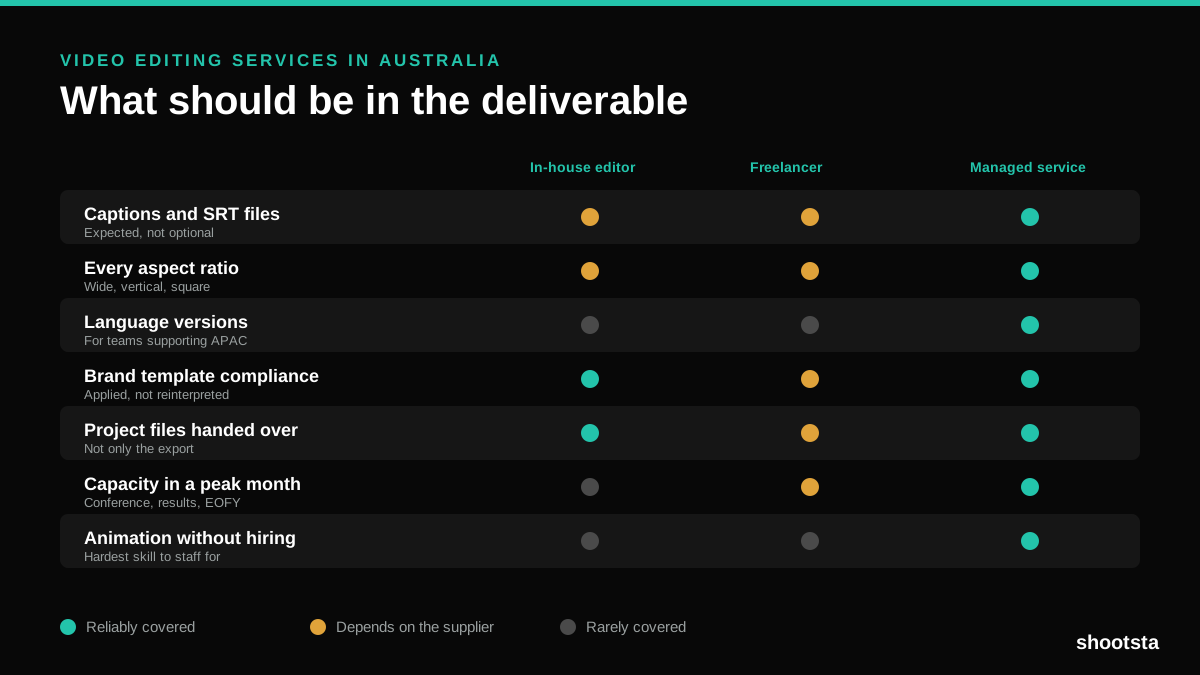
Video Editing Services in Australia
Australian teams are spread across time zones and offices, so the editing queue matters more than the editing. Here is what to expect on cost and turnaround.
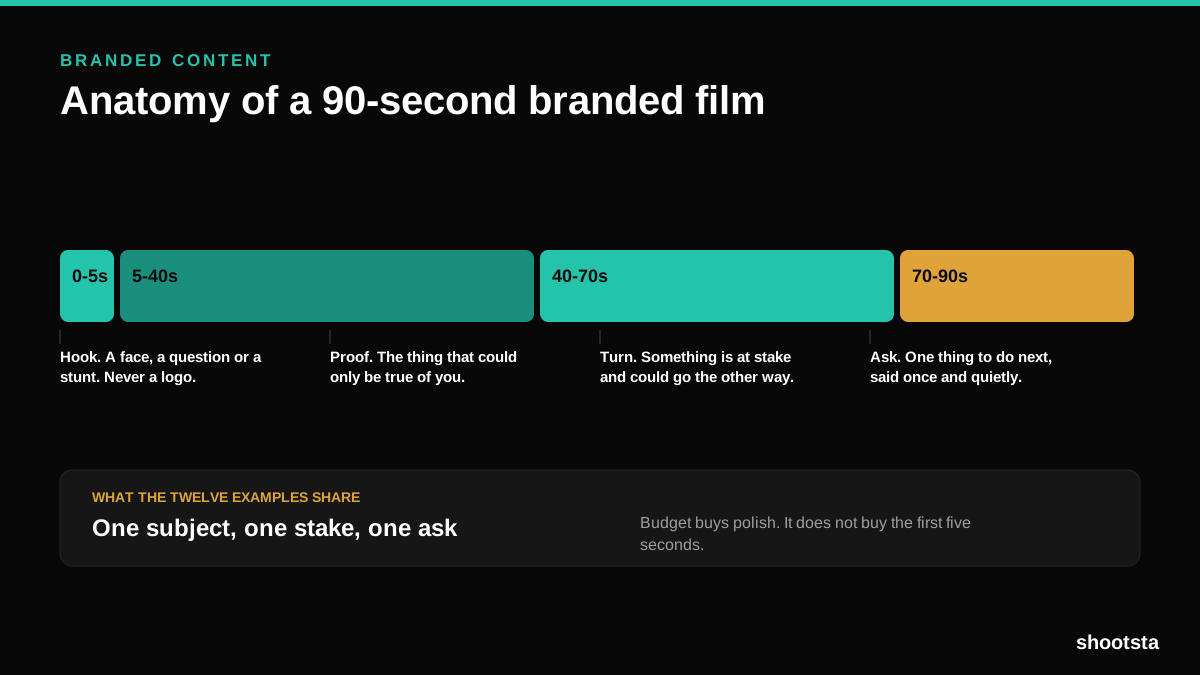
12 Branded Content Examples That Worked
Twelve pieces of branded content that people chose to watch, what each one got right, and the structure underneath all of them.