
shootsta.
How to Plan Engaging Business Podcasts
By Shootsta · Published May 3, 2026 · Updated May 2026
The planning that separates a podcast people listen to from a podcast that quietly disappears after episode three. Format, guests, structure, and distribution.
Why are most business podcasts boring?
Most business podcasts are launched without a planning conversation. Someone in marketing decided podcasts are a thing. A microphone got bought. Episode one happened. By episode six, the energy faded, the calendar slipped, and the show quietly stopped. The pattern is so common it's almost a meme. The cause is always the same: no plan up front.
What does a podcast plan actually cover?
Audience and intent
Who is this for, and why would they listen? "Marketing leaders at B2B SaaS companies who want to scale video without hiring an in-house team" is a usable answer. "Anyone interested in business" is not. Specificity decides everything from guest selection to episode length.
Format and length
The four formats that work in B2B:
- Solo expert (10 to 20 minutes). Host shares a single insight per episode. Cheap to produce, hard to sustain over 50+ episodes.
- Interview (30 to 45 minutes). Host plus one guest. The most common format because it scales with the host's network.
- Co-hosted conversation (25 to 40 minutes). Two regular hosts riff on a topic. Best chemistry, most personality, requires two committed people.
- Narrative documentary (15 to 25 minutes). Produced storytelling with multiple voices. Highest production cost, highest brand payoff.
Pick one. Don't switch formats every episode. Listeners come back to consistency.
Cadence
Weekly is the standard for serious shows. Monthly works if the production is documentary-quality. Anything less frequent than monthly gets forgotten between episodes. Pick a cadence the team can sustain for 12 months without exception.
How to structure each episode
A useful template:
- Cold open (15-30 seconds). A clip from later in the episode that hooks the listener.
- Intro (10-20 seconds). Show name, episode topic, guest name.
- Body (the meat). Whether interview or narrative, the body is where the value lives.
- Wrap (30-60 seconds). Key takeaway, where to find more, the call to action.
The cold open is the part most teams skip. Don't. The first 30 seconds decides whether the listener finishes. A flat intro before the value loses 30 to 50% of the audience.
Video podcasts: when and why
Most B2B podcasts now record video alongside audio. The reason isn't YouTube subscribers (those are slow to build for talking-head video). The reason is short-form clips. A 35-minute interview produces 6 to 10 LinkedIn-friendly cuts. That's where the actual reach comes from.
If you're going to ship video clips alongside the podcast, plan the framing for vertical crops in advance. The full breakdown is in our aspect ratio guide.
Guest selection
The guest list is the show. A weak guest can't be saved by good production. A strong guest forgives mediocre production. Three filters worth using:
- Lived experience, not just opinions. The guest should have done the thing, not just written about it.
- Audience overlap. The guest's network and yours should share the target listener, not duplicate them.
- Distribution willingness. A guest who shares the episode brings 30 to 50% more listens than one who doesn't.
The interview itself is its own discipline. Our interview questions guide covers how to write the prompts that pull stories out of guests.
Distribution: where most podcasts die
Audio-only on Spotify and Apple is necessary but not sufficient. Real growth comes from:
- Short clips on LinkedIn. 60 to 90 seconds, vertical, captioned.
- Email to the existing list. Subscribers who already trust the brand.
- Guest amplification. Make it easy for the guest to share (pre-built copy, video clip, image).
- Internal staff sharing. The team is the first audience.
Plan the distribution before the first episode, not after.
FAQs about business podcasts
How many episodes before a podcast finds an audience?
20 to 30 for most B2B shows. Discoverability is slow on audio platforms. The teams that quit at episode 8 never find out whether the show was working.
How long should a business podcast be?
30 to 45 minutes for interview shows. 15 to 25 minutes for solo. Listeners return to a length they can fit into a commute or a workout. Inconsistent lengths are harder to plan for.
Can I outsource podcast production?
Yes. Editing, mastering, clip cutting, and show notes are all outsourceable. The host and guest selection are not. The team has more on running scaled video and audio production in our enterprise video production guide.
Take this article with you
Read the latest at shootsta.com/blog/how-to-plan-engaging-business-podcasts
You might also like
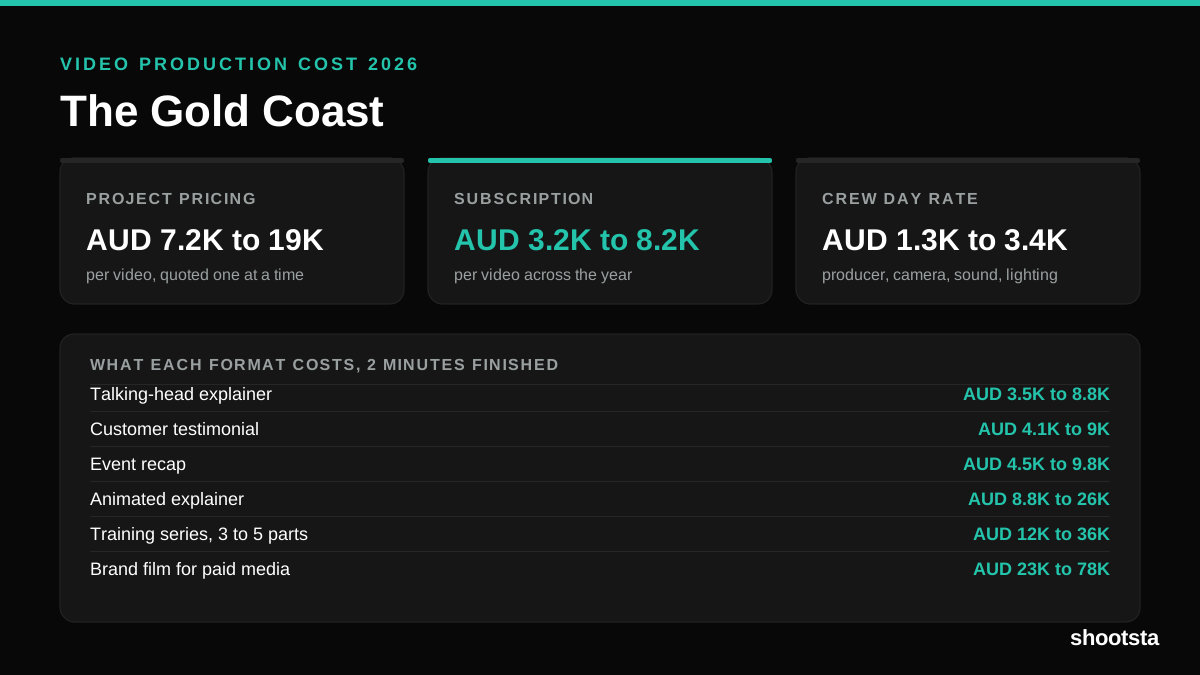
Video Production Cost on the Gold Coast 2026
Video production in the Gold Coast costs AUD 3,200 to AUD 8,200 per finished video on a subscription model, and AUD 7,200 to AUD 18,500 for one-off project work. Here is what you are paying for, and how the three pricing models compare.
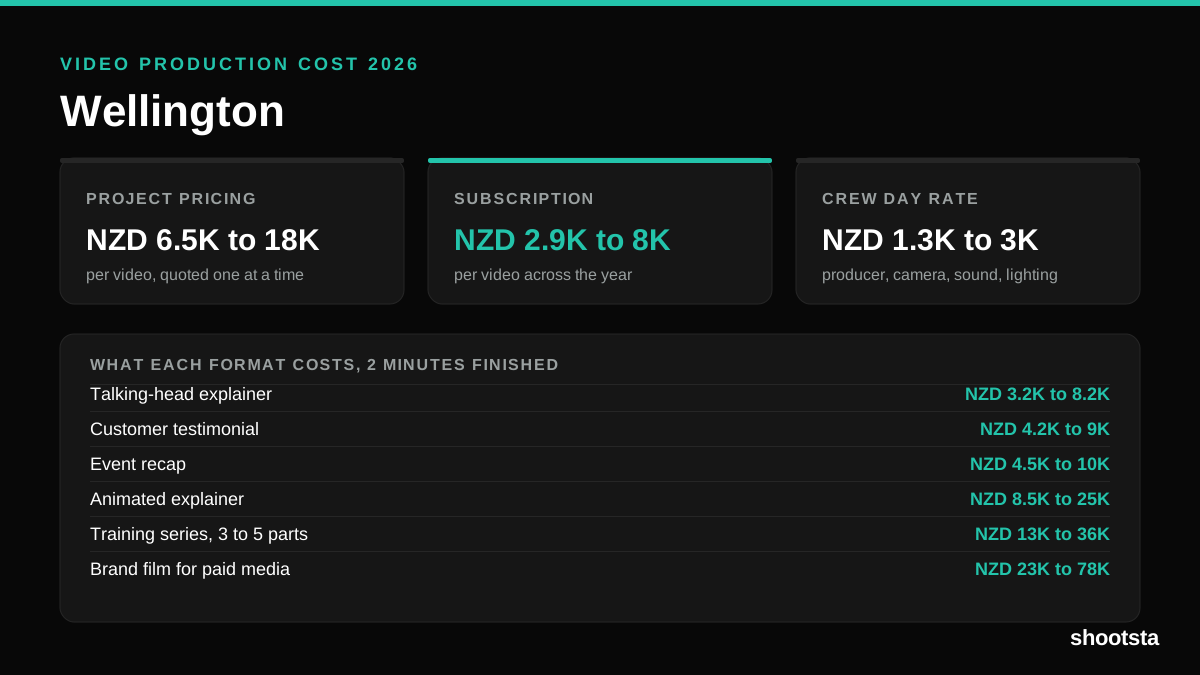
Video Production Cost in Wellington (2026)
Video production in Wellington costs NZD 2,900 to NZD 8,000 per finished video on a subscription model, and NZD 6,500 to NZD 18,000 for one-off project work. Here is what you are paying for, and how the three pricing models compare.
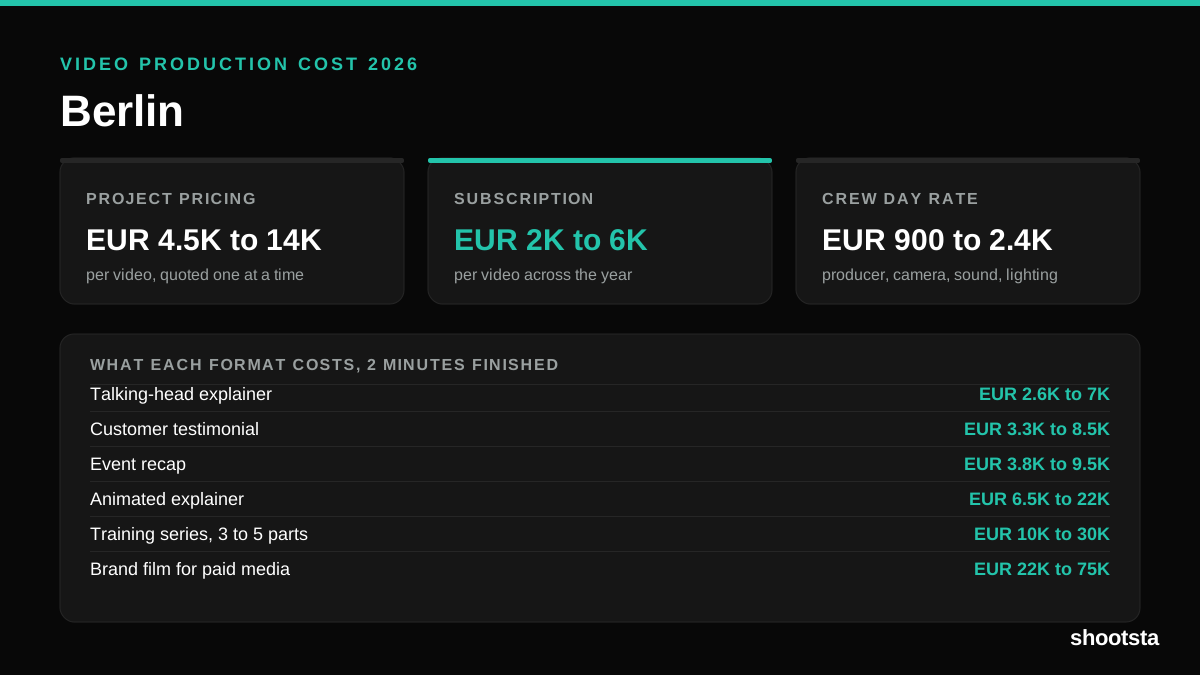
Video Production Cost in Berlin (2026)
Video production in Berlin costs EUR 2,000 to EUR 6,000 per finished video on a subscription model, and EUR 4,500 to EUR 13,500 for one-off project work. Here is what you are paying for, and how the three pricing models compare.
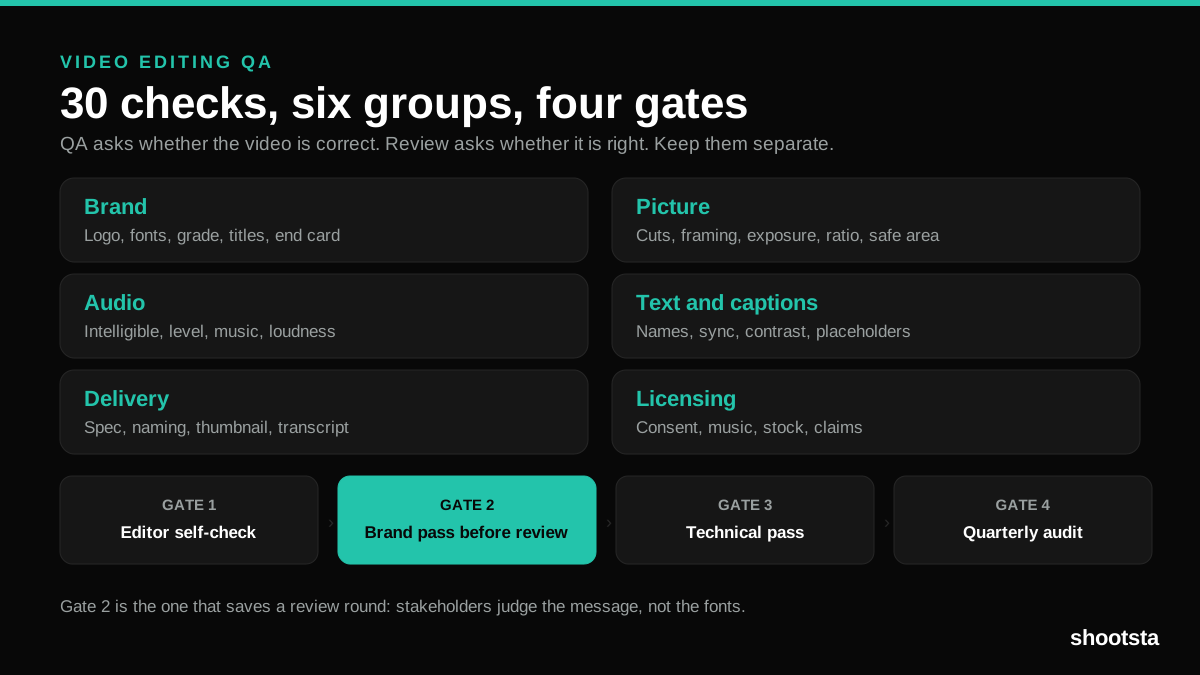
Video Editing QA: The Complete 2026 Guide
Video editing QA is the pass that catches brand drift, bad audio and wrong deliverables before stakeholders do. Here is the 30-point checklist, the four stage gates, and how to run it at 40 videos a month.
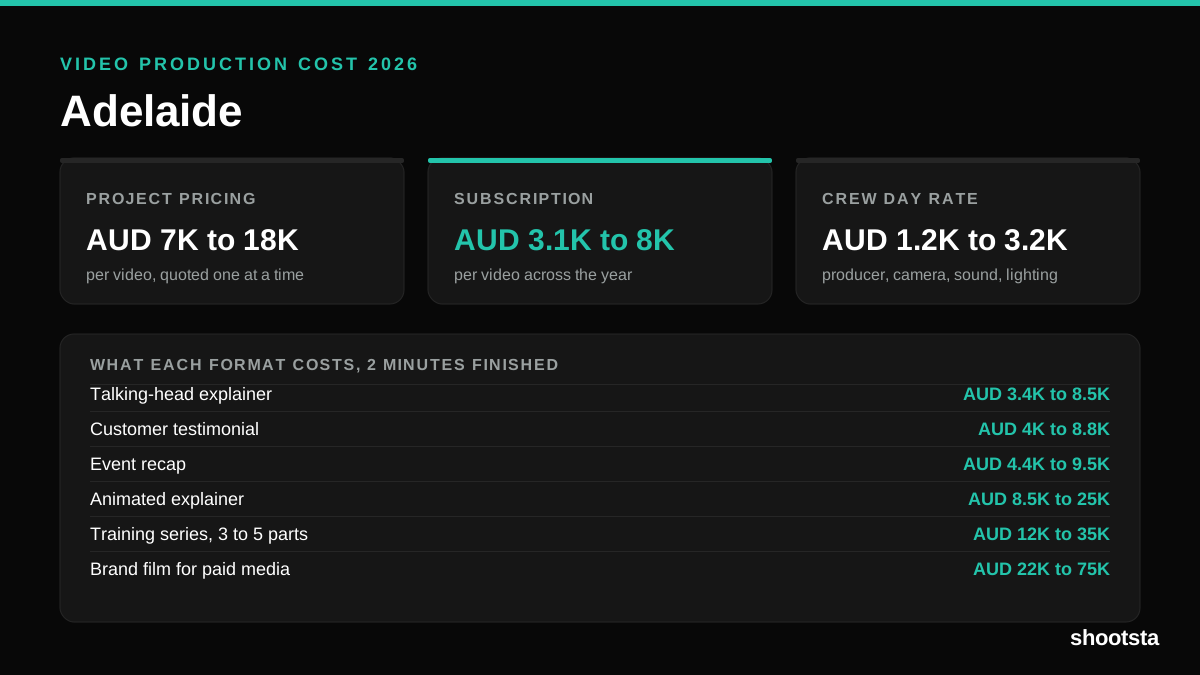
Video Production Cost in Adelaide (2026)
Video production in Adelaide costs AUD 3,100 to AUD 8,000 per finished video on a subscription model, and AUD 7,000 to AUD 18,000 for one-off project work. Here is what you are paying for, and how the three pricing models compare.
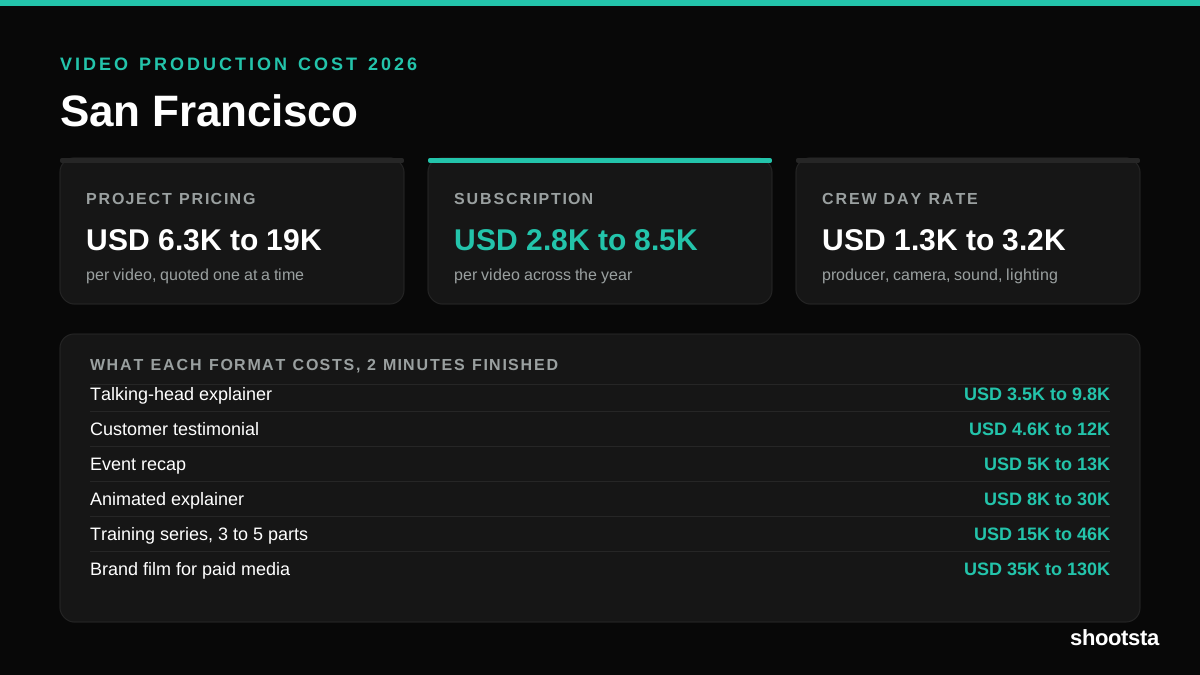
Video Production Cost in San Francisco 2026
Video production in San Francisco costs USD 2,800 to USD 8,500 per finished video on a subscription model, and USD 6,300 to USD 19,100 for one-off project work. Here is what you are paying for, and how the three pricing models compare.