
shootsta.
The Perfect Length for Business Video
By Shootsta · Published February 25, 2026 · Updated October 2026
How long should a business video be? Platform benchmarks, audience attention data, and the rule that beats every guideline: cut to the message.
How long should a business video be?
A business video should run as long as the message needs and stop there. Drop-off rates spike at predictable points on every platform. In our experience, a business video usually works better when it is shorter than the team planned. Here is what works on each channel.
Organic feed video works best at 30 to 90 seconds. Thought leadership can run up to 3 minutes when the audience already knows you. The full LinkedIn breakdown sits in our LinkedIn video length guide.
YouTube long-form
Tutorials and explainers sit well at 5 to 12 minutes. The platform rewards watch time, but only when the video earns it, and padding drags your numbers down.
YouTube Shorts, TikTok, Reels
Short vertical video should run 15 to 45 seconds. Anything longer must hook the viewer in the first 3 seconds.
Internal comms
Executive updates work at 60 to 180 seconds. They can run longer if the format is a planned town hall or a training piece. The drop-off pattern at work is the same as on social: the second minute is where audiences leave.
Sales and follow-up video
Keep outreach video under 60 seconds, and keep a follow-up after a meeting under 2 minutes. The shorter the video, the more likely the recipient watches it through.
Why shorter usually wins
Attention is limited. The first 3 seconds decide whether a viewer keeps watching, and the first 30 seconds decide whether they finish. After that, completion rates drop steadily, however good the video is. A 90-second video at 80% completion delivers more total seconds of attention than a 4-minute video at 30% completion.
That does not mean every video should be 60 seconds. Long-form earns its place when the audience is searching for the topic, as with tutorials, deep dives and customer stories. People who arrive from search will forgive length, while people scrolling a social feed will move on.
How to cut a video that's too long
- Cut the intro. "Hi, I'm..." rarely survives the cut on a tight video, so start with the hook.
- Cut the windup. Make your point in the first sentence instead of saving it for the third.
- Cut the recap. Don't tell viewers what you're about to say, what you said, and what you just said.
- Cut the second example. One clear example beats two half-examples.
- Cut the polite ending. Replace "thanks for watching" with the call to action.
The golden rule of business video length
Make every second carry the message. If you can cut a section without losing meaning, cut it. The viewer's time is what you are spending, and a team that respects it earns more attention over time. The two Shorts below from Shootsta Academy reinforce the same point.
If you're still mapping out the video, lock the length in the video brief. A target duration set before scripting stops the slow drift toward "just one more thing."
FAQs about video length
What is the ideal length for a corporate video?
For external audiences, 60 to 90 seconds. For internal comms and executive updates, 90 to 180 seconds. For a customer story or case study, up to 3 minutes if the storytelling earns it.
Does Google use video length as a ranking signal?
Google rewards engagement rather than length itself. It looks at signals such as watch time, completion and what viewers do next. A short video that holds attention often outranks a long video that doesn't.
Should I make multiple cuts at different lengths?
Yes, when the budget allows it. A single shoot can produce a 60-second social cut, a 90-second LinkedIn version, and a 3-minute long-form. Plan the cuts at the brief stage so the shoot captures what each one needs.
Take this article with you
Read the latest at shootsta.com/blog/perfect-length-for-business-video
You might also like

How to Plan Video Team Capacity Around Leave
Your only editor just booked two weeks off, and you already know which projects will slip. Chad Lakin explains how to plan video team capacity so the work keeps moving when someone is away.
Corporate Video Editing Standards: Full Guide
A two-page editing standard does more for consistency than a forty-page brand book. Here is what it should cover, who owns each part, and how to enforce it with an in-house editor or an outside partner.
Quality Control in Outsourced Video Editing
When editing leaves the building, quality has to be checked by a system rather than by whoever happens to look. Here is the system: acceptance criteria, two QA gates, counted revision rounds and a quarterly audit.
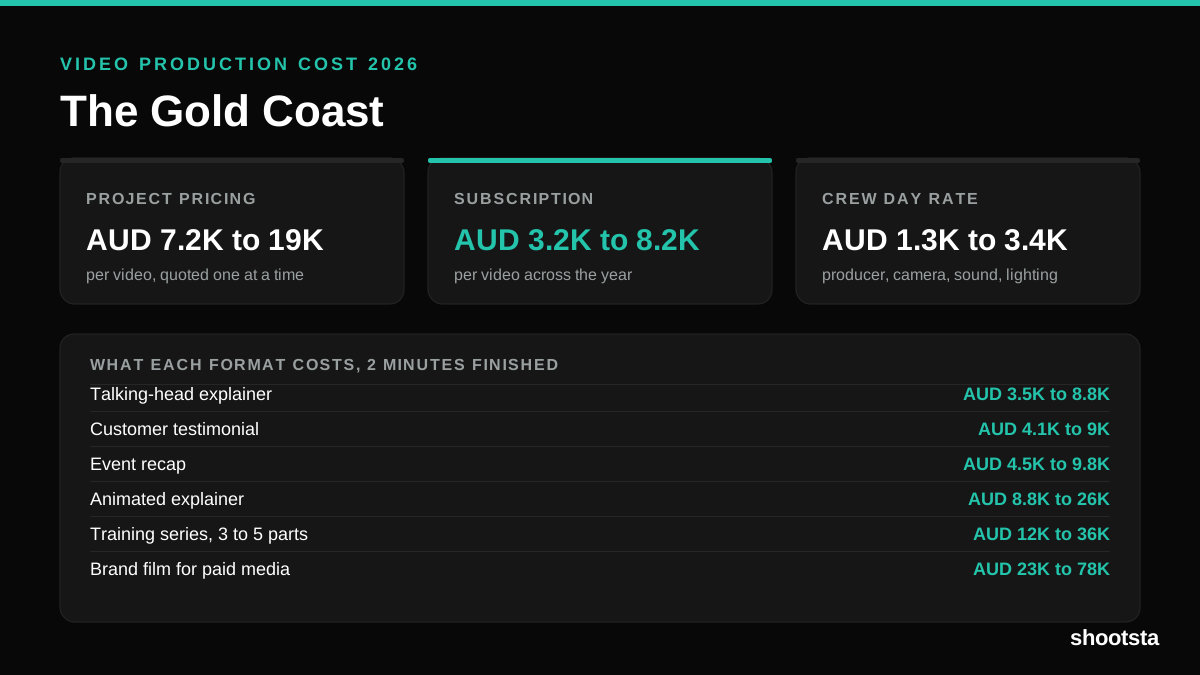
Video Production Cost on the Gold Coast 2026
Video production in the Gold Coast costs AUD 3,200 to AUD 8,200 per finished video on a subscription model, and AUD 7,200 to AUD 18,500 for one-off project work. Here is what you are paying for, and how the three pricing models compare.
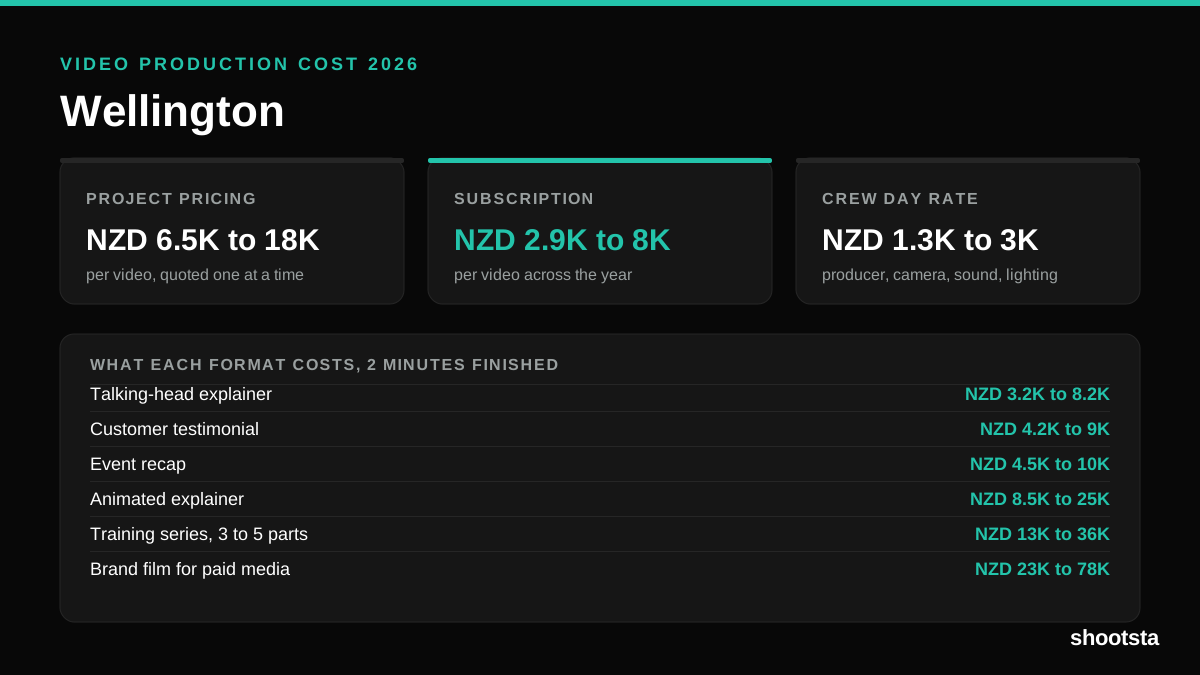
Video Production Cost in Wellington (2026)
Video production in Wellington costs NZD 2,900 to NZD 8,000 per finished video on a subscription model, and NZD 6,500 to NZD 18,000 for one-off project work. Here is what you are paying for, and how the three pricing models compare.
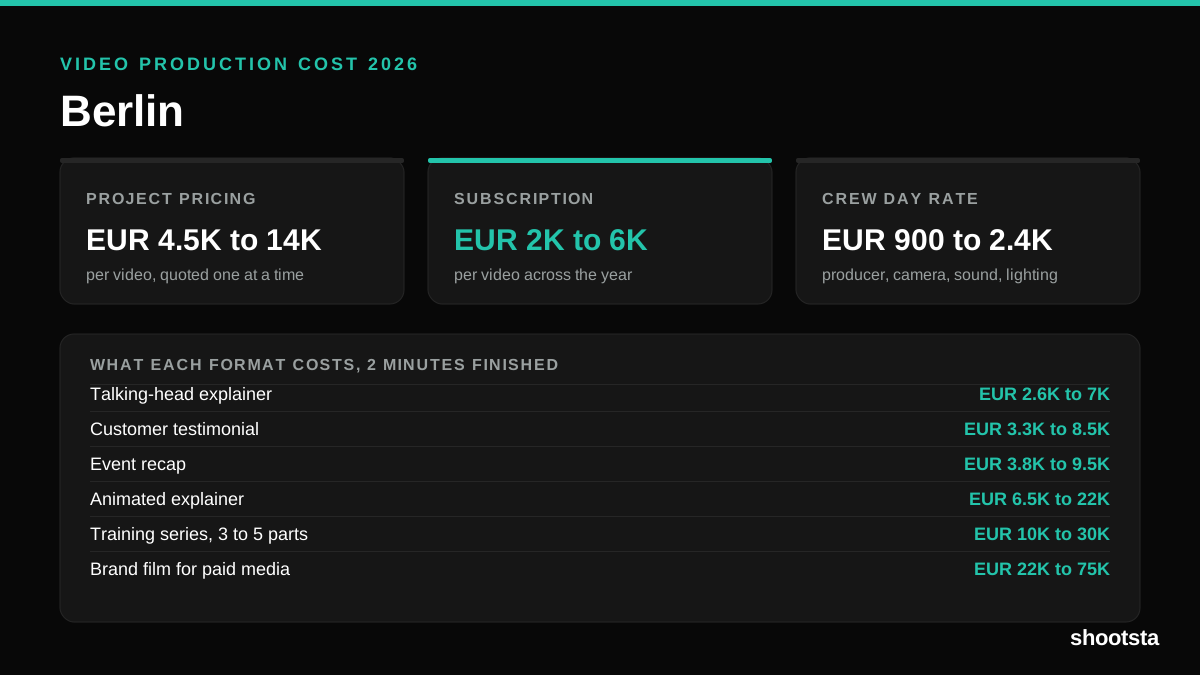
Video Production Cost in Berlin (2026)
Video production in Berlin costs EUR 2,000 to EUR 6,000 per finished video on a subscription model, and EUR 4,500 to EUR 13,500 for one-off project work. Here is what you are paying for, and how the three pricing models compare.