
Animation Use Cases for Product & SaaS Teams
shootsta.
Animation Use Cases for Product & SaaS Teams
By Shootsta · Published June 30, 2026 · Updated October 2026
Software is abstract, and a screen recording only goes so far. Here is where product and SaaS teams get the most out of animated video across the product lifecycle.
Why does animation fit software products?
Software is abstract. A lot of what a product does happens behind the interface, and a raw screen recording shows the clicks without explaining the value. Animation shows the why, from the problem the product solves to the result the customer gets. That is why it carries so much of the product story for SaaS teams.
A simple test settles most cases. If the point is the exact clicks, record the screen. If the point is the concept behind the feature, animate it. Many product videos need both, which we cover in the different kinds of animation for business.
1. Product launch and category explainers
A 60 to 90 second animated explainer is the video a product team gets the most use from. It sits on the homepage and in the launch campaign, and sales opens every deck with it. It answers "what is this and why should I care" before the prospect ever sees the UI.
2. Feature releases
Every release needs a short, clear video. Animation in a shared style lets the team ship one per feature without a new production each time, and updating it when the feature evolves is a quick edit rather than a re-shoot.
3. Onboarding and activation
New users churn when they do not reach value fast. Animated onboarding, sometimes blended with screen capture, walks them through the first key actions consistently. It scales to every new account without the team rebuilding the same walkthrough.
4. In-app and help content
Short animated clips embedded in the product and the help center reduce support tickets by answering the common questions at the point of need. They are cheap to produce in a shared style and easy to keep current as the product changes.
5. Technical and developer concepts
APIs, architecture, and data flows are diagrams in motion. Animation explains how the pieces connect in a way a screen recording cannot, which matters for technical buyers who need to understand the system before they commit.
How much should a product team produce?
You will likely need more than you expect. Between launches, releases, onboarding, and help content, the natural volume is dozens of videos a year. That is what makes a style kit and a repeatable model worth building, since every video after the first reuses the same foundation. The cost side is in animated explainer video cost.
Where to start
Pick the one feature your sales and success teams explain inconsistently and build the animated version first. To scope a product video program, read The Business Animation Playbook or explore our animation production services.
Take this article with you
Read the latest at shootsta.com/blog/animation-use-cases-product-saas
You might also like

How to Plan Video Team Capacity Around Leave
Your only editor just booked two weeks off, and you already know which projects will slip. Chad Lakin explains how to plan video team capacity so the work keeps moving when someone is away.
Corporate Video Editing Standards: Full Guide
A two-page editing standard does more for consistency than a forty-page brand book. Here is what it should cover, who owns each part, and how to enforce it with an in-house editor or an outside partner.
Quality Control in Outsourced Video Editing
When editing leaves the building, quality has to be checked by a system rather than by whoever happens to look. Here is the system: acceptance criteria, two QA gates, counted revision rounds and a quarterly audit.
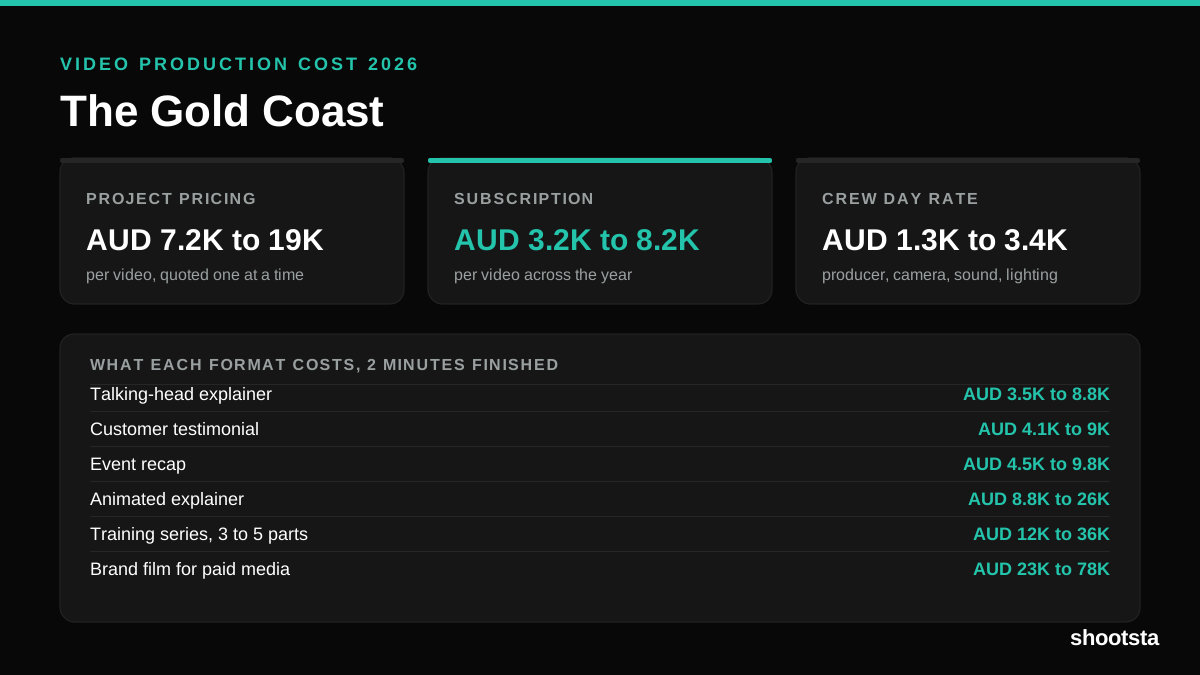
Video Production Cost on the Gold Coast 2026
Video production in the Gold Coast costs AUD 3,200 to AUD 8,200 per finished video on a subscription model, and AUD 7,200 to AUD 18,500 for one-off project work. Here is what you are paying for, and how the three pricing models compare.
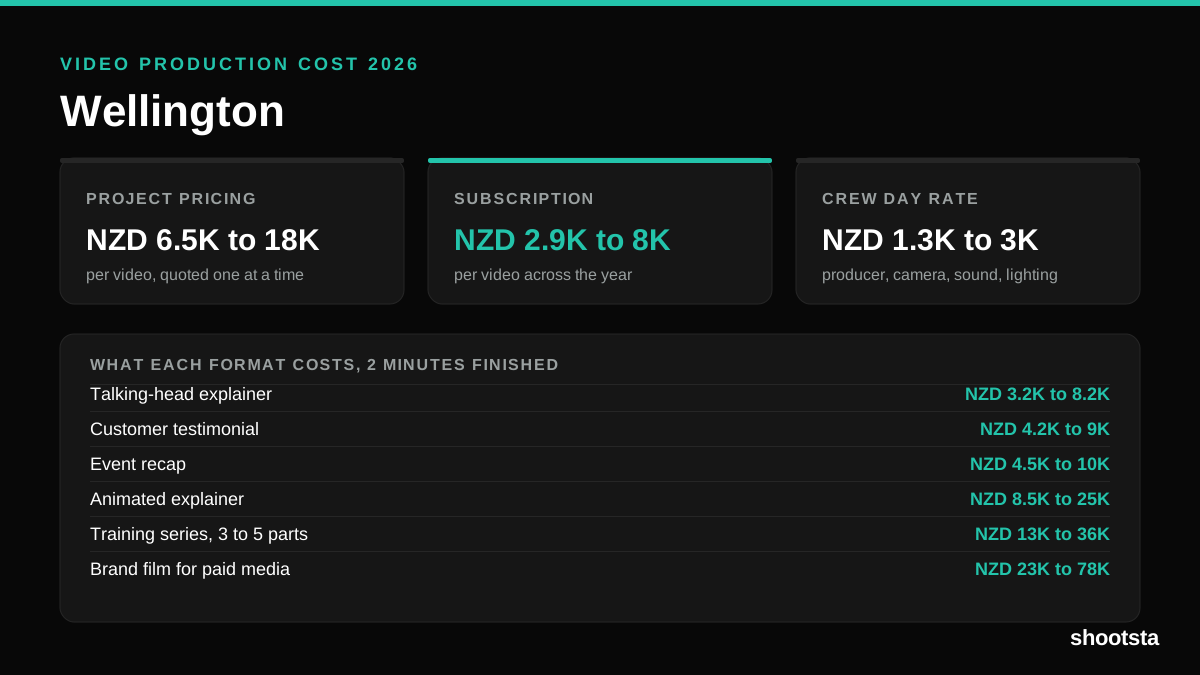
Video Production Cost in Wellington (2026)
Video production in Wellington costs NZD 2,900 to NZD 8,000 per finished video on a subscription model, and NZD 6,500 to NZD 18,000 for one-off project work. Here is what you are paying for, and how the three pricing models compare.
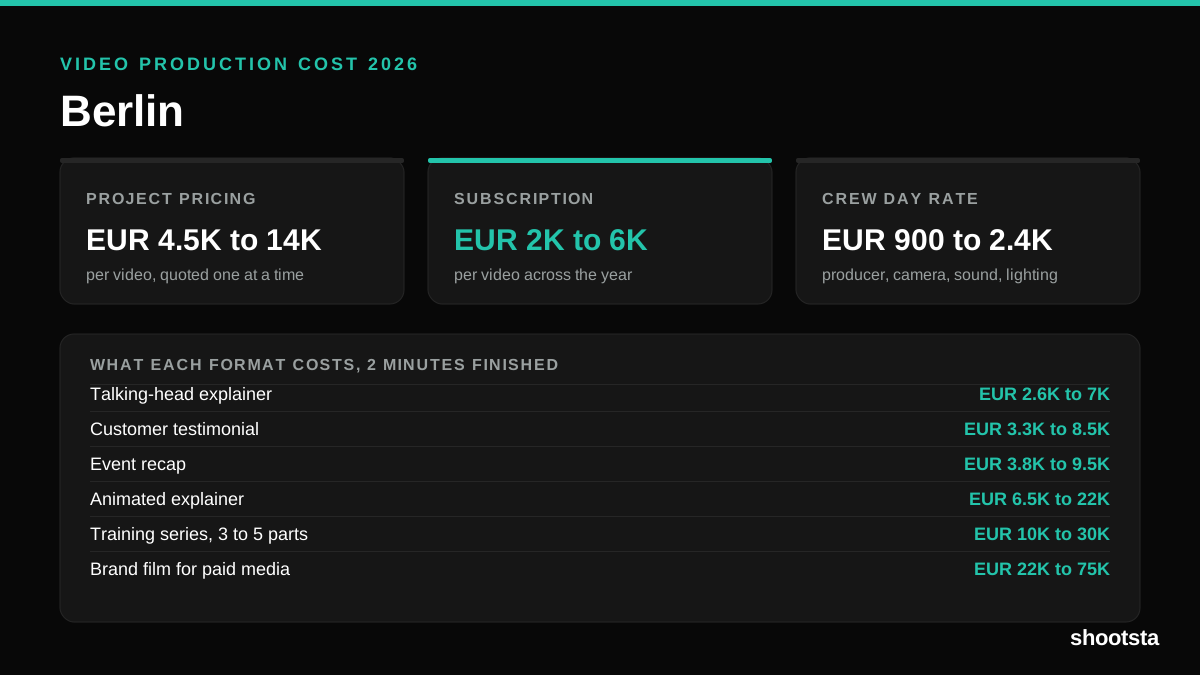
Video Production Cost in Berlin (2026)
Video production in Berlin costs EUR 2,000 to EUR 6,000 per finished video on a subscription model, and EUR 4,500 to EUR 13,500 for one-off project work. Here is what you are paying for, and how the three pricing models compare.