
Setting Achievable Video Marketing Goals and KPIs
shootsta.
Setting Achievable Video Marketing Goals and KPIs
By Mark Ashworth · Published July 12, 2025 · Updated October 2026
Master setting goals for video marketing success. Learn to align video content with marketing objectives and create measurable KPIs for maximum ROI.
It is easy to start video marketing with big hopes and then struggle to set goals that tie back to business results. Without clear targets and metrics, even a creative video can't show ROI or prove what it did for growth.
The gap between a campaign that pays off and an expensive experiment is usually the goal behind it. When each video is tied to a clear marketing objective, you know what to measure and what to change, and engagement and conversions are easier to improve.
Critical Success Factor: With defined video marketing KPIs, you can see which videos earn their budget and fix weak campaigns while they are still running, instead of finding out at the end of the quarter.
Understanding Video Marketing Goal Categories
Good goal-setting for video marketing starts with knowing the different types of targets video can hit across the customer journey. Each goal type needs its own metrics, timelines, and success criteria that match your broader strategy.
Video marketing goals fall into four main categories:
- Awareness goals that build brand recognition
- Engagement goals that build audience connection
- Consideration goals that nurture prospects
- Conversion goals that drive specific business actions
Knowing these categories helps you focus resources and set realistic expectations for what video can deliver.
Awareness and Reach Objectives
Awareness goals focus on reaching more people and building market presence through video. These targets usually measure impressions, reach, share of voice, and brand recognition to show market penetration and audience growth.
Balance reach quantity with audience quality. A video seen by 100,000 random viewers provides less value than one seen by 10,000 qualified prospects who fit your target customer profile.
Key Awareness Metrics:
- Total video impressions and unique reach
- Brand mention increase and share of voice
- Audience growth rate across video platforms
- Demographic alignment with target customer profiles
- Cost per thousand impressions (CPM) efficiency
Engagement and Connection Goals
Engagement goals measure how audiences interact with your video beyond just watching. They include watch time, interaction rates, social sharing, and completion rates that show real audience connection.
Know the difference between genuine interest and vanity metrics. A video with high views but low engagement suggests content that grabs attention but fails to connect or drive action.
Lead Generation and Conversion Targets
Conversion goals tie video directly to business results: lead generation, sales meetings, demo requests, and revenue. These need tracking and attribution models that show clear links between video engagement and outcomes.
Set realistic conversion targets from your own baseline and any industry benchmarks you trust. B2B conversion from video to leads tends to be low and slow, because buying committees take time. E-commerce brands can often trace a direct sale to a video, so their targets can be tighter.
Establishing SMART Video Marketing Objectives
SMART criteria (Specific, Measurable, Achievable, Relevant, Time-bound) turn vague goals into focused action plans. "Increase video engagement" is too vague for real decision-making. SMART goals give you something concrete to work toward.
Specific Goal Definition
Specific goals define what success looks like, who the audience is, and what actions video should drive. Instead of "improve brand awareness," try "increase brand recognition among UK financial services decision-makers by 25% through educational video."
Also define the video types, channels, and audience segments that will help you reach each goal. This focus keeps teams from spreading too thin across too many targets at once.
Measurable Performance Indicators
Every goal needs numbers you can track. Include primary and secondary KPIs that give both quick feedback and longer-term success signals.
Primary KPIs measure goal achievement directly. Secondary ones provide context and early warnings. For lead generation, primary KPIs might be qualified leads generated. Secondary metrics could be video completion rates and CTA click-through rates.
Essential Video Marketing KPIs by Goal Type:
Awareness Goals:
- Video reach and impression growth
- Brand search volume increase
- Social media follower growth from video content
- Brand mention sentiment improvement
Engagement Goals:
- Average video watch time and completion rates
- Social sharing and comment engagement
- Email list growth from video opt-ins
- Return visitor rates from video traffic
Conversion Goals:
- Lead generation from video content
- Sales attribution to video touchpoints
- Demo requests and consultation bookings
- Revenue per video marketing investment
Achievable and Realistic Expectations
Achievable goals account for your resources, market conditions, and realistic timelines. Targets that are too ambitious can burn out teams and lead to poor decisions. Targets that are too easy may not drive enough growth.
Use industry benchmarks, competitive context, and your own capabilities as a guide. A startup with limited video resources should not set the same volume goals as an established company with a dedicated video team.
Aligning Video Content with Marketing Objectives
Good video marketing ties every video to a strategic purpose and a measurable business outcome. Without this link, videos become isolated creative projects with no clear payoff.
Content Strategy Integration
Map video types to specific goals and audience segments. Educational videos support thought leadership, while product demos help close a sale. Customer testimonials build trust with buyers who are still comparing options, so each type earns its place for a different reason.
Content calendars should reflect this alignment. Schedule video production to support campaign timelines and business priorities. This keeps video from becoming reactive or disconnected from your broader strategy.
Multi-Channel Content Distribution
One video can serve multiple goals across channels. It might build awareness on social media, drive engagement through email, and support conversions on a landing page. Each channel gets its own messaging and call-to-action.
Cross-channel strategies get more value from every video investment. But this means adapting formats and messaging for each platform while keeping brand consistency.
Campaign Integration and Sequencing
Think of videos as parts of integrated campaign sequences that guide audiences through the full customer journey. This approach treats video as part of a connected experience, not a standalone piece.
Connect video to other marketing touchpoints. Coordinate timing with email sequences, social campaigns, and sales outreach for maximum impact.
Setting Realistic Timelines and Milestones
Good goal-setting includes realistic timelines that account for production cycles, audience building, and performance tuning. Unrealistic timing expectations lead to abandoned campaigns or wasted budget.
Short-Term Performance Indicators
Short-term milestones give early signals about campaign direction and content quality. They help you spot what works and adjust before investing heavily in weak approaches.
Look for initial engagement rates, audience growth patterns, and completion metrics within the first 30-60 days. These early signals help predict longer-term results and guide tactical changes.
Long-Term Success Metrics
Long-term goals focus on total impact and lasting business value. These typically take 6-12 months and include metrics like market share growth, customer lifetime value gains, and brand equity development.
Understanding how short-term actions connect to long-term outcomes helps businesses stay committed during periods when immediate results do not yet show the full picture.
Budget Allocation and Resource Planning
Achievable goals need budgets that match. Underfunding video marketing sets you up for disappointment.
Production Budget Considerations
Video production costs vary widely based on complexity, quality, and volume. Your goals must account for these costs so you have enough resources to hit your targets without cutting corners on quality.
Include both direct production costs and supporting expenses like distribution, promotion, and measurement tools. Many businesses undercount the total cost by focusing only on content creation.
Performance Marketing Investment
Hitting video marketing goals often requires paid promotion. Organic reach limits on most platforms mean you need strategic ad spend to get content in front of the right people.
How you split budget between creation and promotion depends on the goal type. Awareness goals usually need higher promotion spend. Engagement campaigns may benefit more from investing in content quality.
Measuring and Optimizing Performance
You improve what you measure on a regular schedule. Without tracking and adjustment, even a well-planned campaign can miss its targets.
Analytics and Tracking Setup
Set up analytics that track your KPIs across all channels and audience touchpoints. Connect video performance to broader business metrics and enable attribution analysis.
Capture both hard numbers like view counts and engagement rates, and softer signals like audience sentiment and content effectiveness feedback. Together, these give you a full picture for smart decisions.
Performance Optimization Strategies
Regular analysis drives ongoing improvement. Find what works: which content styles perform best, which audiences respond most, and which distribution tactics get the best ROI.
Test variables like video length, messaging, visual style, and CTA placement. These tests provide data-backed insights that make future content stronger.
Goals are easier to set against a baseline. Grade your program with the CMO video scorecard and set next quarter's target against whichever measure scores lowest.
Frequently Asked Questions
How do I determine realistic video marketing goals for my business?
Start by looking at your current marketing performance, available resources, and industry benchmarks. Factor in your target audience size, competition, and internal video skills when setting targets.
It usually pays to start with modest goals. Raise the targets as your team builds video skills and proves ROI to stakeholders.
What are the most important KPIs for measuring video marketing success?
The best KPIs depend on your goals. Common ones include completion rates, engagement metrics (shares, comments), lead generation numbers, and revenue attribution.
B2B companies often focus on qualified leads and sales cycle impact. B2C businesses may focus more on brand awareness and direct conversion rates.
How long should I wait to see results from video marketing efforts?
Engagement metrics show up within days or weeks. But real business impact usually takes 3-6 months of consistent video activity. Brand awareness and thought leadership goals may need 6-12 months. Conversion campaigns can show impact in 30-90 days if well-targeted and optimized.
Should video marketing goals differ across different platforms?
Yes. Each platform serves different purposes and attracts different viewer behaviors. LinkedIn video goals might focus on professional engagement and leads. Instagram goals could target brand awareness and community building. But all platform goals should feed into your broader business targets.
How do I align video marketing goals with overall business objectives?
Map each video goal to a specific business outcome: revenue growth, customer acquisition, or market expansion. Make sure video KPIs connect to broader marketing metrics. Regular reporting should show how video performance affects overall marketing ROI and business results.
Strategic Benefits of Goal-Driven Video Marketing
Clear video goals make the rest of the work easier to judge. They give your team a focus, show where the budget is doing the most good, and set the success criteria you need to justify the next round of spend.
Measurable Business Advantages:
- Improved ROI: Goal-driven video makes return on investment something you can show, because each video has a number it is meant to move
- Faster Optimization: Clear KPIs tell you what to change mid-campaign, so improvements happen sooner
- Better Resource Allocation: Strategic goals prevent wasted budget on weak content or channels
- Stakeholder Buy-in: Measurable targets make it easier to get executive support and budget
- Competitive Advantage: A planned approach gives you an edge over rivals whose video output has no clear aim
Goals also help the people making the videos. When your team knows the target for each piece, briefs get sharper and edits get easier to sign off, because everyone is judging the cut against the same aim.
ROI and Business Impact Analysis
Structured goals improve ROI in a plain way: you stop paying for videos that have no job. The rest comes from spending where the data says it works and tuning each campaign as the numbers come in.
The impact can reach past marketing metrics into shorter sales cycles and higher customer lifetime value. When video goals line up with business targets, each year's results give you a better baseline for the next.
Quantifiable Business Impact:
- Marketing ROI you can track and report each quarter
- Lower customer acquisition costs as weak channels are cut
- Shorter sales cycles when sales teams use video at the right stage
- Higher customer engagement scores over time
- Campaign results you can forecast with more confidence
Implementation Planning and Execution
Setting up goal-driven video marketing takes systematic planning. You need to address resource needs, timeline expectations, and performance tracking systems. This planning phase decides whether your video efforts hit their targets or drift without focus.
Goal-Setting Workshop Framework
Start with structured goal-setting sessions that include marketing, sales, and executive stakeholders. These workshops make sure video targets align with business priorities and get the right resource backing.
Come away with specific goal statements, success metrics, timelines, and resource commitments. This documentation creates accountability and allows regular progress checks.
Resource Allocation Strategy
Hitting goals needs the right resources across content creation, distribution, measurement, and optimization. Many businesses undercount what video marketing really takes, which leads to unmet expectations.
Plan for both internal team time and external costs like production, promotion, and analytics tools. Realistic resource planning raises the odds of hitting your goals and avoids mid-campaign shortfalls.
Performance Monitoring Systems
Systematic monitoring lets you course-correct throughout campaigns. It should give regular updates on goal progress and early warnings about problems that need attention.
Automate data collection where possible while surfacing insights that drive smart decisions. Regular reporting keeps stakeholders informed and maintains accountability.
Video Marketing Goal-Setting Assessment
Rate how well your current video marketing goal-setting works:
Rate Your Goal-Setting Capabilities (1-5 scale):
- Strategic Alignment: Video goals clearly connect to business targets
- Measurability: All goals have specific, trackable success metrics
- Resource Allocation: Budget and team resources match goal requirements
- Timeline Realism: Goals have achievable milestones and realistic timelines
- Performance Tracking: Systems monitor progress and enable optimization
- Cross-Channel Integration: Video goals coordinate with broader marketing
- Audience Focus: Goals consider target audience traits and behaviors
- Competitive Context: Targets account for market conditions and competition
- ROI Framework: Goals include clear return expectations
- Continuous Improvement: Regular goal review and refinement processes
Scoring Assessment:
- 40-50 points: Strong goal-setting with minor optimization areas
- 30-39 points: Good approach needing targeted improvements
- 20-29 points: Notable gaps needing attention
- Below 20 points: Needs a full goal-setting overhaul
Next Steps for Video Marketing Success
Start by auditing your current video marketing goals and measurement systems. Find gaps between what you do now and best-practice goal-setting that drives measurable results.
Build a systematic approach that includes stakeholder alignment, resource planning, and performance measurement. This foundation supports lasting video marketing success and continuous improvement based on real data.
Immediate Action Plan
- Audit Current Goals: Check existing video targets for clarity and measurability
- Stakeholder Alignment: Run goal-setting sessions with marketing, sales, and exec teams
- Resource Assessment: Work out budget and team capacity for hitting video goals
- Measurement Setup: Set up analytics and tracking for full performance monitoring
- Content Strategy: Align video creation with your goals and success criteria
- Timeline Development: Create realistic milestones and check-in points
- Optimization Framework: Set up regular review and improvement processes
Transform Your Video Marketing Strategy
Shootsta helps businesses create video marketing programs built around clear goals and measurable results. Our platform supports systematic video creation, distribution, and performance tracking aligned to your specific business targets.
Goal-Driven Video Solutions:
- Strategic video planning that ties content to business targets
- Performance tools that track meaningful KPIs and ROI
- Scalable production that supports ambitious growth goals
- Multi-channel distribution that maximizes goal achievement
- Ongoing optimization features that improve results over time
Achieve Your Video Marketing Objectives: From goal-setting through performance optimization, Shootsta helps businesses build video strategies that deliver measurable value and lasting competitive advantage.
If you want to set better video marketing goals, Contact Shootsta today to learn how our platform can help you set clear targets, track real results, and hit the video marketing goals your business needs.
Keep reading
More from Shootsta Academy
Take this article with you
Read the latest at shootsta.com/blog/setting-achievable-video-marketing-goals-kpis
You might also like

How to Plan Video Team Capacity Around Leave
Your only editor just booked two weeks off, and you already know which projects will slip. Chad Lakin explains how to plan video team capacity so the work keeps moving when someone is away.

Corporate Video Editing Standards: Full Guide
A two-page editing standard does more for consistency than a forty-page brand book. Here is what it should cover, who owns each part, and how to enforce it with an in-house editor or an outside partner.

Quality Control in Outsourced Video Editing
When editing leaves the building, quality has to be checked by a system rather than by whoever happens to look. Here is the system: acceptance criteria, two QA gates, counted revision rounds and a quarterly audit.
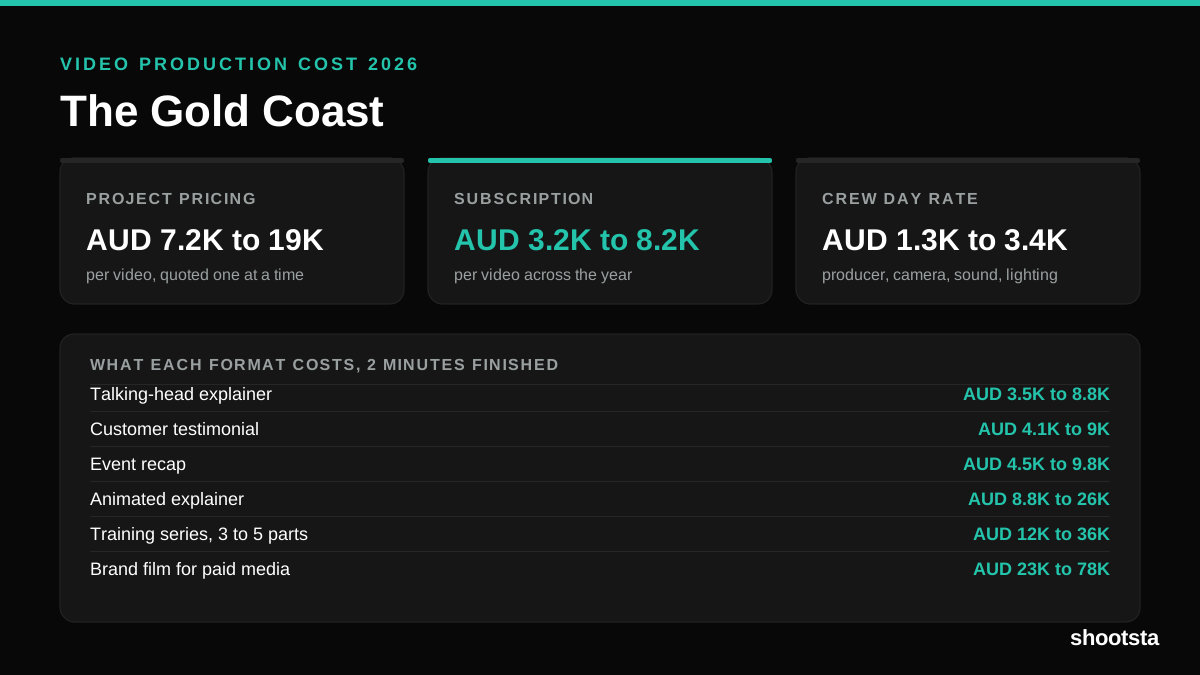
Video Production Cost on the Gold Coast 2026
Video production in the Gold Coast costs AUD 3,200 to AUD 8,200 per finished video on a subscription model, and AUD 7,200 to AUD 18,500 for one-off project work. Here is what you are paying for, and how the three pricing models compare.
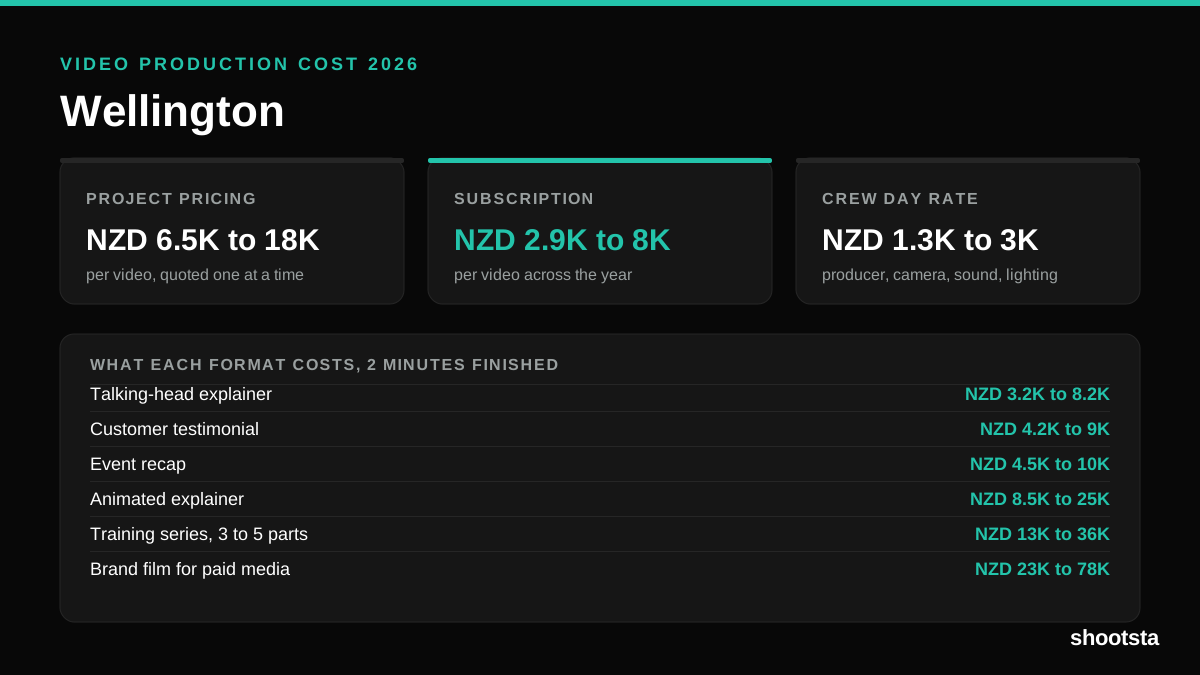
Video Production Cost in Wellington (2026)
Video production in Wellington costs NZD 2,900 to NZD 8,000 per finished video on a subscription model, and NZD 6,500 to NZD 18,000 for one-off project work. Here is what you are paying for, and how the three pricing models compare.
Video Production Cost in Berlin (2026)
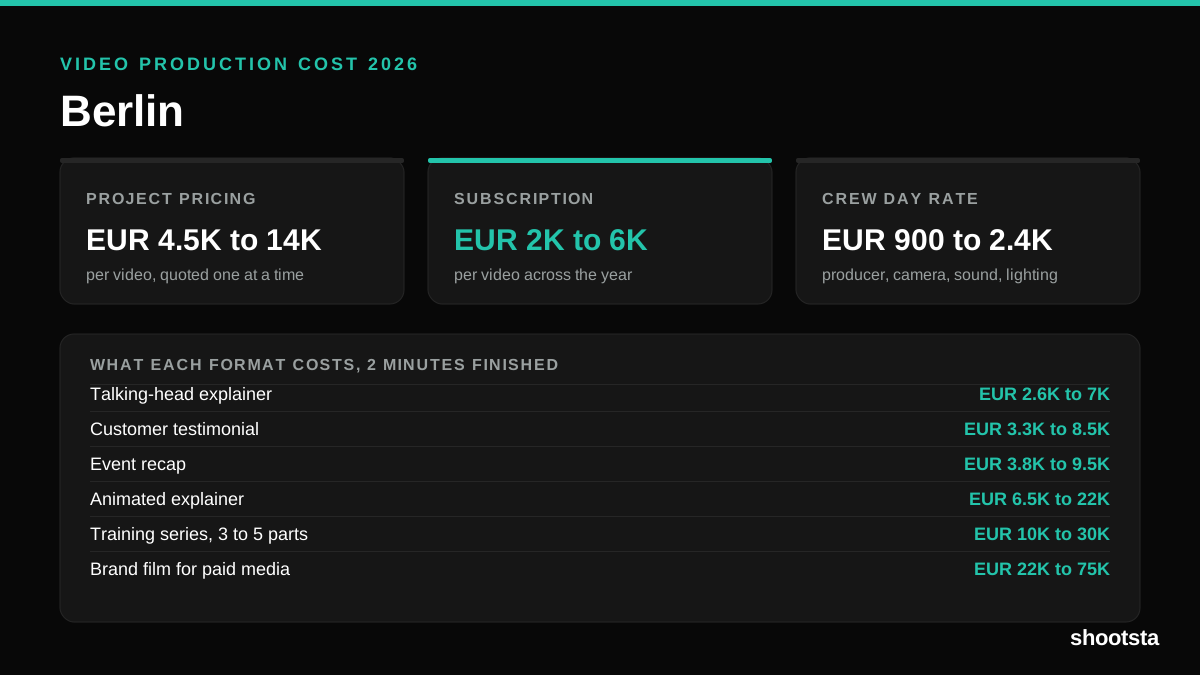
Video production in Berlin costs EUR 2,000 to EUR 6,000 per finished video on a subscription model, and EUR 4,500 to EUR 13,500 for one-off project work. Here is what you are paying for, and how the three pricing models compare.