
shootsta.
Video Performance Benchmarking Across Industries
By Mark Ashworth · Published July 5, 2025 · Updated October 2026
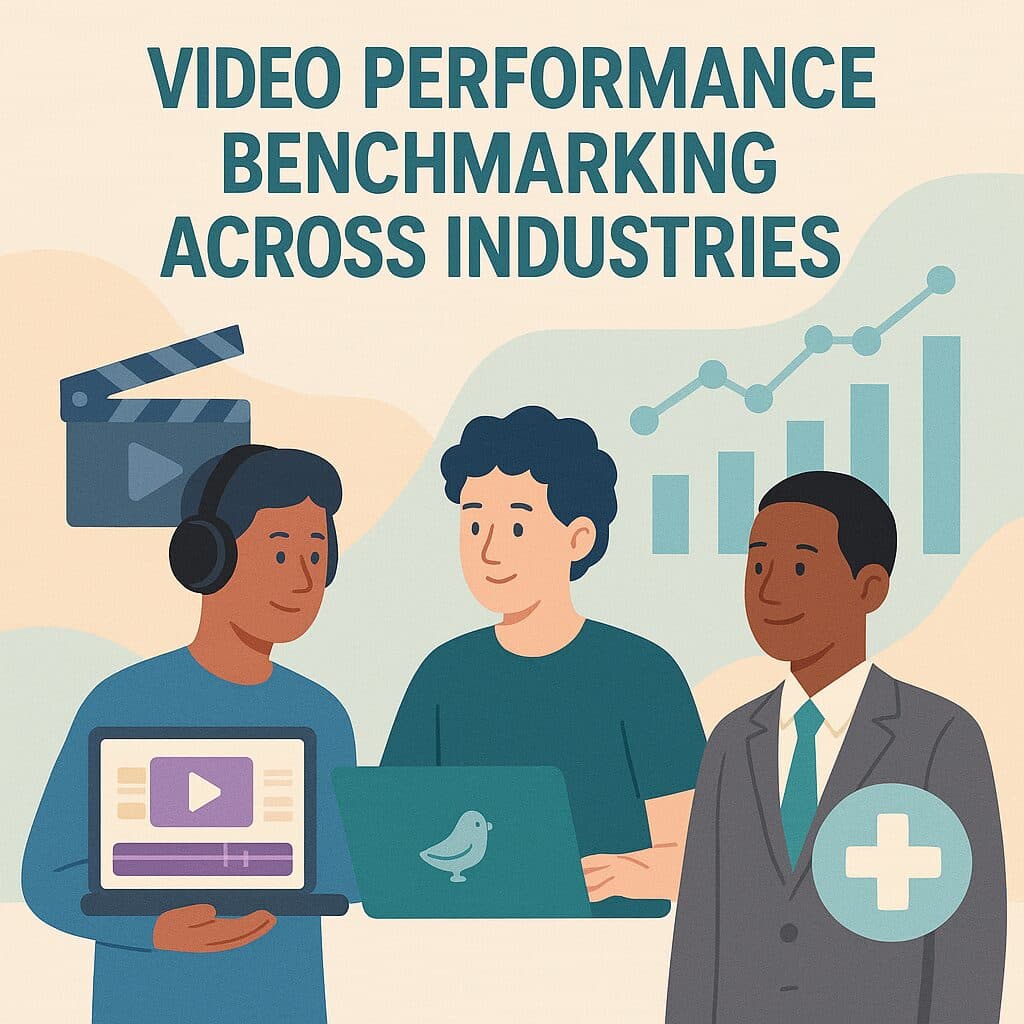
Video performance benchmarking across industries: what view rates, engagement and ROI look like in B2B tech, healthcare, financial services, retail and manufacturing, and how to set your own baseline.
A completion rate that looks strong in one industry can be weak in another. When you track video benchmarks by sector, you can set fairer targets and defend your budget.
Start by reviewing how your team measures video today. Agree with leadership on what success looks like, then build a plan that fits your own goals.
Benchmarking Reality Check
Generic metrics with no industry context make it hard to tell a good result from a bad one. A sector benchmark shows you where a campaign falls short.
Video Performance Benchmarking Basics
Video benchmarking means comparing your metrics with industry standards, competitor results and your own past data. It shows you the gaps and helps you set goals you can reach. Good benchmarking also looks at the softer factors behind the numbers.
Video metrics differ a lot by industry. A B2B tech audience watches differently from a retail shopper, so each sector needs its own benchmarks before the results mean anything.
Key Metrics for Video Performance Analysis
A useful set of video benchmarks covers engagement, completion, click-through, conversion and cost. Once you know which of these matter most in your industry, you can stop tracking the rest so closely.
Essential Video Performance Metrics
- Engagement Metrics: View duration, completion rates, interaction levels, and audience retention patterns
- Reach Indicators: Impression volumes, unique viewer counts, and demographic penetration rates
- Conversion Performance: Click-through rates, lead generation, sales attribution, and cost per acquisition
- Quality Measures: Brand recall, message understanding, and audience sentiment
- Efficiency Ratios: Cost per view, return on ad spend, and lifetime value attribution
- Platform-Specific KPIs: Algorithm performance, organic reach, and platform engagement
Industry-Specific Performance Variations
Each industry has its own video patterns, shaped by its audience, buying cycle and competition. That is why a sector benchmark beats a global average.
Tech companies often get high engagement on educational videos, but completion drops when the topic gets complex. Retail brands see strong conversions, though they compete hard for every second of attention.
B2B Technology Sector Video Benchmarks
B2B tech companies deal with long sales cycles, technical subjects and buying groups with mixed roles. All of that shapes their metrics, and educational content tends to beat promotional messaging here.
In tech, thought leadership, product demos and case studies usually post the strongest numbers. Generic promo videos tend to lag behind what the same format achieves in other industries.
Technology Industry Performance Standards
B2B tech videos tend to show moderate engagement but produce high-quality leads when they tackle a specific business problem. Completion rates move with video length and with how technical the topic is.
Technology Sector Benchmarks
- Average View Duration: Viewers stay longer on simpler topics pitched at their seniority
- Completion Rates: Educational videos finish far more often than promotional ones
- Click-Through Rates: Targeted B2B campaigns with a clear offer earn the strongest clicks
- Lead Generation: Measure how many viewers become qualified leads as well as how many watch
- Cost Efficiency: Compare cost per qualified lead from video with other channels
- Engagement Quality: Comments are more thoughtful and shares travel further in professional networks
Content Type Performance Variations
Video types perform differently in tech. Product demos and educational pieces beat generic brand messaging, while executive interviews and thought leadership build authority over the long term.
Webinar recordings and technical tutorials get replayed often. That makes them useful for lead nurturing and customer education across a long B2B sales cycle.
Healthcare and Medical Industry Benchmarks
Healthcare organizations face strict rules and cautious audiences, which changes how their video metrics compare with other sectors. Educational content about health outcomes and patient stories tends to perform best.
Patients take longer to decide and need more trust before they act. As a result, medical videos show fewer instant conversions but stronger patient acquisition over time.
Healthcare Video Performance Standards
In healthcare, trust and educational value count for more than entertainment. Completion rates rise when a video addresses a specific health concern or gives practical advice.
Healthcare Industry Benchmarks
- Trust Indicators: Watch for viewers who go on to research the provider after an educational video
- Completion Rates: Patient education usually finishes well ahead of promotional healthcare videos
- Engagement Depth: View times run longer, but people share less because health is a private topic
- Conversion Timelines: Expect weeks or months between a first view and an appointment booking
- Content Preferences: Viewers trust patient stories more than brand messaging
- Compliance Requirements: Regulated content tends to reach fewer people but converts better
Patient Education vs. Promotional Content Performance
Patient education videos beat promotional content on engagement, on completion and on patient growth over time. Educational content builds trust and shows expertise, while promotional videos are often met with doubt.
Healthcare organizations with strong results tend to put most of their video effort into education and patient value, with direct promotion as the smaller share.
Financial Services Video Analytics Benchmarks
Financial services firms work under heavy regulation with cautious audiences, and they have to earn trust before people engage. Their video benchmarks reflect long decision cycles and content shaped by compliance review.
In finance, educational videos about planning, investment and compliance post strong numbers. Promotional content meets more doubt and earns less engagement.
Financial Industry Performance Metrics
Financial services benchmarks show how much educational content and thought leadership matter for building trust. Results also differ a lot between consumer and business audiences.
Financial Services Benchmarks
- Educational Content: Planning and investment explainers hold viewers to the end more often than promotional pieces
- Trust Building: It can take months between a first video view and a service inquiry
- Demographic Variations: Older audiences tend to watch financial education through to the end
- Compliance Impact: Regulated content often reaches fewer people but produces better-qualified leads
- Authority Building: Executive thought leadership videos are a reliable source of qualified leads
- Consumer vs. B2B: Business audiences engage more with technical financial content than consumers do
Regulatory Compliance Impact on Performance
Regulation limits what financial firms can claim and adds disclaimers that affect how long people watch. Compliant content often starts with lower numbers but converts better.
The financial firms that do best with video focus on education and useful advice while staying strictly compliant. That builds lasting trust.
Retail and E-commerce Video Performance Standards
Retail and e-commerce brands see some of the fastest video results, because products are visual and buying decisions happen quickly. Product demo videos beat other content types in this sector.
E-commerce video tends to convert well and return strong ROI. Competition for attention is fierce, though, so you need to keep testing and refreshing your approach.
E-commerce Video Benchmarks
Retail benchmarks focus on instant conversion and visual engagement. Product videos, customer stories and lifestyle content all perform much better than generic brand messaging.
Retail Industry Performance Standards
- Product Videos: Shoppers who watch a product demo are more likely to buy
- Conversion Rates: Track direct purchases from each video, since retail can attribute sales closely
- Engagement Speed: Buying decisions often happen within the same viewing session
- Customer Reviews: Shoppers tend to trust a video review more than a written one
- Mobile Performance: Most retail video is watched on a phone
- Social Commerce: Shoppable video lets viewers buy without leaving the feed, which lifts conversion
Product vs. Lifestyle Content Performance
Product demo videos drive more sales on the spot, while lifestyle content builds brand loyalty over time. The strongest retail video plans use both.
A common split in e-commerce puts the larger share of the video budget into product-focused content and the rest into brand and lifestyle messaging.
Manufacturing and Industrial Sector Benchmarks
Manufacturing firms sell complex products to technical buyers over long sales cycles. In that setting, educational and demo content beats promotional messaging by a wide margin.
Industrial viewers watch for longer and want more detail than consumer audiences do. Technical accuracy and visible expertise drive the results.
Manufacturing Industry Video Metrics
Manufacturing benchmarks reward educational value and technical demos. B2B buyers in this sector want detailed videos that show your team can solve their problem.
Manufacturing Sector Benchmarks
- Technical Content: Equipment demos and technical explainers hold viewers well when they stay specific
- Sales Cycle Impact: A video can influence a deal for many months before the purchase order arrives
- Decision Maker Focus: Engagement rises when a video tackles a specific operational problem
- Trade Show Integration: Video that supports an in-person event tends to bring in better leads
- Safety Training: Regulatory and safety videos are often mandatory, so completion runs high
- Case Study Performance: Customer success stories are among the strongest lead generators
Technical vs. Promotional Content Effectiveness
In manufacturing video marketing, technical education beats promotional messaging. The firms that do best show how they solve problems and spend less airtime on the product itself.
Manufacturing firms with strong results make most of their output educational and keep promotion small. That mix matches what their audience wants.
Cross-Industry Benchmark Comparison
When you compare benchmarks across industries, you see big differences in how audiences behave and what they want to watch. Those patterns help you set realistic goals for your own video plan.
Cross-industry trends also point to ideas you can borrow from other sectors, while your own sector sets the expectations you report against.
Performance Metric Variations by Industry
Audience type, buying cycle and competition all push the key metrics in different directions from one industry to the next. That is why you need industry-specific benchmarks to get a useful read.
Cross-Industry Performance Comparison
- Highest Engagement: Healthcare education, retail product demos and financial planning explainers
- Fastest Conversions: E-commerce and retail purchases, followed by technology free trials
- Longest Sales Cycles: Manufacturing B2B and financial services, where a deal can take a year or more
- Best Completion Rates: Patient education, technical training and product demos
- Most Cost-Efficient: E-commerce, where a sale can be traced straight back to the video that drove it
- Highest ROI Potential: Retail commerce and technology software, where video sits close to the purchase
Industry-Specific Optimization Strategies
Each industry needs its own optimization approach, built on how its audiences behave. A generic playbook misses the sector factors that move the numbers.
To improve, you need the industry benchmarks and a clear view of what makes your own company different.
Frequently Asked Questions
How do video performance benchmarks vary between B2B and B2C industries?
B2B audiences usually watch for longer and finish more educational content, and the path from video to deal is slow. B2C audiences decide faster, convert more on the spot and respond more to visual appeal and entertainment.
As a result, B2B benchmarks focus on lead quality, while B2C benchmarks track transaction volume.
What are the most important metrics to benchmark for video performance analysis?
Start with completion rate, engagement duration, click-through rate, conversion rate and cost per acquisition. Your industry decides which of these matters most. Healthcare teams watch trust signals, e-commerce teams watch conversions, and B2B tech teams care more about lead quality than lead volume.
How often should companies update their video performance benchmarks?
Fast-moving industries like tech and retail should update quarterly. More stable sectors like healthcare and manufacturing can update every six months. A major platform algorithm change or a new regulation may call for a review straight away.
What external factors most significantly impact video performance benchmarks across industries?
Platform algorithm changes have the biggest effect, followed by economic conditions, new regulations, competition and the seasons. Shifts in mobile viewing, privacy law and the platforms your audience uses also move benchmarks across industries.
How can small businesses effectively benchmark video performance without extensive data resources?
A small business can set a baseline from industry reports, the benchmarks platforms publish, competitor analysis tools and free analytics. Pick the few metrics tied to your goals instead of trying to track everything. It also helps to swap data with peers in your industry.
Strategic Value of Industry Video Benchmarking
When you benchmark video with care, your decisions rest on data, your goals become realistic and your budget goes where it works.
Proven Benchmarking Benefits
- Better Campaigns: You can see which videos fall short of your sector and fix them first
- Smarter Budgets: Spend moves toward the formats that beat the benchmark
- Goal Achievement: Targets set against your industry are ones the team can reach
- Market Insight: You get a clearer picture of where you stand against competitors
- Stakeholder Buy-in: ROI reports carry more weight when they compare you with your sector
- Planning Accuracy: Forecasts for new video projects start from real reference points
Good benchmarking also helps when you negotiate with vendors and set team performance goals.
ROI and Business Impact Through Benchmarking
Benchmarking pays off through better content choices and better use of your budget. Within a year, you should see campaigns improve and spend move to stronger formats.
The impact reaches past the campaign metrics. Planning gets easier, stakeholders trust your numbers more and you learn more about what competitors are doing.
Quantifiable Benchmarking Results
- Campaign results you can compare against your industry, quarter by quarter
- Lower costs as budget and targeting follow the benchmark data
- More accurate predictions of how a new video will perform
- A sharper view of your market position and the gaps you could fill
- More confidence from stakeholders because your reports rest on data
How to Set Up Video Benchmarking
Good video benchmarking needs a clear system for collecting data, analyzing it and putting what you learn into the next round of videos.
Begin with a review of your current numbers and some research into your industry. Then build a framework that fits your business goals.
Data Collection and Analysis Systems
Your data collection should capture the right metrics and let you compare them with industry standards and competitors over time.
Look at the hard numbers and at the softer factors, such as message and timing, that shape them in your industry.
Connecting Benchmarks to Strategy
Make sure what you learn from benchmarks feeds into content planning, budget decisions and goal setting, and that it stays tied to your wider business goals.
Link your benchmarking data to your planning cycles and performance reviews. That keeps the team improving each quarter.
Video Performance Benchmarking Assessment
Use this checklist to see how well your team handles benchmarking and applies what it learns.
Benchmarking Readiness Assessment
Rate each item below on a 1-5 scale, then add up your score.
Data Collection and Analysis
- Full performance metric tracking across all video content and platforms
- Industry-specific benchmark research and competitor intelligence
- Analysis tools and skills for meaningful comparison and trend spotting
- Systems connecting video metrics with broader business performance
Strategic Application
- Benchmark-informed goal setting and target development
- Budget strategies based on industry standards and optimization chances
- Content strategy using benchmark insights and competitive analysis
- Stakeholder reporting that shows ROI through industry comparisons
Continuous Improvement
- Regular benchmark updates and performance reviews
- Testing and refining strategy based on benchmark analysis
- Cross-industry learning and best practice sharing
- Performance forecasting tied to benchmarking insights
Assessment Results:
- 45-60 points: Excellent benchmarking base with advanced optimization skills
- 30-44 points: Good capabilities needing targeted upgrades in strategy
- 20-29 points: Moderate readiness needing planned development before full rollout
- Below 20 points: Basic data collection and analysis work needed first
Next Steps for Benchmarking Success
Start by reviewing your current video metrics and researching the benchmarks for your industry. That gives you a baseline and shows where the biggest gains are.
Then build a repeatable process that ties the analysis to what you make next.
Strategic Implementation Plan
- Performance Audit: Full review of current video metrics and patterns
- Industry Research: Detailed look at sector-specific benchmarks and competitor standards
- Gap Analysis: Spot performance gaps and optimization chances through benchmark comparison
- Strategy Development: Build content strategy and resource plans using benchmark data
- Tracking Systems: Set up tools and processes for ongoing performance tracking
- Optimization Framework: Create a clear approach to improving performance over time
- Reporting Integration: Build stakeholder reports that show value through benchmark analysis
Improve Your Video Performance with Strategic Benchmarking
Benchmarks tell you which videos to make more of. Shootsta helps you make them, with a first cut in about 48 hours.
Complete Benchmarking Solutions:
- Production planned around the formats that perform best in your sector
- A platform where every brief, version and approval sits in one place
- Account managers who help you turn benchmark insights into a production plan
- Enough output to test formats against industry standards instead of guessing
- Predictable costs that make the return on each video easier to show
Get Better Results: Shootsta extends your in-house team with editing, animation and creative support, so you can act on what the benchmarks show and get more from your video marketing.
If you want to improve your video performance through benchmarking, Contact us today to see how our platform and team can help across every part of your video plan.
Keep reading
Take this article with you
Read the latest at shootsta.com/blog/video-performance-benchmarking-industries
You might also like

How to Plan Video Team Capacity Around Leave
Your only editor just booked two weeks off, and you already know which projects will slip. Chad Lakin explains how to plan video team capacity so the work keeps moving when someone is away.

Corporate Video Editing Standards: Full Guide
A two-page editing standard does more for consistency than a forty-page brand book. Here is what it should cover, who owns each part, and how to enforce it with an in-house editor or an outside partner.
Quality Control in Outsourced Video Editing
When editing leaves the building, quality has to be checked by a system rather than by whoever happens to look. Here is the system: acceptance criteria, two QA gates, counted revision rounds and a quarterly audit.
Video Production Cost on the Gold Coast 2026
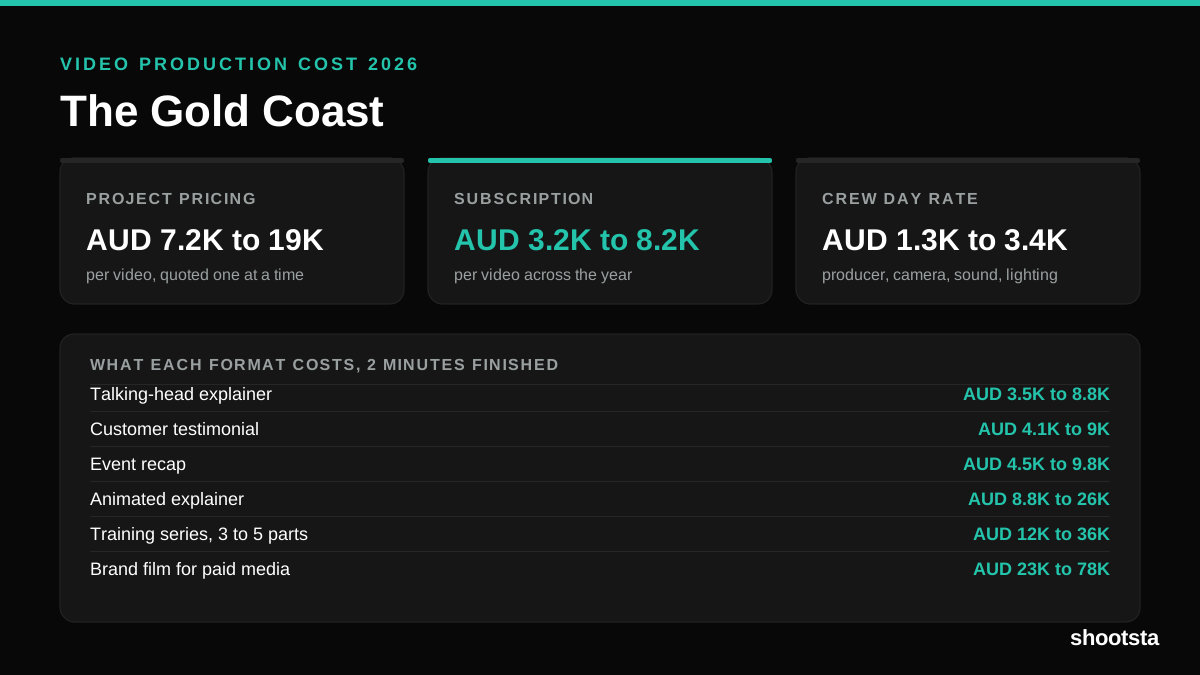
Video production in the Gold Coast costs AUD 3,200 to AUD 8,200 per finished video on a subscription model, and AUD 7,200 to AUD 18,500 for one-off project work. Here is what you are paying for, and how the three pricing models compare.
Video Production Cost in Wellington (2026)
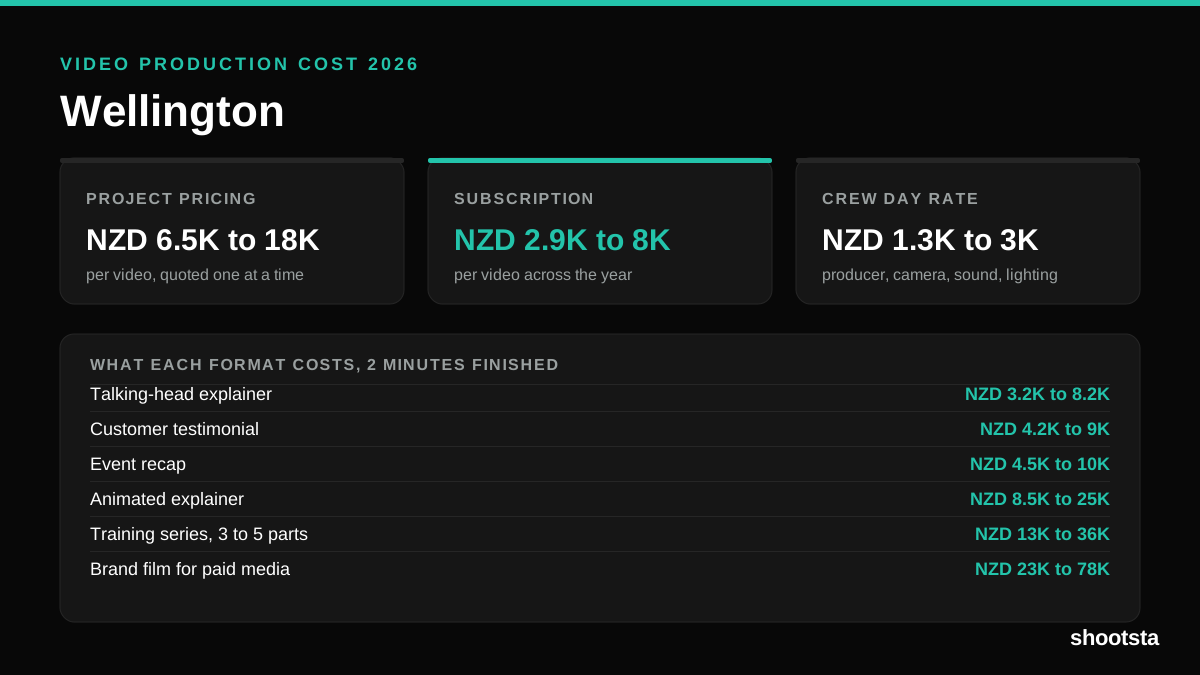
Video production in Wellington costs NZD 2,900 to NZD 8,000 per finished video on a subscription model, and NZD 6,500 to NZD 18,000 for one-off project work. Here is what you are paying for, and how the three pricing models compare.
Video Production Cost in Berlin (2026)
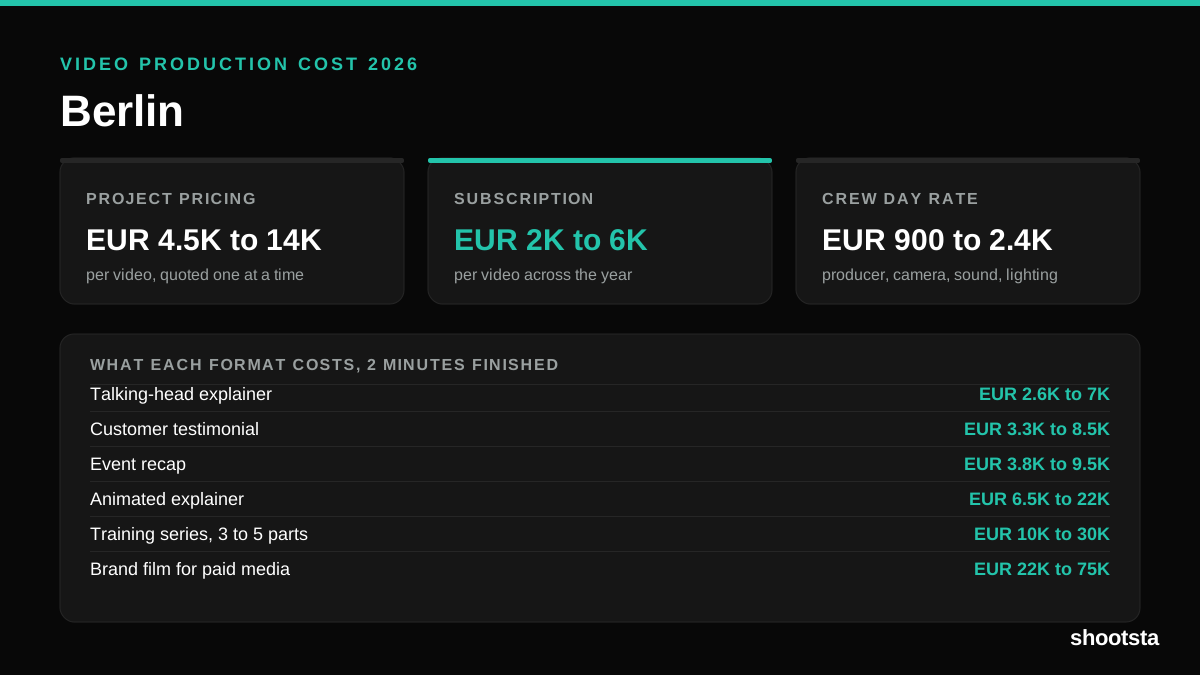
Video production in Berlin costs EUR 2,000 to EUR 6,000 per finished video on a subscription model, and EUR 4,500 to EUR 13,500 for one-off project work. Here is what you are paying for, and how the three pricing models compare.