
shootsta.
Video Production ROI Calculator and Framework
By Mark Ashworth · Published June 28, 2025 · Updated October 2026
Measuring video production ROI shows whether video is a cost line or something that brings in revenue. You do it by tracking how video spend connects to business results such as leads, closed sales and customer lifetime value.
When you can measure video ROI, you can defend the budget at review time. You can also shape your content plan around what the data says works, rather than around guesses.
Understanding Video Production ROI Fundamentals
Video production ROI counts direct revenue and the indirect value video creates. That indirect value includes brand awareness, customer engagement and time saved across the business.
A sound measurement plan uses hard numbers, such as conversion rates and tracked revenue. It also records softer effects like brand perception and market position, which pay off over a longer period.
Core ROI Calculation Framework
Video production ROI uses the same math as any return on investment. You compare what video earned against what it cost to make and distribute. Then you adjust for attribution and pick a measurement window that suits your sales cycle.
The basic formula divides net profit from video by total video costs, then multiplies the result by 100 to give a percentage. Deeper analysis adds multi-touch attribution and lifetime value tracking.
Essential ROI Components
- Direct Revenue: Sales, leads, and conversions directly attributed to video content touchpoints
- Cost Savings: Reduced customer support, training efficiency, and operational improvements
- Brand Value: Awareness increases, perception improvements, and market positioning gains
- Customer Lifetime Value: Long-term revenue from customers acquired through video marketing
- Production Costs: All expenses including strategy, creation, distribution, and optimization
- Opportunity Costs: Resources allocated to video versus alternative marketing investments
Attribution Models and Measurement Complexity
Accurate ROI measurement depends on the attribution model you choose. A buyer usually meets several touchpoints before converting, and the model decides how much credit video gets for the result.
Simple last-click models give all the credit to the final touch. Multi-touch models spread it across every step before purchase and weight each touchpoint by how the buyer engaged with it during the sales cycle.
Video Marketing ROI Benchmarks and Industry Standards
Benchmarks give you context when you judge results. Use them to set fair expectations for your industry, your company size and the type of video you make.
The most useful benchmark is usually your own history. Compare each new video against past ones and against other channels you fund, and the gaps will show you where to improve.
Industry Performance Benchmarks
Published ROI figures for video vary widely, and many come from vendors with something to sell. Treat any single number with care. Your return depends on what the video is for, how well it is distributed and how carefully you count costs.
Results also differ by industry and purpose. A B2B explainer that shortens a sales cycle earns its return in a different way from a training video that cuts classroom time. Set a benchmark for each use rather than one figure for the whole program.
Video ROI Benchmark Data
- B2B Video Marketing: Judge it over a window that matches your sales cycle, and track the pipeline that video touched
- E-commerce Product Videos: Compare conversion rates on product pages with and without video
- Training and Education: Count the training hours saved and any change in knowledge retention
- Customer Support: Track the drop in support tickets for the topics your videos cover
- Brand Awareness Campaigns: Run brand lift and recall studies before and after the campaign
- Sales Enablement: Watch deal cycle length and close rates on deals where reps used video
Performance Factors Affecting Video ROI
Video ROI depends on the quality of the content, how well you target the audience, where you distribute it and how carefully you measure. Your industry plays a part too.
Once you know what drives ROI, you can decide where to spend. That might mean more on production quality, a sharper content plan or a bigger distribution budget.
Video ROI Metrics: A Full Measurement Framework
Video ROI metrics fall into four groups: engagement, conversion, brand impact and business outcomes. Read together, they show whether your video marketing is working and paying back.
A good framework mixes leading indicators, which hint at future results, with lagging indicators, which record what happened. You need both to make day-to-day fixes and longer-term plans.
Engagement and Performance Metrics
Engagement metrics measure how your audience interacts with a video. Completion rates, replays and shares show whether it holds attention. They are also an early sign of whether it will convert.
Track the numbers and the comments people leave. Look for patterns that line up with business outcomes, and let those patterns guide changes to your content plan.
Critical Video Performance Metrics
- View Completion Rate: The share of viewers who watch to the end, which shows how relevant the video is
- Engagement Rate: Likes, comments and shares per view
- Click-Through Rate: The share of viewers who act on the call to action in the video
- Watch Time: Total minutes viewed, which shows how much interest the video holds
- Replay Rate: How often people watch again, which often means the video works as a reference
- Social Amplification: Shares and organic spread that extend your reach
Conversion and Revenue Metrics
Conversion metrics tie video to business results. Leads, attributed sales and new customers give you concrete ROI figures to defend the budget.
Revenue tracking needs attribution that accounts for buyers who touch many channels. Done well, it shows how video adds to sales and to customer lifetime value.
ROI Calculation Methods and Best Practices
A reliable ROI calculation rests on good data collection, accurate cost tracking and sound attribution. With those in place, your numbers can support real investment decisions.
Measure the same way every time and pick attribution windows that suit your sales cycle. Count every cost as well, including the hidden ones and the work your team set aside to make the video.
Full Cost Tracking
Accurate ROI needs complete cost accounting. Include direct production costs, overhead, distribution and the opportunity cost of moving resources away from other marketing.
Capture every video-related expense. That covers strategy, production, talent fees, distribution, software and the hours your staff spend on video work.
Complete Cost Framework
- Strategy and Planning: Research, concept development, and strategic planning activities
- Content Production: Filming, talent, equipment, locations, and production management
- Post-Production: Editing, motion graphics, sound design, and quality assurance
- Distribution Costs: Platform fees, paid promotion, and advertising spending
- Technology Platforms: Software licenses, hosting, and analytics tool subscriptions
- Personnel Time: Internal team allocation and opportunity costs
Revenue Attribution and Measurement
Revenue attribution links video touchpoints to conversions across journeys that span many channels. Aim to avoid two errors: counting the same sale twice and missing sales that video influenced.
A good attribution setup is precise enough to trust and simple enough to run each month. It should help you improve your videos and show how video drives revenue.
Building Your Video ROI Measurement System
A working ROI measurement system joins your tools together, tracks results the same way each time and reports on a regular schedule. That keeps video performance in front of the people who fund it.
Start with the measures that match your business goals. Check that the data is accurate and that it helps with both quick fixes and longer-term planning.
Technology and Analytics Setup
ROI measurement depends on analytics platforms that talk to each other. Marketing automation, CRM integration and attribution modeling connect video data with business outcomes.
When you pick platforms, check how well they integrate, how deep their attribution goes and what reports they produce. They should also keep data accurate as your video program grows.
Essential Measurement Technologies
- Video Analytics: Platform-native and third-party tools tracking engagement and viewing behavior
- Marketing Automation: Lead tracking and nurture attribution connecting video with conversions
- CRM Integration: Sales attribution and revenue tracking for video-influenced deals
- Web Analytics: Traffic attribution, conversion tracking, and behavior analysis
- Attribution Platforms: Multi-touch analysis and customer journey mapping
- Business Intelligence: Full reporting and ROI dashboard visualization
Reporting and Optimization Frameworks
Regular reporting keeps stakeholders informed and lets you base decisions on data, so your video marketing results improve over time.
Each report should pair the data with clear actions. Tailor the view to the reader: executives want summary metrics, while the people making videos need detailed breakdowns.
Interactive Video Production ROI Calculator
Use this calculator to estimate your video production ROI from your own investment and performance figures.
What is a good ROI for video production?
There is no single good figure for video production ROI, because it depends on what the video is for and how you count costs. A positive return that beats your other channels is a sensible first test. Published benchmarks vary widely, so your own past results are the most reliable comparison.
Set your expectations around the measurement window, because many campaigns take months to show their full effect. If you track indirect benefits as well as direct revenue, you will often find the return is higher than your first estimate.
How long does it take to see ROI from video production?
Timeframes vary by content type and business goals. Some videos generate returns right away while others build value over longer periods.
Product demo videos can show results within days when you track conversions directly. Brand awareness campaigns usually take months to show a measurable change. B2B video marketing often takes longer again, because the return arrives when deals close at the end of a long sales cycle.
Evergreen educational content keeps paying back for years. Its total ROI climbs as it keeps drawing views with no extra production cost.
What costs should be included in video production ROI calculations?
Include every video-related cost: planning time, production, post-production editing, distribution and ad spend, platform fees and internal staff time. If you track only direct production costs, you will understate the total investment and overstate the return.
Hidden costs include the opportunity cost of putting resources into video instead of other marketing, ongoing optimization time and analytics subscriptions. Counting all of them gives you ROI numbers that hold up in a budget meeting.
How do you measure video ROI for brand awareness campaigns?
Brand awareness video ROI needs indirect measurement. Use brand lift studies, assisted conversion tracking, and awareness metrics like reach, recall, and perception shifts.
Methods include survey-based brand lift analysis, social listening for brand mention increases, and multi-touch attribution showing video's effect on later conversions. Compare brand metrics before and after campaigns. Track longer-term sales patterns in exposed audiences versus control groups.
Brand measurement is less direct than conversion tracking. Over a longer period, though, careful brand measurement can show value that direct response figures miss.
What tools are best for tracking video production ROI?
You need integrated platforms: video analytics tools, marketing automation systems, CRM with attribution features, and business intelligence dashboards that pull data from across touchpoints.
Key tools include YouTube Analytics and Vimeo for platform data, Google Analytics for website behavior, HubSpot or Marketo for marketing attribution, Salesforce for revenue tracking, and Tableau or Looker for ROI dashboards.
How well the tools connect matters more than the features of any one of them. You need data that flows from the first video view through to the closed deal before you can calculate ROI accurately.
Strategic ROI Optimization Framework
Improving ROI is ongoing work. Review performance on a regular cycle, refine the plan based on what you find and make smaller adjustments in between.
Video Production ROI Benefits
- Investment Justification: Clear ROI figures make budget approval easier to win
- Strategic Optimization: Performance data shows you where to move spend
- Stakeholder Confidence: Open reporting builds support from executives
- Performance Improvement: Regular analysis shows which changes lift results
- Budget Efficiency: Full tracking exposes costs you can cut
- Competitive Advantage: Better measurement lets you put money behind the formats that work
Next Steps for Video ROI Excellence
Start by recording a baseline for your current performance. Then build the analytics setup you need to track ROI and improve on it.
Focus on linking video performance to business outcomes in one connected system. That gives you a clear view of ROI for weekly decisions and for annual planning.
ROI Implementation Plan
- Measurement Framework: Set up tracking aligned with business goals
- Analytics Implementation: Deploy platforms connecting video performance with revenue
- Baseline Assessment: Document current performance as a foundation for measuring improvement
- Cost Tracking: Implement full accounting of all video-related spending
- Attribution Modeling: Deploy analysis connecting video with conversion outcomes
- Reporting Systems: Create dashboards giving stakeholders clear ROI visibility
- Optimization Process: Set up regular review and refinement to improve returns over time
Maximize Video Production Returns
Shootsta helps you get a better return on video by pairing efficient production with distribution planning and performance measurement. Per-video cost with Shootsta runs 50-60% below agency rates, and a lower cost per video raises the return on every one you publish.
Complete ROI Optimization Solutions:
- Content planning tied to business goals and ROI targets you can measure
- Production at a lower cost per video, with the quality your brand needs
- Analytics that track the ROI metrics listed above
- Distribution planning so each video reaches the right audience
- Regular performance reviews that help you improve returns over time
Transform Your Video Investment: Measuring ROI in a structured way helps you get more from video marketing, from the first edit through to the final report. It also gives you proof of value when the budget is reviewed.
If you want to measure and improve your video production ROI, contact us today. We can show you how Shootsta helps teams get measurable results from their video budget.
Video Production ROI Calculator
Calculate your return on investment for video production campaigns
Your ROI is well above break-even. Compare it with your other channels.
Keep reading
Take this article with you
Read the latest at shootsta.com/blog/video-production-roi-calculator-framework
You might also like

How to Plan Video Team Capacity Around Leave
Your only editor just booked two weeks off, and you already know which projects will slip. Chad Lakin explains how to plan video team capacity so the work keeps moving when someone is away.

Corporate Video Editing Standards: Full Guide
A two-page editing standard does more for consistency than a forty-page brand book. Here is what it should cover, who owns each part, and how to enforce it with an in-house editor or an outside partner.
Quality Control in Outsourced Video Editing
When editing leaves the building, quality has to be checked by a system rather than by whoever happens to look. Here is the system: acceptance criteria, two QA gates, counted revision rounds and a quarterly audit.
Video Production Cost on the Gold Coast 2026
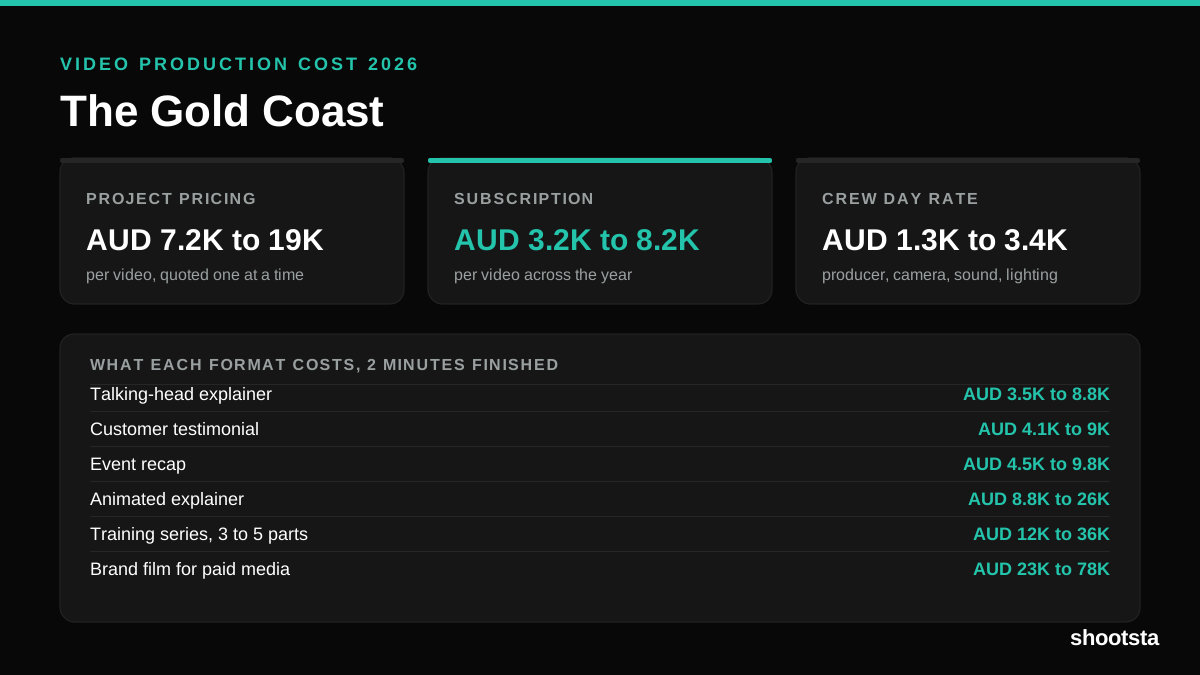
Video production in the Gold Coast costs AUD 3,200 to AUD 8,200 per finished video on a subscription model, and AUD 7,200 to AUD 18,500 for one-off project work. Here is what you are paying for, and how the three pricing models compare.
Video Production Cost in Wellington (2026)
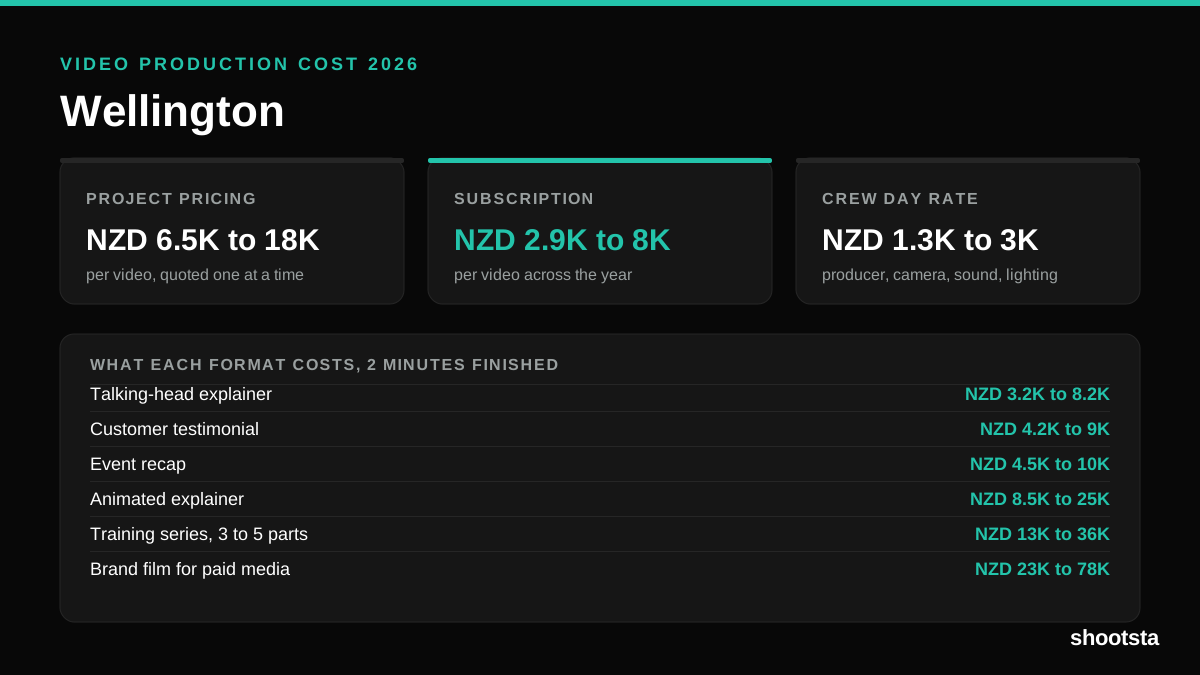
Video production in Wellington costs NZD 2,900 to NZD 8,000 per finished video on a subscription model, and NZD 6,500 to NZD 18,000 for one-off project work. Here is what you are paying for, and how the three pricing models compare.
Video Production Cost in Berlin (2026)
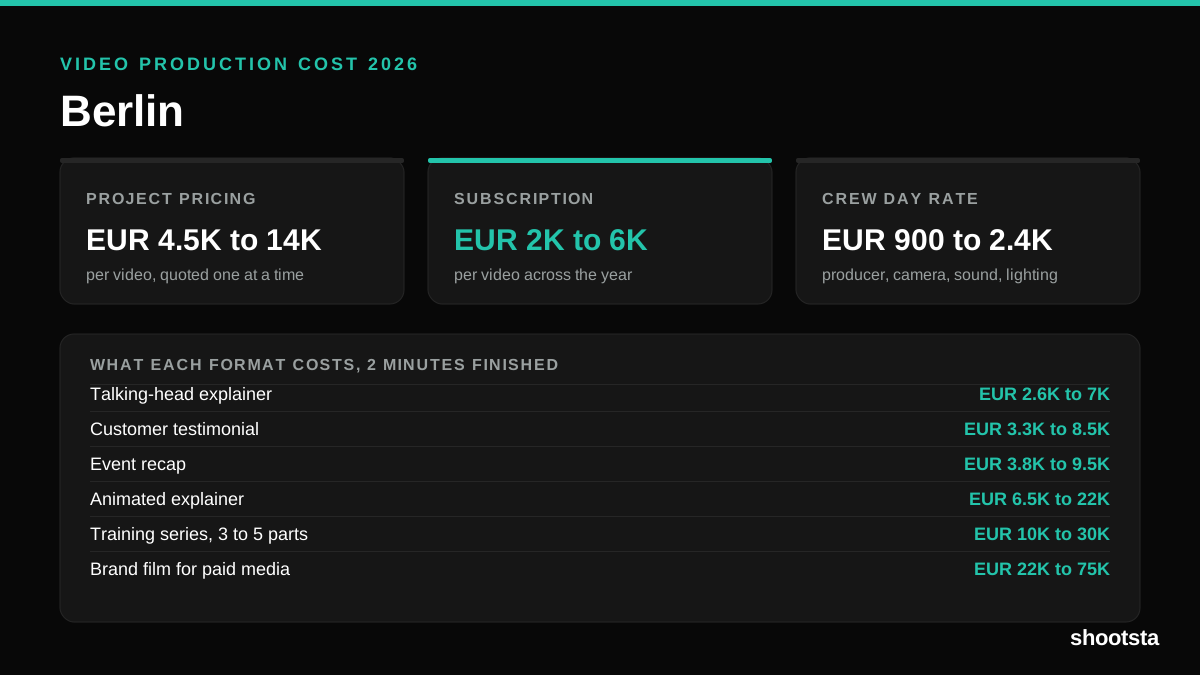
Video production in Berlin costs EUR 2,000 to EUR 6,000 per finished video on a subscription model, and EUR 4,500 to EUR 13,500 for one-off project work. Here is what you are paying for, and how the three pricing models compare.