
shootsta.
Maximize Your Video Marketing ROI with Clear Objectives
By Justin · Published May 8, 2025 · Updated September 2026

Why Do Businesses Waste Time Creating the Wrong Videos, and How Can Defining a Clear Objective Save Budget and Improve ROI?
Estimated reading time: 5 minutes
- 89% of businesses use video for marketing.
- 66% of marketers increased spending on video marketing without achieving intended results.
- Establishing clear objectives can enhance engagement and increase ROI.
- 96% of marketers agree video helps customers understand products better.
- Understanding the audience significantly boosts video effectiveness.
Table of Contents
- The Current State of Video Marketing
- Why Businesses Create the Wrong Videos
- How Clear Objectives Save Budget and Improve ROI
- Strategies for Setting Clear Video Marketing Objectives
- Conclusion
- FAQ
The Current State of Video Marketing
Video marketing is thriving, with statistics showcasing its undeniable effectiveness:
- A whopping 89% of businesses now use video as a marketing tool.
- 95% of video marketers regard it as a vital component of their overall strategy, highlighting its significance in driving engagement and conversions (source: Wyzowl).
- Digital video ad spending has skyrocketed, reaching over $191.3 billion in 2024 (source: Statista).
- Notably, 87% of video marketers have observed greater traffic to their websites when utilizing video content, while 82% have seen increased dwell time (source: Here Now Film).
- Additionally, 86% of marketers reported increased lead generation due to video, and 81% attributed direct sales growth to their video marketing efforts.
However, even with these promising stats, about 66% of marketers increased their spending on video marketing in 2022 (source: Here Now Film), suggesting a gap between intent and execution.
Why Businesses Create the Wrong Videos
Despite its high potential, numerous factors lead businesses to produce ineffective video content:
Lack of Direction and Expertise
A pivotal challenge is the lack of direction and expertise. Research reveals that 37% of marketers who don't utilize video cite not knowing where to start as a significant barrier (source: Wyzowl). Many companies fail to establish specific goals prior to production, resulting in content that lacks focus and does not effectively address marketing objectives.
Resource Constraints
Resource limitations further complicate the landscape. More than 25% of marketers who do not use video report a lack of time as the main reason, while 11% deem it too expensive (source: Wyzowl). In the absence of careful planning, businesses frequently squander resources on videos that are not aligned with their immediate objectives.
Unclear ROI Expectations
Finally, unclear expectations about ROI can hinder video marketing effectiveness. 16% of marketers remain unsure about the return on investment associated with video marketing, which leads to continued investment in ineffective tactics (source: Wyzowl). Without tangible metrics for success, businesses often find it challenging to assess video performance accurately.
How Clear Objectives Save Budget and Improve ROI
Defining clear objectives before diving into video production can transform mediocre content into powerful marketing tools. Here’s how:
Targeted Content Creation
When a business understands its objectives, videos can be tailored to specific goals such as brand awareness, lead generation, or customer education. Statistics show that 96% of marketers agree video has assisted customers in understanding a product or service better (source: Here Now Film). Tailored content drives more relevant engagement and higher conversion rates.
Efficient Resource Allocation
With defined objectives, businesses can determine the appropriate length, style, and production value of their videos. This clarity not only prevents overspending on unnecessary production elements but also allows teams to focus on what truly matters. Video production can be streamlined when resources are directed at what directly contributes to higher engagement and conversions.
Measurable Results
Establishing set objectives allows companies to create relevant KPIs and benchmarks beforehand. This enables them to gauge video marketing ROI effectively. By leveraging data-driven insights, businesses can refine their video strategies, ensuring continual improvement and better results over time.
Strategies for Setting Clear Video Marketing Objectives
To avoid falling into the trap of creating ineffective videos, businesses can adopt the following strategies when crafting video marketing objectives:
- Define Specific Goals: Clearly outline what each video needs to achieve—whether it's increasing website traffic, generating leads, or educating customers.
- Know Your Audience: Identifying your audience and what resonates with them is key. Tailoring videos to fit their preferences can significantly enhance engagement.
- Establish Success Metrics: Define how success will be measured before production starts. Setting clear metrics allows for accurate evaluation of performance after publishing.
- Align with Overall Marketing Strategy: Ensure that each video's objectives complement broader marketing and business goals. This alignment enhances the potential for effective and impactful content.
- Start Small and Scale: Begin with simple videos focusing on specific objectives, then expand based on what’s shown to work. This iterative approach minimizes risk while building momentum.
Conclusion
In an era where businesses are increasingly relying on video content, ensuring that each video serves a clear purpose is paramount. Companies that take the time to establish well-defined objectives are likely to see enhanced effectiveness, greater employee engagement, and improved ROI.
Shootsta adjusts to meet your video production needs, whether it’s creating scalable, high-quality content with Shootsta Pro, needing a high-impact video project completed through Shootsta Premier, or wanting personalisation and tailored videos via Shootsta Elevate.
By harnessing the power of video while ensuring it aligns with your marketing strategy, you're poised to not only save budget but also scale your efforts efficiently.
Looking to improve your video marketing? Explore Shootsta’s services, watch a related video to learn more, or book a call with our experts today!
FAQ
What are some common mistakes businesses make in video marketing?
Common mistakes include a lack of clear objectives, failure to understand the audience, and neglecting to measure ROI effectively.
How can businesses measure the success of their video marketing efforts?
Businesses can measure success through defined KPIs such as engagement rates, website traffic, lead generation, and conversion rates.
What types of videos should businesses focus on creating?
Businesses should create videos that align with their specific marketing goals, such as brand awareness, product education, or customer testimonials.
Keep reading
To put numbers against your own program, use the video ROI calculator. For the production side, see marketing video production.
Take this article with you
Read the latest at shootsta.com/blog/maximize-your-video-marketing-roi-with-clear-objectives
You might also like
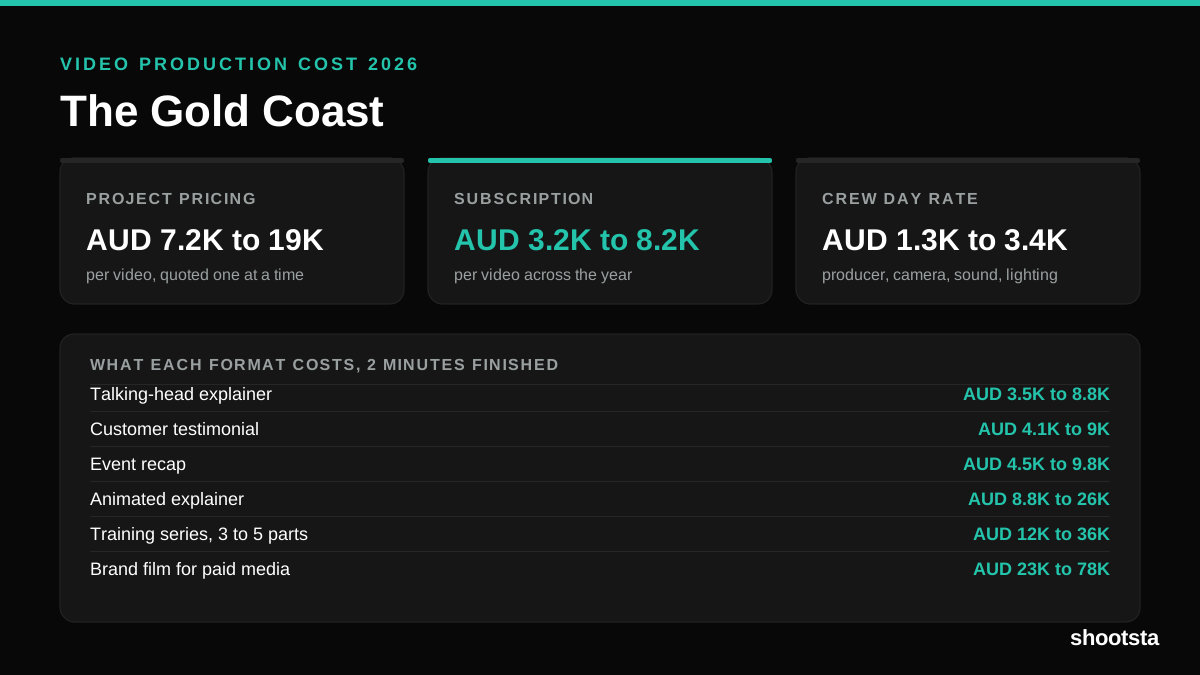
Video Production Cost on the Gold Coast 2026
Video production in the Gold Coast costs AUD 3,200 to AUD 8,200 per finished video on a subscription model, and AUD 7,200 to AUD 18,500 for one-off project work. Here is what you are paying for, and how the three pricing models compare.
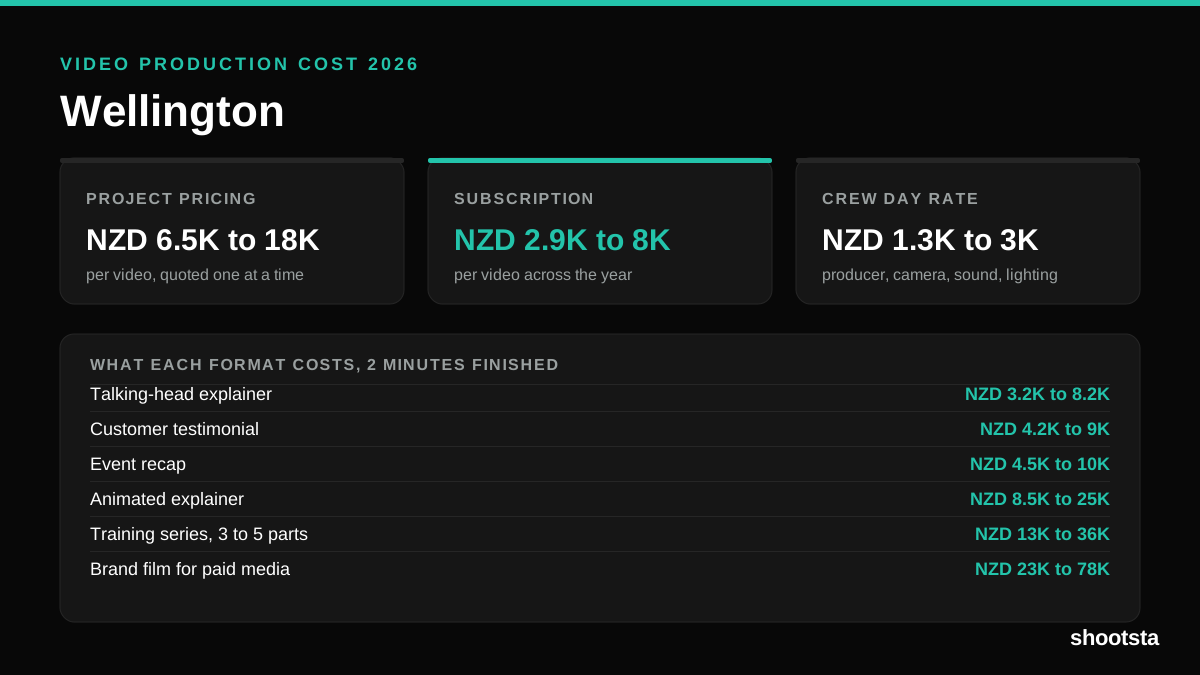
Video Production Cost in Wellington (2026)
Video production in Wellington costs NZD 2,900 to NZD 8,000 per finished video on a subscription model, and NZD 6,500 to NZD 18,000 for one-off project work. Here is what you are paying for, and how the three pricing models compare.
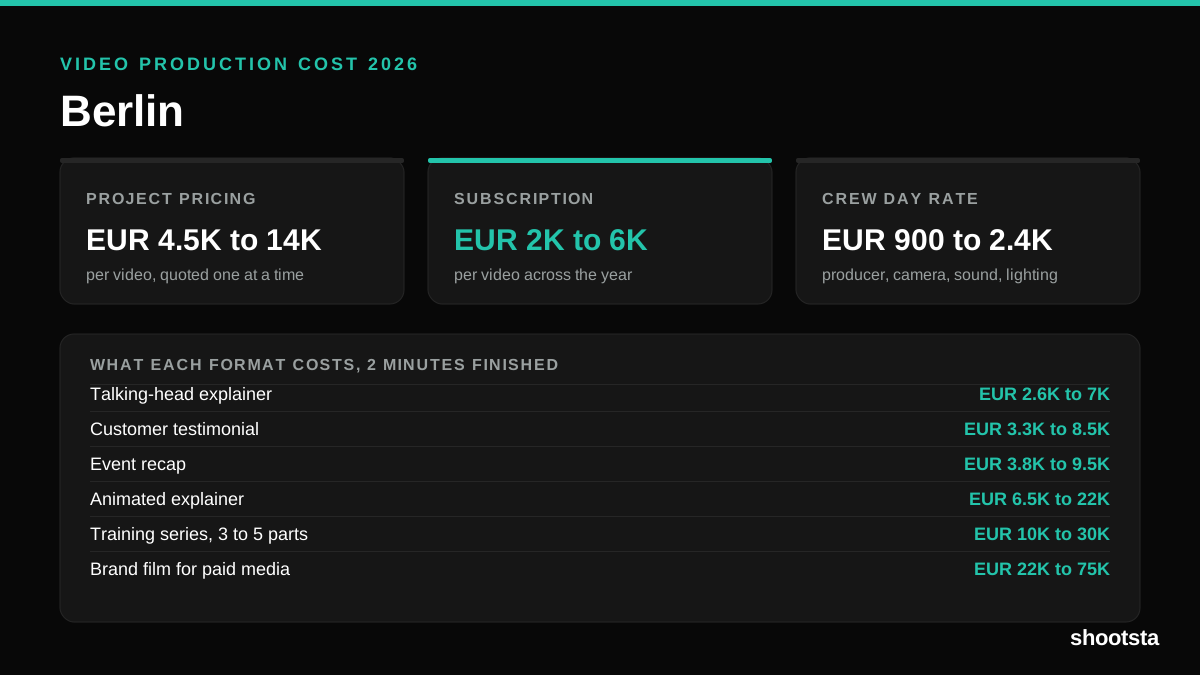
Video Production Cost in Berlin (2026)
Video production in Berlin costs EUR 2,000 to EUR 6,000 per finished video on a subscription model, and EUR 4,500 to EUR 13,500 for one-off project work. Here is what you are paying for, and how the three pricing models compare.
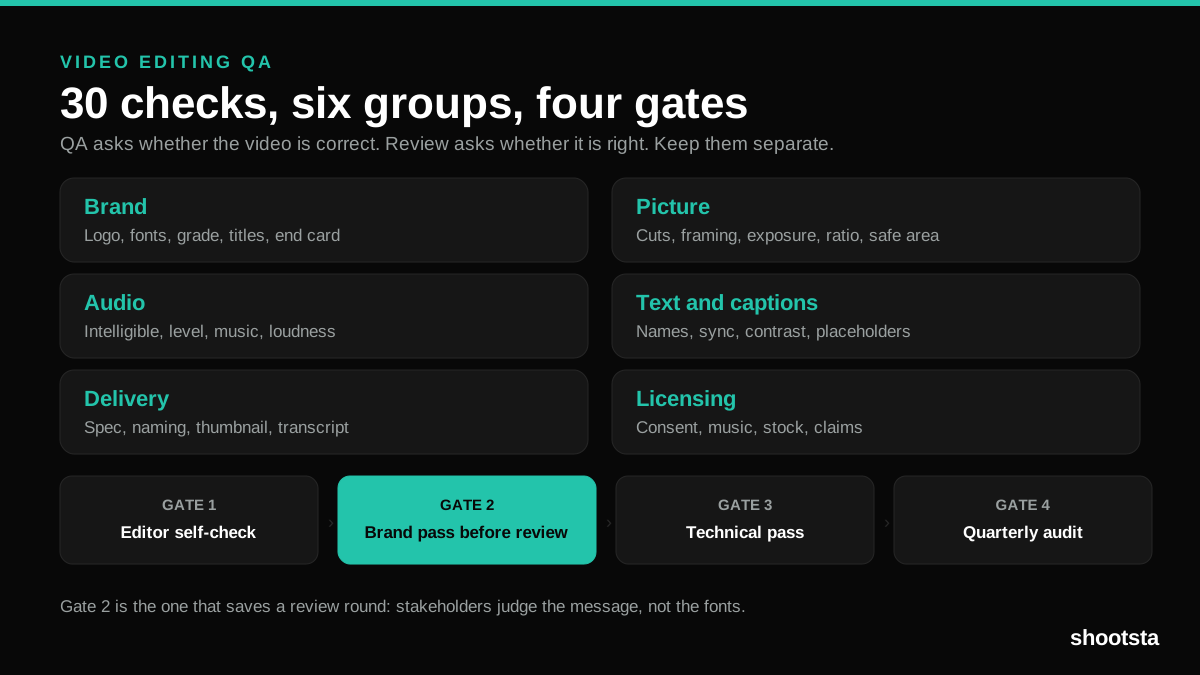
Video Editing QA: The Complete 2026 Guide
Video editing QA is the pass that catches brand drift, bad audio and wrong deliverables before stakeholders do. Here is the 30-point checklist, the four stage gates, and how to run it at 40 videos a month.
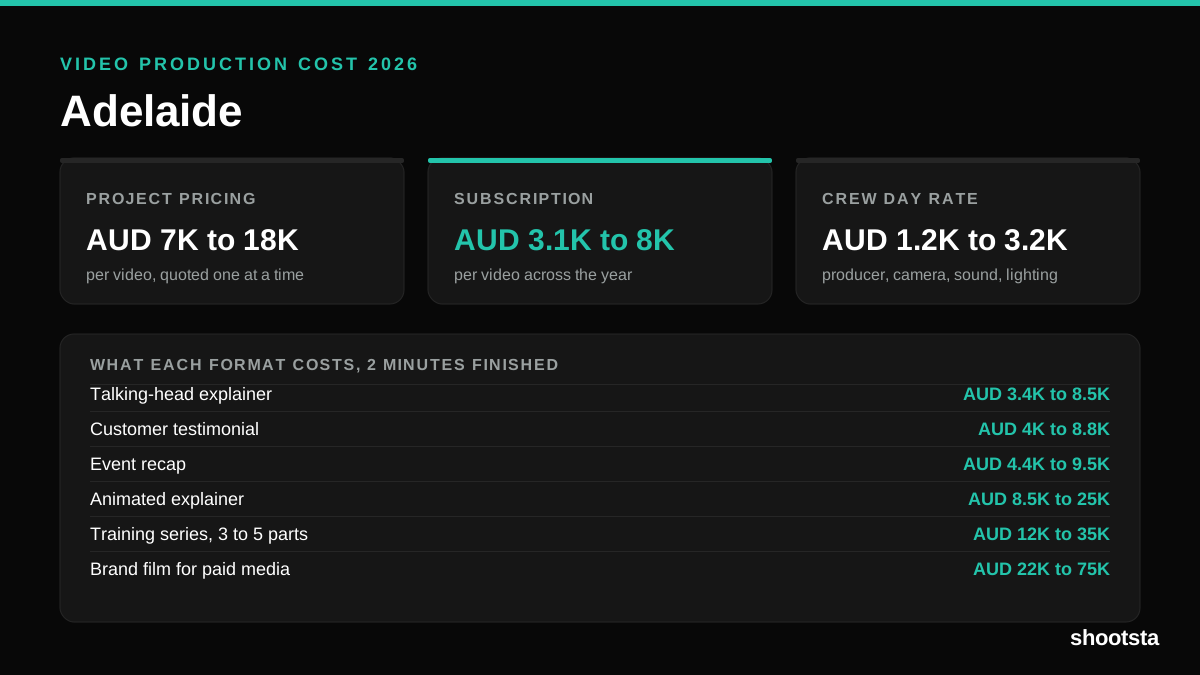
Video Production Cost in Adelaide (2026)
Video production in Adelaide costs AUD 3,100 to AUD 8,000 per finished video on a subscription model, and AUD 7,000 to AUD 18,000 for one-off project work. Here is what you are paying for, and how the three pricing models compare.
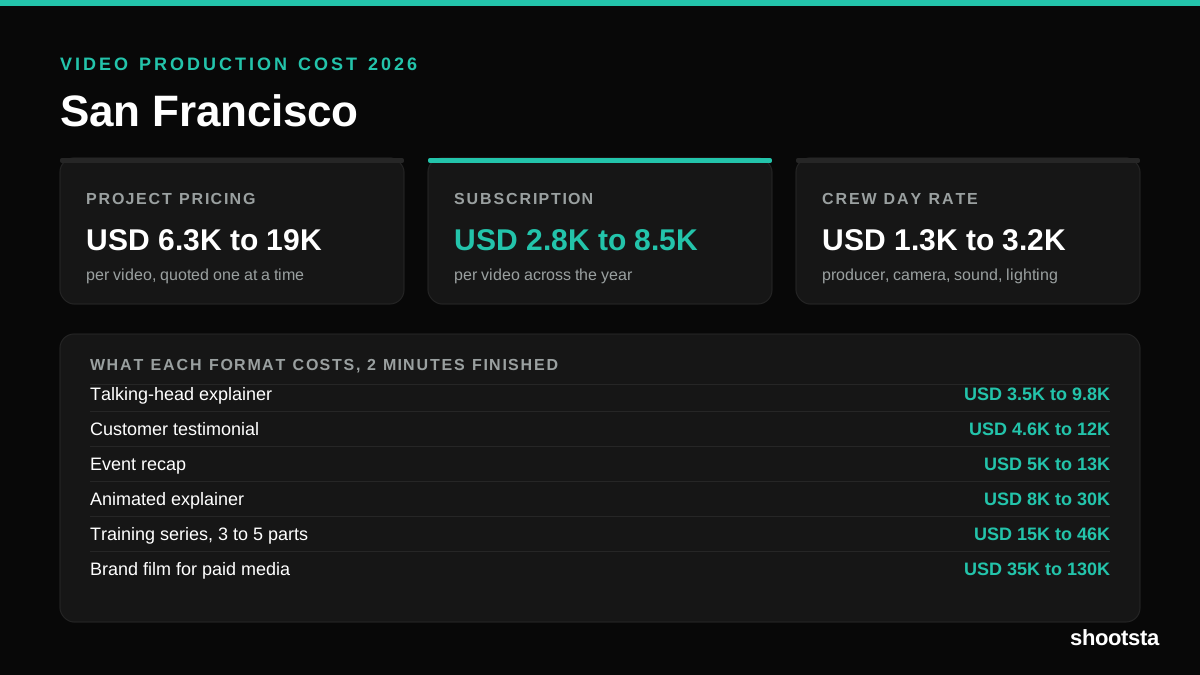
Video Production Cost in San Francisco 2026
Video production in San Francisco costs USD 2,800 to USD 8,500 per finished video on a subscription model, and USD 6,300 to USD 19,100 for one-off project work. Here is what you are paying for, and how the three pricing models compare.