
How to Build a LinkedIn Thought Leadership Video Program
shootsta.
How to Build a LinkedIn Thought Leadership Video Program
By Mark Ashworth · Published April 15, 2026 · Updated October 2026
A step-by-step guide to getting executives on camera for LinkedIn. Covers topics, production approach, posting cadence, and how to handle reluctant leaders.
Why does executive visibility on LinkedIn matter for B2B?
Plenty of senior leaders have a LinkedIn profile, yet many of them rarely post. The ones who post on video, week after week, build a personal brand that feeds their company's pipeline. When a CEO shares a point of view on camera, it signals confidence and openness in a way a corporate blog post struggles to match.
B2B buyers tend to trust a named person in their industry more than a brand account. Your executives can be those trusted voices, as long as they show up. LinkedIn's feed also tends to favor personal profiles over company pages. That means a video from your CEO's profile will often reach far more people than the same video posted from your company page.
What stops leaders from posting video on LinkedIn?
When we film executives, we hear the same objections again and again: "I don't have time," "I'm not good on camera" and "I don't know what to talk about." You can solve each of them with a little planning.
Time: A thought leadership video does not need to be a long production. A 60-second clip filmed on a phone can take less time than writing a LinkedIn text post. If you batch a few clips in one short session, you have enough videos for the month.
Camera comfort: Very few people feel natural on camera, but executives are usually good at talking about their industry. It helps to treat the shoot as a conversation with a colleague rather than a performance. Give them a conversational prompt instead of a script. Let the first take be a warmup, because people tend to relax and improve by the second take.
Topics: This is the easiest problem to fix, because executives already have opinions. They share them in board meetings, on sales calls and at conferences. Your marketing team's job is to capture those opinions and turn them into short, focused videos.
What topics work best for executive LinkedIn video?
In our experience, the best thought leadership videos fall into four categories:
Industry trends and predictions. When your CEO comments on a new regulation, a competitor move, or a shift in buyer behavior, they position themselves as someone worth following. These videos have a short shelf life but high engagement because they are timely.
Behind-the-scenes decisions. Your leader might explain why you entered a new market, why you dropped a product line or why you grew the team in APAC. These "why we did X" videos make the company feel human. They also build trust with prospects who are deciding whether to work with you.
Responding to news and events. When something happens in your industry, the first leader to share a thoughtful take on video owns the conversation. Speed matters more than production quality here. A quick selfie video posted within hours of the news beats a polished piece posted a week later.
Lessons learned and failures. Many executives avoid this category, yet it often draws the strongest response. When a leader admits something did not work and explains what they learned, it builds credibility faster than any success story.
Free PDF Guide
Get the LinkedIn Video Strategy Guide
How top B2B brands use thought leadership video to generate pipeline on LinkedIn.
Should thought leadership videos be polished or raw?
Both have a place, but raw usually works better than polished for thought leadership on LinkedIn. The feed is personal, and people scroll through updates from colleagues, friends and industry peers. A heavily produced corporate video can feel out of place there, while a direct-to-camera clip filmed in the leader's office fits right in.
That said, raw still has to look and sound good. Good lighting, clear audio and a steady frame are the minimum. We aim for what we call "polished casual," which means the clip is professionally lit and mic'd while the tone stays conversational. There is no teleprompter or script, so you just see an executive talking about something they know well.
For recurring series and higher-stakes content (keynote clips, product launches, annual reflections), a more produced approach makes sense. Match the production level to the type of video you are making. You can compare production approaches in our LinkedIn video production guide.
What posting cadence should executives maintain?
A steady rhythm matters more than volume. One video a week does more for you than a burst of videos followed by a month of silence. LinkedIn tends to reward regular posting, and your audience starts to expect the next video when it arrives on schedule.
This cadence is realistic for a busy executive:
- Weekly: One 30-60 second video on a single topic
- Monthly: One longer video (2-3 minutes) with deeper analysis
- Quarterly: One produced piece (keynote clip, interview, or panel highlight)
You can batch the weekly videos by recording four clips in a single sitting once a month. Your marketing team or production partner then handles editing, captions and scheduling. For the executive, that adds up to about the length of one meeting each month.
How do you measure the impact of thought leadership video?
Vanity metrics such as views and likes tell you whether the videos are reaching people, while business metrics tell you whether they are working. Track both, but base your decisions on the business metrics.
Reach metrics: These include video views, impression growth over time, follower growth on the executive's profile, and the volume and quality of comments.
Business metrics: These include profile visits that turn into website visits, inbound connection requests from target accounts, mentions in sales conversations ("I saw your CEO's video about X"), and pipeline influenced by video engagement. For more detail on tracking these metrics, see our guide to B2B video ROI KPIs.
The clearest signal is qualitative. When prospects start mentioning your executive's videos in sales calls, you know the program is working.
How does this connect to a broader employee advocacy strategy?
Executive thought leadership leads the way, but it works best alongside a wider employee advocacy video program. When your CEO posts a video about company direction and a group of employees then share their own views, the combined reach grows quickly. The executive sets the tone and the team carries it further.
A production partner like Shootsta helps here by working alongside your in-house team. Instead of relying on each executive and employee to figure out video on their own, you give them a system: recording sessions, editing support, a content calendar, and distribution guidelines. Download the LinkedIn Video Strategy Guide for the full framework.
What is the first step?
Start with one executive, and pick the leader who is most willing. That may not be the CEO, since a VP of Sales or Head of Product who already posts on LinkedIn often makes a better pilot. Record four videos in one session and post them weekly. After a month, measure the results, and if the pilot works, expand it to other leaders.
Getting started is the hardest part. Once an executive sees their first video draw comments from peers and hears a prospect mention it on a call, they usually want to keep going.
Take this article with you
Read the latest at shootsta.com/blog/linkedin-thought-leadership-video-program
You might also like
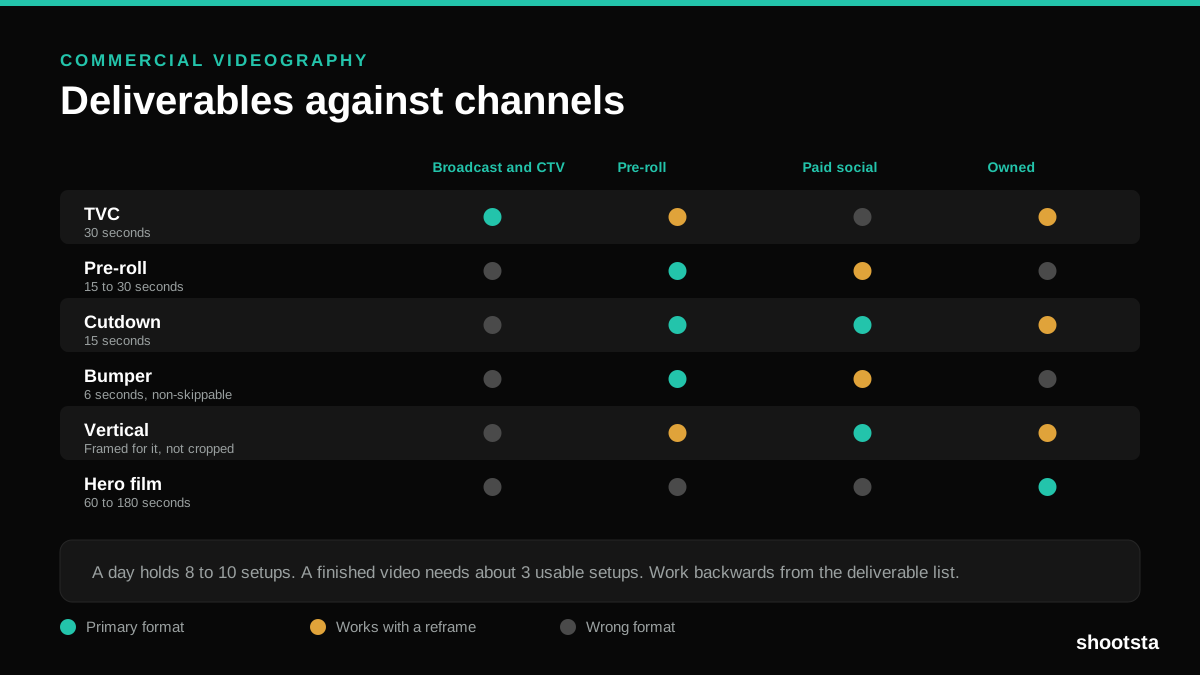
Commercial Videography: Cost and Scope
Commercial videography is priced by the day and judged by the deliverable. Most projects go wrong because those two numbers were never reconciled.
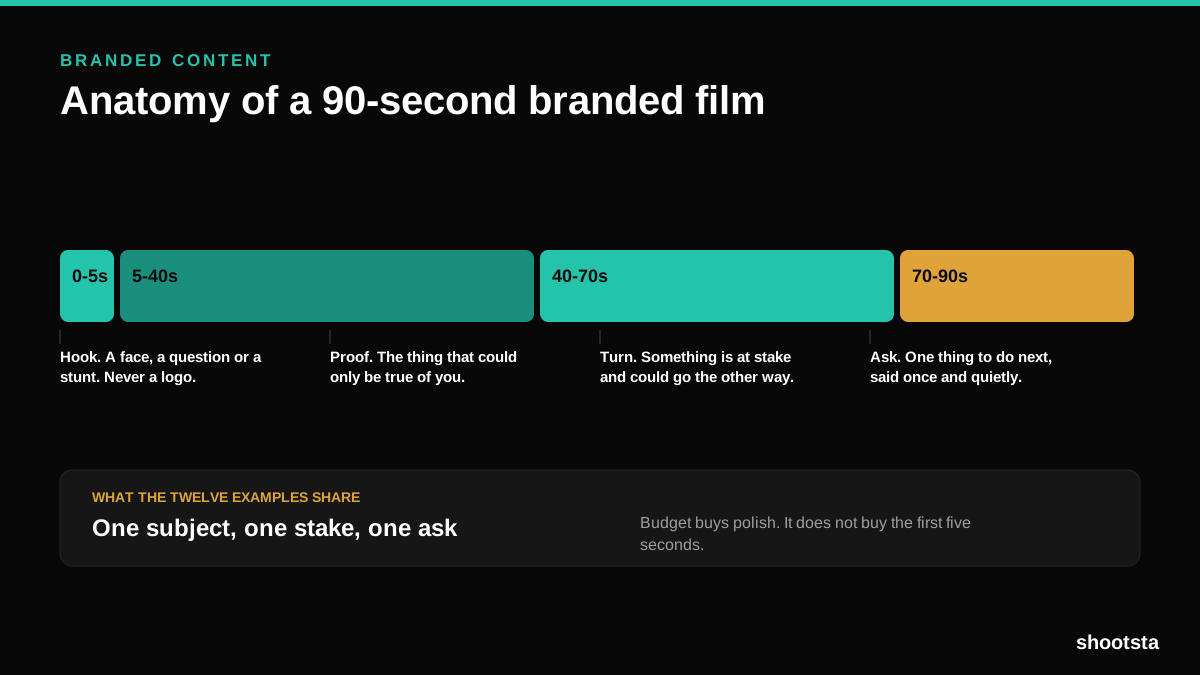
12 Branded Content Examples That Worked
Twelve pieces of branded content that people chose to watch, what each one got right, and the structure underneath all of them.
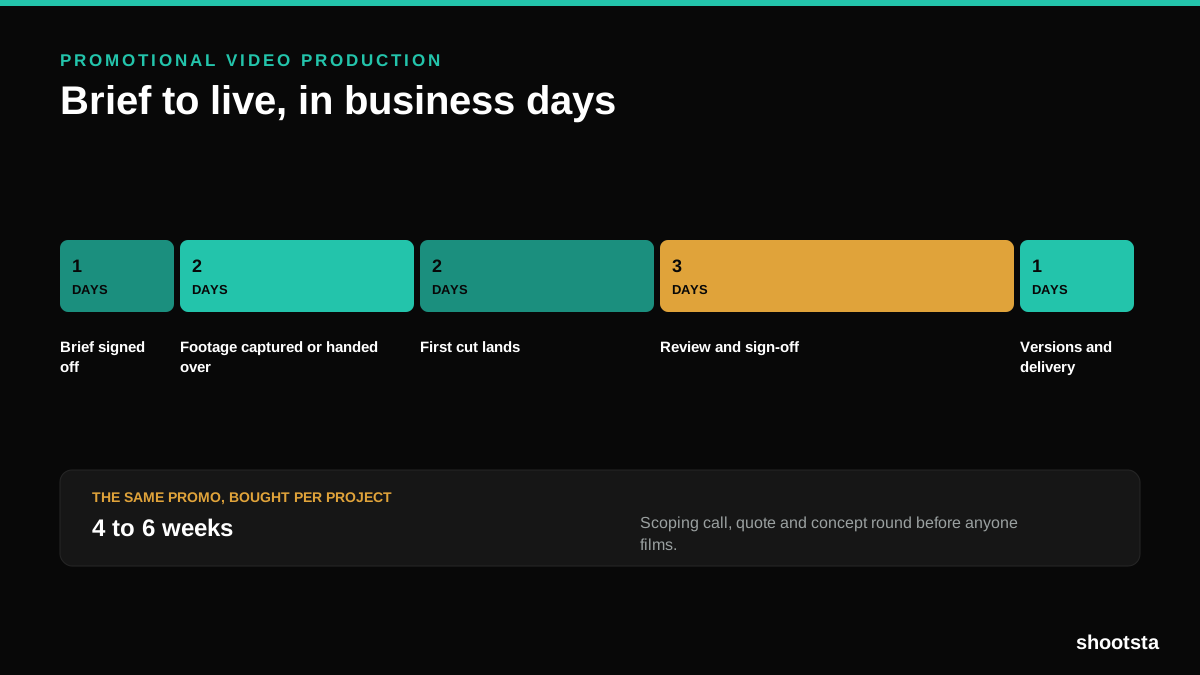
Promotional Video Production: Cost and Time
Most promotional video production schedules are not slow because of the edit. They are slow because of the approval chain. Here is where the days go.
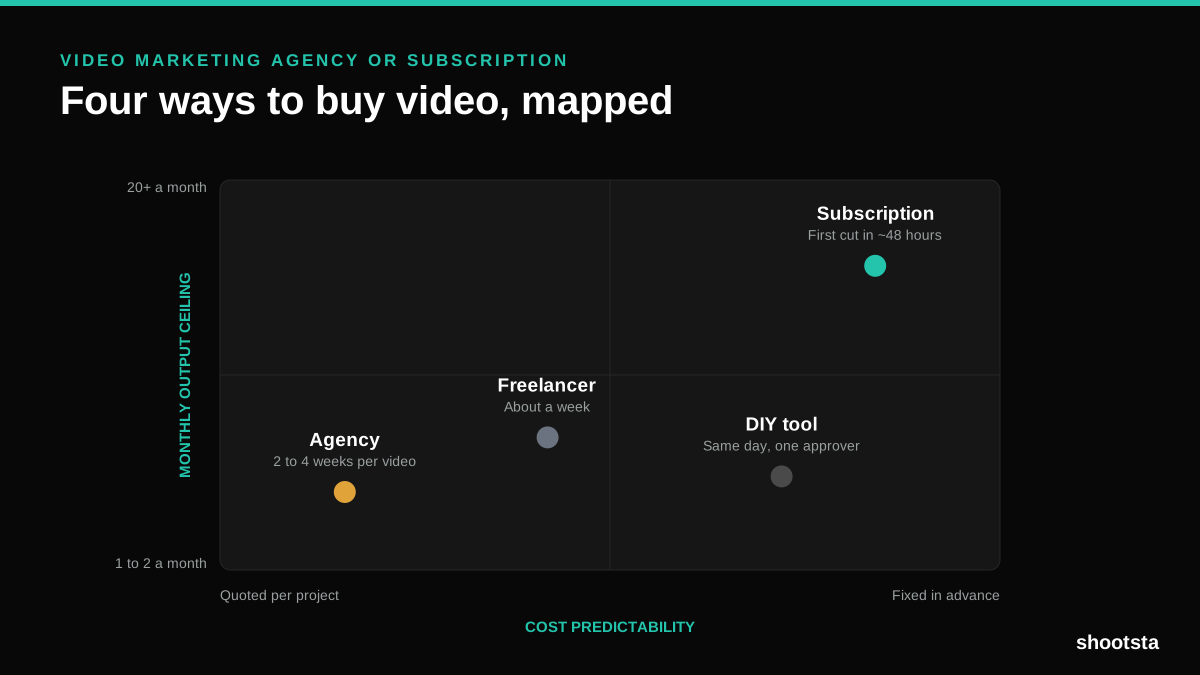
Video Marketing Agency or Subscription?
A video marketing agency prices per project and works in weeks. A subscription prices the year and works in days. Which one fits depends on how often you publish, not on which is better.

B2B Video Production: Costs and Buying Models
There are five ways to buy B2B video production. Each one works well up to a point and then breaks, usually at a volume nobody planned for. Here is what each costs and where the ceiling sits.
How to Measure Video Speed-to-Market
How to Measure Video Speed-to-Market
Speed-to-market is the lag between needing a video and publishing it. For marketing teams it is a revenue metric. Here is how to measure and improve it.