
Compliance Training Videos That Don't Put People to Sleep
shootsta.
Compliance Training Videos That Don't Put People to Sleep
By Shootsta · Published April 5, 2026 · Updated October 2026
Mandatory compliance training has a reputation for being dull. Scenario-based video changes that. Here is how to produce compliance content employees remember.
Why does compliance training need video?
Compliance training is mandatory, so employees will complete it whether it's good or bad. But "completed" and "learned" are different things. A slide deck with a voiceover and a checkbox quiz can hit full completion while almost nothing sticks. When the situation the training covered comes up months later, the employee can't recall what to do.
Video-based compliance training improves retention because it shows instead of tells. Instead of reading a policy about data privacy, employees watch a scenario where a colleague makes a mistake and see the consequences. That story sticks in a way that bullet points on a slide do not.
What compliance topics work best as video?
Data privacy and cybersecurity
Phishing simulations, password hygiene and secure data handling all benefit from showing real-world examples of how breaches happen, such as a clicked link, a shared password, an unsecured laptop in a coffee shop.
Anti-harassment and workplace conduct
Training on conduct needs nuance that text can't convey. Tone of voice, body language and power dynamics are all visible on screen. Scenario-based videos let employees see both acceptable and unacceptable conduct in context.
Health and safety
In industries with physical safety requirements, such as manufacturing, construction and healthcare, video shows correct procedures in the actual work environment. A 2-minute video of proper lifting technique filmed in your warehouse is more effective than a written manual.
Anti-bribery and corruption
Gift policies, hospitality guidelines and third-party due diligence all involve judgment calls that vary by situation. Scenario-based video presents realistic dilemmas and walks through the decision-making process.
Diversity, equity, and inclusion
DEI training requires empathy and perspective-taking that flat content can't create. Video lets employees hear from colleagues with different experiences and watch inclusive conduct play out in realistic workplace scenarios.
How do you produce compliance training videos?
The production approach depends on the topic and your risk tolerance.
For low-stakes topics (general workplace policies, system usage), a subject matter expert filmed on a phone with professional editing is enough. The SME explains the policy, walks through common scenarios, and answers FAQs. Filming can take about half an hour, and the edit can turn that into a few short modules.
For high-stakes topics (anti-harassment, safety), invest in scenario-based production. Script realistic situations, use employees or actors to perform them, and edit with clear callouts showing the right response. This takes more effort, and it pays off on topics where a mistake has real consequences.
Either way, keep each module under 5 minutes. Break a 30-minute compliance program into 6 modules with a short quiz after each. Employees can complete them across multiple sessions instead of sitting through a half-hour video.
How do you keep compliance video content current?
Regulations change and policies get updated, so your compliance training can't be a static asset that sits untouched for years. The advantage of video-based training is that individual modules can be re-recorded and replaced without rebuilding the entire program.
When a data privacy regulation changes, re-record the relevant 3-minute module. The other 5 modules in the program stay the same. With a training video production subscription, updating a single module costs a fraction of rebuilding an entire e-learning course.
Set a review schedule: quarterly for rapidly changing topics (cybersecurity), annually for stable topics (code of conduct). Tag each module with its review date so nothing goes stale.
Start with your highest-risk topic
If you're moving from slide-based compliance training to video, start with the topic where poor training has the highest business risk. That is often data privacy or anti-harassment, depending on your sector. Produce a 5-module video series, roll it out to one department as a pilot, compare completion rates and assessment scores to the old format, and expand from there.
Explore our full training video production capabilities, or see the enterprise video playbook for how compliance training fits into a broader video program.
Take this article with you
Read the latest at shootsta.com/blog/compliance-training-videos-that-dont-put-people-to-sleep
You might also like
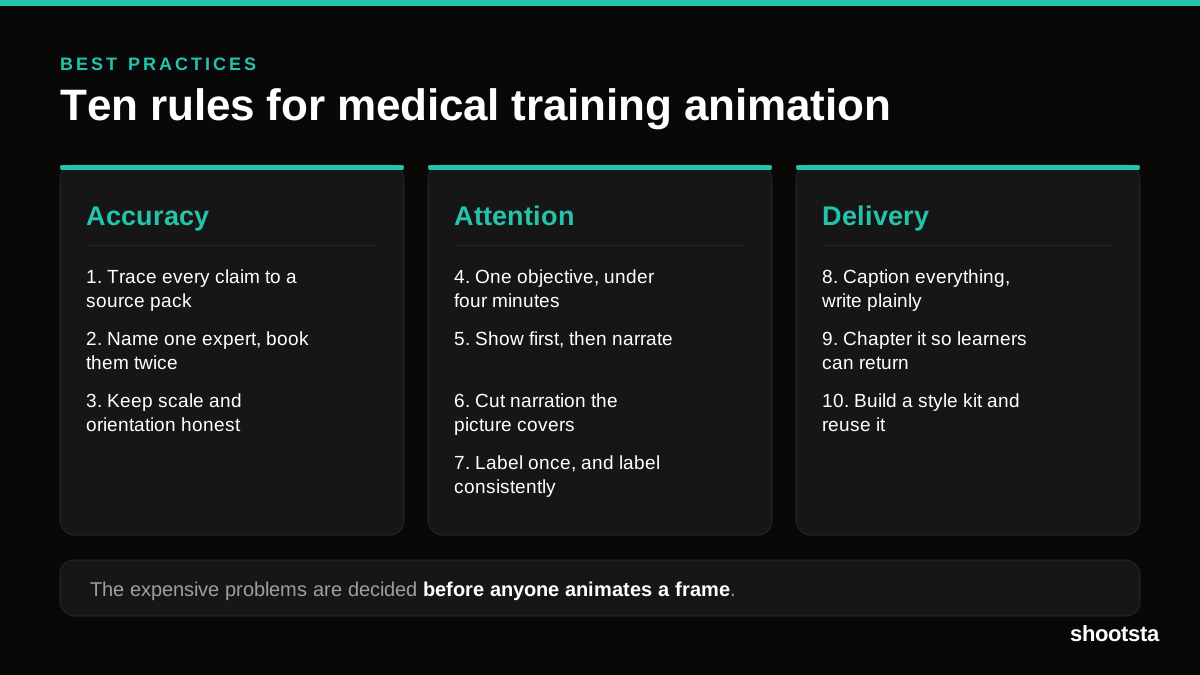
Medical Training Animation Best Practices
Ten rules that hold up across device training, clinical protocol work and mechanism of action modules. Most medical animation fails for dull reasons: too many objectives, narration that repeats the picture, and review that arrives too late to change anything.
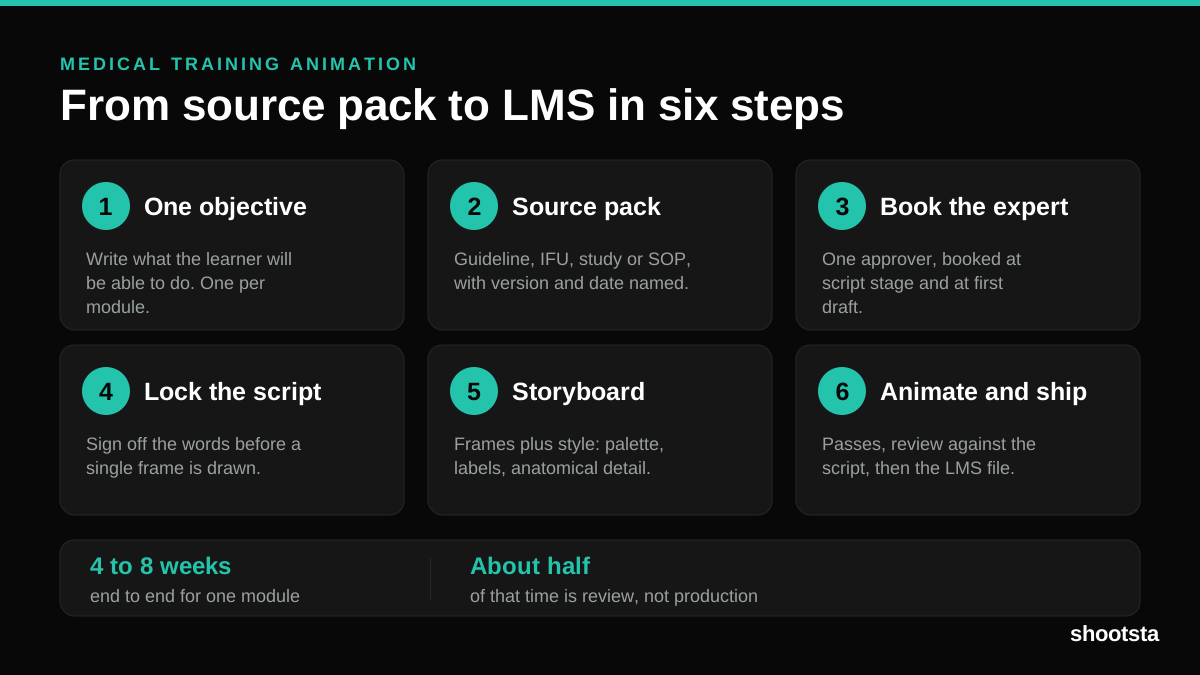
Medical Training Animation: A Complete Guide
A medical training animation teaches a procedure, a device workflow, or a mechanism the camera cannot reach. Here is how one gets made, what it costs, and how to keep medical review from eating the schedule.
What Delayed Training Videos Cost L&D Teams
What Delayed Training Videos Cost L&D Teams
When training video ships late, employees work without the knowledge for longer. For a distributed enterprise, that backlog has a large, measurable cost.
Australian Corporate Training Video Production
Australian Corporate Training Video Production
A practical guide to corporate training video production for Australian teams: compliance and WHS modules, LMS-ready formats, AEST turnaround, and what a training library costs to build.
What Makes a Great Learning Video
What Makes a Great Learning Video
A great learning video changes what someone can do after watching it. Here is how the best ones are built, the mistakes that lose learners, and how the panel scores them.
Animation Use Cases for L&D Teams
Animation Use Cases for L&D Teams
Learning and development teams get more out of animation than almost any other function. Here are the places it works hardest, and where you should still reach for a camera.