
shootsta.
Video Production Turnaround Time: Speed vs Quality
By Mark Ashworth · Published January 16, 2025 · Updated October 2026
Understanding Video Production Turnaround Time
Video production turnaround time is the total time from the start of a project to final delivery. With a traditional agency, that usually runs from 4 to 12 weeks, depending on how complex the project is. Many businesses now need finished video within days, because their campaigns and channels move faster than an agency calendar. The timeline breaks down into five phases: Pre-production planning: Briefing, scriptwriting and storyboarding come first. This phase sets the creative direction, and doing it well prevents costly revisions later. Production execution: Filming or screen capture comes next. How long it takes depends on location needs, talent availability and how technical the shoot is. Post-production editing: This is usually the longest phase. It covers editing, grading, sound design and motion graphics. Review and revisions: Several review cycles can stretch the timeline, especially when feedback arrives in pieces or the approval chain runs through several stakeholders. Final delivery: Technical specs, format conversions and delivery logistics close out the project. This phase is short, but it still needs a slot in the plan.Why Traditional Video Production Takes So Long
A few structural factors stretch timelines in conventional production workflows. Each one is fixable once you can see it. Agency resourcing creates natural delays. A production company runs several client projects at once, so your project competes with others for the same people. One editor may be working on a handful of projects in the same week, which creates scheduling bottlenecks. Sequential workflows also block parallel work. Traditional production follows a strict line where each phase must finish before the next begins, so if your script needs a rewrite, everything after it waits. Stakeholder approvals add friction at every stage. When feedback comes from several departments with different priorities, it takes time to merge the input and get everyone to agree. Technical complexity needs specialist skills. Projects with advanced animation, complex visual effects or special equipment take longer, because the people with those skills are not always free when you need them.The Real Cost of Slow Video Production
A slow video production turnaround time costs you more than a slipped date on the schedule. The effects spread into revenue, budget and your team. Missed market moments are the biggest cost. If your product launch video arrives two weeks after the launch event, the early momentum that drives sales has already passed. Campaigns built around seasonal events, industry conferences or news topics lose their point when the video arrives late. Budget overruns build up fast. Longer timelines mean more project management hours, extra revision cycles and the cost of campaigns that start late. A project that drags from 6 weeks to 10 weeks usually runs over budget as well as over time. The gap with your competitors grows over time. While you wait for one video, a competitor with faster production can publish several. That gap in volume shows up in brand visibility and engagement, and over time in market position. Your team feels it too. Creative people get worn down when they spend more time chasing approvals than making videos, and that hurts retention and makes hiring harder.Fast Video Production: The Framework for Speed Without Compromise
Quick video turnaround does not have to mean lower quality. It takes a planned approach that tightens each phase of production.Streamline Pre-production
The fastest projects start with a clear brief that leaves nothing to guess. Give the objectives, target audience, key messages, brand guidelines and success metrics up front. Templates for common video types (testimonials, product demos, thought leadership) can cut briefing time a lot. Keep an asset library that holds your brand elements, footage, music and graphics in one place. When editors don't have to hunt for the approved logo or wait for a stock footage decision, projects move much faster.Accelerate Production
Look at production models that skip long location scouting and setup. Studio filming with a standard setup lets you record several videos in one session. Some organizations save a lot of production time by recording a quarter's worth of videos at once instead of one project at a time. Remote production gives you more options. Contributors can record good footage on location without a full crew, then send the files in for professional editing.Optimize Post-production
Template-driven editing gives each video a set structure, which cuts the number of decisions an editor has to make. When your company update video follows a proven format, editors work faster and the brand stays consistent. Parallel work lets several people work on different parts of a video at the same time. While one editor builds the main cut, another prepares the motion graphics and a sound designer finishes the audio mix.Implement Efficient Review Processes
Route feedback through one point of contact who merges the input from every stakeholder. This stops contradictory revision requests and cuts the total number of review cycles. Set time-bound feedback windows so reviewers respond quickly but still have time to think. A 48-hour review period with a clear deadline gets faster responses than an open-ended "let us know when you have thoughts" request. Give timestamp-specific comments so editors can find and fix issues quickly. Vague feedback like "the pacing feels off" is harder to act on than "the segment from 1:23-1:45 could be tightened by 5 seconds."Modern Solutions for Rapid Turnaround
New technology and service models now tackle the speed problem while keeping quality intact. Here are the ones worth knowing about. Video platforms that combine human editors with AI assistance can deliver professional video on much shorter timelines. Experienced creative teams protect the quality, and the technology handles the routine tasks. Hybrid models use template-based production for high-volume, repeatable video and custom production for flagship pieces. This lets you produce weekly social video quickly while you spend more time on quarterly hero videos. Subscription-based video production gives you predictable capacity and faster turnaround. Your account has dedicated resources, so you are not competing with other clients for an editor's attention. Shootsta is one example. It is a video platform that combines human creativity with AI assistance to deliver branded videos at scale, with a first cut in about 48 hours, and companies use it as a corporate video partner across all their key business touchpoints.Setting Realistic Turnaround Expectations
Each video type needs a different timeline, based on how complex it is and how polished it has to be. Use these ranges as a starting point. Social media video: Simple, authentic videos for social platforms can be turned around in 24-48 hours with a lean workflow. Internal communications: Employee-facing videos usually move faster (3-5 days) because they need less polish and fewer approval layers than external marketing video. Marketing campaigns: Brand-focused campaign videos generally need 1-2 weeks, which gives you speed and still protects the brand. Flagship video: Cornerstone pieces like annual reports, major product launches or executive thought leadership may still need 3-4 weeks, so plan them early.Making the Speed vs Quality Decision
Three factors decide how you balance fast video production against your quality standards: Strategic importance: Videos tied directly to revenue or brand reputation deserve more time. A product demo that sales teams will use for 18 months needs more polish than a weekly LinkedIn update. Lifespan: Evergreen video that stays useful for months or years justifies a longer production timeline. Time-sensitive video tied to an event or a news cycle needs speed more than perfection. Audience expectations: Customer-facing videos need higher production values than internal training materials. Where your audience sees the video shapes how much polish they expect.Building Your Fast-Production Capability
Organizations that keep video turnaround quick tend to have a few habits in common. None of them needs a big budget to start. They keep clear brand guidelines, which cuts decision time during production. When the whole team knows the visual style, tone and messaging rules, projects move faster. They keep a video calendar so they can plan and batch the work. Instead of treating each video as a one-off emergency, they book production ahead and film several pieces in one go. They put money into the right tools and partners. Whether they build internal capability or work with a specialist partner, they fund the parts of the workflow that keep production fast. They measure the right things. Tracking turnaround time, revision cycles and approval bottlenecks shows where a process fix will have the most effect.Conclusion
Video production turnaround time does not have to hold back your video plans. Once you know where the time goes, you can tighten the workflow and pick partners who match your speed needs. Then you can produce good videos on timelines that fit how your business works. The companies doing well with video are not always spending more. They have built systems that deliver quick turnaround without the quality drops that hurt their brand. As video becomes central to how sales, marketing, HR and customer success communicate, that system becomes a competitive advantage.Why Fast Video Production Matters for Your Business
Improving your video production turnaround time pays off across the organization in ways you can measure. More video: Faster production cycles let you publish more often. If your turnaround drops from 8 weeks to 2, you can produce far more videos on the same budget. Improved market responsiveness: When you can make a video in days instead of months, you can react to market changes, competitor moves and customer feedback while they still matter. Better resource use: Lean workflows cut idle time and the hidden cost of long project management. Your creative team spends more time making videos and less time coordinating them. Enhanced campaign performance: Video that lands on launch dates, seasonal peaks and cultural moments gets stronger engagement than video that arrives after the moment has passed. Greater creative flexibility: Fast turnaround makes testing possible. You can produce several versions, measure how each one performs and improve the next one based on real data. Reduced stakeholder frustration: When colleagues see their video requests filled quickly, they plan video into their work instead of avoiding it because of the wait.The Financial Case for Faster Video Production
Knowing the return on a faster video production turnaround time helps you justify the systems, tools and partners it takes to get there. Direct cost savings come from lower project management overhead. A video that takes 8 weeks needs far more coordination, meetings and admin than one finished in 10 days, and that time costs money on every project. Opportunity value is the campaigns you can run and the moments you can catch when video arrives on time. A product launch video that lands two weeks late misses the launch week, which is when attention and early sales are highest. For a big launch, the revenue at stake can easily outweigh the cost of the video. Efficiency multipliers show up when you produce more videos with the same resources. If a shorter turnaround lets you triple your yearly output on the same spend, your cost per video drops by two-thirds. Strategic agility is harder to measure but still worth a lot. Being able to respond quickly to a competitor, join a trending topic or test new messaging gives you an edge that grows over time. When you move agency work to a production partner with a lean workflow, you can expect changes like these: - Much shorter average turnaround, with a first cut in about 48 hours on a platform like Shootsta - More videos produced across the year from the same budget - 50-60% lower per-video cost than agency rates - Fresher videos that keep pace with what is happening in your marketMaking the Transition to Faster Production
Assess Your Current State
Start by writing down your real timelines rather than the ones you hope for. Track where the time went across 5-10 recent projects. You will probably find that only a small part went on production, and most went on coordination, waiting and revisions. Then find your biggest bottlenecks. The usual suspects are creative direction that keeps changing, review rounds that take a week each, a partner who can't fit you in, or brand guidelines so unclear that each project starts from scratch.Define Your Requirements
Each organization needs a different setup. A company producing two videos a month needs something different from one that wants new social video every day. Work out how much volume you need for each video type: hero videos, regular campaigns, social media, internal communications and sales enablement. Then set a quality bar for each category. Some videos need higher production values than others, so be clear about what is essential and what is nice to have.Evaluate Your Options
Internal production gives you the most control and the fastest turnaround for simple videos. It needs real investment in equipment, software and trained staff, so it suits organizations with high volume and a dedicated budget. Specialized video platforms combine the speed of templates with professional quality from experienced creative teams. This suits organizations that need consistent, branded video at scale without building that capability inside. Hybrid approaches use internal capacity for simple videos and external partners for complex projects. You get flexibility, but someone has to coordinate the two.Prepare Your Organization
A successful switch needs buy-in from more than the marketing team. Plan for these three areas. Stakeholder education shows internal clients that faster turnaround depends on them too, through better briefs and quicker feedback. The bottleneck is often your own internal process rather than the production partner. Process documentation sets up repeatable workflows so each project does not start from zero. You can start by creating templates for briefs, feedback forms and approvals. Success metrics should cover turnaround time and also how the videos perform. Track video results, quality scores and business impact so you know speed is not costing you effectiveness.Plan for the Transition
Change management matters, so don't try to overhaul everything at once. Pace the change in stages. Start with a pilot that covers one video type or one department. Prove the model works before you roll it out across the organization. Then grow step by step, adding volume as the new system proves reliable. Jumping from 2 videos a month to 8 overnight puts quality at risk. Leave room to adjust as you learn. Your first setup won't be perfect, so build in review points where you can refine it.What's Your Optimal Video Production Timeline?
Video Turnaround Assessment
Answer these questions to determine the right turnaround expectations for your organization's video needs:
Question 1: What's your primary use case for video?
A) Social media and digital marketing campaigns
B) Internal communications and training
C) Product launches and flagship campaigns
D) Sales enablement and customer education
Question 2: How often do you need new video content?
A) Multiple times per week
B) Weekly
C) Monthly
D) Quarterly or for specific campaigns
Question 3: What's your typical approval process?
A) Single decision-maker or quick consensus
B) 2-3 stakeholders with clear authority
C) 4-6 stakeholders across multiple departments
D) Complex approval chain with many layers
Question 4: How important is production polish versus content relevance?
A) Relevance and speed are paramount; good enough production quality works
B) Balanced approach: needs to look professional but not perfect
C) High production values are important for brand perception
D) Flagship quality required, because it represents our brand at the highest level
Question 5: What's your content lifespan?
A) Days to weeks (social media, news-based video)B) Weeks to months (campaign video)
C) Months to a year (product marketing)
D) Evergreen (core brand or educational video)
Scoring Guide:
Mostly A's - Fast Turnaround Focus (24-48 hours):
You need a high-volume production model built for speed. Look at video platforms with template-based workflows and short approval chains, and put consistency ahead of customization.
Mostly B's - Rapid Production (3-7 days):
You need reliable, professional quality with quick turnaround. A hybrid approach or a specialist production partner can deliver branded video efficiently without heavy customization.
Mostly C's - Standard Timeline (2-3 weeks):
You need solid production values at a reasonable speed. A traditional agency or an established production partner can meet these needs, though you should still tighten your review process.
Mostly D's - Extended Timeline (4+ weeks):
You're making flagship video where the quality justifies a longer timeline. Spend the time on careful planning, and still run an efficient process so the timeline does not creep past what the quality needs.
Mixed Results:
You need different production setups for different video types. Consider a tiered approach, with a fast-turnaround partner for high-volume video and a specialist agency for hero pieces.
Frequently Asked Questions
What is a reasonable video production turnaround time?
A reasonable turnaround time depends on the video type and how complex it is. Simple social media videos can be finished in 24-48 hours with a lean workflow. Standard corporate videos usually need 1-2 weeks for good results. Complex productions with animation, several locations or heavy post-production may need 3-4 weeks. Match the timeline to how much the video matters rather than using one rule for everything. The organizations that get the best results set different expectations for each category: social video (1-3 days), marketing campaigns (1-2 weeks) and flagship pieces (3-4 weeks).How can I get faster video production without sacrificing quality?
Fast video production without a drop in quality comes from improving your workflow rather than rushing it. Start with clearer creative briefs that prevent back-and-forth questions. Use templates for recurring video types to cut decision time. Merge feedback from all stakeholders into single review rounds instead of approving in sequence. Choose a production partner that keeps dedicated resources for your account instead of splitting them across many clients. Batch similar videos into the same filming session. Let technology handle the routine tasks and keep creative decisions with experienced people. The fastest timelines come from removing coordination friction while keeping quality standards intact.Why does traditional agency video production take so long?
Traditional agencies work within a few structural limits that stretch timelines. They usually run several client projects at once, which creates competition for people and scheduling bottlenecks. Their workflows are sequential, so each phase must finish before the next begins. Stakeholder approvals add delays at every stage, especially when feedback is not merged into one round. Limited capacity in busy seasons means projects wait in a queue for resources. Agency pricing also gives little reward for speed, because longer timelines often mean more billable hours. If you want faster turnaround, look for partners whose business model and workflow are built for rapid production.What factors most impact video production turnaround time?
A few factors decide how quickly a video project finishes. Creative clarity at the start has the biggest impact, because a clear brief with specific objectives prevents the revision cycles that misalignment causes. The approval process matters a great deal too, and projects that need agreement from five or more stakeholders take noticeably longer than those with a short decision chain. Partner capacity and workflow design also count, since dedicated resources and parallel work speed up completion. Complexity plays a part, with simple talking-head videos finishing much faster than those that need animation or visual effects. Last, asset availability affects speed, because projects that need custom footage, music licensing or new graphics take longer than those that use existing assets.How do I maintain brand consistency with fast video production?
Brand consistency at speed comes from a system rather than new creative decisions on every project. Write full brand guidelines that cover visual style, tone, messaging frameworks and technical specs. Build template libraries for recurring video types that hold the brand elements in place and leave room for the message. Work with production partners who learn your brand well at the start and then apply it across every project. Put approval checkpoints on brand alignment at the key stages instead of reviewing every small choice. Keep approved logos, color palettes, fonts and stock footage in one shared library. The organizations with the strongest brand consistency at volume treat brand standards as a tool that speeds up decisions rather than a set of limits that slows them down.Take Control of Your Video Production Timeline
You now have a framework for balancing speed and quality in video production. The next step is to review your current approach and find where it can improve. Audit your current timelines. Track your last 5-10 video projects from briefing to final delivery. Write down where the time went and compare it with where you thought it went, because that comparison shows the specific bottlenecks to fix. Define your video needs. Map the video types you need across departments: marketing campaigns, social video, internal communications, sales enablement and customer education. Then set quality and timeline expectations for each category. Compare your production options. Check your current approach against alternatives that may better fit your speed and volume needs. Ask whether your existing partner can support where your video plans are heading. Start with a pilot program. Test a faster production approach with one video type or department before you commit to change across the organization. Measure both speed and quality to confirm the model works. Fix your internal processes. Even the best production partner will be slowed down by internal bottlenecks in briefing, feedback and approvals. Work on those at the same time as any partner change.Ready to Scale Your Video Strategy?
Organizations that combine human creativity with AI assistance now get a first cut of a branded video in about 48 hours, with the brand consistency that traditional approaches take weeks to reach.
Bring your video production turnaround time down with a production model built for speed and brand control.
Keep reading
Take this article with you
Read the latest at shootsta.com/blog/video-production-turnaround-time-framework
You might also like

How to Plan Video Team Capacity Around Leave
Your only editor just booked two weeks off, and you already know which projects will slip. Chad Lakin explains how to plan video team capacity so the work keeps moving when someone is away.
Corporate Video Editing Standards: Full Guide
A two-page editing standard does more for consistency than a forty-page brand book. Here is what it should cover, who owns each part, and how to enforce it with an in-house editor or an outside partner.
Quality Control in Outsourced Video Editing
When editing leaves the building, quality has to be checked by a system rather than by whoever happens to look. Here is the system: acceptance criteria, two QA gates, counted revision rounds and a quarterly audit.
Video Production Cost on the Gold Coast 2026
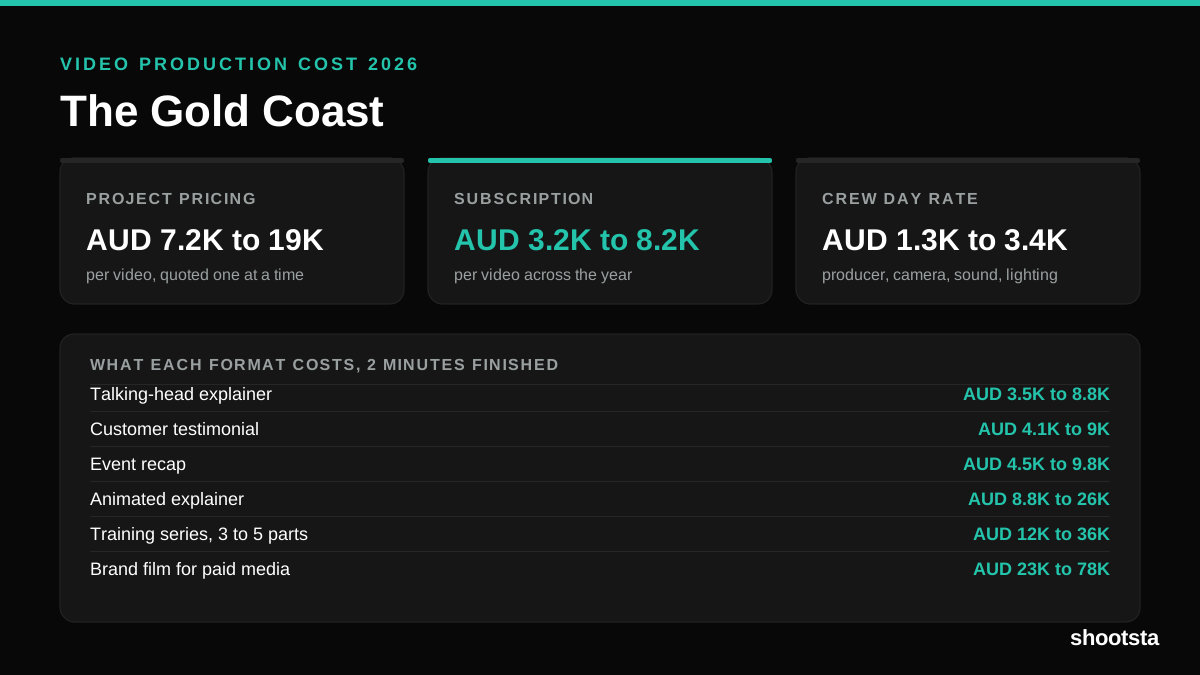
Video production in the Gold Coast costs AUD 3,200 to AUD 8,200 per finished video on a subscription model, and AUD 7,200 to AUD 18,500 for one-off project work. Here is what you are paying for, and how the three pricing models compare.
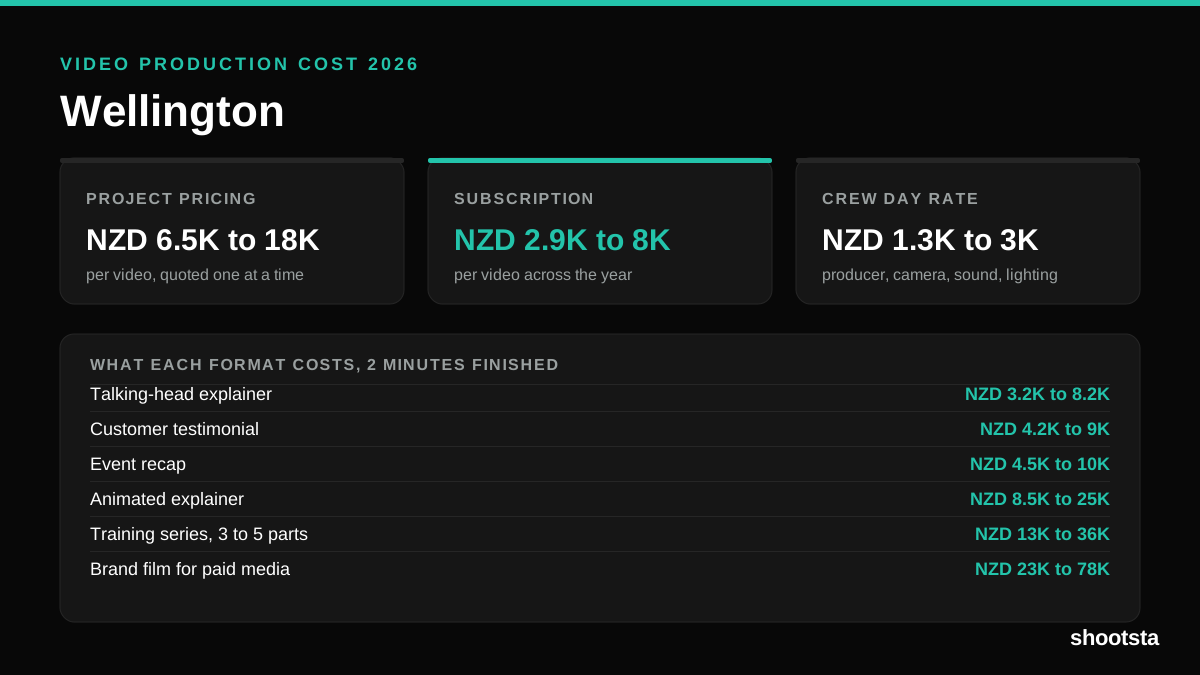
Video Production Cost in Wellington (2026)
Video production in Wellington costs NZD 2,900 to NZD 8,000 per finished video on a subscription model, and NZD 6,500 to NZD 18,000 for one-off project work. Here is what you are paying for, and how the three pricing models compare.
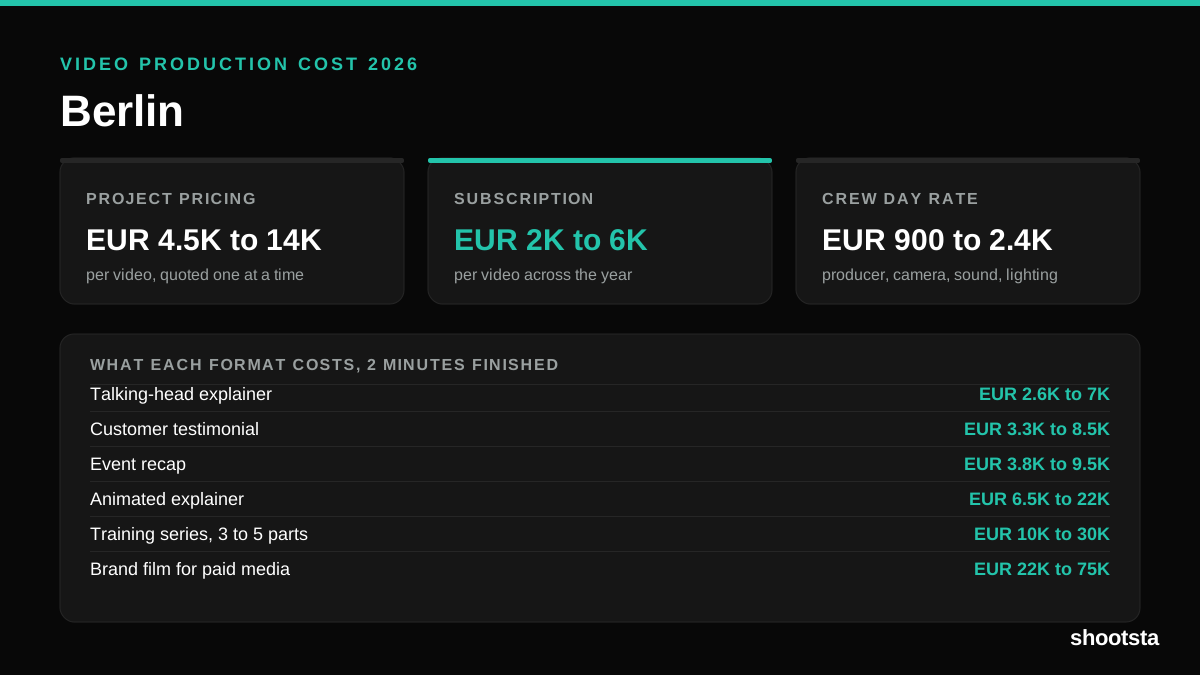
Video Production Cost in Berlin (2026)
Video production in Berlin costs EUR 2,000 to EUR 6,000 per finished video on a subscription model, and EUR 4,500 to EUR 13,500 for one-off project work. Here is what you are paying for, and how the three pricing models compare.