
shootsta.
UK Video Production FAQ (2025 Edition)
By Mark Ashworth · Published November 26, 2025 · Updated October 2026
Complete video production UK FAQ covering costs, timelines, quality standards. Essential video basics UK guide with corporate video help for strategic implementation.
UK businesses looking into video production often find too much information spread across agencies, blogs, and outdated guides. Advice conflicts, pricing stays vague, and timelines are unclear. That makes it hard to move forward with confidence.
This video production UK FAQ pulls together the answers UK businesses ask us for most. It covers video basics, budgeting, timelines, and how to make smart decisions about your video strategy.
Keep it open as a reference when you brief a provider or set next year's budget.
Understanding Video Production UK. FAQ Essentials
We start with the basics, so you and your colleagues share the same terms before the specific questions.
What exactly is corporate video production?
Corporate video production means creating branded video for business use rather than for entertainment. This includes internal comms, training, marketing, product demos, recruitment, and customer education.
It spans every business function from HR to sales. Each area needs a different production approach and quality level.
Unlike casual smartphone footage, professional corporate video keeps your brand consistent and your message clear. That does not mean expensive. Options range from simple webcam recordings to full broadcast quality, depending on the content's purpose and audience.
What types of video do businesses typically need?
A business usually needs several video types, and each one does a different job. Common types include customer testimonials for social proof, recruitment videos to attract talent, explainer videos for complex topics, event coverage for conferences and launches, and social media content for platform engagement.
The right production approach varies by type. A CEO message needs different treatment than a product tutorial. That affects costs, timelines, and what you need from your production team.
Do we need a production company or can we DIY?
It depends on your volume, quality needs, and internal skills. If you only make occasional videos with basic quality, internal resources and a decent smartphone may work. But consistent, professional output across multiple video types usually needs outside help.
Today's options go beyond agencies vs. pure DIY. Platform-based solutions pair professional teams with easy-to-use tools. You handle simple content in-house and tap expert support for complex projects. This hybrid model gives you flexibility that all-internal or all-external setups cannot.
Quick Answer Summary
The most common questions are about costs (£800-£15,000+ per video depending on complexity), timelines (2 days to 8 weeks depending on approach), and whether you need outside help (usually yes for consistent quality). Knowing these basics helps you ask better questions about your specific situation.
Video Production UK FAQ: Costs and Budgeting
Budget questions come up more than anything else. Here is what you need to know about video production costs in the UK.
How much does corporate video cost?
Pricing varies widely by approach and complexity:
- Simple interview-style videos: £800-£2,500 (platforms) or £2,000-£6,000 (agencies)
- Standard corporate videos: £2,500-£8,000 (platforms) or £5,000-£15,000 (agencies)
- High-end brand films: £15,000-£50,000+ depending on creative scope
These ranges cover the full process: planning, filming, editing, revisions, and delivery. Per-video costs drop a lot with volume. If you make ten or more videos a year, a retainer or subscription deal will usually cost less per video than paying project by project.
What drives video production costs?
Several factors shape the price. Crew sizes and day rates are a big one. A single camera operator costs £500-£1,500 per day, while a full crew runs £3,000-£8,000+. If you film on location, you also pay for travel, permits and logistics.
Talent and actors add fees from hundreds to thousands based on usage and experience. Post-production (editing, graphics, revisions) takes up a large share of the budget. Agency overhead then sits on top of the direct costs.
Modern platforms cut costs through simpler workflows and shared tools. They remove much of the traditional overhead, and Shootsta's per-video cost runs 50-60% below agency rates for the same quality.
How should we budget for ongoing video needs?
Plan an annual video budget instead of paying project by project. Work out your volume across departments and use cases, then negotiate bulk pricing. The total depends on how many videos you make and how complex they are.
A higher volume means a bigger annual budget, but the cost of each video falls as the volume grows.
Video Production UK FAQ: Timelines and Process
Realistic timelines let you plan video projects around launches and events. Here is what to expect.
How long does video production take?
Traditional agencies usually take 4-8 weeks from brief to delivery. That breaks down to 1-2 weeks for planning, 1-2 days filming, and 2-4 weeks editing plus revisions. Agencies can rush a job, but they usually charge more for it.
Modern platforms deliver standard projects in anywhere from about 48 hours to one week. Speed matters because delayed content misses launch windows and limits how often you can publish.
What is the typical production process?
Professional video follows clear phases. Pre-production covers briefing, scripting, storyboarding, and logistics. Production captures the footage. Post-production handles editing, graphics, sound, and revisions. Final delivery provides files formatted for your chosen channels.
Each phase needs input and sign-off from your team. Organizations with clear decision-making and fast feedback get their videos much sooner than those with unclear authority or endless review rounds.
How many revision rounds are normal?
Agreements usually include 2-3 revision rounds. Well-briefed projects often need only 1-2 rounds for minor tweaks. Heavy revisions usually point to a weak brief or mismatched expectations rather than a production problem. Give a thorough brief upfront and gather feedback from all stakeholders at once to keep revisions down.
Timeline Reality Check
The biggest delay in video production is not the production itself. It is approval delays. Projects stall most often during stakeholder review. Organizations that get videos fast set clear approval authority and firm review deadlines.
Video Production UK FAQ: Quality and Standards
When you match quality to purpose, you spend the right amount on each video. These questions help you set that level.
What quality do we need?
Not every video needs the same production level. Brand campaigns earn their premium budgets with high production values. Routine internal comms just need clean, professional presentation. Training content should be clear above all else. Social media videos should fit platform-specific formats.
Match quality to purpose. This stops you from under-investing in high-profile content and over-producing routine materials. Smart organizations sort content by importance and budget each type accordingly.
How do we maintain brand consistency across videos?
Manual checks alone will miss things, so you need a system as well. Build video-specific brand guidelines covering visual identity, messaging, tone, and quality benchmarks. Modern platforms can embed these standards into workflows and flag deviations before content reaches stakeholders.
If multiple departments produce video, centralized brand management keeps things consistent no matter who starts the project.
Should internal videos have lower production values than external?
Internal video should look professional but does not need heavy polish. Employees prefer authentic communication. Over-produced content often feels fake. But basics still matter: good lighting, clean audio, proper framing, and clear editing.
The key difference is that internal video values genuine connection over marketing polish. It needs a different creative approach than external content, but not always a lower budget.
Benefits of Strategic Video Implementation
Knowing what video does well helps you make the case for budget. It also shapes where you use it first.
Communication Effectiveness
Video often explains a process or idea more clearly than text. Viewers can see and hear it, which helps them understand and remember it. Complex ideas become accessible through visual demos and storytelling that written content alone cannot match.
Engagement Improvement
Video tends to hold attention longer than text or static images. This matters for training adoption, internal comms reach, marketing conversion, and any use where audience attention drives results.
Scalable Content Assets
A single video can work across many channels. One production gives you website content, social media clips, email assets, presentations, and training modules. That multiplies your return on investment.
Competitive Differentiation
Organizations using video well stand out through better client experiences, more engaging comms, and a modern brand image. This advantage grows as video-mature competitors pull ahead of those still relying only on text.
ROI Reality
A planned video program can pay for itself. The return comes from cost savings, better marketing results and productivity gains from better training and comms. You see those returns when video is planned as a program rather than used now and then.
Measuring Video Production UK FAQ Success
Track the right metrics to make sure your video investment pays off.
What metrics should we track?
Good measurement covers several areas. Engagement metrics like view rates, completion percentages, shares, and comments show if content connects with viewers. Comprehension checks through surveys or quizzes show whether viewers understood the message.
Business outcomes tie video to real results. These include conversion rates, training completion, policy compliance, or sales impact.
Do not focus only on raw view counts. A video that drives action matters more than one that racks up passive views.
How do we calculate video ROI?
Look at the full picture: direct cost savings, productivity gains, and business results. Training videos that cut onboarding time save real money through faster ramp-up. Marketing videos that lift conversion rates add measurable revenue. Internal comms with higher engagement lead to better alignment and execution.
Measure beyond production costs. Include time savings, outcome gains, and new abilities that video makes possible.
Implementation Considerations
Before you scale video up, you need to answer a few practical questions. These are the ones that shape your budget and setup.
Build vs. Buy Decision
For many businesses, an outside partner that extends an in-house team works better than building a full internal video team. An in-house producer costs £35,000-£55,000 a year plus equipment, and one person can only make so many videos. A partner adds flexible capacity and varied skills, and Shootsta's per-video cost runs 50-60% below agency rates.
Platform vs. Agency Choice
Traditional agencies do well with high-end creative campaigns but often struggle with volume, speed, and cost. Platform-based solutions are built for consistent quality at scale with fast turnaround and clear pricing. A common setup is a platform for everyday production, with an agency for the occasional flagship project.
Technology Integration
Video should plug into your existing systems: marketing automation, learning platforms, intranets, and comms tools. Good integration means content flows into normal workflows instead of needing separate distribution efforts that limit adoption.
Video Production UK Quick Reference
Use this quick reference when you need an answer to a common video production question. The answers below come from the sections above.
Essential Quick Answers
Getting Started:
- Start with clear goals for what video should achieve
- Budget £2,000-£8,000 per video for professional quality through platforms
- Expect a turnaround of about 48 hours to 7 days with modern providers, 4-8 weeks with agencies
- Plan for 2-3 revision rounds when you give a thorough initial brief
Quality Standards:
- Match production value to the content's purpose and visibility
- Good audio and lighting matter more than expensive cameras
- Keep brand consistency through documented guidelines and workflow systems
- Aim for authentic delivery in internal content, polish for external
Working with Providers:
- Pick partners based on relevant experience and clear processes
- Write detailed briefs to avoid revision-heavy projects
- Set clear approval authority and timelines
- Consider volume deals to lower your cost per video
Measuring Success:
- Track completion rates and engagement as well as view counts
- Measure understanding through surveys or quizzes for training content
- Link video to business outcomes like conversion or productivity
- Calculate total ROI including time savings and outcome gains
Taking Action on Your Video Strategy
Moving from research to action takes a plan. These steps will get you started.
Start by setting clear goals beyond "we need video." Decide which business outcomes video should drive. That might be better training, higher marketing conversion or stronger internal engagement. Clear goals guide your content strategy, production choices, and how you measure success.
If you already make some videos, audit what you have. Look at true costs including internal time, check quality consistency, and ask stakeholders what they think. This baseline shows where you can improve and helps justify new investment.
Judge providers on what you need rather than on how good their showreel looks. The agency winning awards for brand films may not handle your volume, speed, or budget needs. Match their strengths to your real requirements.
Run pilot projects before committing organization-wide. Test workflows, check quality, train teams, and collect feedback. This learning phase prevents problems when you scale up.
Set up proper governance with approval workflows, brand standards, and quality benchmarks. Clear processes keep video projects from becoming frustrating instead of valuable.
Modern platforms pair human editors with AI-powered tools, so they can deliver video faster and at a larger scale than traditional methods. A first cut in about 48 hours turns video from a rare special project into a routine business tool.
The businesses that do well with video treat it as an ongoing capability rather than an occasional expense. They plan ahead, pick the right partners and build expertise that gives them a real edge through better communications.
Frequently Asked Questions About Video Production UK
What is the minimum budget needed for professional corporate video?
Professional corporate video starts at about £800-£1,500 for simple interview or testimonial content through platform providers. That covers basic filming, editing, and one revision round. Agencies typically start at £2,000-£3,000 for the same type of content because of higher overhead.
Standard corporate videos with moderate production needs run £2,500-£5,000 through platforms or £5,000-£10,000 through agencies. High-end brand content with extensive planning, multiple shoot days, actors, or complex post-production can reach £15,000-£50,000+.
Organizations making multiple videos a year should look at volume pricing. Subscriptions or retainers lower the cost of each video. Match your spend to the purpose of the content, so flagship campaigns get premium budgets and routine comms get cost-effective production.
Modern platforms now deliver professional quality at budgets that used to buy only amateur results. That makes regular video realistic for teams that once made one or two a year.
How quickly can we get video produced when needed urgently?
Speed depends entirely on your provider and the production approach. Agencies typically need 4-8 weeks for standard projects. Agency rush service costs extra and brings that down to 2-3 weeks.
Modern platforms deliver standard projects in anywhere from about 48 hours to one week. Simple videos like interview testimonials or screen recordings can turn around in 24-48 hours.
Complex work with heavy graphics, multiple filming locations, or detailed editing may take 1-2 weeks even with fast providers. The biggest speed factor is clear initial briefs and quick stakeholder feedback. Projects tend to stall during client review rather than during production.
Organizations that get videos fast set clear approval authority, gather feedback efficiently, and work with speed-optimized providers. When comparing providers, ask whether quoted timelines cover revision rounds and final delivery as well as the first version.
Do we need different videos for different social media platforms?
Yes. Each platform has its own technical specs, viewing habits, and audience expectations:
- Instagram: vertical 9:16 for stories/reels, square 1:1 for feed, 15-60 seconds
- LinkedIn: horizontal 16:9, 30 seconds to 3 minutes, professional tone
- TikTok: vertical 9:16, 15-60 seconds, informal and authentic style
- YouTube: horizontal, 2-10+ minutes, detailed information
- Twitter/X: square or horizontal, 30 seconds to 2 minutes
This means you should shoot with multiple formats in mind or plan repurposing during production. Modern platforms can deliver multiple format versions from a single shoot.
Plan your channels before production. That way, footage gets captured right for each platform instead of needing expensive reformatting later.
How do we handle video when our team has no experience?
No video experience should not stop you. It just shapes which approach fits best. Teams without experience benefit from full-service providers who handle everything from concept to delivery.
Platform-based solutions work well for new teams. They offer easy briefing tools, dedicated account support, templated workflows for consistent quality, and training resources to build skills over time.
Start with pilot projects to build confidence before expanding. Many organizations find that working with experienced providers speeds up internal learning. Teams pick up video skills by watching professional processes and results.
Avoid buying expensive equipment and software for DIY without any expertise. That usually produces poor results and wastes money better spent on professional production while your team learns.
What rights and ownership issues should we consider with video?
Standard corporate agreements usually give you full ownership of the final video with unlimited usage rights. That works for most business uses.
You still need to check the details. Make sure you have each of these in place:
- Talent releases for employees or customers who appear
- Music licenses for any audio tracks
- Stock footage rights for third-party content
- Location permissions for external filming sites
- Source file ownership so you can edit later
Some agreements give usage rights but let the provider keep ownership. Know the difference. For videos with customers or partners, get written permission that covers how you plan to use it. GDPR requires proper documentation for anyone identifiable. International use may need extra licensing.
State your intended use upfront to avoid costly relicensing later. Most modern platforms include broad usage rights in their standard pricing. Traditional agencies may charge extra for wider licensing. Review contracts carefully to make sure rights match your distribution plans.
Keep reading
Take this article with you
Read the latest at shootsta.com/blog/uk-video-production-faq
You might also like

How to Plan Video Team Capacity Around Leave
Your only editor just booked two weeks off, and you already know which projects will slip. Chad Lakin explains how to plan video team capacity so the work keeps moving when someone is away.
Corporate Video Editing Standards: Full Guide
A two-page editing standard does more for consistency than a forty-page brand book. Here is what it should cover, who owns each part, and how to enforce it with an in-house editor or an outside partner.
Quality Control in Outsourced Video Editing
When editing leaves the building, quality has to be checked by a system rather than by whoever happens to look. Here is the system: acceptance criteria, two QA gates, counted revision rounds and a quarterly audit.
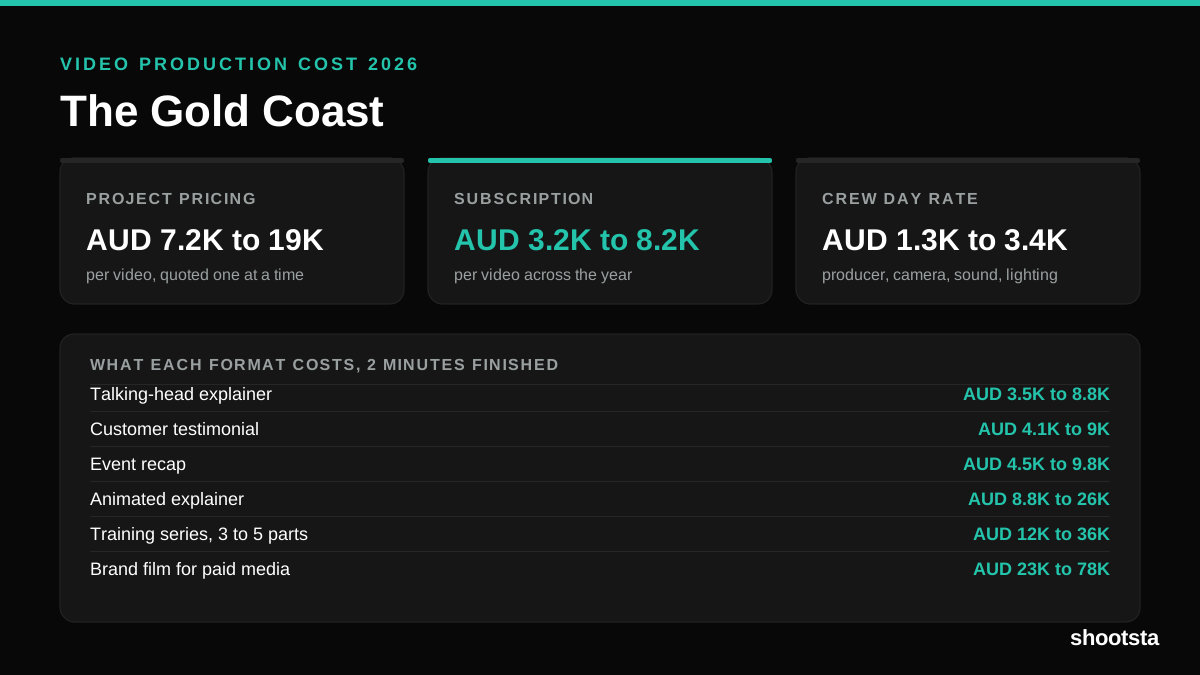
Video Production Cost on the Gold Coast 2026
Video production in the Gold Coast costs AUD 3,200 to AUD 8,200 per finished video on a subscription model, and AUD 7,200 to AUD 18,500 for one-off project work. Here is what you are paying for, and how the three pricing models compare.
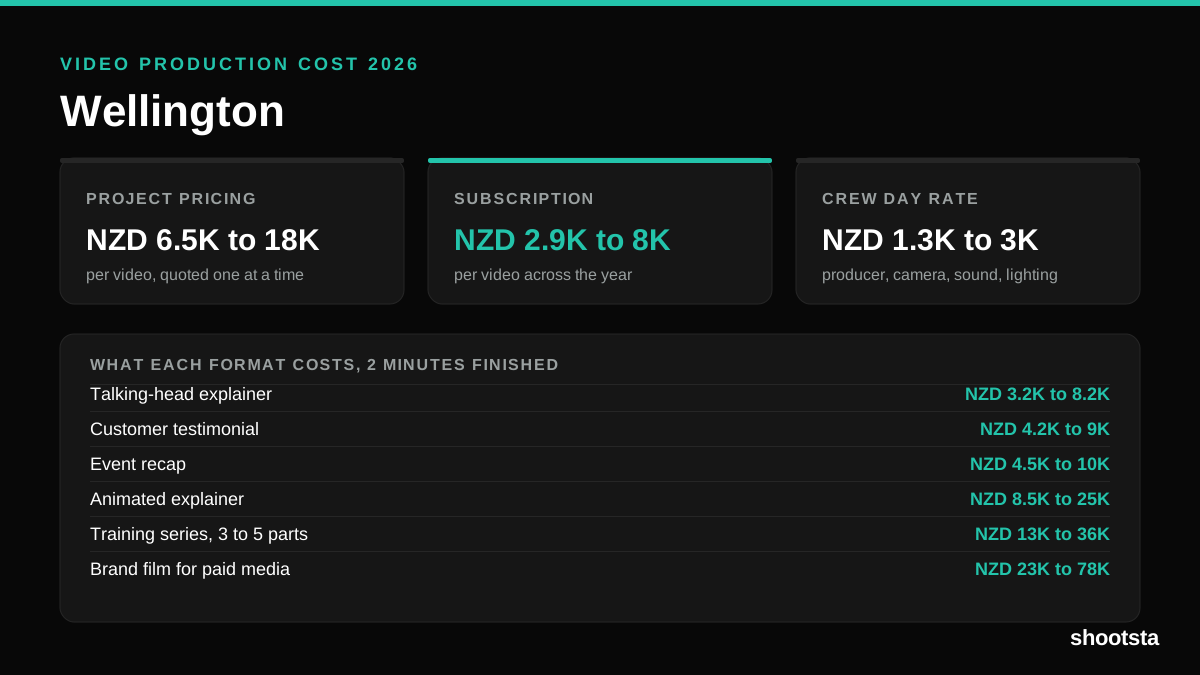
Video Production Cost in Wellington (2026)
Video production in Wellington costs NZD 2,900 to NZD 8,000 per finished video on a subscription model, and NZD 6,500 to NZD 18,000 for one-off project work. Here is what you are paying for, and how the three pricing models compare.
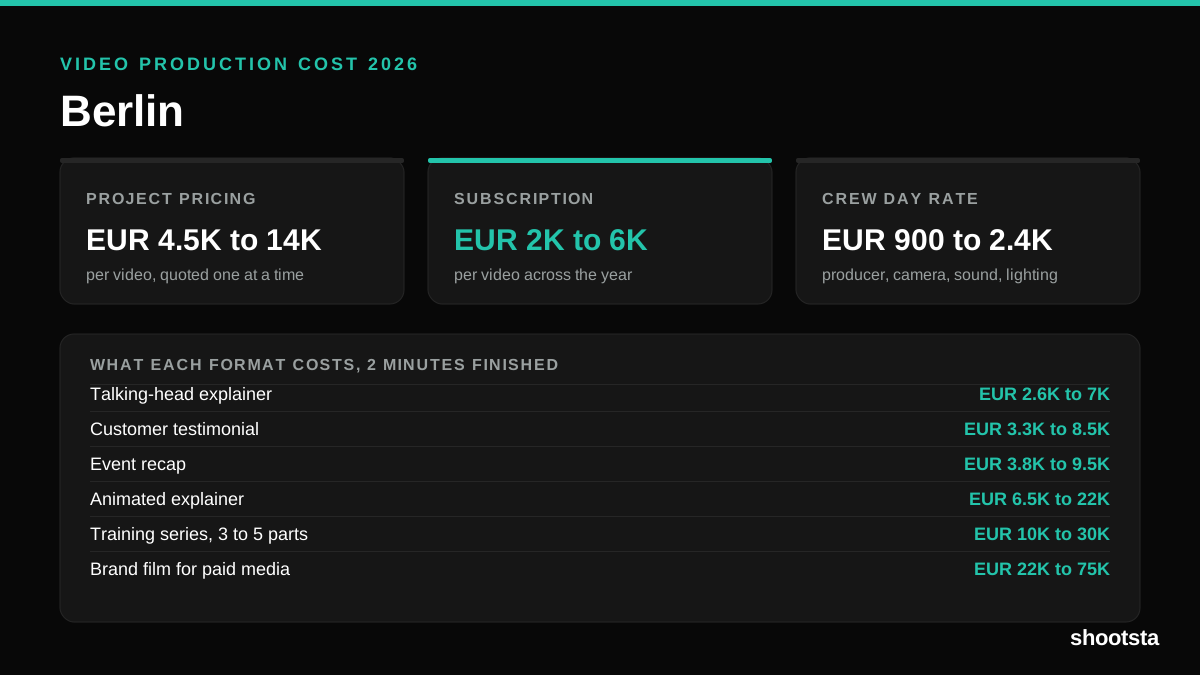
Video Production Cost in Berlin (2026)
Video production in Berlin costs EUR 2,000 to EUR 6,000 per finished video on a subscription model, and EUR 4,500 to EUR 13,500 for one-off project work. Here is what you are paying for, and how the three pricing models compare.