
shootsta.
Testimonials vs Case Studies: When to Use Each
By Rania Michaels · Published June 6, 2024 · Updated October 2026
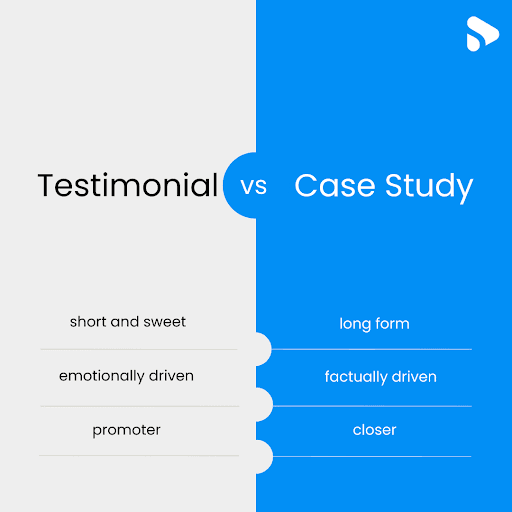
You've probably heard of testimonials and case studies. But, you might not know what they are, and which one you should be making when? Both are vital to your businesses success, so understanding the ins and outs of each will be well worth the time it takes you to read this blog.
You've probably heard of testimonials and case studies. You might be less sure what each one is, and which one you should be making when. Both matter to your business, so the ins and outs of each are worth the few minutes it takes to read this post.
For those who want to skip straight to the point, we won't waste your time. Here's the high-level breakdown.
Testimonials are like those little gold stars of approval you see from customers. They're the kind words and praises that clients share about your product or service. They tell others, "Hey, these guys are great, and here's why!" On the other hand, case studies follow more of a story. They walk through one specific instance where your product or service was used, from the problem to the solution, and they set out the results and the impact your work made.
For those who want the full detail on both formats, and on when each one does its best work, read on.
What are Testimonials?
If you have ever bought something because a friend raved about it, you already know how a testimonial works. Testimonials are personal recommendations from satisfied customers. They do the same job a friend does when they vouch for your business.
The Breakdown
Testimonials are positive statements made by happy customers. They are usually short and to the point, and they name what the customer loved about your product or service. The good ones read as glowing reviews that show off the strongest parts of what you offer.
Types of testimonials
Written testimonials
These are the classic quotes you see on websites and social media posts. They're like little thank-you notes from customers.
Video testimonials
It's like having a mini-commercial where a customer shares their positive feelings about your service on camera. They're powerful because you get to see and hear the enthusiasm firsthand.
Endorsements
This is when someone with status or with a significant following gives your product or service a thumbs up. It can be a big deal because it can reach a lot of people quickly.
Testimonials build trust and credibility
This is where testimonials earn their place. Buyers face a lot of choices, and testimonials act as trust signals. They tell potential customers, "Others have tried this and loved it." That matters most if you're new in the market or introducing a new product. A good testimonial can be the deciding factor that tips someone from "maybe" to "yes, please!"
Testimonials do a lot of the work of building trust, and they can make your business stand out in a crowded market. So if you've got happy customers, don't be shy about asking them to share their experiences. It could be the best marketing tool you'll ever use, and one of the cheapest.
Testimonial video example
Testimony vs testimonial: what is the difference?
The two words get used as if they mean the same thing. They do not, and the difference matters when you put a label on a piece of content.
A testimony is a formal, first-hand account of something a person witnessed or experienced, and the word carries legal weight. Someone gives testimony in court, under oath.
A testimonial is a voluntary endorsement. A customer says your product worked, in their own words, because they are happy to be quoted. There is no oath and no obligation, which is precisely why a testimonial persuades: nobody made them say it.
In marketing, the word you want is almost always testimonial. Use testimony only when you mean sworn or formal evidence, because anywhere else the phrasing reads as overclaiming.
What are Case Studies?
A case study puts a spotlight on one part of your product or service, and shows what it did for a real customer in a practical, real-life example.
The Breakdown
A case study is a detailed story about how your product or service helped a customer. Where a testimonial is a quick comment, a case study goes deep. A good case study typically includes:
a) The Challenge: the problem your customer was facing before they found you.
b) The Solution: how your product or service stepped in and fixed it.
c) The Results: the happy ending, with the tangible benefits like increased sales, time saved, or other improvements.
Types of case studies
Problem-Solution-Results
This is the most common format. It's like a before-and-after story, showing the transformation your customer experienced.
Narrative
Here, the focus is on storytelling. The problem, the solution and the results are told in order, as one story with a beginning and an end.
Data-driven
For the number lovers, these case studies pack in the stats and facts, showing hard evidence of your product's effectiveness.
Case studies demonstrate practical application and effectiveness
The strength of a case study is that it proves your product or service does what you say it does. It shows the product in action, solving real problems for real people. That carries weight with a buyer, because it moves from the claim "Our product is great!" to the evidence: "Here's how our product made a difference."
Think of it like this: if testimonials are the starter, case studies are the main course. They give a fuller, richer picture of what you have to offer. Each one is a story, and it is also proof that your product or service delivers real results. Very few marketing assets manage to do both jobs at once.
Case study video example
Testimonials vs Case studies - the key differences
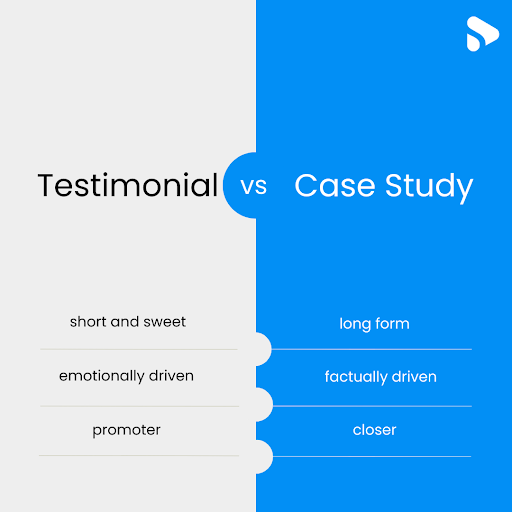
We've talked about the charm of testimonials and the power of case studies. Now, let's put them side by side and spot the differences. Think of it like comparing apples and oranges: both are fruit, but people enjoy them for different reasons.
Format and Content Comparison
Testimonials
These are usually short and sweet, like a quick shout-out from a happy customer. They're all about giving a personal thumbs-up. The content in testimonials is more about feelings and overall satisfaction.
Case Studies
These are the long-form version of a customer's experience. They're detailed and include specific examples of how your product or service was used. Case studies give a full picture, from problem to solution to results.
Emotional Appeal vs. Factual Detail
Testimonials
Here, emotion is the star of the show. It's all about how the customer felt after using your product or service. These personal, emotional reactions can be very persuasive because they're relatable.
Case Studies
They lean more on the factual side. The customer's feelings are in there, but the point is what happened. The focus is on data, results and concrete evidence. It's the difference between "I loved it!" and "Here's how it improved our process by 50%."
Impact on the Decision-Making Process
Testimonials
Think of them as the promoters that build trust and enthusiasm. They work wonders at the initial stages of decision-making, especially when potential customers are just getting to know your brand.
Case Studies
These are your closers. They come in with the facts and figures that can sway a decision when customers are closer to making a purchase. They show that your product or service delivers what the sales pitch promised.
So, when you're deciding whether to use a testimonial or a case study, think about your audience and what stage they're at in the buying process. Testimonials are great for creating a buzz and building trust, while case studies are perfect for providing that final, convincing argument with hard evidence.
Both testimonials and case studies have their unique strengths, and understanding these can help you use them effectively to connect with your audience and boost your business.
How Shootsta can help you to create powerful video content
If you want testimonials and case studies on video, Shootsta can help you plan, film and edit them. Your customers tell the story on camera, and our editors turn the footage into a finished video you can publish.
The first step is a short conversation about which customer to feature and which format fits, and the rest follows from there.
Who produces customer stories at any real volume?
Deciding you need customer video is straightforward. Shipping twelve a year is not, because each one needs scheduling around the customer, legal sign-off, an edit and a set of cutdowns. Teams that manage it treat it as a program with a production partner attached: see the best video editing services for customer stories, or the best B2B video production companies for partners who handle the shoot as well.
Keep reading
Take this article with you
Read the latest at shootsta.com/blog/testimonials-vs-case-studies-which-to-use-and-when
You might also like

Shootsta at Day 1 of B2B Marketing Leaders Forum
Shootsta is at B2B Marketing Leaders Forum Asia in Singapore on 14 and 15 October 2026. Watch our day 1 video, edited overnight and ready before the first coffee break on day 2.
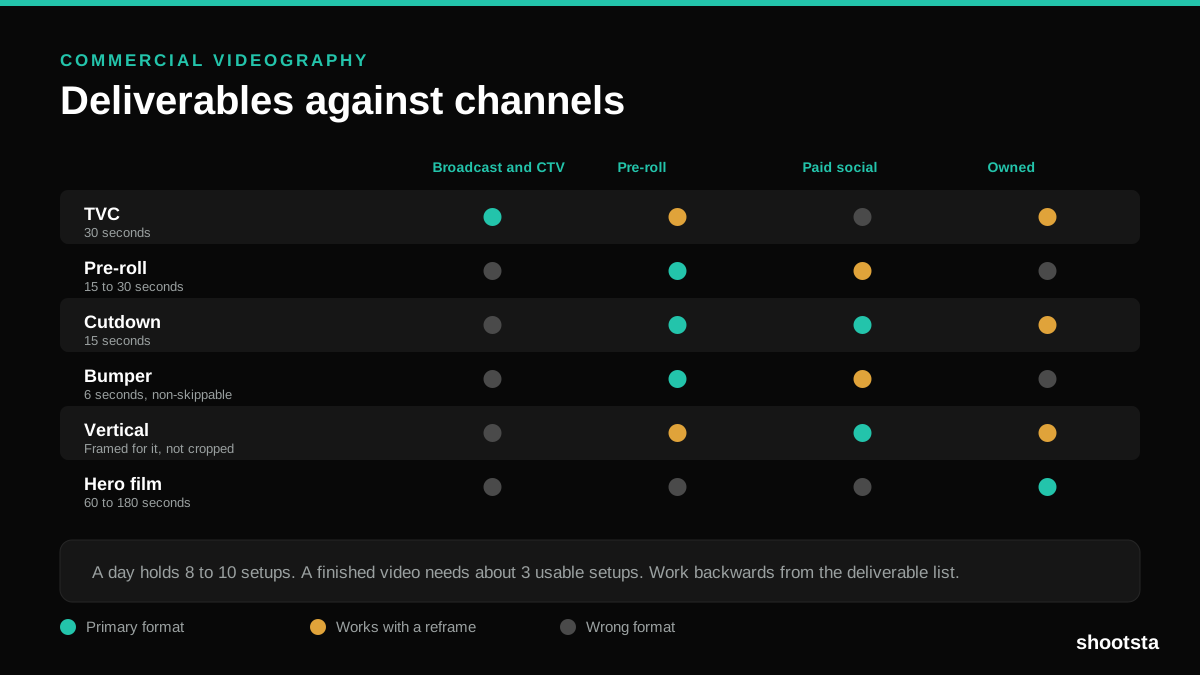
Commercial Videography: Cost and Scope
Commercial videography is priced by the day and judged by the deliverable. Most projects go wrong because those two numbers were never reconciled.
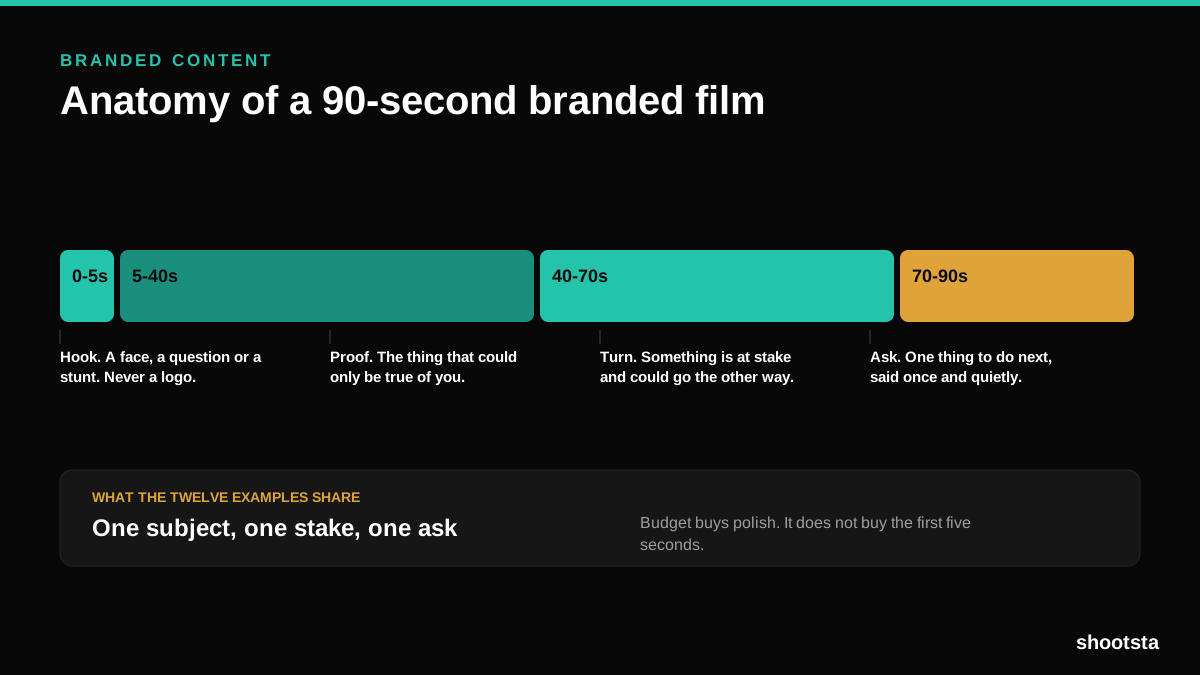
12 Branded Content Examples That Worked
Twelve pieces of branded content that people chose to watch, what each one got right, and the structure underneath all of them.
Promotional Video Production: Cost and Time
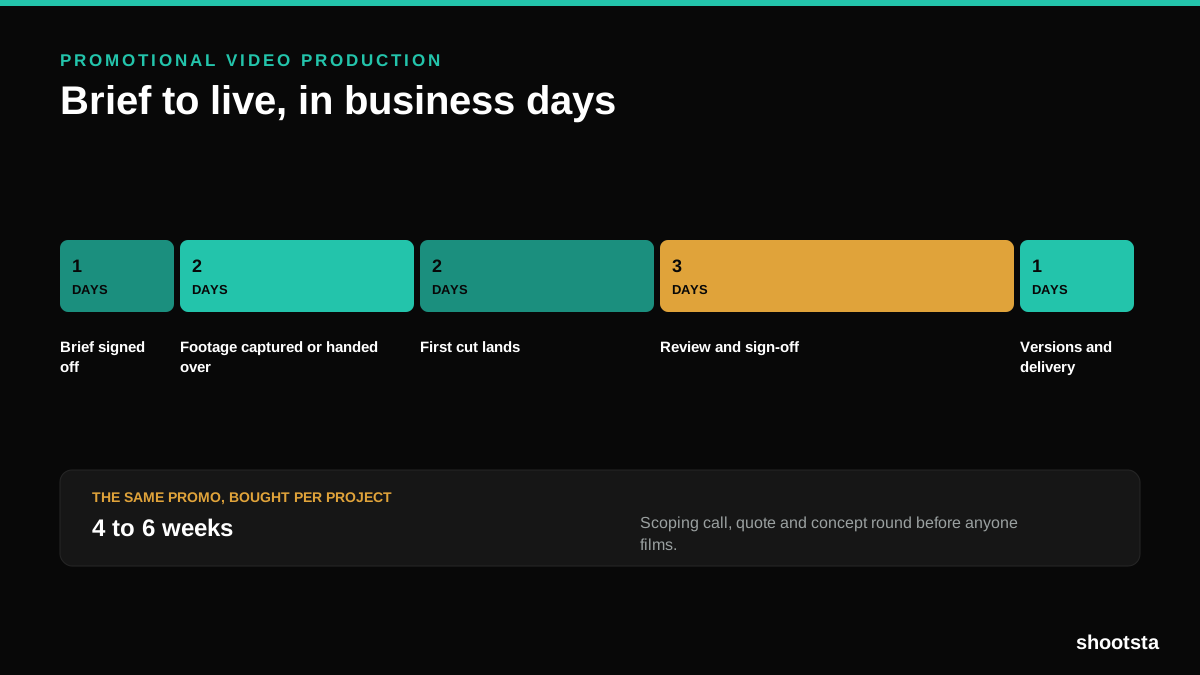
Most promotional video production schedules are not slow because of the edit. They are slow because of the approval chain. Here is where the days go.
Video Marketing Agency or Subscription?
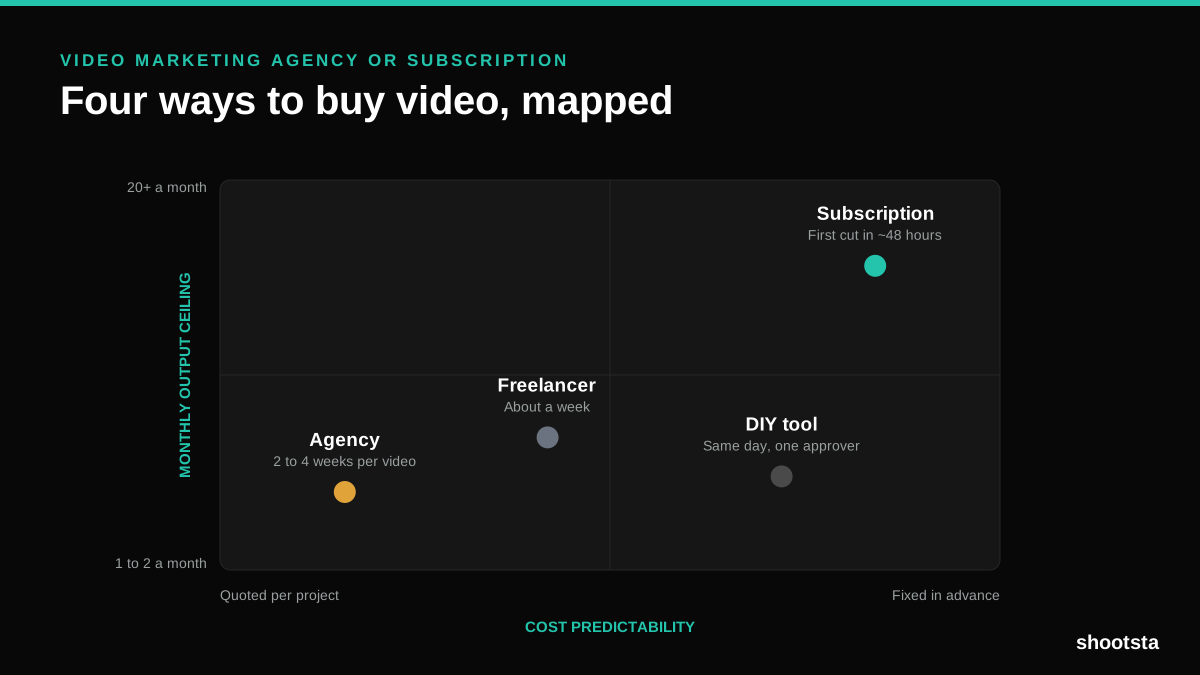
A video marketing agency prices per project and works in weeks. A subscription prices the year and works in days. Which one fits depends on how often you publish, not on which is better.

B2B Video Production: Costs and Buying Models
There are five ways to buy B2B video production. Each one works well up to a point and then breaks, usually at a volume nobody planned for. Here is what each costs and where the ceiling sits.