
shootsta.
Finding Your Target Audience for Video Content
By Rania Michaels · Published September 2, 2024 · Updated May 2026

Creating impactful video content isn’t just about having high production values or an engaging script; it’s fundamentally about understanding who will be watching your videos. Identifying and knowing your target audience is critical because it shapes every element of your content, from the tone and language to the underlying messages and calls to action. When you deeply understand your audience, you’re not just broadcasting content into the void—you’re engaging in a conversation. This connection happens when your content aligns with the specific needs, challenges, and interests of your viewers, making your message resonate on a personal level. This isn’t just about grabbing their attention; it’s about holding it, delivering value, and, most importantly, motivating action. So, let’s dive into why your target audience isn’t just an integral part of your video strategy—it’s the cornerstone of creating content that leaves a lasting impact.
Defining your target audience
Understanding who your target audience is goes beyond simply identifying a demographic or a market segment. It involves recognizing that your audience consists of real people with specific needs, preferences, and behavioural patterns that your content can address. A target audience is not just a broad group of people who might appreciate your video; it’s a carefully defined segment for whom your video must feel like it was made specifically.
To effectively zero in on these individuals, it’s crucial to distinguish between those who need to hear your message and those who want to hear it. People who need your message are directly impacted by your content because it solves a problem or fills a specific gap they experience. On the other hand, those who want to hear your message may not have a direct need but find value or interest in your content due to related interests or aspirational reasons.
Identifying and understanding these distinctions allows you to tailor your messaging in a way that directly appeals to their desires or addresses their pain points, ensuring your content is not just seen but is impactful and engaging. This precision in audience targeting is what transforms general viewers into engaged followers and loyal customers.
Narrowing down your focus
To ensure your video content has the maximum impact, it’s essential to narrow down your focus to the core group that will benefit the most from your message. Here’s how to identify this group:
Analyse your content
Understand the core message of your video and the problem it solves.
Identify pain points
Consider the specific challenges or needs that your video addresses.
Match audience to content
Align your content with the audience who faces these challenges or needs most acutely.
Targeting too broadly might seem like a safe strategy to reach more people, but it often dilutes your message, making it less effective. A broad target may result in content that tries to appeal to everyone but ends up engaging no one. On the other hand, a focused approach allows you to craft messages that resonate deeply with a specific audience, increasing engagement and effectiveness. When your audience feels that your content directly addresses their needs or speaks to their specific situation, they are more likely to engage, remember, and respond to your call to action. This focused strategy not only enhances viewer engagement but also boosts the overall effectiveness of your marketing efforts by ensuring the right message reaches the right people at the right time.
Tailoring content to audience needs
Crafting messages that resonate deeply with your target audience is a critical step in enhancing the impact of your video content. Here’s how to ensure your messages hit home:
Understand their interests
Dive deep into the interests, behaviours, and preferences of your audience. Use surveys, social media interactions, and feedback to gather insights.
Solve their problems
Centre your content around solving specific problems or addressing particular needs that your audience faces.
Use their language
Communicate in a way that reflects the language and tone that your audience uses and understands, making your message more relatable and easier to digest.
Show empathy
Demonstrate understanding and empathy in your content. Show that you know what challenges they face and that you’re here to help solve them.
Include relevant examples
Use examples, case studies, or testimonials that are relevant to your audience to illustrate your points and show real-world applications of your message.
By aligning your video content closely with the specific needs and preferences of your target audience, you not only increase the likelihood of engagement but also foster a deeper connection, making your content more memorable and impactful. This approach ensures that your audience feels understood and valued, which in turn helps build trust and loyalty towards your brand.
7 Tips to Create Content For Your Audience
Creating content that strikes a chord with your target audience doesn’t have to be a guessing game. Here are practical, actionable steps to ensure your video content is finely tuned to the preferences and needs of your audience:
TIP 1 Define your core message
What is the single most important message you want to convey? Ensure it addresses a specific need or interest of your target audience.
TIP 2 Develop audience personas
Create detailed personas for your target audience. What are their interests, challenges, and preferences? How do they consume content?
TIP 3 Ask the right questions
Before creating content, ask:
a) What problem does this video solve for my audience?
b) How will this content improve their life or work?
c) Why should they care about this message?
TIP 4 Use engaging formats
Depending on your audience’s preferences, decide whether an explainer video, a tutorial, or a testimonial fits best. Each format caters to different viewer needs and engagement levels.
TIP 5 Feedback loop
Implement a system to gather feedback on your videos. Use surveys, comments, or engagement data to see what works and what doesn’t.
TIP 6 Consistency is key
Once you find what resonates with your audience, stay consistent with the tone, style, and delivery of your content to build a reliable brand voice.
TIP 7 Leverage tools like Shootsta
Utilise Shootsta’s expertise in video production to enhance your content quality. Shootsta offers tools and services that align with understanding your brand and target audience, ensuring your video content is not only high-quality but also perfectly tailored.
Create targeted video content with Shootsta
Understanding and accurately targeting your audience isn’t just strategic—it’s essential for creating impactful video content. With a clear focus on who your viewers are and what they need, you can produce content that resonates deeply, fostering stronger connections and driving meaningful engagement.
Now that you’re equipped with the tools and strategies to pinpoint your audience, apply these insights to your next video project to see a significant improvement in engagement and effectiveness. Use Shootsta’s expertise and resources to further refine your approach, ensuring every video you produce is not just seen but engaged with.
Ready to elevate your video strategy with Shootsta? Dive into your audience’s preferences and start creating more targeted, effective content today. Let Shootsta help you make every video project your most successful yet!
Keep reading
- Video Content Strategy for B2B Companies
- How to Create Purpose-Driven Content
- Brand Messaging Through Video
More from Shootsta Academy
Take this article with you
Read the latest at shootsta.com/blog/stop-making-content-for-the-wrong-people-finding-your-target-audience
You might also like
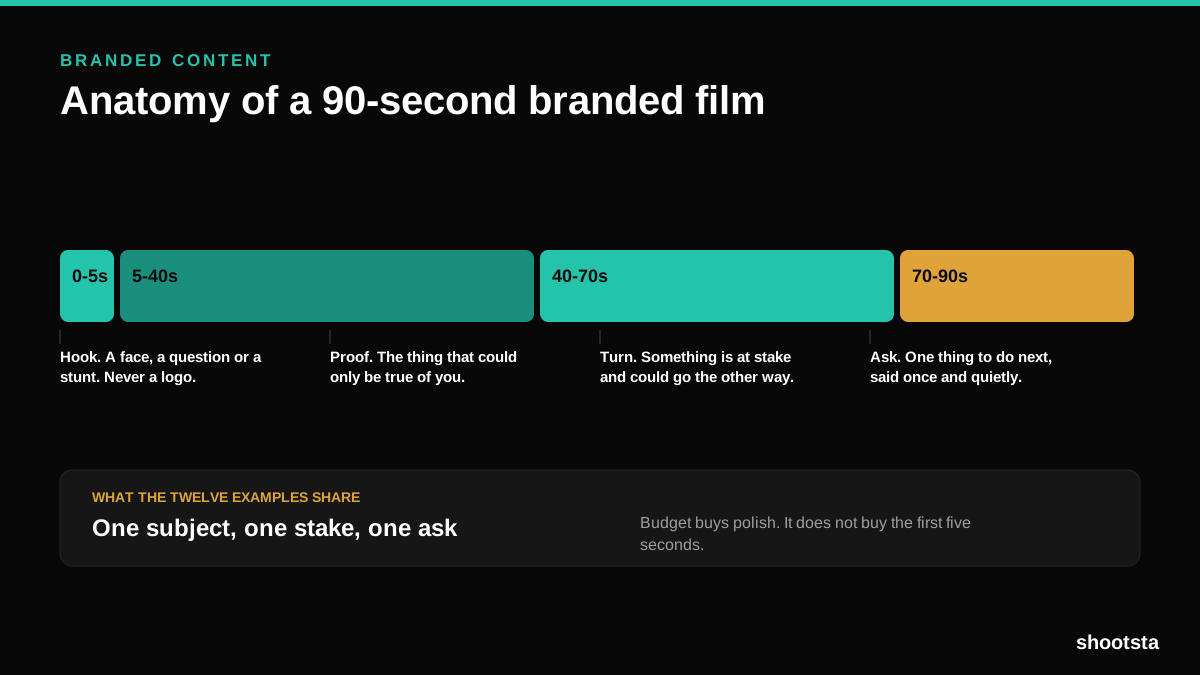
12 Branded Content Examples That Worked
Twelve pieces of branded content that people chose to watch, what each one got right, and the structure underneath all of them.
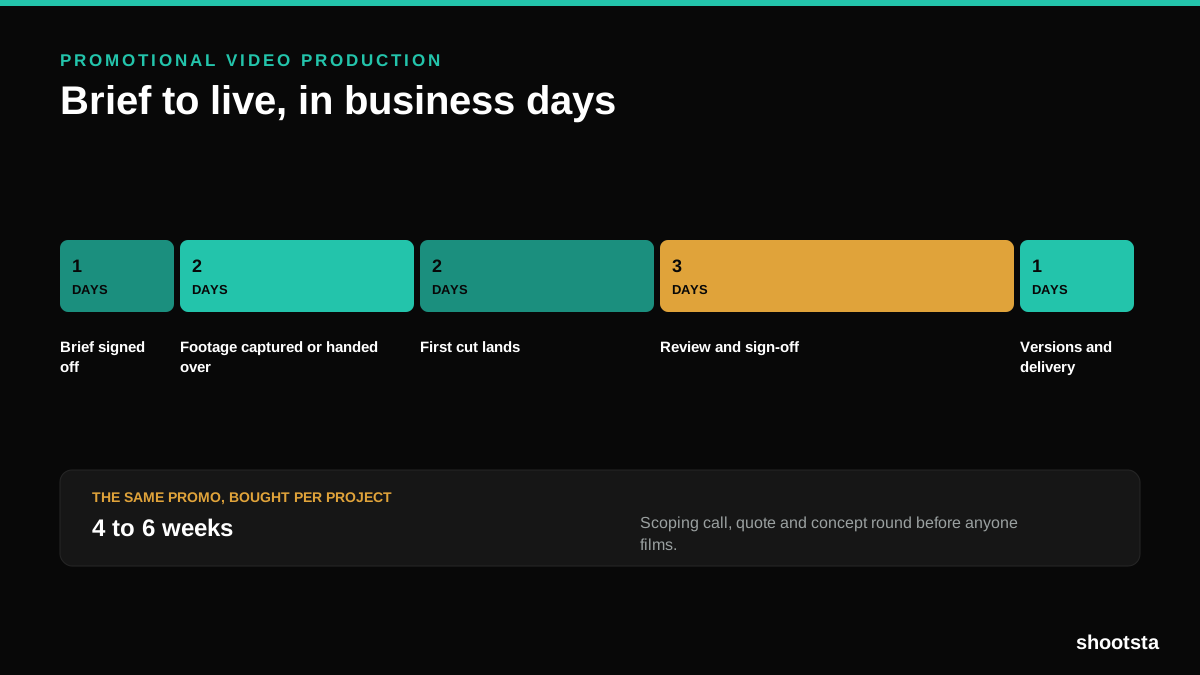
Promotional Video Production: Cost and Time
Most promotional video production schedules are not slow because of the edit. They are slow because of the approval chain. Here is where the days actually go.
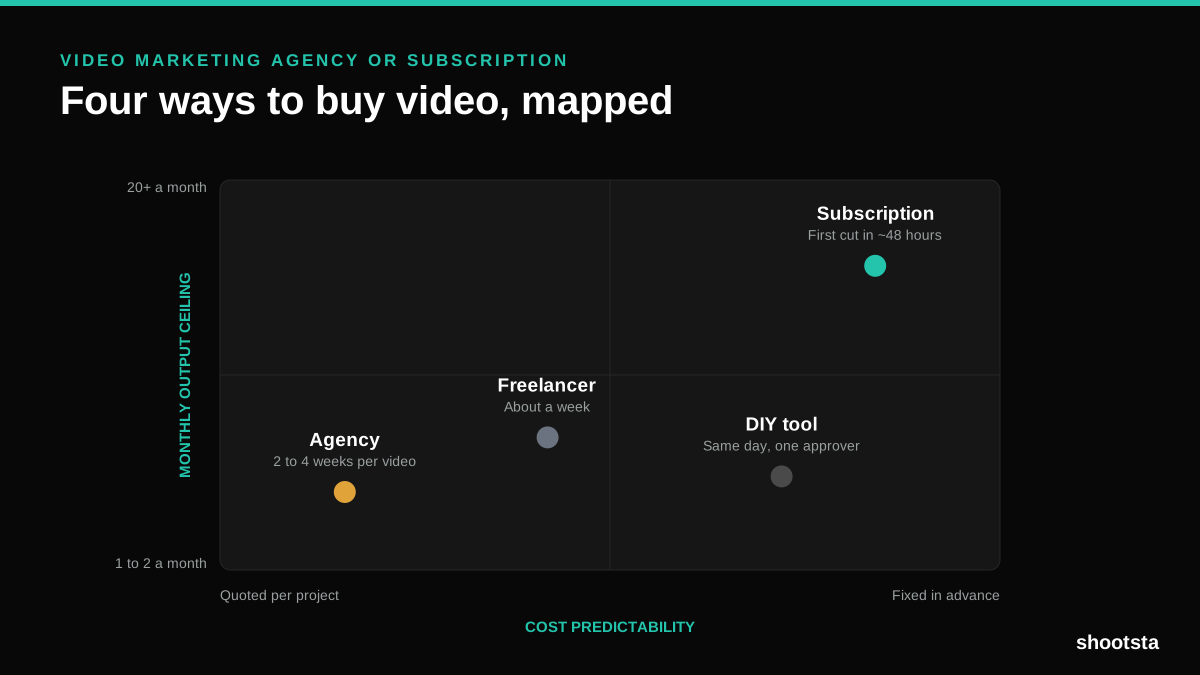
Video Marketing Agency or Subscription?
A video marketing agency prices per project and works in weeks. A subscription prices the year and works in days. Which one fits depends on how often you publish, not on which is better.

B2B Video Production: Costs and Buying Models
There are five ways to buy B2B video production. Each one works well up to a point and then breaks, usually at a volume nobody planned for. Here is what each costs and where the ceiling sits.
How to Measure Video Speed-to-Market
How to Measure Video Speed-to-Market
Speed-to-market is the lag between needing a video and publishing it. For marketing teams it is a revenue metric. Here is how to measure and improve it.
Animation for Wealth Management & Advice
Animation for Wealth Management & Advice
Wealth and advice firms have to explain complex strategies and build trust at scale, under regulation. Animation does both without putting an adviser in front of a camera every time.