On-demand webinar · 25 minutes · free
Five storytelling mistakes killing your videos
The mistakes that quietly drain retention from your case studies, testimonials and brand videos, and the structural fixes that turn them around. Built from ten years of running thousands of business interviews.
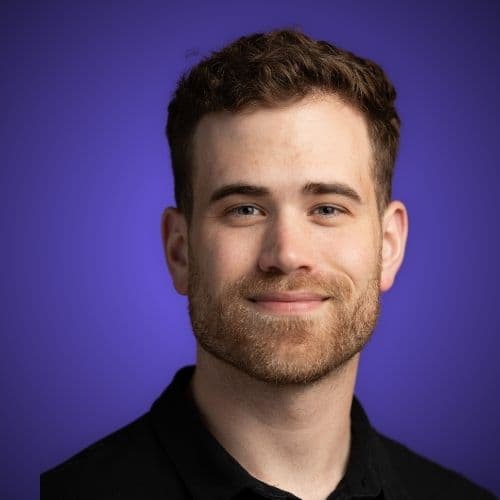
Luke Walker
Manager, Shootsta Academy
What you walk away with
Three things that change how you brief video
When to use a story (and when not to)
A simple split between message-driven and story-driven video, so every project starts with the right format instead of an arbitrary policy that every video must have a story.
The interview system Shootsta uses
The five-step process - objective, preliminary chat, transcript, written questions, facts plus feelings - that turns a vague conversation into a tight, on-message edit.
How to write a hook that actually hooks
Why the most interesting part of the story belongs in the first three seconds, with worked examples for case studies, safety films and employee stories.
Inside the session
The five mistakes, and the fixes
Each mistake is one Luke sees over and over again in the briefs and rough cuts that land in front of Shootsta editors. Here is what each one looks like in practice.
- 01
Treating story as the answer to everything
Not every video needs a story. Some content - explainers, company updates, how-to videos - works better as a direct message. Storytelling adds value when emotion, novelty or personal experience are the point. Force a story onto a how-to video and you trade retention for cleverness.
Fix. Sort your video into message-driven or story-driven before you write. Then commit to one and make every second valuable.
- 02
Settling for any story
Only the best stories get remembered. Case studies and testimonials fall flat when the person on camera was picked for their job title rather than their actual story. A memorable character has a clear want and a real journey toward (or away from) it.
Fix. Pick story over job title. Look for a real want, a real journey and a real outcome. If the person on camera does not have that, find someone who does.
- 03
Confusing authenticity with 'say whatever you want'
Authentic means genuine, not unstructured. Telling talent to 'just say whatever you want' is the fastest way to end up with two hours of footage and no usable story. A scripted answer is just as authentic as an improvised one - as long as it is true.
Fix. Run a preliminary chat, transcribe it, highlight the lines that land. Then write the questions that pull those lines back out on shoot day. You are the storyteller, not the talent.
- 04
Starting at the chronological beginning
Most interviews open with 'Hi, my name is...' and lose the audience in three seconds. Chronological order is rarely the most interesting order. The most interesting part of the story almost always belongs at the start.
Fix. Write the hook yourself. Get the talent to say it on shoot day. Put a question, a controversial statement or the punchline of the story in the first three seconds.
- 05
Deciding storytelling is too hard
One bad interview and a two-hour edit later, most teams quietly retreat to talking-head videos forever. The problem is rarely the story itself - it is the absence of a repeatable system around planning, casting and questioning.
Fix. Treat storytelling as a system, not a creative gamble. Objective, preliminary chat, transcript, written questions, facts plus feelings. The same process every time.
The honest question
How many of these does your next video do?
Run through the list before your next case study or interview. The blanks are where this webinar pays for itself.
Who this is for
Built for the people briefing video
Internal comms managers
Producing case studies, employee stories and leadership updates that need to land emotionally, not just inform.
Brand and content teams
Running ongoing testimonial and customer story programs and trying to lift retention beyond the first 10 seconds.
Marketing leads
Writing briefs for video partners and tired of getting back a 2-hour interview that needs to be carved into a 90-second story.
Anyone briefing video talent
If you have ever told someone on camera to 'just be yourself', this session is the structured alternative.
Wall of love
Teams already telling better stories
Brands across HarperCollins, DUAL, TAFE Queensland and more use Shootsta to produce case studies, employee stories and interviews that land.
We use Shootsta to create more engaging and fun content for the business.
Communications Lead
HarperCollins
Video has transformed the way we communicate by showcasing our culture and our personalities.
Marketing Team
DUAL Australia
We have 600 staff and might have 50 projects at any one time. Video is really important because it helps keep everyone engaged and connected.
Communications
Richard Crookes Constructions
We have so many different study areas and amazing facilities to showcase. Video is the perfect way to capture that.
Marketing
TAFE Queensland
If they can get information succinctly in a video, watching someone warm and personable talking to them, they are far more receptive.
Brand Manager
Regis Aged Care
Trusted by teams at




Your speaker
Luke Walker
Manager, Shootsta Academy
Luke heads up education at Shootsta. He works directly with internal comms, marketing and brand teams at hundreds of organisations, training them on the planning, casting and interview craft that turns a vague brief into a story worth watching.
FAQ
Quick answers
How long is the webinar?
Who is this webinar for?
Should every business video have a story?
What is the business hero's journey?
Can I share the recording with my team?
Ready to fix your next story?
Hit play on the webinar above, or talk to the Shootsta team about turning the system into a repeatable process.
Talk to Shootsta